June 18, 2026
Garage Drywall Installation Cost: 2026 Prices Per Sq. Ft.
Finishing your garage with drywall is one of the most practical upgrades you can make to a home, it adds usable space, improves fire safety, and increases property value. But before you commit, you need to understand what garage drywall installation cost actually looks like in 2026, from materials and labor to the finishing level you choose. Prices vary more than most homeowners expect, and the difference between a basic hang-and-tape job and a fully finished, paint-ready garage can be significant.
At Super Shooters, we've completed over 10,000 drywall and ceiling projects across the Sacramento Valley in our 30+ years of business, and garage finishing is one of the most common requests we handle. We know what drives costs up, what keeps them reasonable, and where homeowners can make smart decisions without cutting corners .
This guide breaks down 2026 pricing per square foot, compares material and labor expenses, and covers how garage size and finish level affect your total. Whether you're hiring a pro or weighing a DIY approach, you'll walk away with real numbers to plan your budget around .
What you pay for garage drywall in 2026
The total garage drywall installation cost in 2026 typically falls between $1,500 and $6,000 for a standard two-car garage, depending on your location, the size of the space, and how finished you want the final result to look. That range is wide on purpose because no two garages are identical, and the choices you make early in the project have a direct impact on what you'll spend.
Typical price ranges by garage size
Your garage size is the first and most significant driver of cost. A single-car garage has roughly 250 to 350 square feet of wall and ceiling surface , while a two-car garage runs closer to 500 to 600 square feet . A three-car garage can push past 800 square feet of drywallable surface, and that additional footage adds up fast when you're paying for both materials and labor.
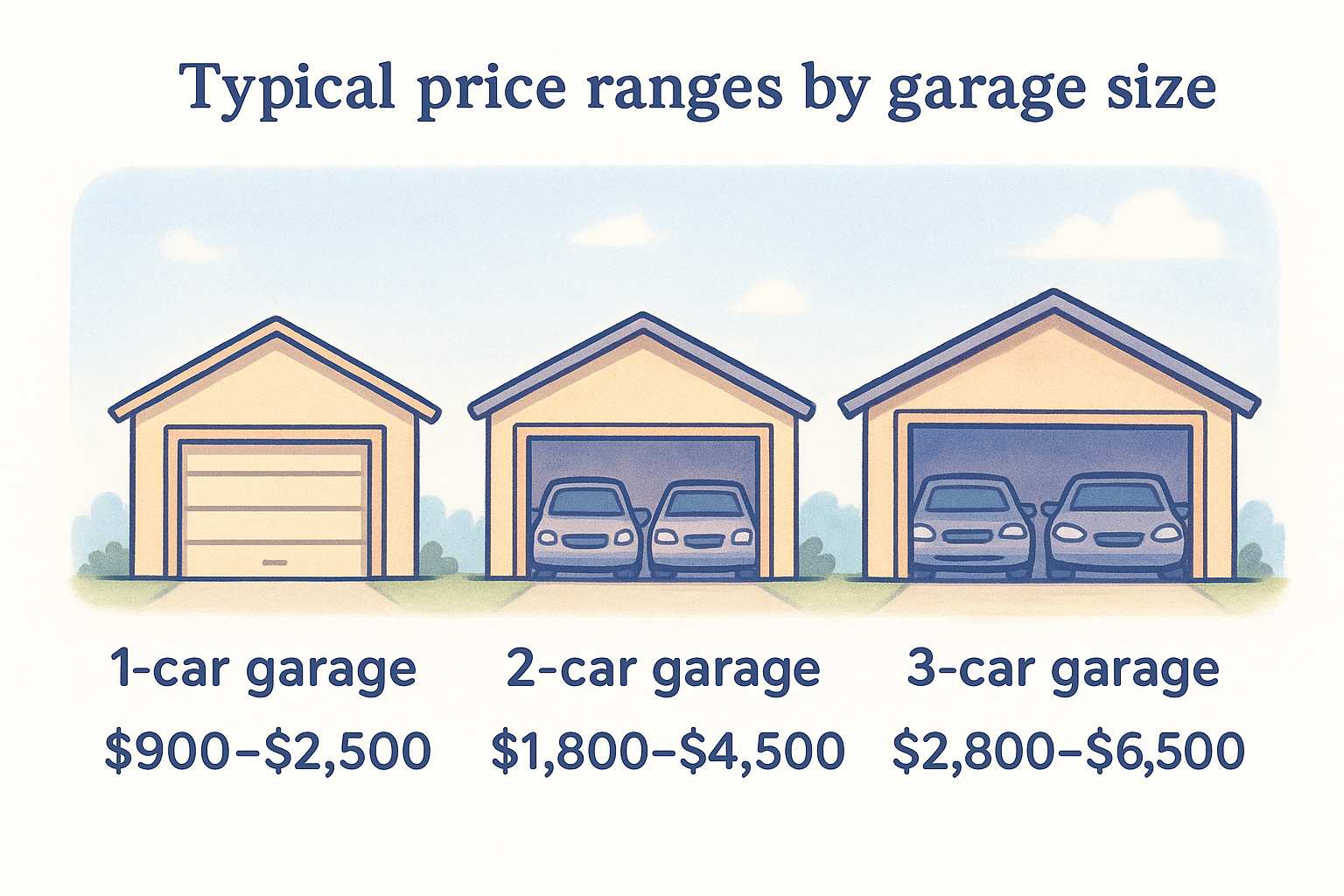
| Garage Size | Wall/Ceiling Sq. Ft. | Estimated Total Cost |
|---|---|---|
| 1-car garage | 250-350 sq. ft. | $900-$2,500 |
| 2-car garage | 500-600 sq. ft. | $1,800-$4,500 |
| 3-car garage | 750-900 sq. ft. | $2,800-$6,500 |
These ranges assume standard drywall installation with basic finishing. Your actual cost will shift based on finish level and local labor rates.
How material and labor costs break down
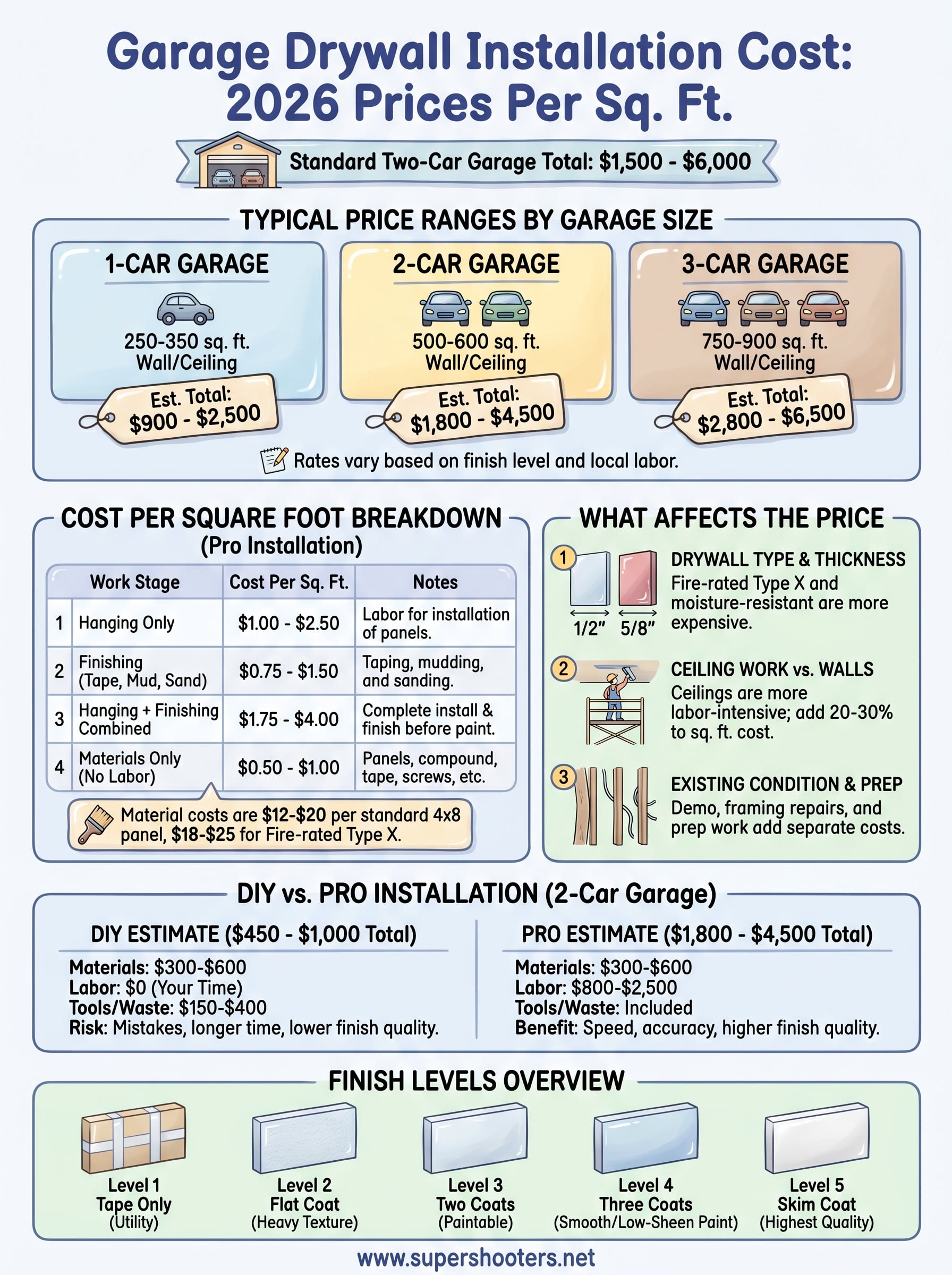
Materials for a typical garage drywall project include drywall sheets(usually 1/2" or 5/8" thick) , joint compound, tape, screws, and corner bead. In 2026, drywall sheets run approximately $12 to $20 per 4x8 panel depending on type and thickness. Fire-rated Type X drywall, which many garages require by code when a wall is adjacent to living space, runs slightly higher at $18 to $25 per sheet .
Labor makes up the larger share of your budget in most cases. Professional drywall crews charge $1.00 to $2.50 per square foot for hanging alone, and finishing (taping, mudding, and sanding) adds another $0.75 to $1.50 per square foot . Combine both stages and you're looking at $1.75 to $4.00 per square foot for a fully installed and finished surface before any paint or texture work is done.
Finish levels and what they add to your cost
Not every garage owner wants or needs a smooth, paint-ready wall. Drywall finishing is measured in levels 0 through 5 , and each level represents a different standard of completion. For garages, most homeowners land somewhere between Level 1 and Level 4 , and the level you choose directly affects both labor hours and material usage.
- Level 1: Tape embedded in compound only, no finishing coats. Common for utility garages that won't be painted.
- Level 2: Flat coat over tape and fasteners. Adds minimal cost and works well for spaces receiving heavy texture.
- Level 3: Two coats of compound over tape. A practical middle ground for garages that will be painted.
- Level 4: Three coats, lightly sanded. The right choice if you plan to paint with a flat or low-sheen finish.
- Level 5: Full skim coat. Adds the most cost and is rarely necessary for garage applications.
Cost per square foot and total price ranges
Understanding garage drywall installation cost on a per-square-foot basis gives you a reliable way to compare contractor quotes and check whether you're being charged fairly. The numbers below reflect 2026 market rates for the Sacramento Valley region, though similar pricing applies across most of California and comparable metro areas.
Breaking down the per-square-foot rate
Hanging drywall and finishing it are two separate stages of work, and most contractors price them independently. When you look at a quote, you'll often see these as line items rather than a single blended rate.
| Work Stage | Cost Per Sq. Ft. |
|---|---|
| Hanging only | $1.00 - $2.50 |
| Finishing (tape, mud, sand) | $0.75 - $1.50 |
| Hanging + finishing combined | $1.75 - $4.00 |
| Materials only (no labor) | $0.50 - $1.00 |
A fully installed and finished garage wall in 2026 typically costs between $1.75 and $4.00 per square foot before any paint or texture is added.
Material costs alone run between $0.50 and $1.00 per square foot when you factor in drywall panels, joint compound, tape, screws, and corner bead. Labor consistently accounts for the larger share of your total budget, often 60 to 70 percent of the final invoice on a standard garage project.
What total project costs look like
Your total spend depends on how many square feet of surface you're covering and which finish level you select. These figures assume a professional installation with standard materials and a finish level suitable for painting.
| Garage Type | Surface Area | Low Estimate | High Estimate |
|---|---|---|---|
| 1-car garage | 250-350 sq. ft. | $900 | $2,500 |
| 2-car garage | 500-600 sq. ft. | $1,800 | $4,500 |
| 3-car garage | 750-900 sq. ft. | $2,800 | $6,500 |
Smaller garages don't always produce proportionally lower bids because contractors factor in a minimum job cost to cover travel, setup, and cleanup time. If your project falls on the smaller end, expect the per-square-foot rate to be slightly higher than what a larger job would produce. A 1-car garage might cost more per square foot than a 3-car garage simply because the fixed overhead is spread across fewer billable square feet.
What changes the price
Several variables push garage drywall installation cost above or below the average ranges, and understanding them helps you anticipate where your project will land. The biggest factors are drywall type, ceiling work, your garage's existing condition , and local labor rates in your area.
Drywall type and thickness
Standard 1/2-inch drywall is the default for most garage walls, but garages that share a wall or ceiling with living space often require 5/8-inch Type X fire-rated drywall by local building code. Type X panels are heavier and slightly more expensive, running $18 to $25 per sheet compared to $12 to $20 for standard panels. That difference adds up when you're covering hundreds of square feet, so check your local code requirements before finalizing a material budget.
Moisture-resistant drywall (sometimes called green board) is another option worth considering if your garage sees humidity fluctuations or sits in a region with wet winters. It costs roughly 20 to 30 percent more than standard panels but holds up significantly better in environments where condensation is common.
Ceiling work vs. walls
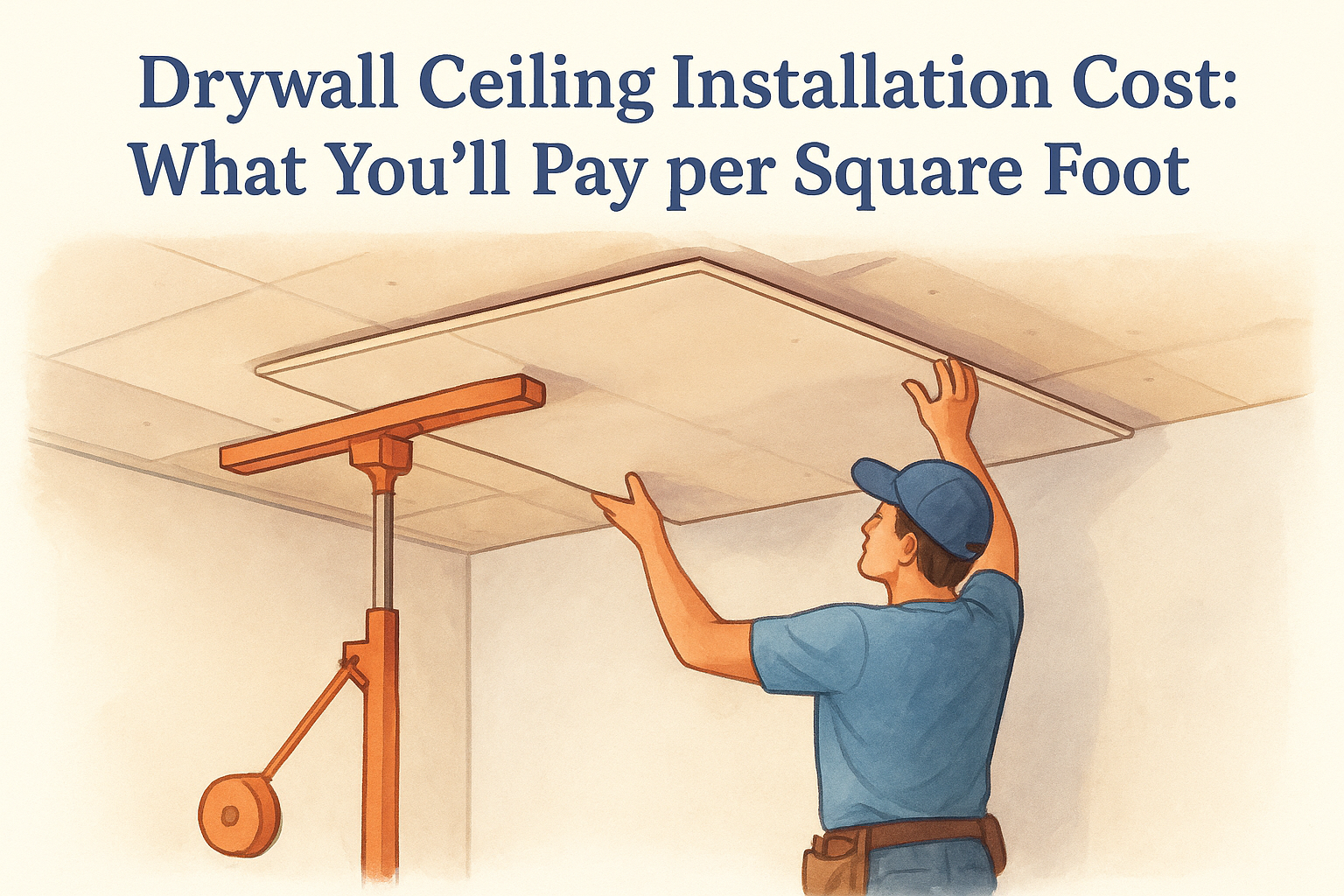
Drywalling a ceiling is more labor-intensive than drywalling walls , which means it costs more per square foot. Overhead work is physically demanding, requires scaffolding or lift equipment, and takes longer to complete accurately. Expect to pay 20 to 30 percent more per square foot for ceiling installation compared to wall installation alone.
If your project includes both walls and ceilings, ask your contractor to quote them separately so you understand exactly where the money is going.
Existing conditions and prep work
The condition of your garage framing directly affects labor time . If studs are unevenly spaced, damaged, or out of plumb, the crew needs to correct them before hanging a single sheet. Electrical rough-ins, plumbing, or insulation work that needs to happen before drywall can go up adds cost and sometimes requires separate subcontractors, which increases your total project timeline and budget.
Removing old materials like damaged drywall, plaster, or wood paneling is typically charged separately by most contractors and runs $0.50 to $1.50 per square foot depending on the scope and what they find behind the existing surfaces.
DIY vs pro installation costs
When you're weighing garage drywall installation cost , the DIY route looks appealing on paper because you eliminate labor, which we've established is 60 to 70 percent of a typical invoice. But the real comparison is more nuanced. Tools, material waste, time, and finish quality all factor into whether doing it yourself actually saves you money in the end.
What DIY actually costs you
Taking on drywall yourself means covering materials, tool rental, and any permits your local municipality requires. Materials for a two-car garage will run $300 to $600 depending on drywall type and finish supplies. If you don't own a drywall lift, screw gun, mud knives, and sanding equipment, rentals add $100 to $200 on top of that. Factor in one to three weekends of labor and the realistic cost of beginner-level mistakes like misaligned seams, bubbling tape, or over-sanded spots that need to be repatched, and your savings shrink quickly.
| Cost Item | DIY Estimate | Pro Estimate |
|---|---|---|
| Materials | $300 - $600 | $300 - $600 |
| Labor | $0 (your time) | $800 - $2,500 |
| Tool rental | $100 - $200 | Included |
| Waste/mistakes | $50 - $200 | Minimal |
| Total (2-car garage) | $450 - $1,000 | $1,800 - $4,500 |
DIY can cut your two-car garage cost by $1,000 or more, but only if you have the time, tools, and patience to reach an acceptable finish level.
Where professional installation earns its price
A licensed drywall crew brings speed and accuracy that a first-time DIYer can't replicate on a first attempt. Professionals hang, tape, and finish a standard two-car garage in one to two days. You'd likely spend two to three times longer on the same job and still end up with visible seams or uneven texture that requires extra work before painting.
The finish quality gap matters most if your garage will serve as a workshop, living space, or ADU component. Poor taping and mudding shows up clearly under paint, and correcting it after the fact costs more than hiring the job out from the start. For utility-only garages where appearance isn't a priority, a careful DIYer with decent skill can absolutely handle a Level 1 or Level 2 finish without professional help.
How to estimate your garage drywall cost
Getting a reliable estimate for your garage drywall installation cost doesn't require a contractor's license. You can build a working budget in under an hour with a tape measure, a calculator, and the pricing data covered earlier in this guide. The key is measuring accurately and applying the right cost ranges for each part of the project.
Measure your wall and ceiling surface area
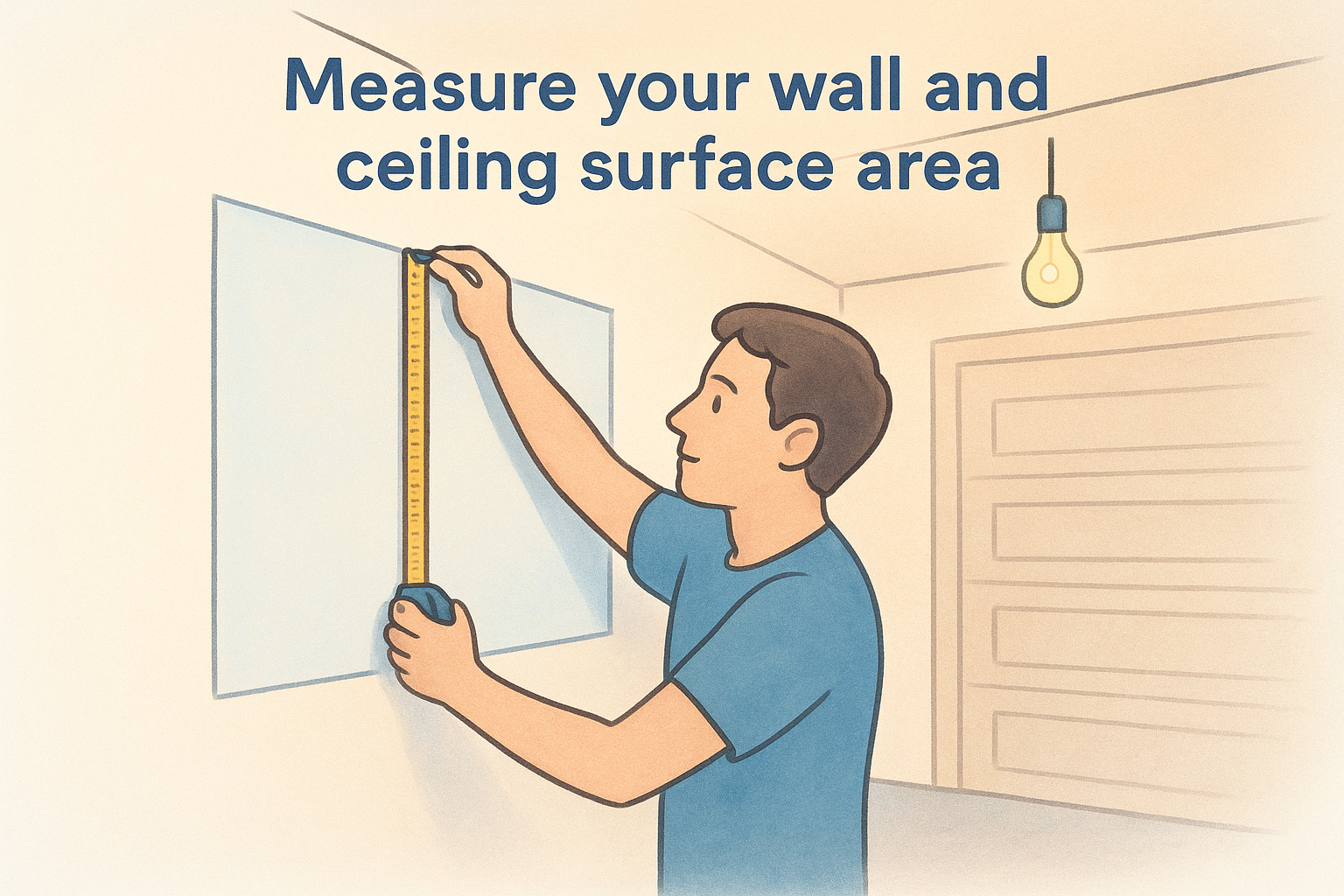
Start by measuring every wall you plan to drywall , recording the height and width of each one. Multiply height by width to get the square footage of each wall, then add all the totals together. For an attached two-car garage with standard 8-foot ceilings, your walls alone will typically add up to 500 to 550 square feet . If you're drywalling the ceiling too, measure the floor footprint of the garage and add that number to your wall total. A standard two-car garage floor footprint runs roughly 400 to 480 square feet .
Don't subtract for windows and doors unless they're unusually large. Contractors rarely adjust pricing for minor cutouts because the extra cutting and fitting work offsets any material savings.
Apply per-square-foot rates to your measurements
Once you have your total square footage, multiply it by the appropriate cost range. For a professionally installed and finished project , use $1.75 to $4.00 per square foot as your baseline. For materials only (if you're doing the work yourself), use $0.50 to $1.00 per square foot.
Run both the low and high ends of the range to give yourself a realistic budget window, not just a single number.
A two-car garage with 600 total square feet of wall and ceiling surface works out to a rough professional estimate of $1,050 to $2,400 using those per-square-foot rates, before factoring in finish level upgrades or any prep work.
Factor in extras that add to the base cost
Adjust your estimate upward if your project includes fire-rated Type X drywall , ceiling installation, or any prep work like removing old materials or correcting damaged framing. Add 20 to 30 percent to your ceiling square footage cost, and budget separately for demo or repairs if your garage walls aren't currently bare framing. Getting at least two itemized contractor quotes lets you cross-check your self-estimate against what local crews are actually charging in 2026.
Simple wrap-up and next steps
Budgeting for garage drywall installation cost comes down to knowing your square footage, choosing the right finish level, and understanding how factors like fire-rated drywall and ceiling work adjust your total. For most homeowners in the Sacramento Valley, a professionally finished two-car garage runs between $1,800 and $4,500 , with the final number depending on the specific conditions of your space.
Your best next step is getting a detailed, itemized quote from a contractor who has experience with garage finishing specifically. Vague estimates based on flat rates leave too much room for surprises when unexpected prep work or material upgrades come up mid-project. If you're ready to move forward, the team at Super Shooters has completed over 10,000 projects across the Sacramento area and offers free in-home estimates with no upfront payment required. Start your project today by exploring our professional drywall installation services.
Recent Posts