May 21, 2026
Drywall Finishing Cost Per Square Foot: 2026 Rates By Level
Getting a straight answer on drywall finishing cost per square foot shouldn't require a research project. But pricing varies enough, by finish level, room size, and region, that most homeowners end up confused before they even request a quote. Whether you're budgeting for a remodel, finishing a garage, or wrapping up an ADU, you need real numbers to plan around , not vague ranges.
At Super Shooters, we've completed over 10,000 drywall and ceiling projects across the Sacramento Valley in our 30+ years of business. That volume gives us a clear picture of what finishing actually costs, and where homeowners tend to overpay. We built this guide using that firsthand experience so you can walk into any estimate with confidence.
Below, you'll find 2026 rates broken down by finish level (Level 3 through Level 5), what drives the price up or down, and how to read a contractor's quote without second-guessing every line item. Let's get into the actual numbers .
Why drywall finishing costs vary so much
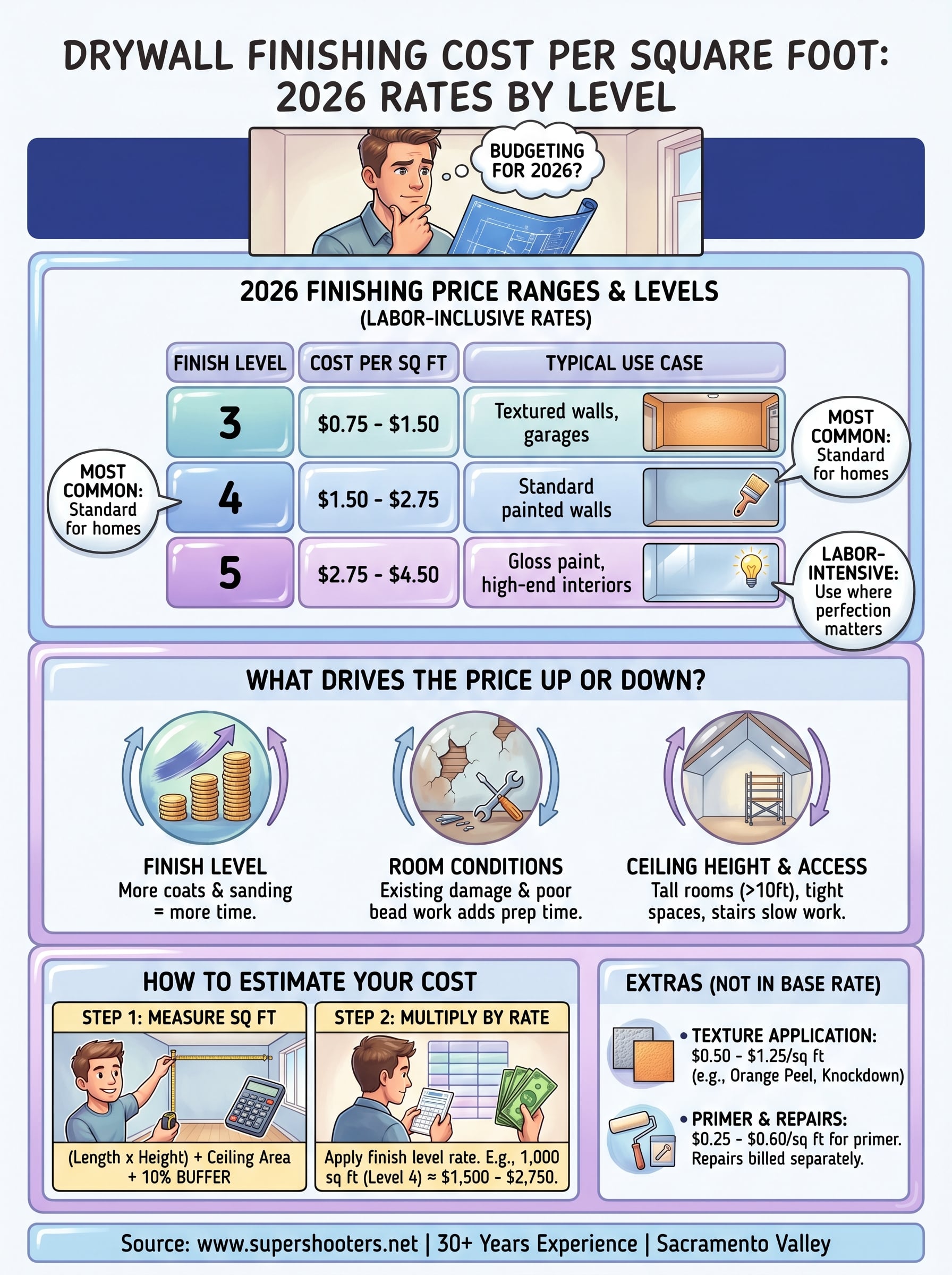
The drywall finishing cost per square foot you see in quotes isn't random, but it does shift based on several factors that contractors weigh before giving you a number. Finish level is the most significant variable, but it's far from the only one. Understanding what actually moves the price helps you spot a fair quote and avoid paying for work you don't need, or getting underbid work that falls apart after the paint goes on.
Finish level determines labor hours
Every additional finish level requires more coats of joint compound, more sanding passes, and significantly more time. A Level 3 finish takes roughly half the labor of a Level 5, which demands a perfectly flat, skim-coated surface with zero texture variation. Contractors price this difference directly into their per-square-foot rate, so the level you choose has a direct and measurable impact on your final invoice before any other factor comes into play.
The jump from Level 4 to Level 5 can add 30 to 50% to your labor cost alone, which makes it critical to specify the right level before work begins.
Room conditions affect prep time
Existing wall damage , poor corner bead installation, and prior patching all affect how much prep your contractor needs to do before finishing can start. A freshly hung drywall board in new construction is far easier to work with than a wall that has repaired sections, mismatched tape work , or moisture damage. Each of those conditions adds time, and time adds cost.
Ceiling height and access add complexity
Standard 8-foot ceilings are straightforward to finish efficiently. Once you move to vaulted ceilings , stairwells, or rooms above 10 feet , contractors need staging or lifts, which slows the work down and raises labor costs. Tight spaces like closets or areas with limited room to swing tools add similar friction. Your home's layout matters more than most homeowners expect when a contractor calculates their per-square-foot rate.
2026 drywall finishing prices per square foot
Here are the numbers you actually need. The drywall finishing cost per square foot in 2026 runs from roughly $0.75 to $4.50 , depending on the finish level you choose and your local labor market. Sacramento Valley rates sit near the middle of the national range, which means you can use these figures as a reliable baseline for any estimate you receive.
Price ranges by finish level
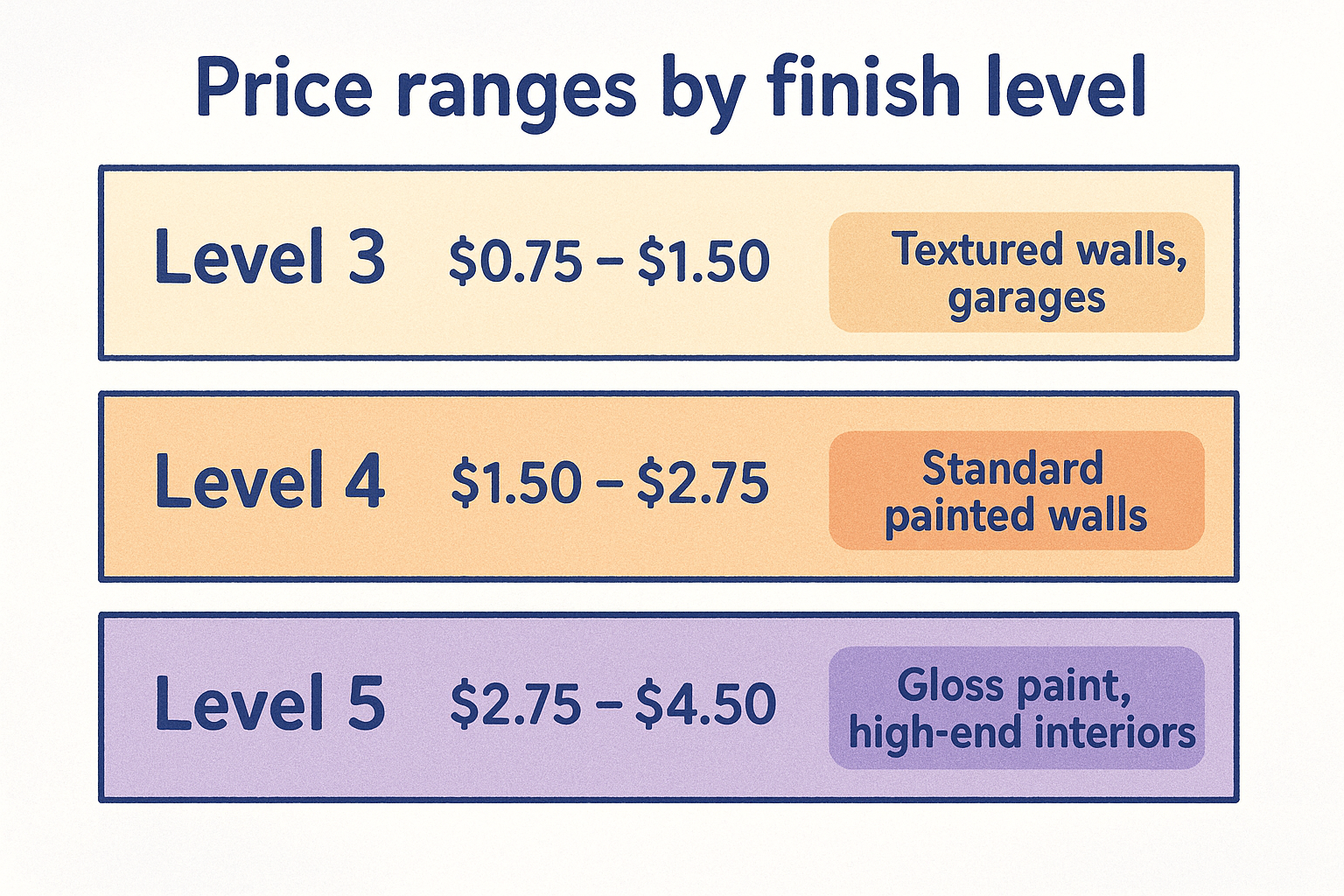
Your finish level is the fastest way to set a realistic budget before you call a single contractor. The table below reflects current 2026 labor-inclusive rates for residential projects in California.
| Finish Level | Cost Per Square Foot | Typical Use Case |
|---|---|---|
| Level 3 | $0.75 - $1.50 | Textured walls, garages |
| Level 4 | $1.50 - $2.75 | Standard painted walls |
| Level 5 | $2.75 - $4.50 | Gloss paint, high-end interiors |
Level 5 finishing is labor-intensive work, and its cost reflects that. Applying it where you only need Level 4 is one of the most common ways homeowners overspend on drywall projects.
What those rates include
Most contractors bundle taping, mudding, and sanding into their per-square-foot rate for finishing. What that rate typically does not include is primer or paint , texture application, or repairs to existing damage. When you review a quote, confirm exactly which steps are covered so you're comparing numbers on equal terms.
Drywall finish levels and when each one makes sense
Not every room needs the same quality of finish, and choosing the wrong level in either direction costs you money. Matching the finish level to the room's actual use keeps your drywall finishing cost per square foot in check without sacrificing results where quality matters.
Level 3: textured walls and utility spaces
Level 3 finishing involves one coat of joint compound over tape, followed by a finish coat. It leaves a surface ready for heavy textures like orange peel or knockdown , which hide any minor imperfections underneath. This level works well for garages, utility rooms, or any wall that will get a texture applied before painting.
Level 4: the standard for most homes
Level 4 is the go-to finish for standard interior walls and ceilings that will be painted with flat or low-sheen paints. It includes an additional coat of compound beyond Level 3 and thorough sanding. Most residential remodels and new construction projects land here because it balances quality and cost effectively.
Specifying Level 4 when you only need Level 3 is a straightforward way to add unnecessary cost to a project without a visible payoff.
Level 5: when the surface needs to be perfect
Level 5 adds a full skim coat over the entire surface after sanding. You need this level when using high-gloss or semi-gloss paint , or when light will hit the wall at a sharp angle and reveal any imperfection.
How to estimate your drywall finishing cost
Running your own estimate before you call a contractor gives you a real number to compare against the quotes you receive. Two pieces of information drive the calculation: your total square footage and the finish level you need for the project.
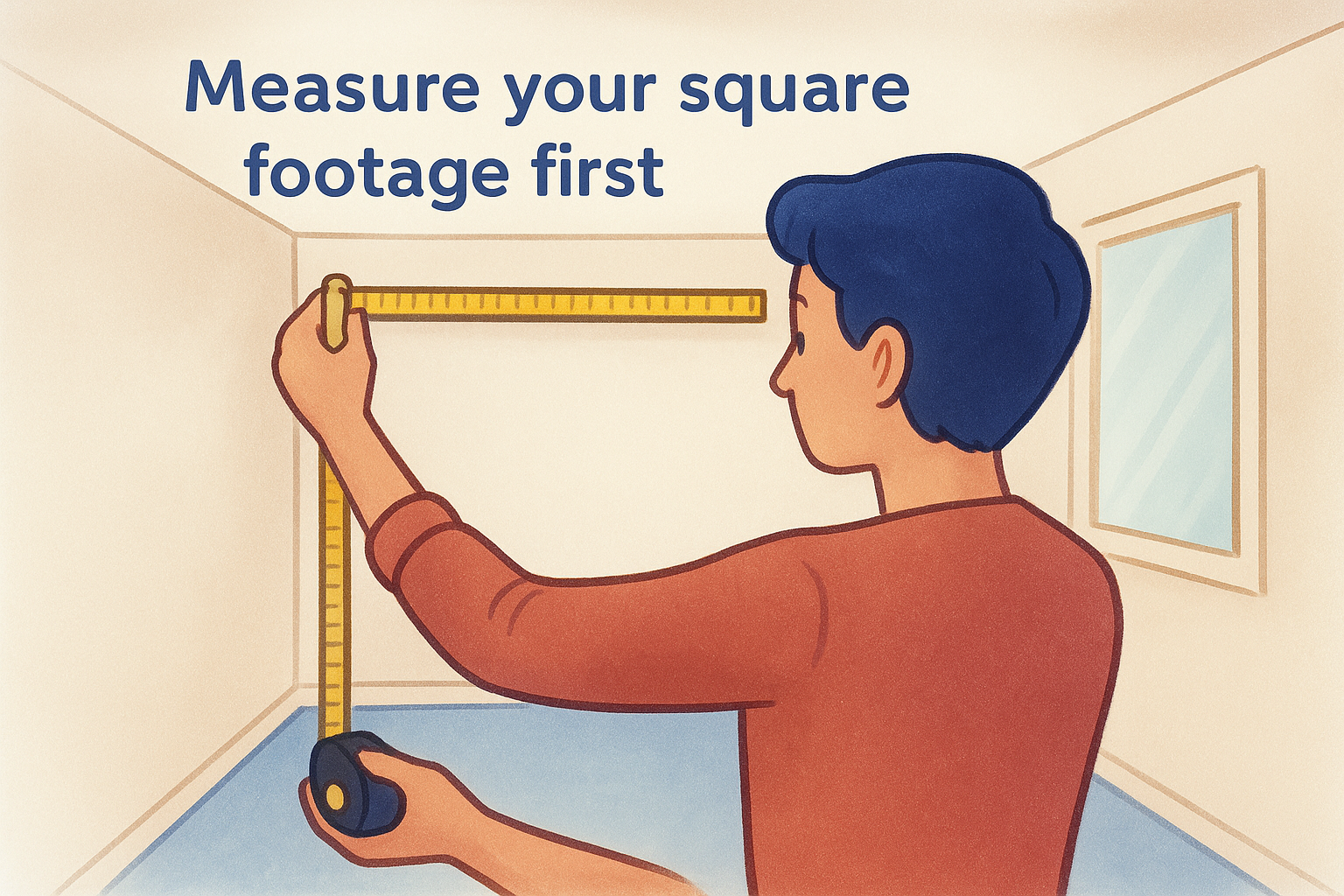
Measure your square footage first
Calculate the square footage of every wall and ceiling surface that needs finishing. Multiply the length by the height for each wall, then add those figures together. For ceilings, multiply room length by room width . Do this for every room in the project and add a 10% buffer to account for waste and overlap in the finishing process.
Skipping the buffer is one of the most common estimation mistakes homeowners make, and it almost always leads to a higher final invoice than expected.
Build your number from the rate up
Once you have your total square footage, apply the rate from the finish level your project requires. If you need Level 4 finishing for a standard painted interior, multiply your square footage by a rate between $1.50 and $2.75 . For a 1,000-square-foot project, that puts your finishing labor estimate between $1,500 and $2,750. Running this math before any contractor visit helps you identify quotes that are out of range on either end and ask better questions when you do.
Extras that change the final price
Your base drywall finishing cost per square foot covers taping, mudding, and sanding, but several add-ons show up regularly on final invoices that homeowners don't anticipate. Knowing these line items in advance lets you budget more accurately and verify that each charge on your quote is legitimate.
Texture application
Texture is almost always priced separately from finish work because it requires different materials and a distinct application process. Common textures like orange peel, knockdown, or skip trowel each add roughly $0.50 to $1.25 per square foot on top of your base finishing rate. If you're matching an existing texture in one room, expect the rate to sit toward the higher end since blending takes extra time to get right.
Specifying your texture type in writing before work begins prevents disputes about materials and labor once the project is underway.
Primer and repair work
Primer application after finishing runs between $0.25 and $0.60 per square foot and is worth including in your scope if your contractor offers it, since a properly primed surface holds paint better and extends the life of the finish. Pre-existing damage , like patched sections, old water stains, or mismatched compound work from prior repairs, will add prep time that your contractor bills separately. Ask your contractor to identify any repair work during the estimate walkthrough so those costs land on the quote, not as a surprise charge mid-project.
Next steps
You now have the numbers, the level breakdowns, and the line items to build a solid budget before any contractor sets foot in your home. Knowing your finish level and total square footage puts you in control of the conversation instead of taking a quote at face value. The drywall finishing cost per square foot only looks complicated until you break it into the components covered in this guide.
From here, the smartest move is to get a professional walkthrough of your specific project. Conditions in your home, ceiling height, existing damage, and texture requirements all affect your final number in ways that a general estimate cannot fully capture. Getting a free in-home estimate removes that uncertainty and gives you a real figure to work with.
Request a free estimate from Super Shooters and get a clear quote from a licensed contractor with 30+ years of experience across the Sacramento Valley.