Share this article

April 30, 2026

Ceiling Drywall Installation Cost: 2026 Price Breakdown

Planning a ceiling project starts with one big question: what's it going to cost? The ceiling drywall installation cost for most homes in 2026 falls between $2 and $5 per square foot, but the final number depends on your ceiling height, room size, material choices, and local labor rates. Without a clear breakdown, it's easy to get blindsided by a quote, or worse, overpay for a straightforward job .

At Super Shooters, we've installed and repaired drywall ceilings across more than 10,000 projects in the Sacramento Valley over the past 30+ years. That experience has given us a sharp understanding of what drives pricing up, what keeps it reasonable, and where homeowners can make smarter decisions. We built this guide to share that knowledge with you, no sales pitch, just real numbers .

Below, you'll find a full cost breakdown covering materials, labor, room-by-room estimates, and the factors that shift your total in either direction. Whether you're finishing a garage, building out an ADU, or replacing a damaged ceiling, this article gives you the pricing context you need before requesting quotes. Let's get into the actual numbers .

Why ceiling drywall costs more than wall drywall

When contractors price a ceiling job, they're not just charging more because they can. Ceiling drywall installation cost runs higher than wall work for specific, practical reasons tied to physics and safety. Every sheet of drywall has to go up instead of across, and that single difference changes how long the job takes, how many people it requires, and what equipment gets involved .

Working overhead changes the labor equation

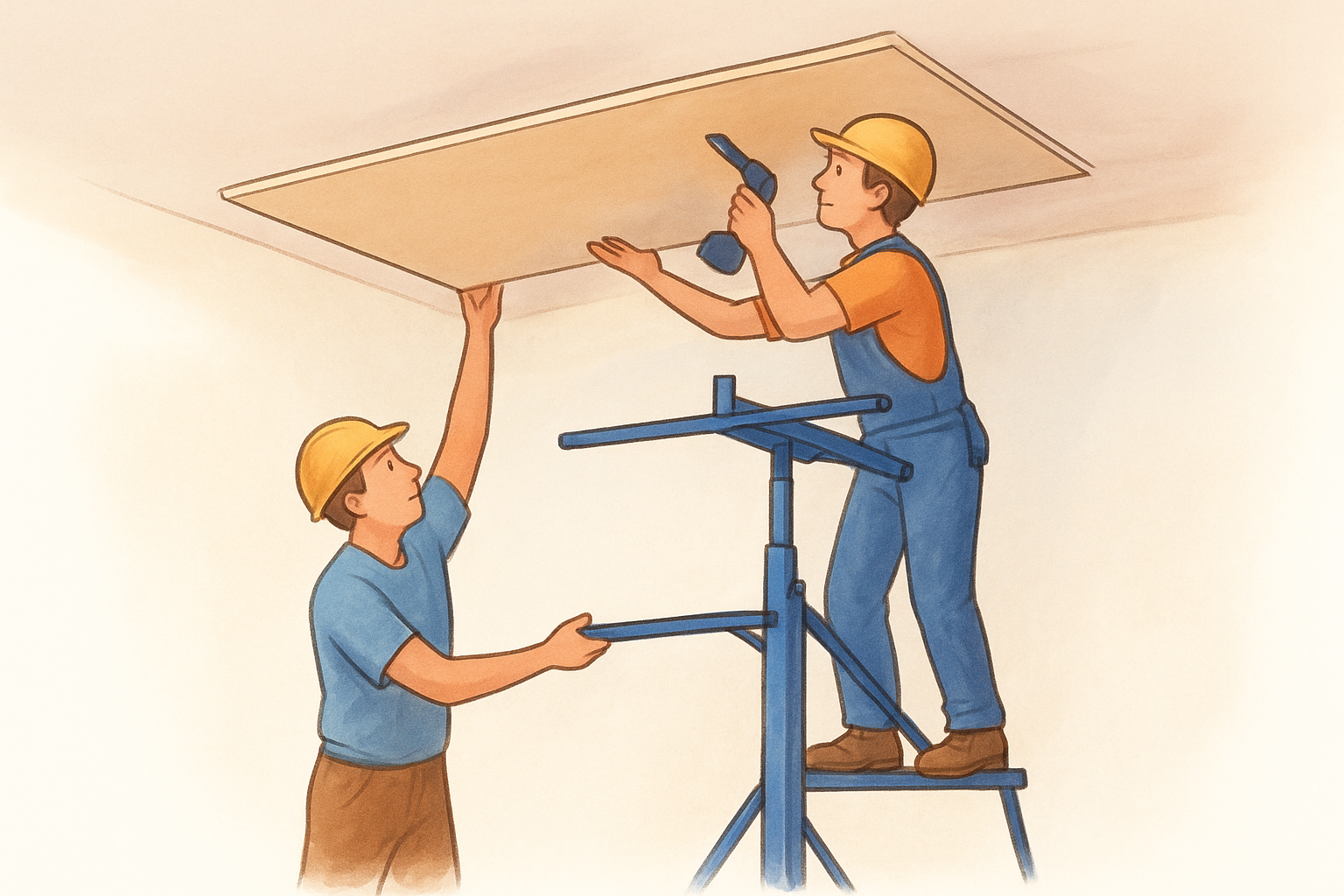
Lifting and holding a 4x8 sheet of drywall against a ceiling while someone fastens it is a two-person job at minimum. Most experienced crews use a drywall lift , a mechanical device that holds the panel in place so workers can fasten it without straining or losing control. That equipment costs money to own or rent, and it takes time to set up and move between positions. Labor typically accounts for 50% to 70% of your total ceiling drywall cost , and the overhead nature of the work is the main reason that percentage stays high. Fatigue also matters: ceiling work slows crews down compared to wall installation, which adds hours to the job.

Overhead drywall installation typically takes 30% to 50% longer per square foot than vertical wall work, which directly affects your labor bill.

Ceiling height and access requirements

Standard 8-foot ceilings still require scaffolding or sturdy staging, but vaulted or cathedral ceilings above 10 feet introduce a different level of complexity . Taller ceilings need taller scaffolding, more frequent repositioning, and in some cases, specialized lift extensions. Your crew spends more time moving equipment and less time actually fastening drywall, which drives up the hours billed. Any ceiling above 9 feet typically adds $0.50 to $1.50 per square foot to your labor cost, depending on how high and how complex the shape is.

Angled or coffered ceiling designs compound the problem further. Each change in plane requires precise cuts, separate framing runs, and additional taping and finishing at inside and outside corners . Straight, flat ceilings are the most affordable because the workflow is predictable and repeatable. The moment you introduce angles or soffits, you add custom labor that can push a project well past initial budget expectations . Keeping your ceiling design simple is one of the most effective ways to control your overall cost if your budget is tight.

2026 average cost per square foot and typical ranges

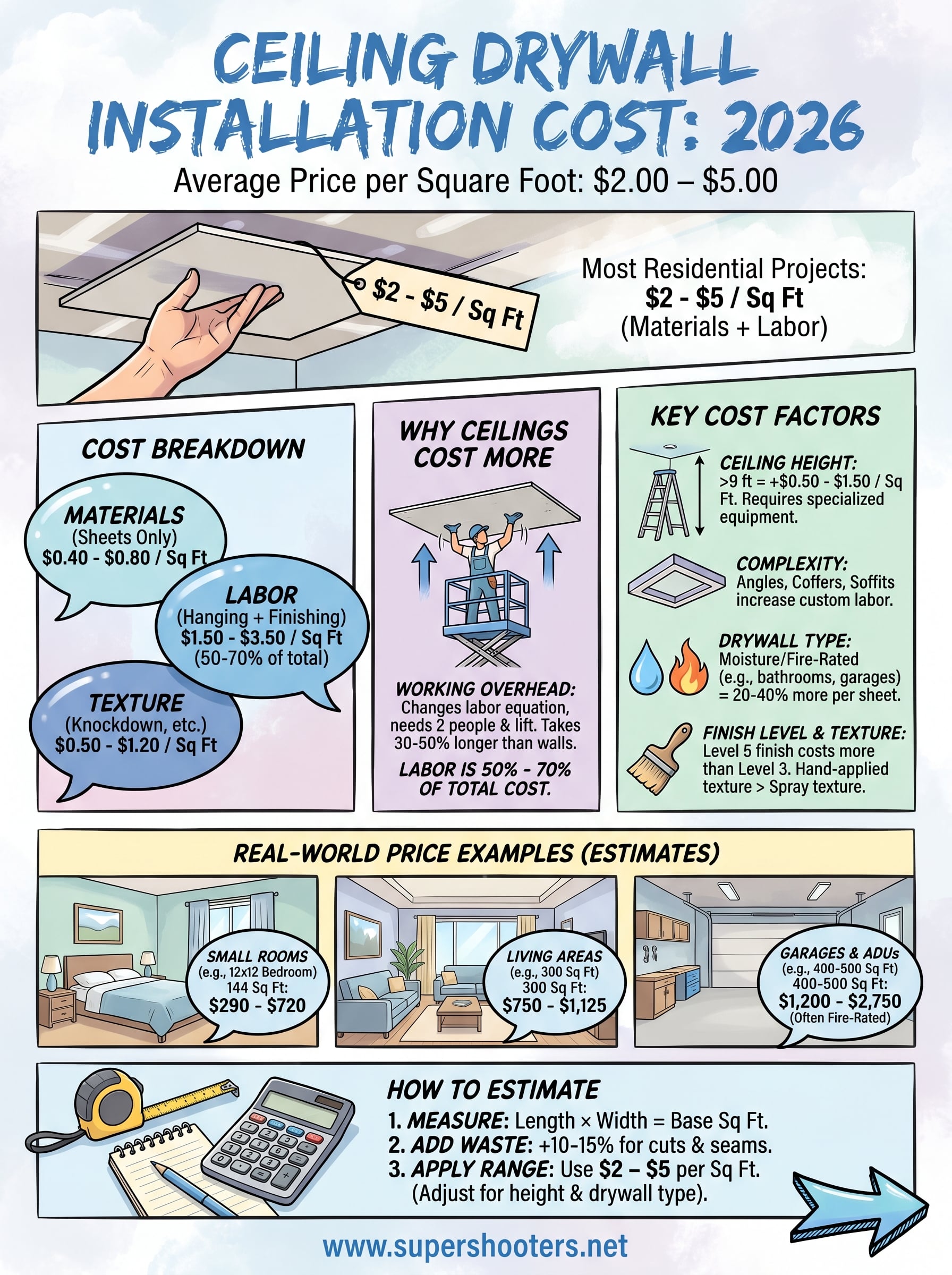
The ceiling drywall installation cost in 2026 sits between $2.00 and $5.00 per square foot for most residential projects when you combine materials and labor. That range covers standard flat ceilings in typical home conditions. Where your project lands within that range depends on ceiling height, drywall thickness, and your local contractor market.

What the per-square-foot breakdown looks like

Materials and labor each carry their own share of the total cost. Understanding both helps you verify whether a quote is reasonable before you sign anything.

Cost Component Low End High End
Drywall sheets (materials only) $0.40/sq ft $0.80/sq ft
Labor (hanging + finishing) $1.50/sq ft $3.50/sq ft
Texture application $0.50/sq ft $1.20/sq ft
Combined total estimate $2.00/sq ft $5.50/sq ft

Texture adds meaningful cost to any ceiling job, and many homeowners forget to budget for it. If your ceiling needs a knockdown, orange peel, or smooth finish after the drywall goes up, factor that in from the start so the final invoice doesn't surprise you.

In the Sacramento Valley, mid-range ceiling drywall projects typically land between $2.50 and $3.75 per square foot for standard 8-foot flat ceilings with basic texture.

When costs push toward the higher end

Prices climb past $4.00 per square foot when ceiling height exceeds 9 feet , the layout is complex, or the job requires specialty drywall like moisture-resistant or Type X fire-rated board. Repairs to existing ceilings can also run higher per square foot than new installation because the crew has to work around obstacles and match existing textures. Simple, open rooms with standard heights keep your costs predictable and toward the lower end of the range.

What drives your final price on a drywall ceiling

Knowing the average ceiling drywall installation cost is useful, but understanding what moves that number is what actually protects your budget. Several variables combine to set your final invoice, and some of them are within your control before you ever contact a contractor.

Drywall type and thickness

Standard half-inch drywall covers most residential ceiling applications and costs the least. Thicker 5/8-inch board runs slightly higher in material cost but provides better sag resistance, which matters for ceilings where the framing spans wider distances. If your space requires moisture-resistant or fire-rated drywall , such as in a garage, bathroom ceiling, or between attached living areas, expect to pay 20% to 40% more per sheet than standard pricing.

Choosing the right drywall type upfront prevents costly replacements later, especially in moisture-prone areas like bathrooms and garages.

Your project square footage scales directly with the number of sheets required. Waste from cuts and seams typically adds 10% to 15% to your material count , so contractors always order beyond the raw measurements. Building that overage into your estimate from the start avoids mid-project surprises that push your total higher.

Finishing level and texture

Drywall finishing runs on a scale from Level 0 (bare boards, no tape) to Level 5 (skim-coated, paint-ready smooth surface). Most residential ceilings land at Level 4 or Level 5 , with each step up requiring additional labor time and more compound applications. A Level 5 finish costs noticeably more than Level 3 because it involves extra coats and sanding passes before the surface is paint-ready.

Texture type also shifts your price. Knockdown and orange peel textures apply faster than hand-applied skip trowel finishes, which require a skilled applicator and more time per square foot. Picking a simpler texture keeps your labor hours lower without sacrificing a quality final look.

Real-world price examples by room size and scenario

Averages only tell part of the story. Seeing how those numbers apply to actual room sizes gives you a more grounded sense of what your specific project will cost before you pick up the phone and request a quote.

Small rooms: bedrooms and bathrooms

A standard 12x12 bedroom ceiling covers 144 square feet , which puts your total ceiling drywall installation cost in the $290 to $720 range at $2.00 to $5.00 per square foot. Bathrooms fall in a similar footprint but typically cost more per square foot because moisture-resistant drywall is required , which raises your material cost 20% to 40% above standard board pricing.

Room Sq Ft Low Estimate High Estimate
10x10 bedroom 100 sq ft $200 $500
12x12 bedroom 144 sq ft $290 $720
8x10 bathroom 80 sq ft $200 $500

Living rooms and open areas

Living rooms and open-concept spaces typically run 200 to 400 square feet of ceiling area , putting your total between $400 and $2,000 depending on ceiling height and finish level. Rooms with vaulted ceilings push toward the high end of that range because of the extra labor, scaffolding repositioning, and cut-heavy panel installation involved.

A 300 square foot living room with a standard 8-foot flat ceiling and knockdown texture typically lands between $750 and $1,125 in the Sacramento Valley.

Garages and ADU projects

Garages and accessory dwelling units involve larger open spans and often require fire-rated Type X drywall , both of which push your per-square-foot cost above standard residential work. A two-car garage ceiling runs roughly 400 to 500 square feet , putting your realistic estimate between $1,200 and $2,750 depending on drywall type, finish level, and site access conditions.

How to estimate your ceiling drywall job before you call

Running a rough estimate before you contact a contractor puts you in a much stronger position during any conversation about price. A basic self-estimate helps you spot unreasonable quotes and understand where your ceiling drywall installation cost is likely to land before anyone sets foot in your home.

Measure your ceiling accurately

Start by measuring the length and width of each room you want to work on, then multiply those two numbers together. That square footage is your baseline for every cost calculation that follows. Add 10% to 15% on top of your raw square footage to account for waste from cuts, seams, and damaged sheets during installation. For example, a 15x20 foot room gives you 300 square feet, but your material estimate should use 330 to 345 square feet to stay accurate.

Measuring every room individually and noting ceiling heights before you call a contractor saves time and helps you get faster, more accurate quotes.

Build your estimate line by line

Once you have your adjusted square footage, apply the cost ranges covered earlier in this guide. Use $2.00 per square foot as your low-end floor and $5.00 as your high-end ceiling for standard residential work. If your ceilings exceed 9 feet or you need specialty drywall, shift your estimate toward the higher end. Write out each component separately:

  • Materials: $0.40 to $0.80 per square foot
  • Labor (hang and finish): $1.50 to $3.50 per square foot
  • Texture: $0.50 to $1.20 per square foot if applicable

Bringing this written estimate to your contractor conversation gives you a reference point to compare against incoming quotes. If a bid comes in significantly higher than your estimate without a clear explanation , ask for a line-item breakdown before you commit.

Next steps

You now have everything you need to understand ceiling drywall installation cost before a contractor sets foot in your home. You know the typical price ranges, what pushes your total higher, and how to build a room-by-room estimate that holds up against real quotes. That knowledge puts you in a far better position to make smart decisions and avoid overpaying for straightforward work.

Bringing accurate measurements and a written estimate to your first conversation with a contractor shortens the process and filters out vague or inflated bids. If your project is in the Sacramento Valley , Super Shooters offers free in-home consultations with no upfront payment required until the job is complete. With 30+ years of experience across more than 10,000 projects, the team gives you a clear, honest quote based on what your ceiling actually needs. Request your free estimate from Super Shooters and get your project moving with a contractor you can trust.

Recent Posts

April 30, 2026
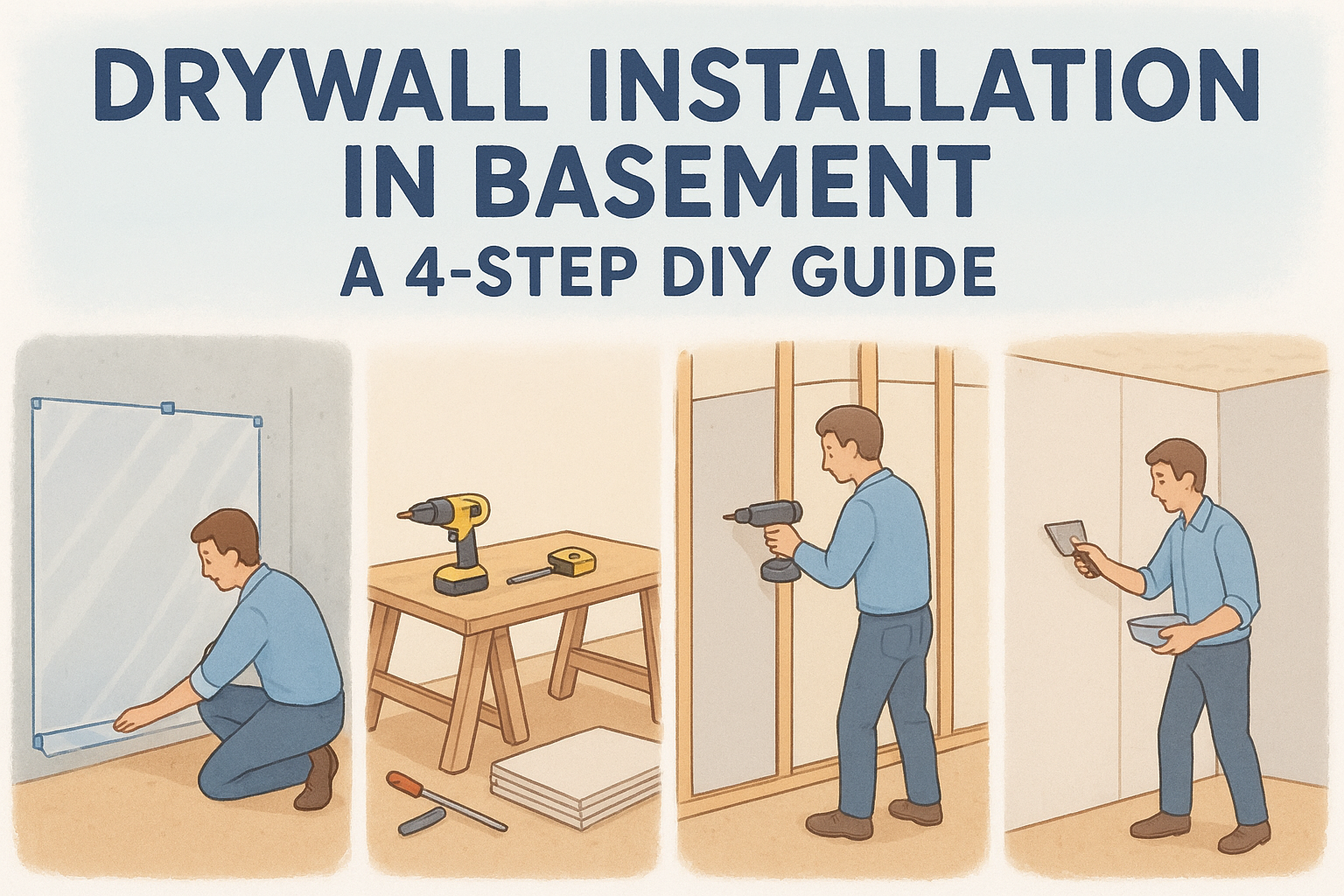
Learn how to install drywall with this step-by-step guide. We cover measuring, cutting, and hanging panels on walls and ceilings for a flawless finish.