August 1, 2026
What Causes Cracks in Walls? Common Reasons Explained
You noticed a new crack running across your living room wall, and now you're wondering if it's something to worry about. Understanding what causes cracks in walls is the first step to figuring out whether you're looking at a cosmetic nuisance or a warning sign. Most homeowners in the Sacramento Valley deal with this at some point, especially in older homes where settling foundations and shifting soil are common.
The short answer: wall cracks come from a handful of sources, ranging from normal house settling and temperature swings to more serious issues like foundation movement or water damage. Hairline cracks in drywall seams are usually harmless. Diagonal cracks near doors and windows, or ones that keep widening, often point to structural problems that need attention before you patch anything.
In this article, we break down the most common reasons walls crack, show you how to tell the difference between cosmetic and structural damage, and walk through what fixing them actually involves. After 30 years repairing walls across Sacramento, Roseville, Folsom, and beyond, we've seen just about every type of crack a house can produce, and we'll share what that experience taught us.
Why wall cracks matter for your home's safety
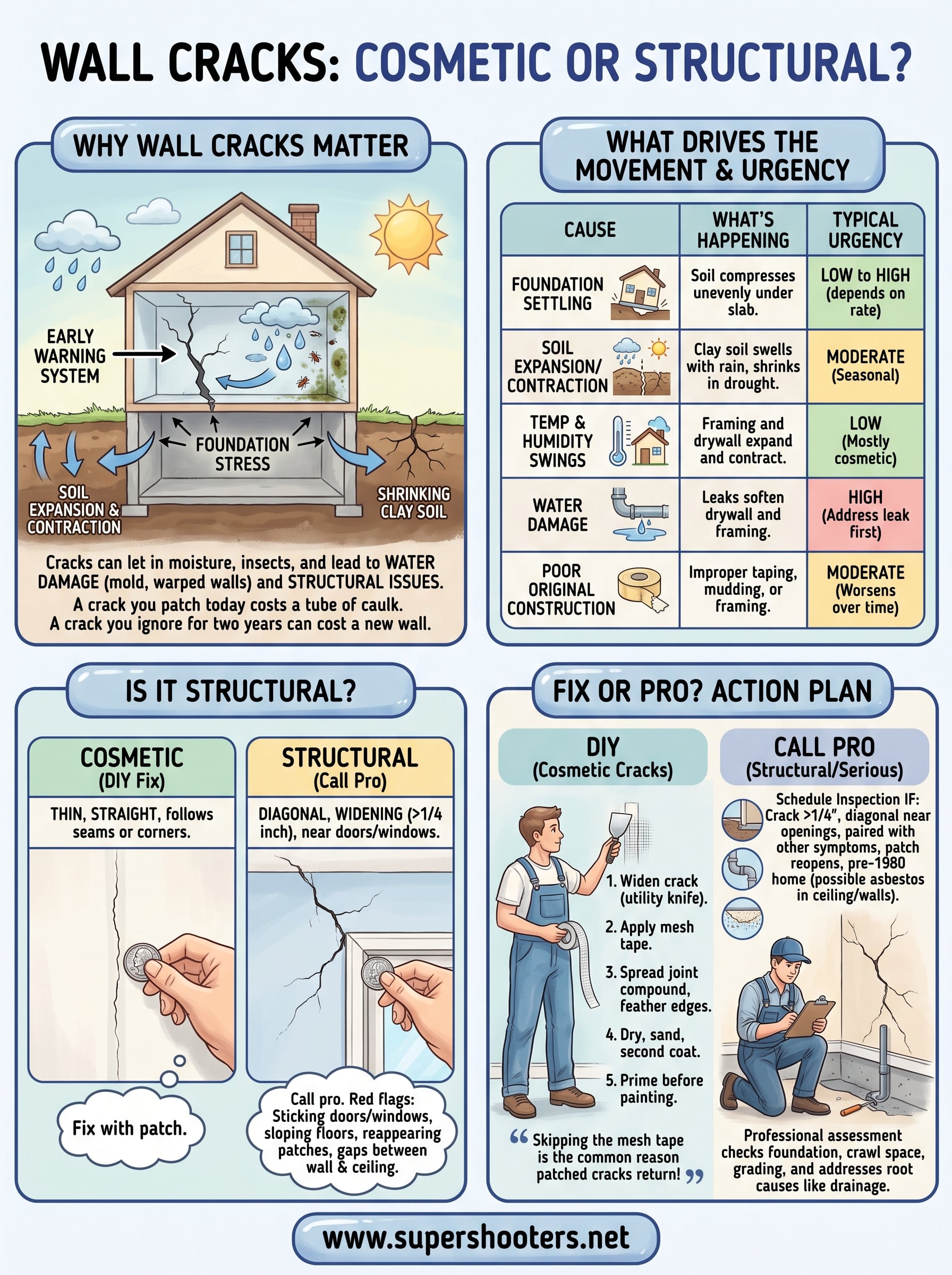
Ignoring a crack because "it's probably nothing" is how small problems become expensive ones. Wall cracks matter because they're often the first visible sign of what's happening inside your home's structure, whether that's normal wood shrinkage or a foundation slowly shifting under the weight of the house. In the Sacramento Valley, expansive clay soil swells when it rains and shrinks during our long dry summers, putting constant stress on foundations that homes in other regions never experience.
Cracks as an early warning system
Left alone, a hairline crack can widen enough to let moisture, insects, and even rodents into your wall cavities. Water intrusion through a widening crack leads to mold growth, warped drywall, and eventually the kind of water damage that requires full wall restoration rather than a simple patch job. This is why we tell homeowners the crack itself is rarely the real cost. The damage it invites over months or years usually is.
A crack you patch today costs a tube of caulk. A crack you ignore for two years can cost a new wall.
What's actually driving the movement
Most cracks trace back to one of a handful of root causes, and knowing which one you're dealing with changes how urgent the repair really is.
| Cause | What's happening | Typical urgency |
|---|---|---|
| Foundation settling | Soil compresses unevenly under the slab | Low to high, depends on rate of widening |
| Soil expansion and contraction | Clay soil swells with rain, shrinks in drought | Moderate, seasonal and recurring |
| Temperature and humidity swings | Framing lumber and drywall expand and contract | Low, mostly cosmetic |
| Water damage | Leaks soften drywall and framing | High, address the leak source first |
| Poor original construction | Improper taping, mudding, or framing | Moderate, worsens over time |
Each of these behaves differently, which is why we look at the pattern of a crack, not just its existence, before recommending a fix. A seam that cracks along the same joint every summer tells a different story than a jagged diagonal line spreading from a doorframe. The Federal Emergency Management Agency notes that soil movement is one of the most common causes of foundation-related damage in residential structures nationwide, and it's a pattern we see constantly in homes built on the clay-heavy lots common around Sacramento, Elk Grove, and Davis.
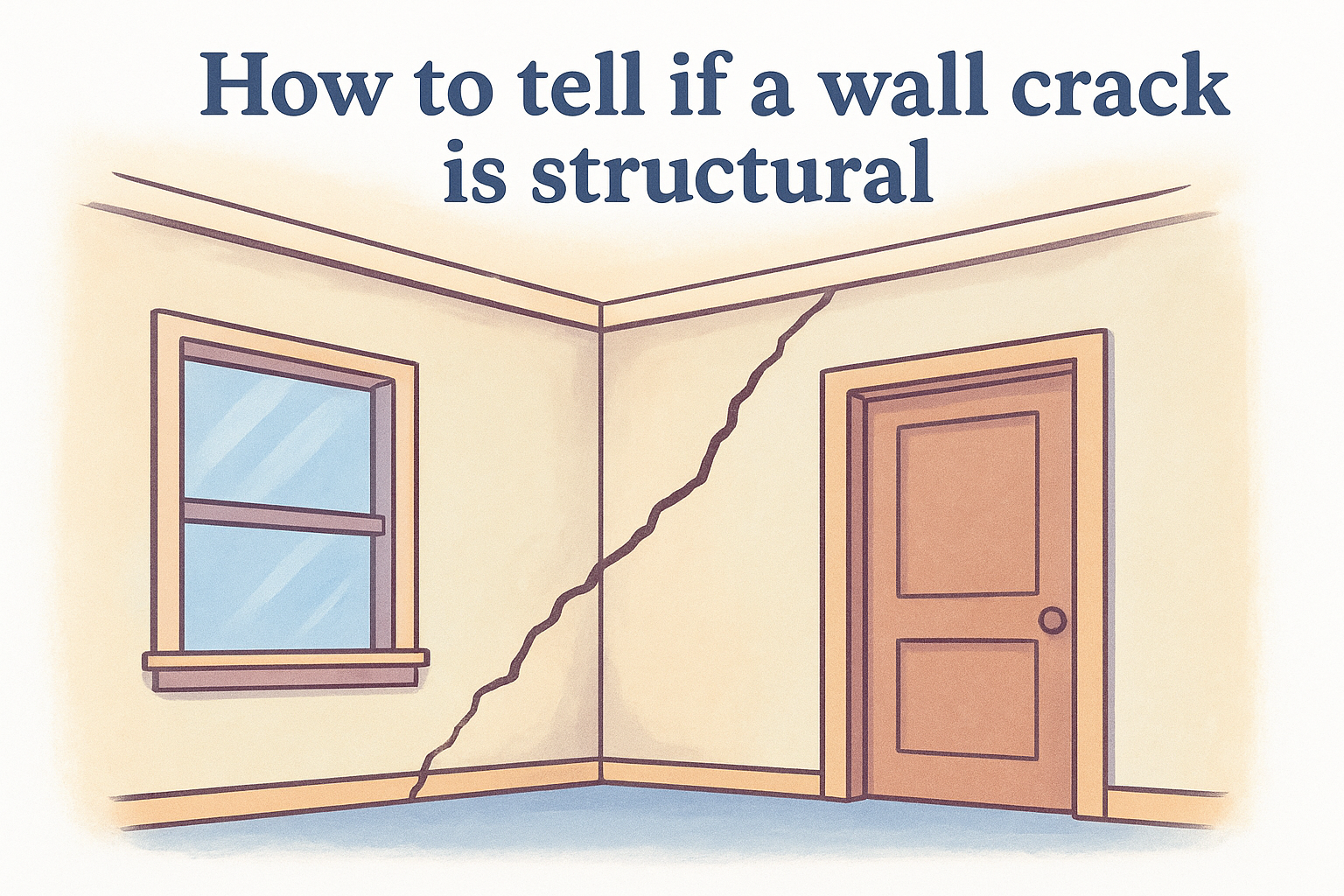
How to tell if a wall crack is structural
Not every crack means your foundation is failing, but certain patterns should send you straight to a professional inspection instead of a bucket of spackle. Structural cracks tend to run diagonally, often at a 45-degree angle from the corners of doors and windows, because that's where stress concentrates as a foundation shifts. Cosmetic cracks, by contrast, usually follow drywall seams in straight horizontal or vertical lines and stay thin no matter how long you watch them.
Width, shape, and location tell the story
Grab a coin or a tape measure before you decide anything. A crack wider than a quarter inch, or one you can slide a nickel into, has moved past cosmetic territory. Location matters just as much as width. Cracks near the top of a wall where it meets the ceiling often point to truss uplift or settling, while cracks that appear on both the interior wall and the matching exterior wall suggest the whole structure is moving, not just the drywall surface.
If you can fit a coin into the crack, it's time to call a professional, not grab a caulk gun.
Signs that confirm a structural problem
Beyond the crack itself, watch for these companion symptoms:
- Doors or windows that stick or won't latch properly
- Sloping or uneven floors near the cracked wall
- Cracks that reappear in the same spot after patching
- Gaps forming between the wall and ceiling or baseboard
- Cracks visible on both interior and exterior walls at the same location
Seeing two or more of these together is a strong signal that soil movement or foundation settling, not simple house settling, is behind the damage.
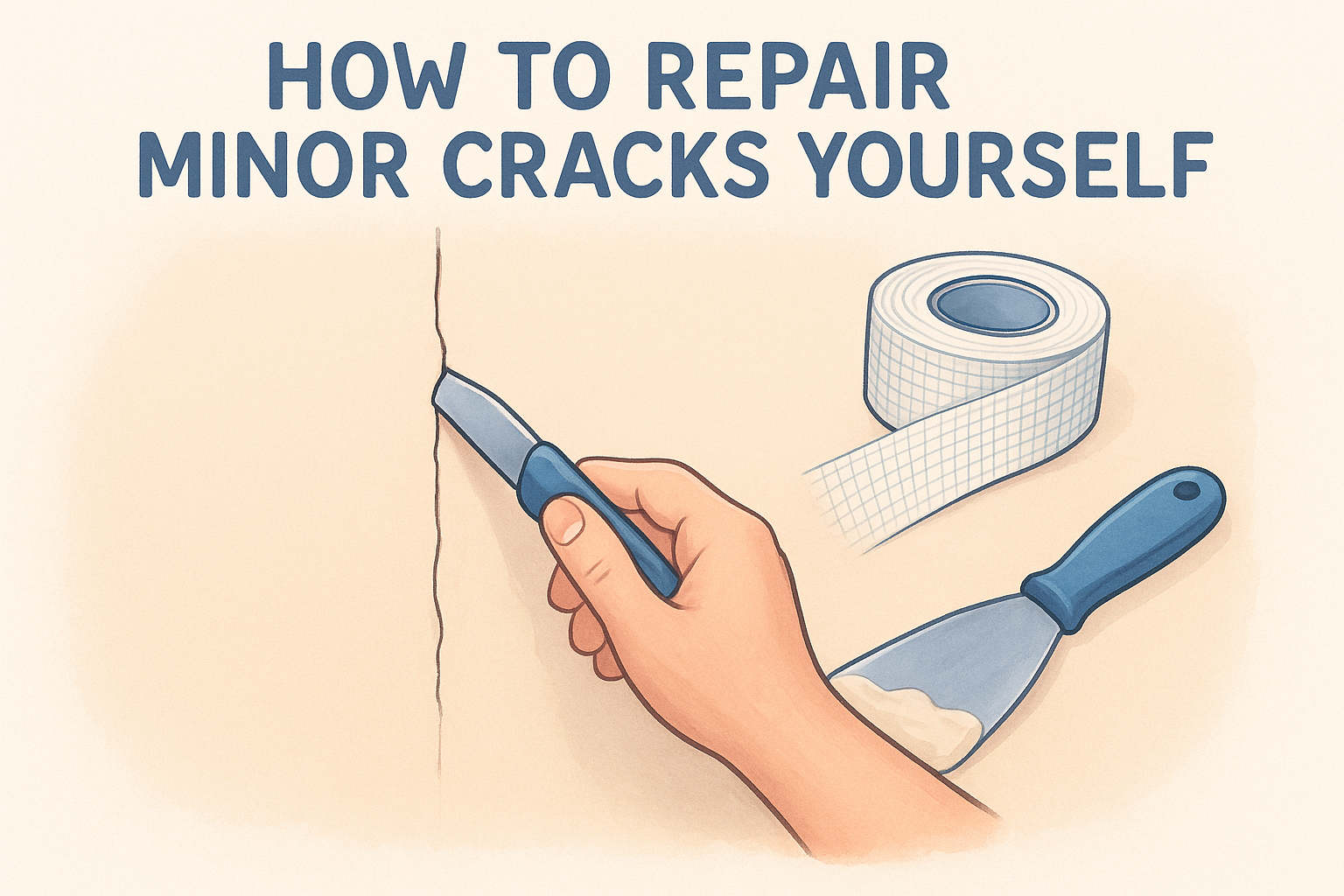
How to repair minor cracks yourself
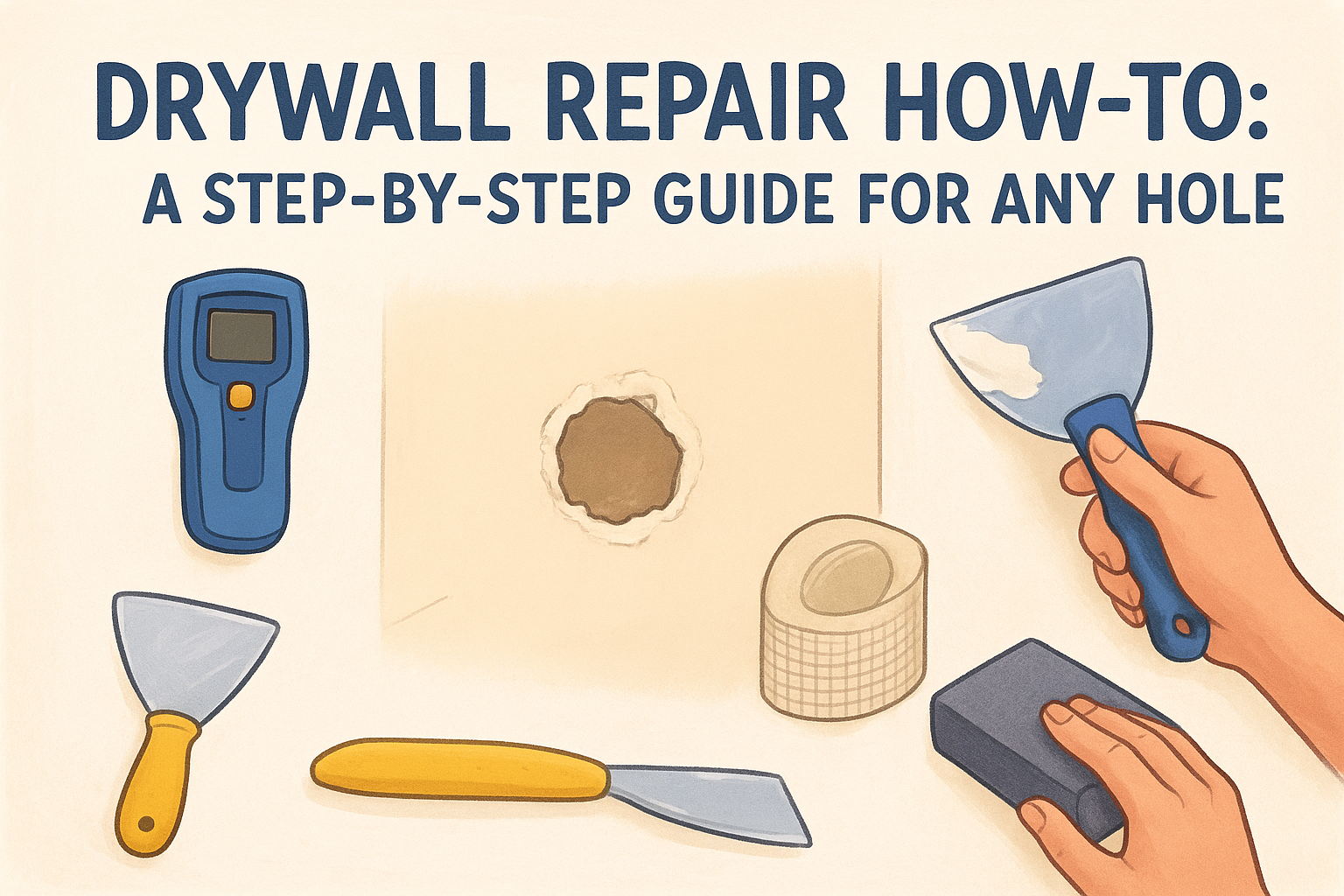
Once you've confirmed a crack is cosmetic, not structural, fixing it yourself takes an afternoon and under $30 in materials. Minor wall cracks in drywall respond well to a simple patch-and-paint process, and doing it right the first time means you won't be back at it next season.
Tools and materials for a clean patch
Gather everything before you start so the joint compound doesn't dry out mid-project:
- Utility knife to widen and clean the crack
- Paper or fiberglass mesh tape
- Lightweight joint compound (spackle works for hairline cracks)
- Putty knife, 6-inch and 10-inch
- 120-grit sanding sponge
- Primer and matching paint
Step-by-step for a lasting fix
Follow these steps in order, and don't rush the drying time between coats:
- Widen the crack slightly with the utility knife so the compound has something to grip.
- Apply mesh tape directly over the crack to prevent it from reopening.
- Spread a thin layer of joint compound over the tape, feathering the edges.
- Let it dry fully, then sand smooth and apply a second thin coat if needed.
- Prime the patch before painting so it doesn't flash under the finish coat.
Skipping the mesh tape is the single most common reason a patched crack comes right back.
Hairline cracks along drywall seams almost always hold after this process. If the same cosmetic crack returns within a few months despite a proper patch, that's your cue to stop treating it as cosmetic.
When to call a professional for wall cracks
Some cracks are beyond a DIY fix, no matter how good you are with a putty knife. Professional wall crack repair becomes the right call the moment a crack signals movement in the structure itself, not just the drywall surface. Waiting on these cracks rarely saves money. It usually just delays a bigger bill.
Red flags that mean it's time to call in an expert
Schedule an inspection if you notice any of the following:
- A crack wider than a quarter inch or one that's actively growing
- Diagonal cracks stretching from door or window corners
- Cracks paired with sticking doors, sloped floors, or ceiling gaps
- A patched crack that reopens in the same spot more than once
- Cracks in a home built before 1980, where acoustic ceilings or older wall materials may contain asbestos
Patching over a structural crack doesn't fix the problem. It just hides it until the next inspection finds it anyway.
What a professional assessment involves
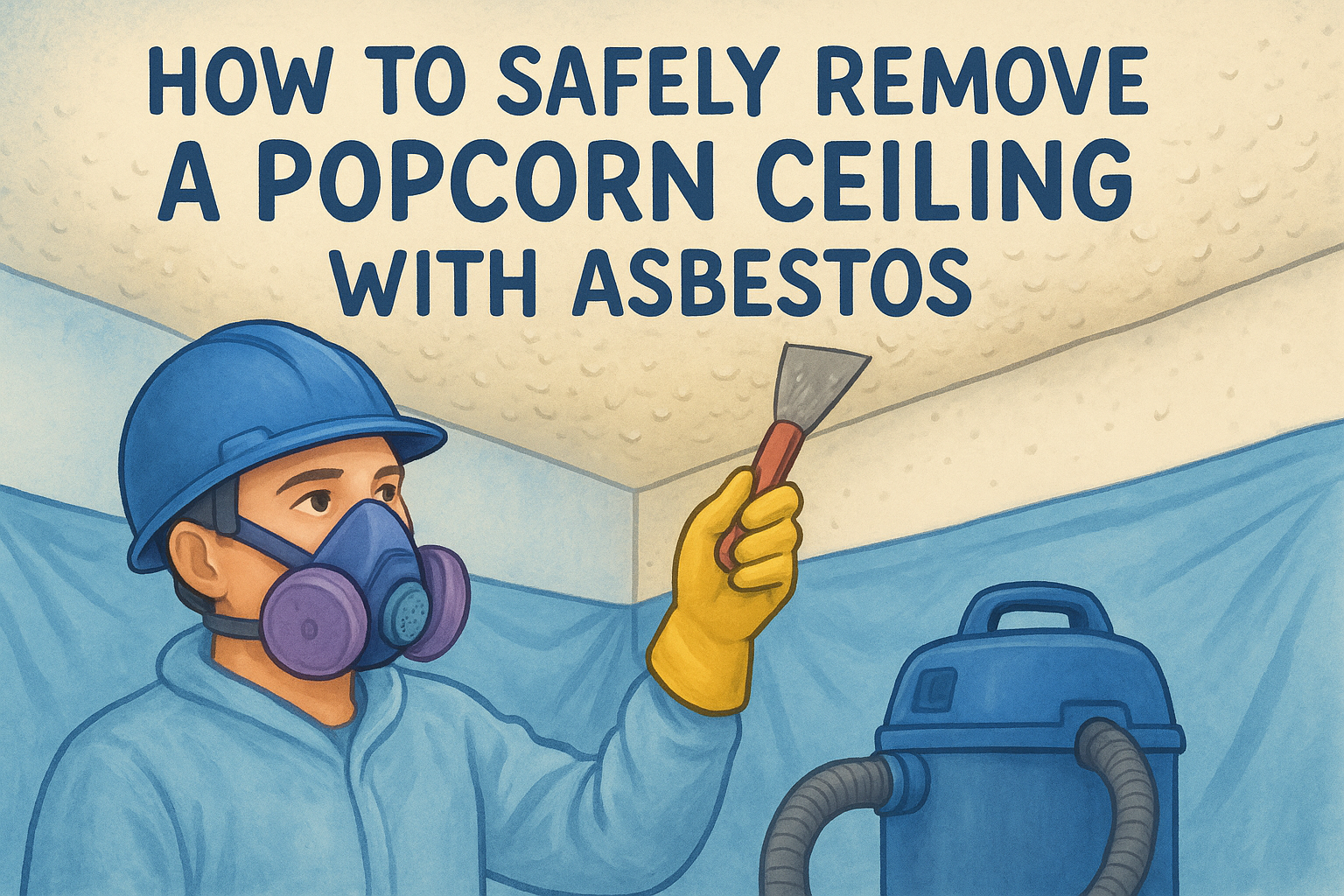
A proper inspection starts with tracing the crack back to its source, not just measuring the gap on the wall. Licensed contractors check the foundation, crawl space, and grading around the home before touching a repair, because a crack caused by drainage issues needs a different fix than one caused by seasonal soil shrinkage. Older Sacramento Valley homes add another wrinkle: popcorn ceilings and older drywall installed before the mid-1980s sometimes contain asbestos, which turns a simple crack repair into a job requiring asbestos abatement first. Trying to sand or cut into that material yourself risks exposing your household to fibers that a licensed team is trained and equipped to remove safely.
Staying ahead of wall cracks
Most cracks you'll find in your home come down to normal house movement, seasonal soil shifts, or aging drywall, not a foundation about to fail. The key is watching how a crack behaves over time. Cosmetic cracks stay thin and straight; structural cracks widen, angle, and bring along sticking doors or sloped floors. Knowing the difference saves you from either overreacting to a hairline seam or ignoring something that needed attention months ago.
Understanding what causes cracks in walls means you're never caught guessing when a new one shows up. Trust the width, the pattern, and the companion symptoms, not just your gut, before deciding whether it's a weekend patch job or a call to a licensed contractor.
If you're dealing with cracked, damaged, or aging drywall anywhere in the Sacramento Valley, get a free drywall repair estimate from a team that's fixed this exact problem for over 30 years.