Share this article

May 20, 2026

What Is Level 5 Drywall Finish? Process And When To Use It

Not every drywall job needs the same level of perfection, but some absolutely do. If you've been researching drywall finishing, you've probably come across the term "level 5 drywall finish" and wondered what makes it different from the standard finish most contractors stop at. The short answer: it's the highest quality finish available, and it exists to solve a specific problem that lower finish levels can't address .

A level 5 finish involves applying a thin skim coat over the entire drywall surface after taping and sanding, creating a perfectly uniform texture with zero visible imperfections. It's not always necessary, but when it is, like under harsh lighting or with glossy paint, skipping it leads to results that look uneven and unprofessional.

At Super Shooters, we've completed over 10,000 ceiling and wall projects across the Sacramento Valley in our 30+ years of business. We apply level 5 finishes regularly and know exactly when they're worth the investment and when a standard finish will do the job just fine. This article breaks down the full process behind a level 5 finish , how it compares to other levels, and the specific situations where it makes a real difference in your home.

Why drywall finish levels matter

The drywall industry uses a standardized system of finish levels (0 through 5) defined by the Gypsum Association to set clear expectations between contractors and homeowners. Each level specifies exactly how much work goes into the surface before it's considered complete. Understanding these levels helps you make informed decisions about what you're paying for and what you should expect when the job is done.

The five levels at a glance

Each level adds more work and produces a smoother, more refined result :

Level Description
Level 0 No finishing; used in temporary construction
Level 1 Tape set in joint compound; used in concealed spaces
Level 2 Tape embedded with one coat; used in garages or as a tile substrate
Level 3 Two coats over tape and fasteners; used under heavy texture
Level 4 Three coats; standard finish for most painted walls
Level 5 Full skim coat over entire surface; required for critical lighting or gloss paint

The level you choose directly affects how your walls look once painted, especially in rooms with large windows or overhead lighting.

How the finish level affects the final look

When you ask what is level 5 drywall finish, part of the answer comes down to how light behaves on a painted surface . Flat walls under raking or glancing light reveal every tape joint, fastener dimple, and tool mark hiding beneath the paint. Lower finish levels leave those imperfections in place, while a level 5 finish eliminates them by covering the entire surface with a uniform skim coat.

Your paint sheen also plays a direct role. Satin, semi-gloss, and gloss paints amplify surface variations because they reflect light at consistent angles, making every flaw visible. A level 4 finish that looks fine under flat paint can look rough and uneven once you apply a glossier product.

What defines a level 5 drywall finish

When people ask what is level 5 drywall finish , the defining feature is always a full skim coat applied over the entire drywall surface . This isn't extra sanding or another pass of compound over the seams. It's a thin, continuous layer of joint compound spread across every square inch of wall and ceiling, then sanded smooth once dry. No other finish level requires this step, which is what puts level 5 in its own category.

A skim coat doesn't just cover seams. It removes the surface variation that causes paint to look uneven under direct or angled light.

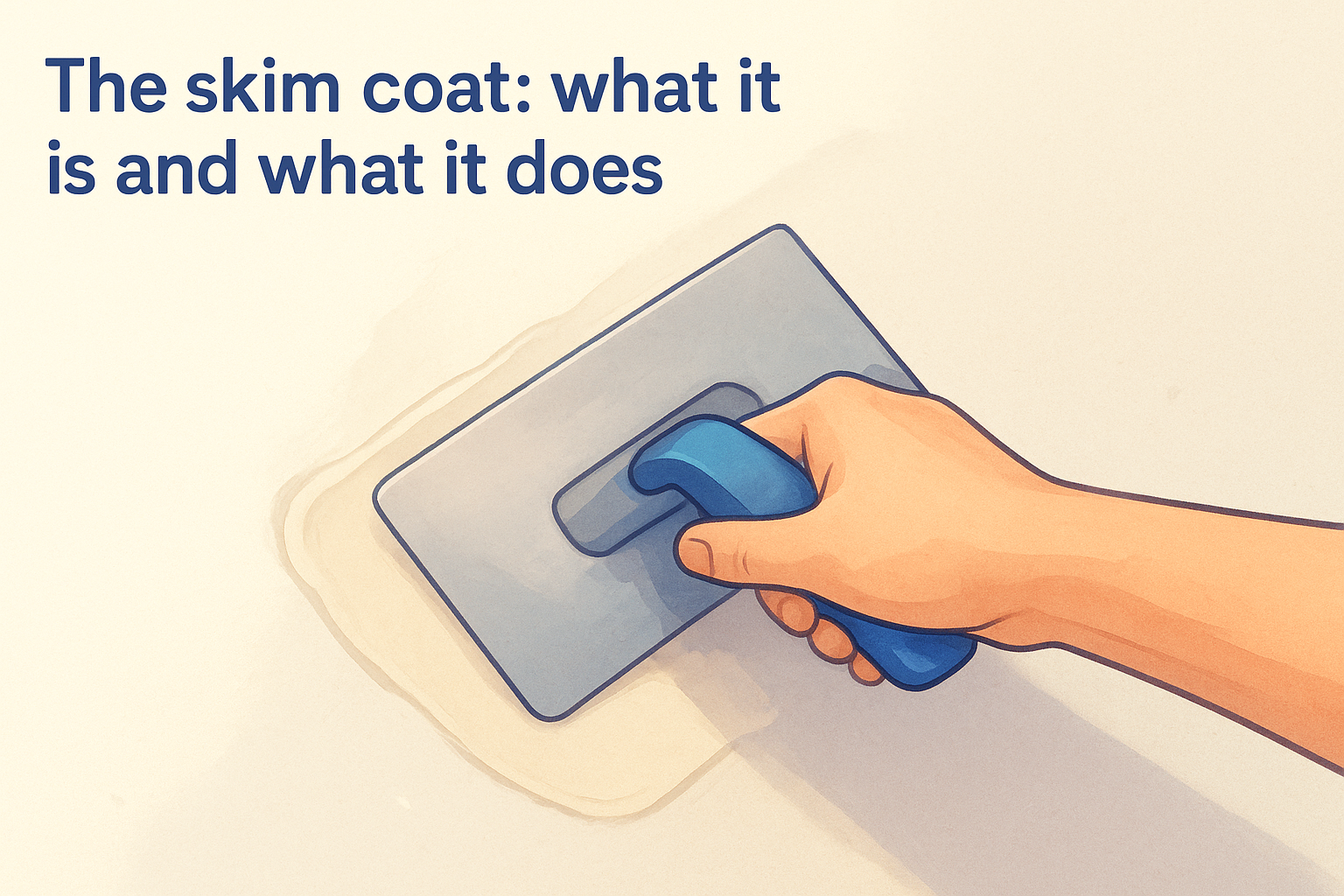
The skim coat: what it is and what it does

A skim coat runs 1/16 to 1/8 inch thick and covers everything, including tape joints, fastener dimples, and the drywall paper facing itself. This uniform layer eliminates texture differences between the taped seams and the flat panel fields, so paint applies and reflects light consistently across the whole surface.

Your finished walls and ceilings will have a glass-smooth feel with no ridges, lines, or visible seams. Running your hand across the surface, you'll notice zero variation in texture from one spot to the next. That uniformity is what separates level 5 from every finish level below it.

Level 5 vs level 4: the real differences

Level 4 is the standard finish for most residential walls, and it does the job well in most cases. It uses three coats of compound over tape and fasteners, sanded smooth. But understanding what is level 5 drywall finish versus level 4 comes down to how each finish performs under real-world conditions, not just how much work went into it.

What level 4 gives you

A level 4 finish leaves tape seams and fastener locations covered and sanded flat, but the surface still has subtle variations between taped areas and open panel fields. Under flat or matte paint , those differences stay hidden because flat paint diffuses light and doesn't emphasize texture changes. For most interior rooms with standard overhead lighting, level 4 works exactly as expected.

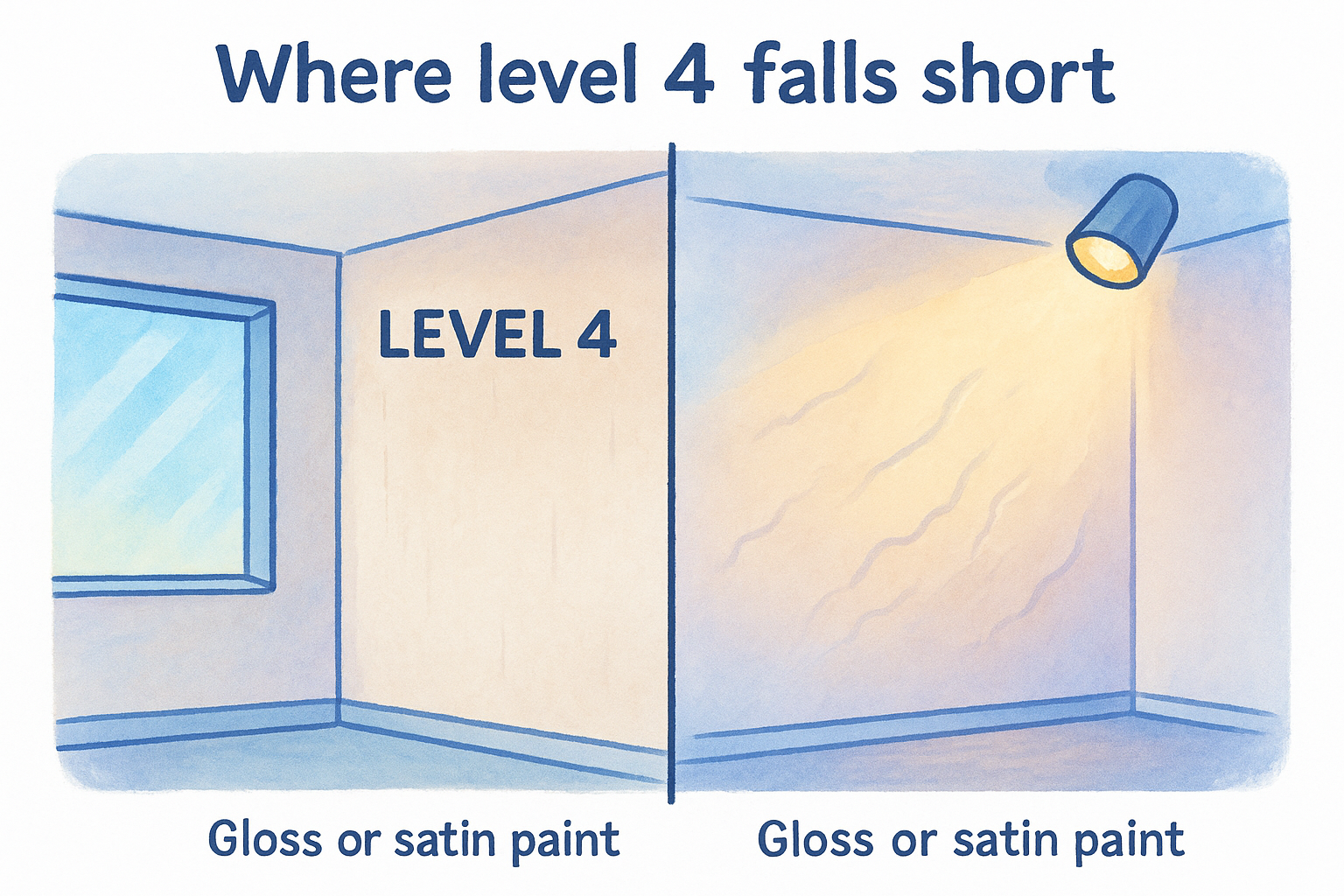
Where level 4 falls short

Problems appear when you introduce gloss or satin paint , large windows, or directional lighting like recessed fixtures mounted close to a wall. Those conditions create raking light that skims across the surface and exposes every ridge or texture change level 4 leaves behind. Level 5's full skim coat eliminates that variation, so your walls hold up under any lighting condition or paint sheen.

If you plan to use anything shinier than flat paint, level 4 will likely show imperfections that no amount of touch-up can fix after painting.

How to get a level 5 finish

Achieving what is level 5 drywall finish in practice means completing all standard taping and finishing steps first, then adding one more step on top. You don't skip straight to the skim coat. The surface must reach level 4 quality before the skim coat goes on, because the skim coat is not thick enough to hide poor prep work underneath.

The steps involved

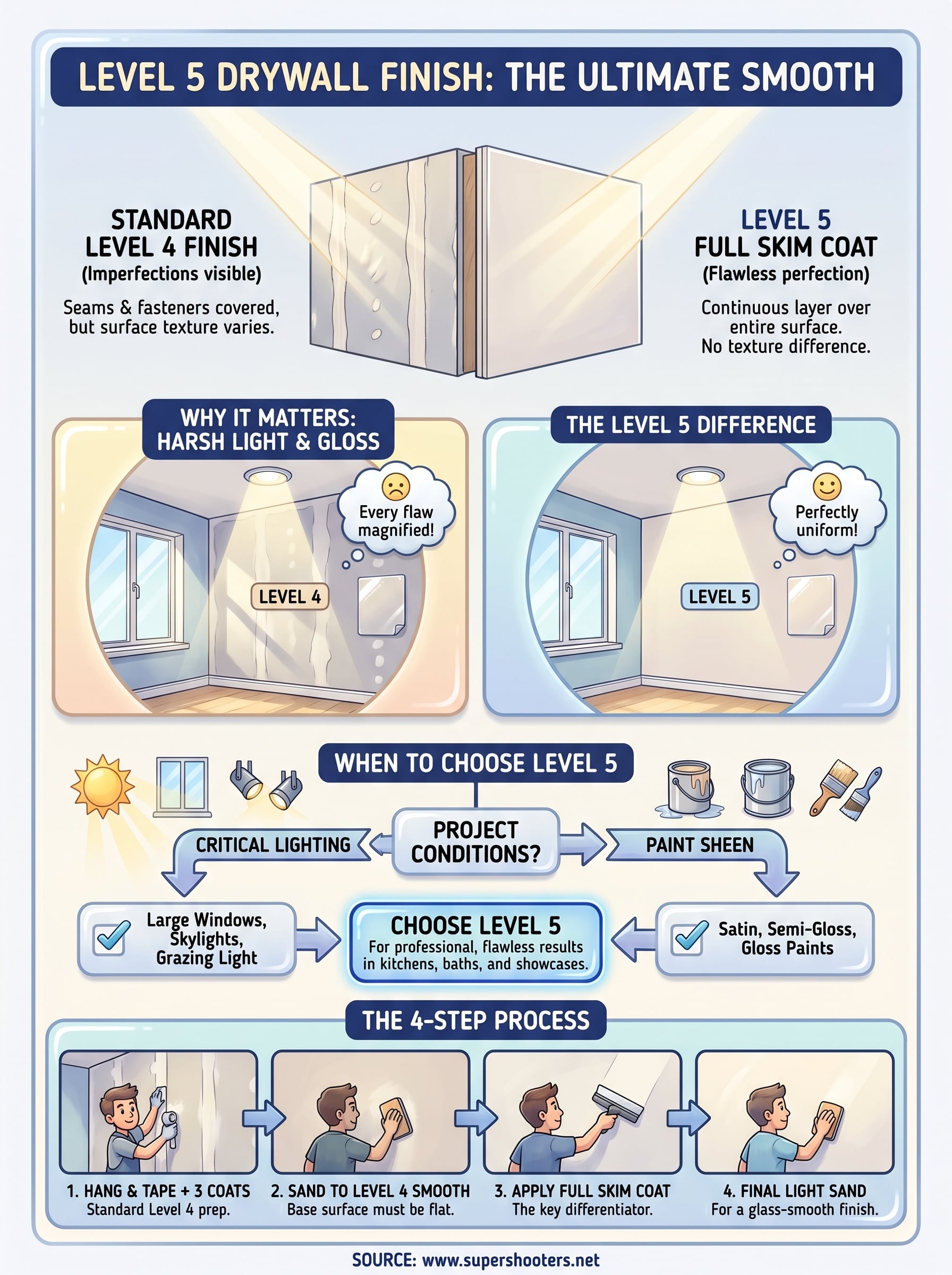
The process follows a clear, specific sequence that every experienced finisher uses to get consistent, professional results :

  1. Hang and tape the drywall, then apply three coats of joint compound over all seams and fasteners.
  2. Sand the surface smooth to a level 4 finish.
  3. Apply the skim coat using a broad knife or sprayer, spreading a thin, even layer of joint compound across the entire wall or ceiling surface.
  4. Sand the skim coat lightly once dry to remove any tool marks or ridges.

The skim coat must cover the full surface, not just problem areas, or you'll create new visible transitions once paint goes on.

Getting level 5 right takes real experience and technique . Uneven skim coat application creates its own set of problems, which is why most homeowners hire a professional finisher for this step rather than attempting it themselves.

When you should choose level 5

Knowing what is level 5 drywall finish is useful, but knowing when to use it is what prevents a disappointing result after painting. Two factors drive this decision: the lighting conditions in the room and the paint sheen you plan to apply. If either applies to your project, level 5 is the right call.

Skipping level 5 when conditions call for it means you'll only see the problems after the paint goes on, at which point the fix requires starting over.

Specific situations that call for level 5

Rooms with large windows, skylights, or wall-grazing recessed lighting are clear candidates for level 5. Directional or natural light hitting a wall at a low angle will expose every seam, fastener dimple, and surface variation that standard level 4 finishing leaves behind. These lighting conditions are common in open-concept living areas, master bedrooms, and home offices.

Satin, semi-gloss, and gloss paints also demand a level 5 surface underneath them. Applying these sheens over a level 4 finish almost always produces visible banding and seam shadows once the paint dries. Your kitchens, bathrooms, hallways, and formal living rooms often receive these sheens, which makes level 5 the smart default for those spaces.

Next steps for your walls and ceilings

Now you know what is level 5 drywall finish, how it's done, and the specific conditions that make it necessary. The decision comes down to two questions: what paint sheen are you planning to use and how much direct or angled light will hit your walls and ceilings ? If either answer points toward level 5, skipping it will cost you more to fix after painting than doing it right the first time would have.

Getting a level 5 finish right requires real experience. Uneven skim coat application creates its own visible problems, so this isn't a step to hand off to someone still building their skills. At Super Shooters , our team has over 30 years of experience finishing walls and ceilings for homeowners across the Sacramento Valley, and we offer free in-home estimates with no upfront payment required. Get a free estimate for your project and we'll walk you through exactly what your walls need.

Recent Posts

By cinchweb May 21, 2026
See the 2026 drywall finishing cost per square foot for levels 0-5. Learn how to estimate your budget and discover the factors that impact residential rates.
By cinchweb May 19, 2026
See 15 real popcorn ceiling removal before and after transformations. Compare pro methods, costs, and modern finishes like shiplap or a smooth skim coat.
By cinchweb May 19, 2026
Learn how to replace popcorn ceilings using scraping, skim coating, or overlays. Get expert tips on asbestos safety and prep for a smooth, modern finish.
By cinchweb May 17, 2026
Learn how to smooth a textured ceiling with our skim coating guide. Master prep, tool selection, and application techniques for a professional, flat finish.
By cinchweb May 16, 2026
Learn how much does drywall cost in 2026. Get current rates per square foot, material prices, and labor estimates to budget your project with confidence.
By cinchweb May 16, 2026
Stop guessing how many drywall sheets do i need. Use our simple room formula to calculate square footage, account for waste, and estimate screws and compound.
By cinchweb May 14, 2026
Explore 7 professional drywall texturing techniques to upgrade your home. Learn how to apply knockdown, orange peel, and skip trowel finishes with ease.
By cinchweb May 14, 2026
Learn how to remove wallpaper from drywall without damage. Our guide covers safe peeling, glue removal, and prepping your walls for a fresh coat of paint.
By cinchweb May 12, 2026
Learn what to do after popcorn ceiling removal. Fix drywall damage, apply a smooth skim coat, and get a professional paint finish with these easy steps.
Show More