
June 15, 2026
How To Prevent Ceiling Cracks And Stop Them Coming Back
Ceiling cracks have a way of showing up at the worst time, and once you spot one, it's hard to stop staring at it. Whether it's a hairline fracture along a seam or a wider split running across the room, the first question is always the same: is this something I should worry about? The good news is that learning how to prevent ceiling cracks starts with understanding what's causing them in the first place. Most of the time, the fix is simpler than you think .
Cracks form for a handful of reasons, humidity shifts, poor taping during original construction, foundation settling, or even just the natural movement of a house over time. Some are purely cosmetic. Others signal something deeper going on. Knowing the difference matters , because it determines whether you grab a tube of caulk or pick up the phone and call a professional .
At Super Shooters, we've repaired and refinished ceilings across the Sacramento Valley for over 30 years, more than 10,000 projects and counting . We've seen every type of ceiling crack out there, and we know what it takes to make a repair that actually holds. This guide walks you through why cracks happen, how to assess them, and the practical steps to stop them from coming back .
What causes ceiling cracks and which ones matter
Ceiling cracks show up for different reasons, and not all of them point to a serious problem. Understanding the root cause is the first step in knowing how to prevent ceiling cracks from returning after you repair them. Fix the surface without addressing what drives the crack , and it will come back, often wider than before.
The most common causes
Most residential ceilings crack because of normal house movement or problems tied to original construction. Homes expand and contract with temperature and humidity changes throughout the year, putting stress on drywall joints and paint. Builders who rush the taping and mudding stage leave seams that are prone to splitting once the house settles.
Here are the main causes you'll encounter:
- Seasonal movement: Wood framing and drywall expand in summer humidity and contract in dry winter air
- Poor taping or mudding: Seams that weren't properly reinforced during construction are the first to crack
- Foundation settling: Gradual soil movement under the house shifts the framing above it
- Water damage: Moisture weakens drywall paper and joint compound, making the ceiling soft and prone to cracking
- Heavy loads above: Foot traffic from an upper floor or attic creates vibration that stresses ceiling drywall over time
Cracks that need more than a patch
Some cracks are purely cosmetic , a hairline split along a taped seam that only needs fresh compound and paint. Others tell a different story. Wide cracks, diagonal runs from corners, or gaps you can fit a quarter into all suggest structural movement that a surface patch alone won't solve.
If a crack reappears within weeks of patching, stop and look for a root cause before you reach for the joint compound again.
Stair-step cracking along ceiling edges, especially near exterior walls, often points to foundation movement and should be evaluated by a professional before any repair work begins .
Step 1. Diagnose the crack before you patch
Before you open a can of joint compound, take five minutes to actually study the crack . Patching over the wrong type of crack wastes your time and money. You need to know whether the crack is dormant or still moving before you choose a repair method.
Read the crack's shape and size
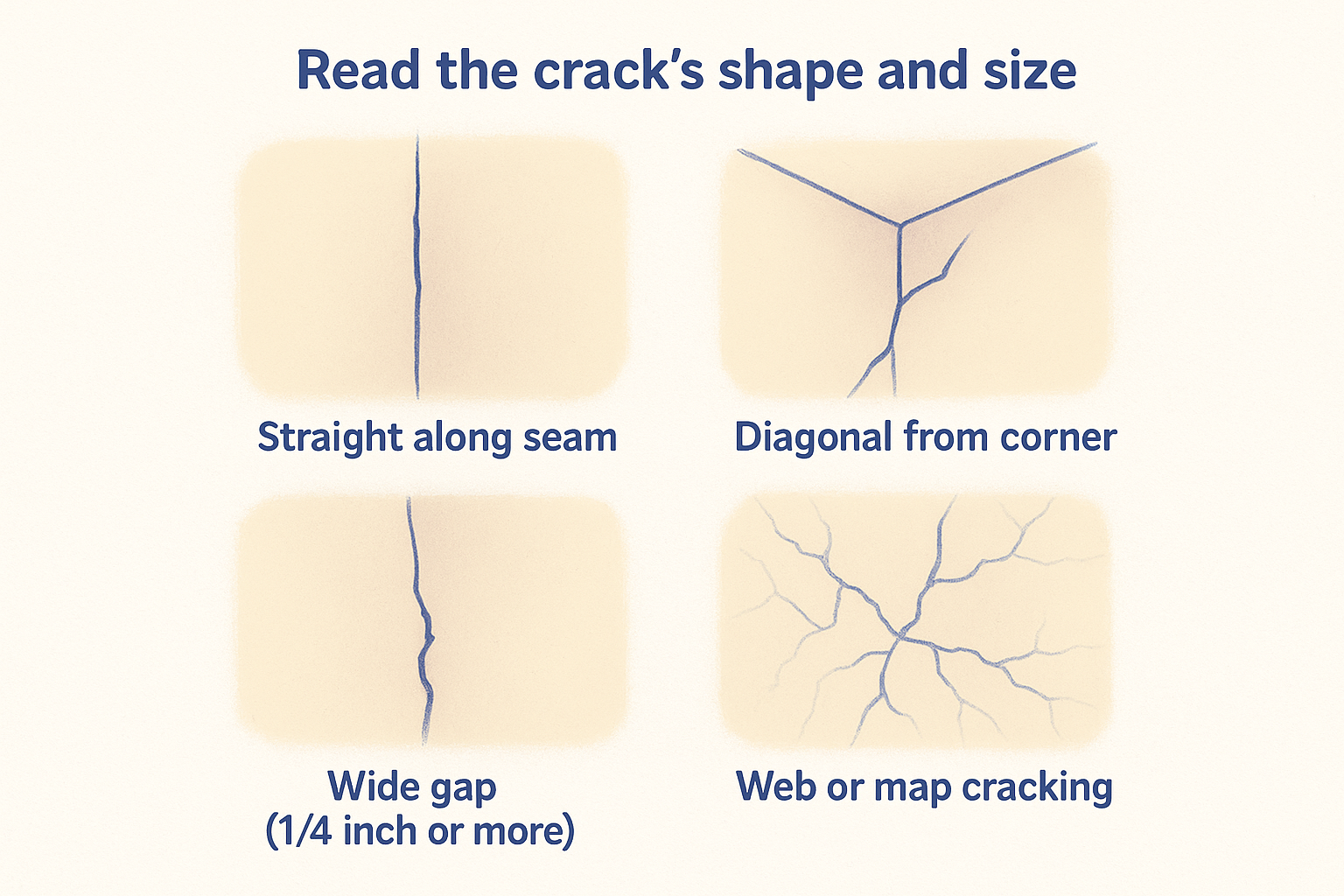
The shape of a crack tells you a lot about what caused it. Straight cracks along seams usually point to poor taping during original construction, while diagonal cracks radiating from corners suggest framing stress or foundation movement . Use this reference before you decide on an approach:
| Crack pattern | Likely cause | Next step |
|---|---|---|
| Straight along seam | Poor taping or mudding | Cosmetic repair |
| Diagonal from corner | Framing or foundation shift | Investigate further |
| Wide gap (1/4 inch or more) | Structural movement | Professional assessment |
| Web or map cracking | Moisture or old plaster | Fix water source first |
Check if the crack is still moving
Mark both ends of the crack with a pencil and write today's date next to each mark. Come back in two to four weeks. If the crack has grown past your marks, it is still active and any patch you apply now will fail. A crack that holds its position is safe to repair. This test costs you nothing and is one of the most reliable steps in learning how to prevent ceiling cracks from returning after a fix.
If the crack grows even a small amount between checks, stop and investigate the root cause before touching the surface.
Step 2. Fix the root cause so it stops moving
Once you confirm the crack has stopped moving, look at what drove it in the first place. Patching over an active root cause is the single biggest reason repairs fail, and it's the step most people skip when searching for how to prevent ceiling cracks from recurring.
Address moisture problems first
If you spotted web cracking or soft drywall around the crack, find and fix the water source before anything else . Check the attic for roof leaks, inspect bathroom fixtures on floors above, and look for condensation buildup in poorly ventilated spaces. Run a dehumidifier in humid rooms and confirm that bathroom exhaust fans vent outside rather than into the attic.
Skipping the moisture fix and patching anyway means you will be back at the same spot within a few months.
Stabilize framing movement
If the crack runs diagonally from a corner or showed active movement during your pencil test, the framing needs direct attention. Add blocking between ceiling joists to reduce flex, or secure any loose joist with a structural screw driven at a slight angle into the top plate. Tighten any gaps between the drywall and framing with a drywall screw before you apply any compound over the crack.
Step 3. Repair it with a crack-resistant method
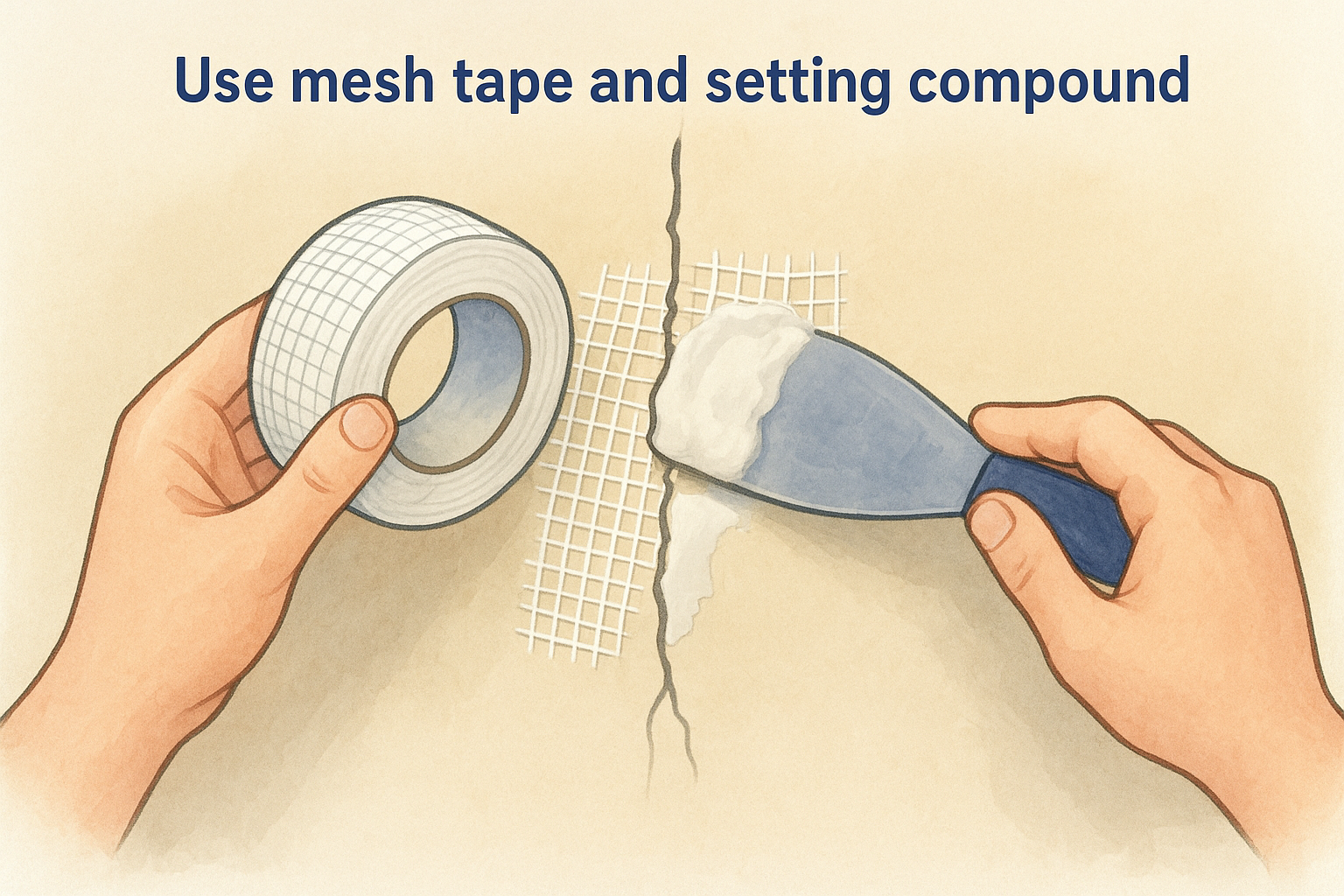
Once the root cause is handled, you are ready to repair the surface. Standard joint compound works for minor hairline cracks, but crack-resistant fiberglass mesh tape combined with setting-type compound gives you a far more durable result for seam failures and wider gaps. This combination is the practical foundation of how to prevent ceiling cracks from reappearing after you patch them.
Use mesh tape and setting compound
Fiberglass mesh tape self-sticks directly over the crack without any pre-coating, which makes it easy to position correctly before you apply compound. Press the tape flat and smooth along the full length of the crack before you touch it with a knife.
Setting-type compound hardens chemically rather than by drying, so it shrinks far less than premixed compound and bonds tighter to the drywall surface.
Apply setting-type compound in two thin coats, letting each coat fully cure before you sand. Avoid premixed compound here because it shrinks as it dries and can pull the tape away from the crack over time.
Sand and prime before painting
Sand each dried coat with 120-grit sandpaper before adding the next layer, then finish with 150-grit to smooth the final surface. Apply a coat of drywall primer before painting to seal the compound and stop the patch from showing through as a flat or dull spot in your finished ceiling.
Step 4. Prevent future cracks with better finishes
Your repair work sets the ceiling right, but the finish you apply on top plays a real role in how to prevent ceiling cracks from returning over time. Two choices make the biggest difference: the type of finish product you use and the humidity level you maintain inside the room after the work is done.
Choose a flexible finish
Standard flat paint does the job for color, but elastomeric ceiling paint adds a layer of flexibility that bridges minor movement in the drywall underneath. Apply it with a thick-nap roller after your primer coat dries completely. For textured ceilings, skip heavy knockdown or orange peel patterns over a freshly repaired seam since thick texture cracks more easily than a smooth or light finish.
Control humidity year-round
Humidity swings are one of the leading drivers of ceiling movement in Sacramento Valley homes. Keep indoor humidity between 35 and 50 percent using a whole-home humidifier in winter and an air conditioner or dehumidifier during humid summers. Run bathroom and kitchen exhaust fans during and after use to pull moisture out before it soaks into the drywall above.
Consistent humidity control costs far less than repeated ceiling repairs.
Quick recap and next steps
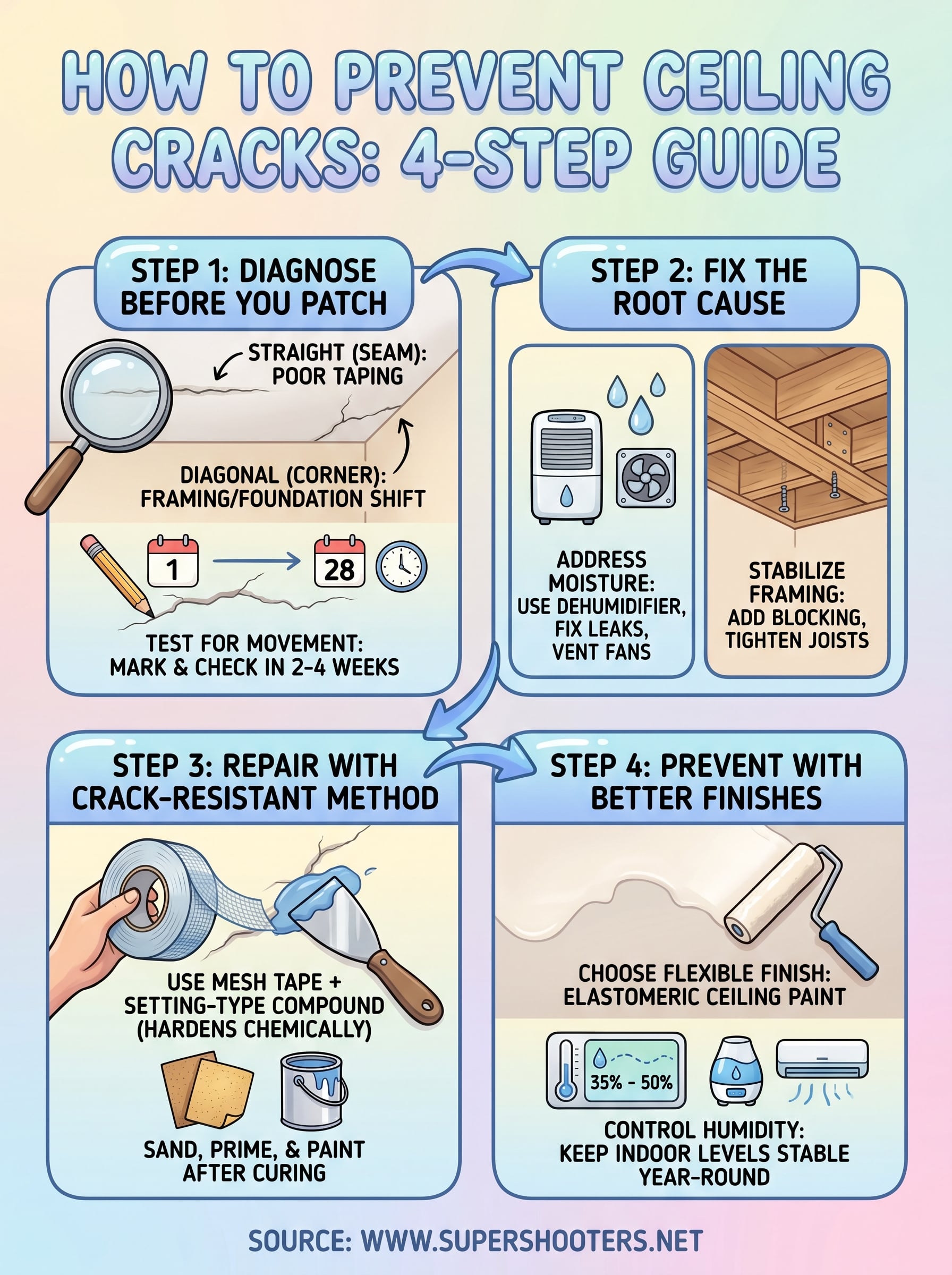
Learning how to prevent ceiling cracks comes down to four steps: diagnose before you patch, fix the root cause, repair with mesh tape and setting compound, and protect the surface with a flexible finish and stable humidity . Skip any one of these steps and the crack will likely return within a season or two.
Most hairline cracks along seams are straightforward DIY repairs if you follow the method above. Wider cracks, diagonal runs from corners, or splits that keep growing are a different story. Those point to structural movement or water damage that needs professional attention before any surface repair makes sense.
If your ceiling keeps cracking or you are dealing with damaged drywall that needs more than a simple patch, the team at Super Shooters can help. Get a free in-home estimate from our drywall repair and patching service and we will assess the full scope of the job at no cost to you.