Share this article

May 31, 2026

How To Fix A Sagging Ceiling: Causes, DIY Steps & Red Flags

A sagging ceiling is one of those problems that starts small and gets worse fast. Maybe you noticed a slight dip near the center of a room, or the drywall is pulling away from the joists. Either way, knowing how to fix a sagging ceiling starts with understanding what caused it, because the repair method depends entirely on whether it's a cosmetic issue or a structural one .

Some sags are straightforward fixes you can handle yourself with screws, adhesive, and a bit of patience. Others signal something more serious, water damage, failed joists, or compromised framing , that requires professional hands. Misreading the situation can lead to a ceiling that looks fine for a month and then fails completely .

At Super Shooters, we've repaired and replaced thousands of ceilings across the Sacramento Valley over the past 30+ years. We've seen every type of sag, crack, and failure a ceiling can throw at a homeowner. This guide walks you through the common causes of ceiling sag , how to assess what you're dealing with, DIY steps for minor repairs, and the red flags that mean it's time to call a pro .

What a sagging ceiling means and why it happens

A sagging ceiling is your home's way of signaling that something has failed with the drywall, the fasteners holding it up, or the structural framing above it. The dip you see from the floor can be a few millimeters of cosmetic warping or the early warning of a full panel failure. Before you think about how to fix a sagging ceiling, you need to know what kind of problem you're actually dealing with, because the repair method changes completely depending on the answer.

Cosmetic sag vs structural sag

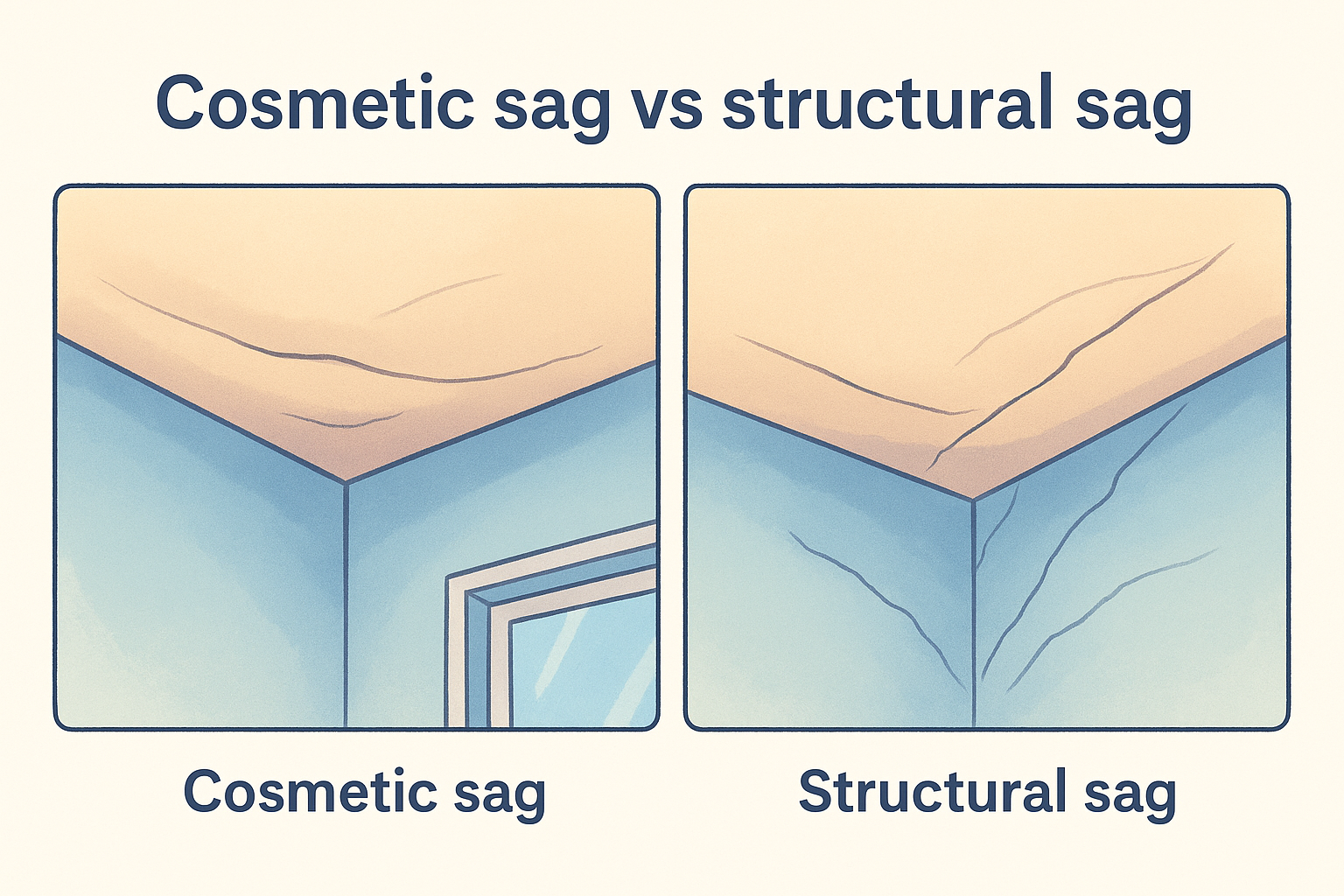
Not every sagging ceiling is a crisis. Cosmetic sag happens when drywall panels lose their bond to the joists above, often because the original installation used too few fasteners, the wrong screw length, or adhesive that has dried out and failed. The drywall itself stays intact, but it's pulling away from the ceiling structure . You'll usually see a gradual curve in the center of one panel, sometimes with hairline cracks along the seams.

Structural sag is a different problem entirely. When the joists themselves bow, crack, or shift, the entire ceiling plane drops. This type of failure often comes with visible deformation across multiple panels , not just one. It also tends to show up as long diagonal cracks that run past seams and into the drywall field. If your ceiling looks like it's sinking in a wide arc rather than bubbling in a single panel, you're looking at a structural issue.

If you see cracks radiating from the corners of doorways or windows alongside a sagging ceiling, treat that as a structural warning until you can prove otherwise.

The most common causes of ceiling sag

Several specific factors cause ceilings to sag , and most of them build up slowly over years. Understanding the root cause is the only reliable way to pick the right repair approach and avoid repeating the same problem.

  • Water damage: A leaking roof, burst pipe, or HVAC condensation soaks into drywall and breaks down both the material itself and the screws holding it in place. Water-damaged drywall is soft and crumbly and will not hold a new fastener reliably.
  • Age and gravity: Drywall installed with adhesive-only methods or undersized screws eventually loses its grip, which is especially common in homes built before 1980.
  • Inadequate original installation: Short screws, too few fasteners per joist, or panels hung parallel to joists instead of perpendicular all lead to long-term bonding failure .
  • Thermal cycling: Attics that reach extreme temperatures cause framing and drywall to expand and contract , which loosens fasteners over years of repeated movement.
  • Structural movement: Foundation settling or overloaded framing can bow joists downward, pulling the ceiling with them.

Knowing which cause applies to your ceiling tells you whether a box of drywall screws will solve the problem or whether you need to open up the ceiling and inspect what's sitting above it.

Safety checks before you touch anything

Before you grab a ladder and start poking at that ceiling, you need to rule out two specific hazards that can turn a simple repair into a serious problem. Learning how to fix a sagging ceiling the right way means treating the safety check as the first step of the repair , not an optional warmup. Give yourself 15 minutes to run through these checks before you pick up a single tool.

Never stand directly under a visibly bulging section of ceiling. Position yourself to the side so you can observe without putting yourself in the drop zone.

Check for active water

A wet ceiling is an unstable ceiling . Water-soaked drywall can weigh several times its dry weight, and that extra load is what causes sudden, unexpected panel drops. Before you diagnose anything, look for damp spots, discoloration, or visible drips above the sag. Press the surface gently with a single finger from a safe angle. If it gives, feels soft, or water appears around your fingertip, stop immediately.

  • Turn off any water supply lines running above the affected area if you suspect a plumbing leak.
  • Check the attic or floor above for standing water, saturated insulation, or condensation on pipes.
  • Do not start repairs until you identify and stop the moisture source.

Check for asbestos risk

Homes built before 1980 have a real chance of containing asbestos in ceiling materials, particularly in textured acoustic ceilings. If you disturb asbestos-containing material without proper precautions, you release airborne fibers that create a serious long-term health hazard. Do not scrape, sand, or drill into any ceiling in an older home until you know what's in it.

If your home predates 1980, contact a licensed asbestos testing service before any repair work begins. Sacramento Valley homeowners can also reach out to Super Shooters, since our team handles asbestos-containing ceilings safely as part of our removal and repair services.

Step 1. Diagnose drywall sag vs joist sag

Knowing which part of the ceiling failed is the single most important step in figuring out how to fix a sagging ceiling . Getting the diagnosis wrong means either wasting money on cosmetic fixes that don't hold, or missing a structural problem that keeps getting worse. Run through this diagnostic before you buy any materials or pick a repair method.

The push test

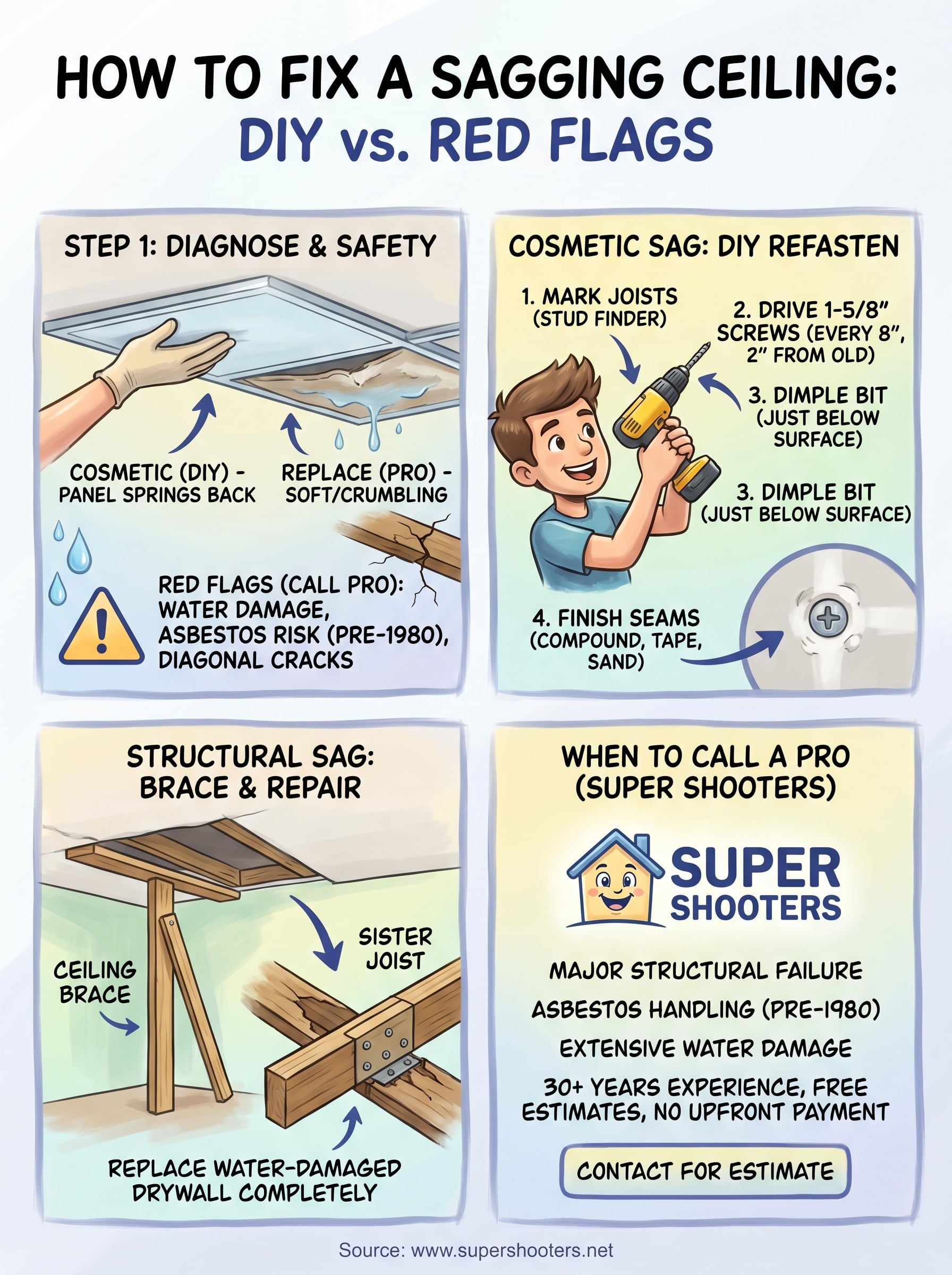
Stand on a stable ladder and gently push upward on the sagging area with your palm. You're looking for two specific responses. If the panel moves upward and springs back, the drywall has separated from the joists but the panel itself is still intact. That's a cosmetic sag you can address with screws and joint compound. If the panel feels soft, crumbles, or doesn't move at all, the material is either water-damaged or physically compromised , and it needs full replacement before any fastening work begins.

A panel that moves freely when you push it but drops back down is telling you the fasteners have failed, not the drywall itself.

Use your knuckles to knock along the ceiling in a grid pattern . A solid knock means good contact with the joist. A hollow sound means the panel has pulled away at that point.

Reading the crack pattern

Crack location and shape tell you a lot about what caused the sag. Use this table to match what you're seeing to a likely cause, which helps you decide whether a DIY repair is appropriate :

Crack type What it suggests
Hairline cracks along seams Fastener or tape failure, cosmetic sag
Cracks crossing panel seams Joist movement or structural shift
Diagonal cracks from corners Foundation settlement, call a pro
Large gaps between panel edges Significant drywall separation

Cracks that run diagonally across multiple panels are the most serious pattern you can find. If you see that combination, stop the DIY approach and get a structural inspection scheduled before anything else.

Step 2. Refasten loose drywall and fix seams

Once you've confirmed the drywall has separated from the joists rather than failed structurally, you can move to the actual repair. This is the most common fix in the how to fix a sagging ceiling process, and it requires the right fasteners placed in the right locations to hold long-term.

What you need

Gather your materials before climbing the ladder so you're not making multiple trips. Using the correct screw type and compound makes the difference between a repair that lasts years and one that fails within months.

  • Drywall screws: 1-5/8 inch coarse-thread screws for 1/2-inch drywall; 2-inch screws for thicker panels
  • Screw gun or drill with a drywall dimpler bit
  • Stud finder to locate joist centers
  • Joint compound (all-purpose or setting-type)
  • Paper tape or drywall mesh tape
  • 6-inch and 10-inch drywall knives
  • Fine-grit sandpaper (120-grit)

Driving new screws

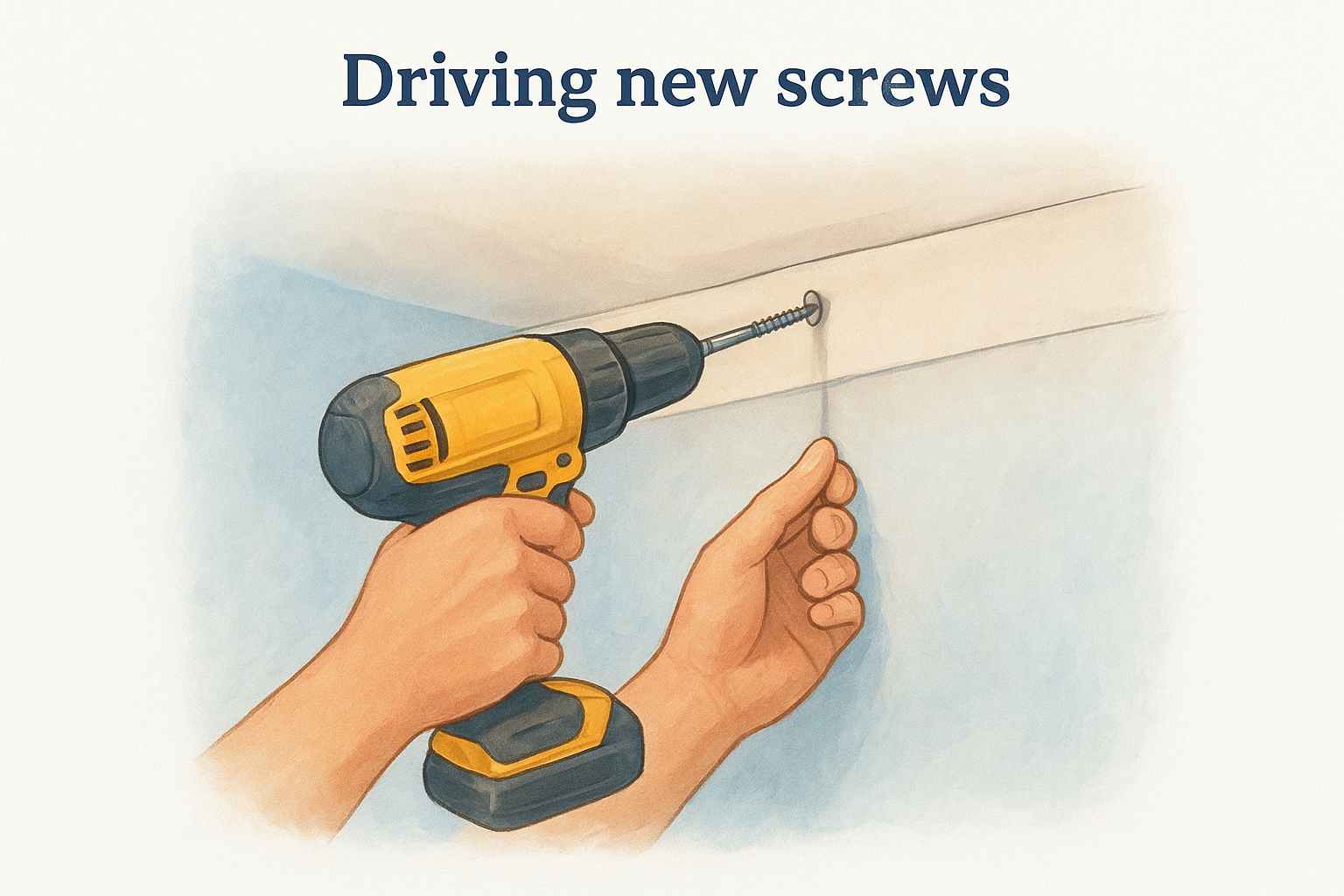
Locate each joist above the sagging panel using a stud finder, then mark the joist centers with a pencil across the full length of the problem area. Drive new screws every 8 inches along each joist, placing them at least 2 inches away from any existing fasteners that have already pulled through.

Set each screw so the head sits just below the drywall surface without tearing the paper face. A small dimple is correct; a hole means you've gone too far and that fastener won't hold. If original screws have torn through the paper, skip those locations entirely and place new fasteners 2 inches to either side.

Never try to re-drive a screw through a torn paper face. It will spin freely and add no holding strength.

Finishing the seams

Apply joint compound over every screw dimple and feather it smooth with your 6-inch knife. For seams that have cracked open, press paper tape into a thin bed of compound, smooth it flat, and let it dry completely before adding a second coat.

Sand lightly between coats with 120-grit sandpaper to keep the surface level with the surrounding ceiling. Once the final coat is dry and sanded smooth, prime the repaired area before painting to prevent the compound from showing through the finished surface.

Step 3. Address joist sag and water damage

When your diagnosis points to bowed joists or water-damaged panels , a screw-and-compound repair won't hold. This step covers what to do when the problem goes deeper than the drywall surface, which is also where understanding how to fix a sagging ceiling correctly matters most. Working on a compromised ceiling without temporary support in place puts you at real risk of a panel dropping while you're directly underneath it.

Temporarily brace the ceiling

Before you open any section of ceiling with joist damage, build a temporary brace using two-by-fours and a sheet of plywood. Cut two vertical studs to just below ceiling height, place a horizontal plywood sheet across the top, and press the assembly up until it contacts the full sagging area. This brace holds panels in position while you work on the framing above.

Do not skip the brace. A panel that's already partially detached can fall without warning once you start drilling near it.

  • Use at minimum a 3/4-inch plywood sheet wide enough to span the sag
  • Keep the brace in place until all fastening and framing work is complete

Sister the damaged joist

If a joist is cracked, bowed, or notched past its allowable depth , sistering is your most reliable fix. Cut a new joist to match the length of the damaged one, slide it flush against the existing member, and fasten the two together with structural screws or 16d nails driven every 12 inches along the full length. This transfers the load to the new lumber and stops further deflection.

Replace water-damaged drywall

Water-damaged drywall cannot be saved by refastening or taping over it . Cut the panel back to the nearest joist on each side using a utility knife or oscillating tool. Remove the damaged section completely, then inspect the cavity for mold or remaining moisture before installing anything new. Only hang replacement drywall once the framing is fully dry, and prime the new panel with a moisture-resistant primer before finishing.

Next steps

Knowing how to fix a sagging ceiling gives you a real advantage: you can act fast, pick the right repair method, and avoid the bigger problems that come from ignoring early warning signs. Minor fastener failures and small separated panels are genuine DIY jobs when you follow the steps above. Water damage, bowed joists, and anything involving asbestos put you in different territory, where the risk of getting it wrong is too high to absorb on your own.

When your ceiling needs more than screws and joint compound, Super Shooters has handled exactly that kind of work across the Sacramento Valley for over 30 years. Our team can assess the damage, handle asbestos-containing materials safely, and restore your ceiling to solid condition. No upfront payment is required , and we offer free in-home estimates so you know exactly what you're dealing with before any work begins. Schedule your drywall repair and patching estimate today.

Recent Posts

By cinchweb June 2, 2026
See what you'll pay for hanging and finishing in 2026. Learn the drywall labor cost per sheet to help you budget your project and find a fair quote.
By cinchweb June 1, 2026
Get smooth walls with these pro drywall finishing tips. Master mud consistency, tape application, and sanding to achieve a flawless, professional finish.
By cinchweb May 31, 2026
Estimate your water damage drywall repair cost with our 2026 guide. Compare labor rates, square foot pricing, and learn when to repair vs. replace panels.
By cinchweb May 31, 2026
Learn what causes ceiling cracks and how to spot structural red flags. Find out if your home has simple cosmetic issues or damage that needs expert repair.
By cinchweb May 28, 2026
Fix your home with this guide to drywall repair after water damage. Learn to dry wall cavities, replace panels, and match textures for a seamless finish.
By cinchweb May 28, 2026
Follow these drywall installation steps to hang, tape, and finish your walls like a pro. Learn everything from framing prep to achieving a seamless finish.
By cinchweb May 26, 2026
Calculate the cost to drywall a room in 2026. This guide breaks down square foot rates, labor factors, and material costs to help you budget for your project.
By cinchweb May 25, 2026
Learn how to repair plaster walls by stabilizing loose areas, fixing cracks with mesh tape, and matching textures for a finish that makes damage invisible.
By cinchweb May 25, 2026
Learn how to calculate drywall needed for your project. Our guide covers measuring, subtracting openings, and adding waste for an accurate sheet count.
Show More