

Share this article

June 8, 2026

Plaster Ceiling Repair Tips: Fix Cracks, Holes & Sagging

Plaster ceilings add character to older homes, but they don't last forever. Cracks spread along seams, holes appear where fixtures used to be, and sections start to sag away from the lath above. If you've noticed any of these problems, you're probably searching for plaster ceiling repair tips that actually work, without requiring you to rip everything down and start over. The good news is that many common plaster issues are fixable with the right materials, tools, and technique.

At Super Shooters, we've completed over 10,000 ceiling and wall projects across the Sacramento Valley in our 30+ years of business. We've seen every type of plaster failure there is, hairline cracks, baseball-sized holes, full sections pulling away from the framing. That hands-on experience is exactly what shaped this guide. Below, you'll find step-by-step instructions for diagnosing and fixing the most common plaster ceiling problems, along with material recommendations and tips for knowing when a repair is realistic versus when it's time to call in a professional.

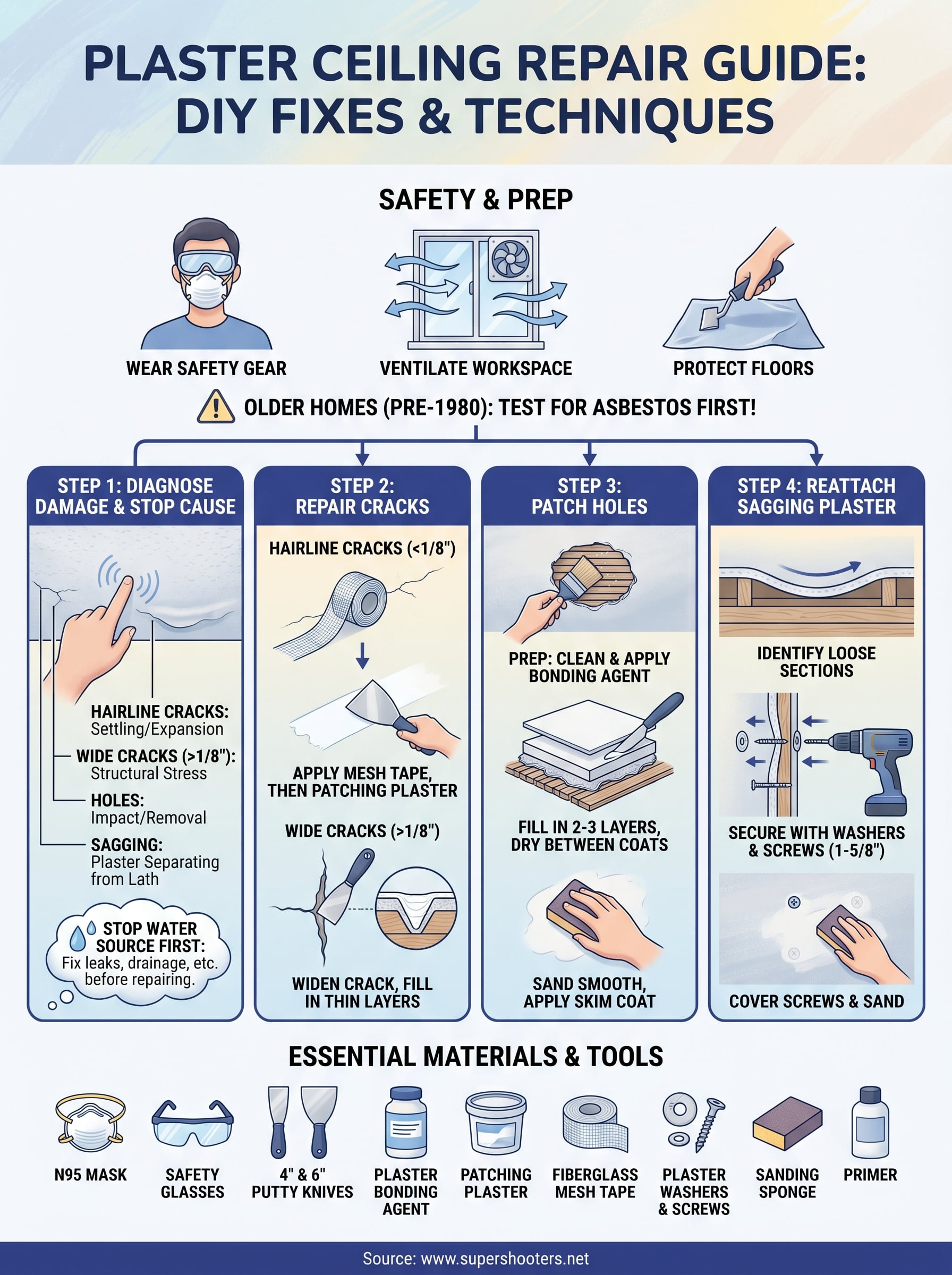
Before you start: safety, tools, and materials

Before you pick up a scraper or mix a single batch of plaster, take a few minutes to prepare properly. Old plaster in homes built before 1980 may contain asbestos. If you're unsure about your ceiling's age or composition, have a certified asbestos inspector test a sample before disturbing any material. Skipping this step is not worth the health risk.

If your home was built before 1980 and you haven't tested for asbestos, stop and test before doing any repair work.

Safety gear to wear on the job

Plaster dust is fine and irritating, and ceiling work means it falls directly onto your face. Wear a properly rated N95 respirator rather than a basic paper dust mask, and keep safety glasses or goggles on throughout the entire job. A hard hat is optional, but it adds real protection if a loose section of plaster drops while you're working overhead.

Keep the workspace well-ventilated by opening windows and positioning a box fan to push air outward. Lay plastic sheeting on the floor and over any furniture before you start, which contains dust and debris and makes cleanup far faster when the job is done.

Tools and materials you'll need

Having everything ready before you start saves you mid-job trips to the hardware store. Here's what you need for most plaster ceiling repair tips to work effectively:

Item Purpose
N95 respirator and safety glasses Personal protection from dust
4-inch and 6-inch putty knives Scraping loose material and applying compound
Plaster bonding agent Helps new plaster adhere to old surfaces
Patching plaster Fills deep holes and missing sections
Fiberglass mesh tape Reinforces cracks before patching
Plaster washers and drywall screws Reattaches loose plaster to lath
Fine-grit sanding sponge Smooths repaired areas
Primer Seals patches before painting

Patching plaster sets harder and faster than standard joint compound, making it the right choice for deeper repairs. Reserve joint compound for the final skim coat where you need a smooth, feathered surface.

Step 1. Diagnose the damage and stop the cause

Before applying any plaster ceiling repair tips , you need to understand what you're dealing with. Rushing straight into patching without identifying the underlying problem means the damage will return within months, and you'll waste both time and money on a fix that doesn't hold.

Identify what type of damage you have

Run your hand across the ceiling and tap the surface lightly to check for hollow spots. Different damage types point to different causes , and each one requires a specific repair approach:

  • Hairline cracks : Normal settling or seasonal expansion and contraction
  • Wide cracks (over 1/8 inch) : Foundation movement or structural stress
  • Holes : Fixture removal, water damage, or physical impact
  • Sagging sections : Plaster has separated from the lath above

If a section feels soft or spongy when you press it, active moisture damage is still present behind the surface.

Fix the root cause before you repair

Repairing visible damage without stopping the source is the most common mistake homeowners make with plaster ceilings. If a leaking pipe, poor roof drainage, or a failing bathroom seal caused the problem, address that issue first . Only patch the ceiling after the area has dried completely, which typically takes 48 to 72 hours depending on how saturated the plaster became.

Step 2. Repair plaster ceiling cracks the right way

Not all cracks need the same fix. Hairline cracks require a different approach than wide, structural ones, and applying the wrong technique to either type produces a repair that reopens within a season.

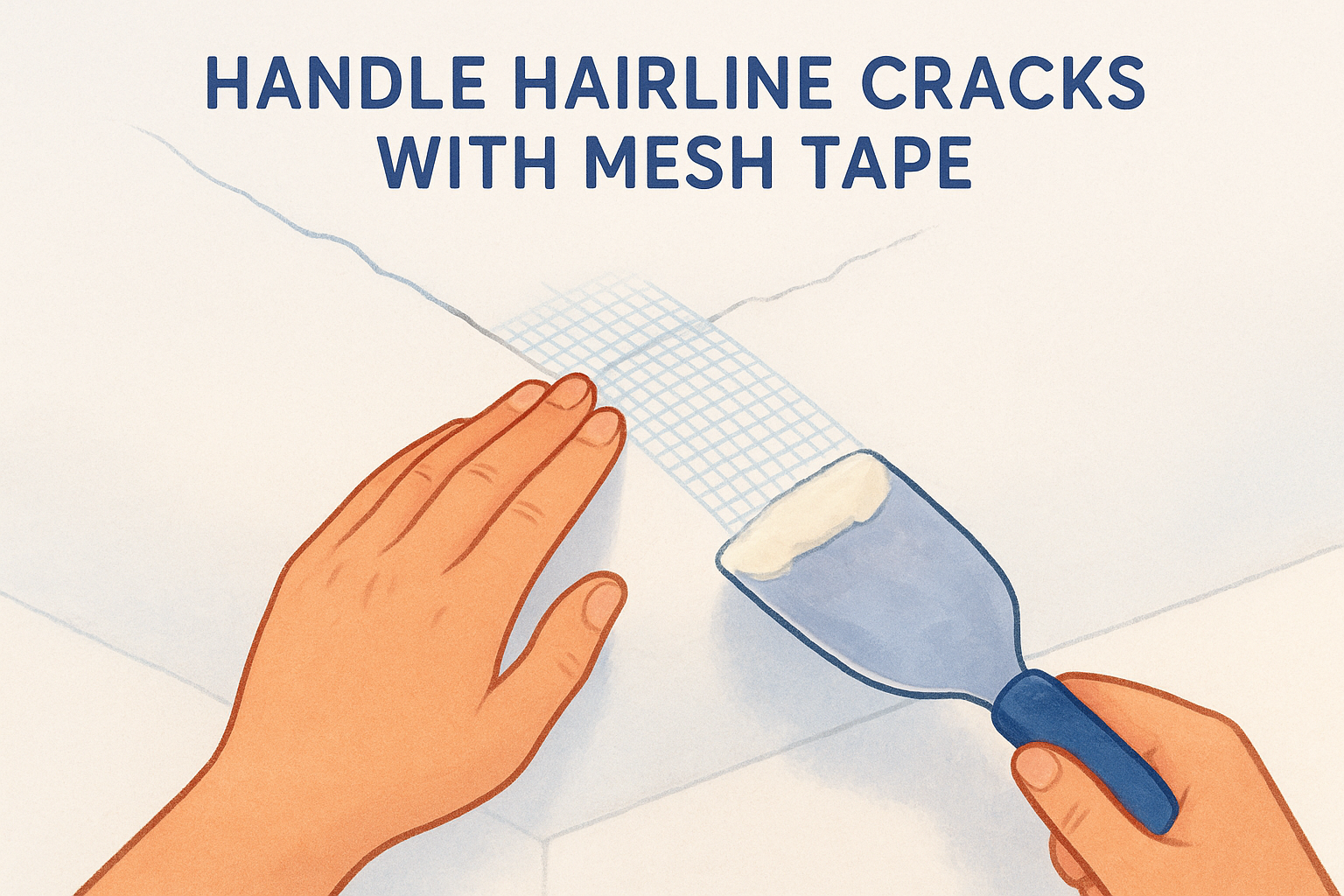
Handle hairline cracks with mesh tape

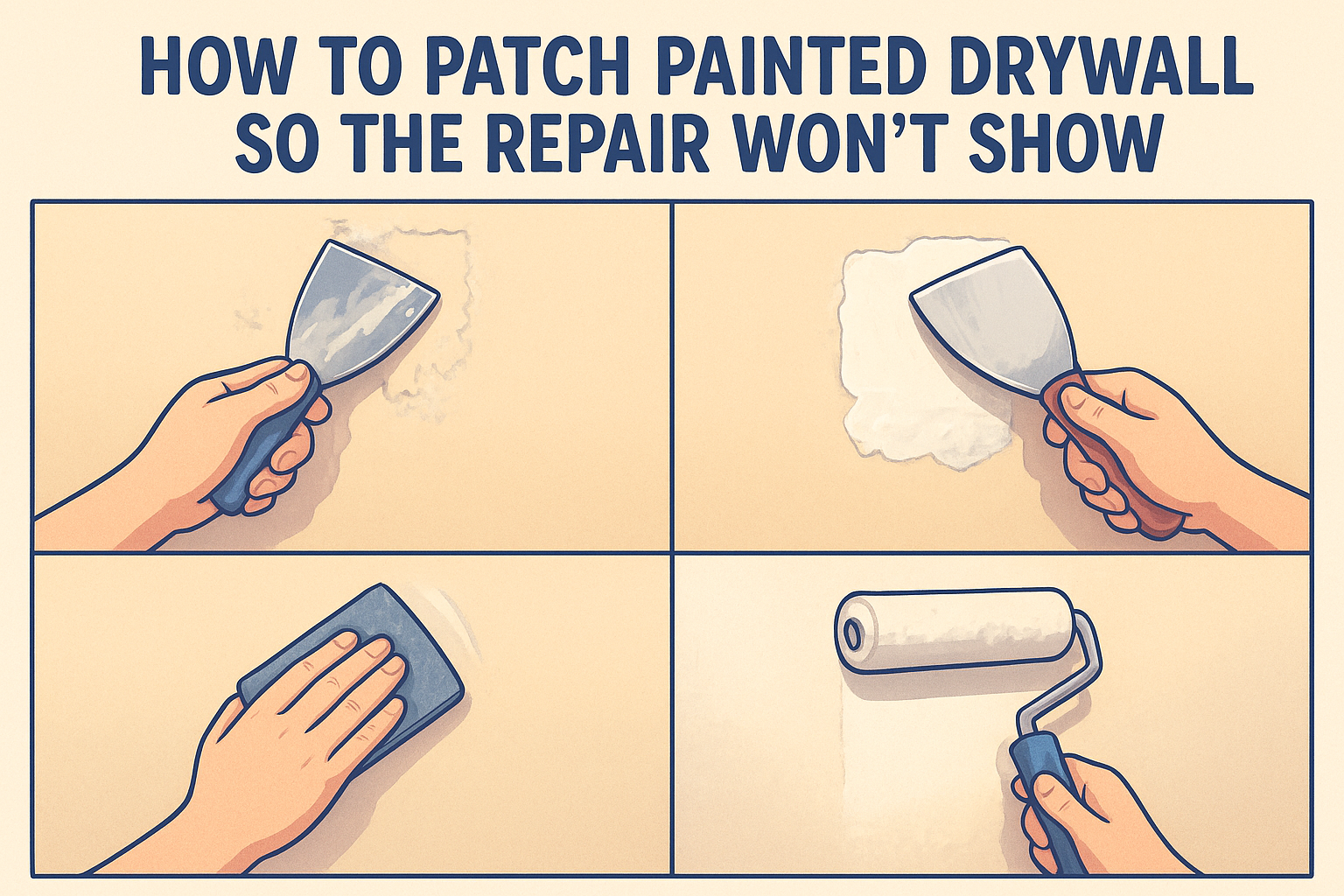
For cracks under 1/8 inch wide, self-adhesive fiberglass mesh tape is your best starting point. Press the tape firmly along the full length of the crack, then apply a thin coat of patching plaster over the tape using a 6-inch putty knife. Feather the edges outward so the patch blends into the surrounding surface.

Don't skip the mesh tape on hairline cracks. Without it, the crack will reappear through the new compound as the plaster moves.

Follow these steps in order for clean results:

  1. Press mesh tape along the full crack length
  2. Apply a thin first coat of patching plaster
  3. Let it dry fully (at least 2 hours)
  4. Sand lightly, then apply a finish skim coat

Fix wider cracks before taping

Cracks wider than 1/8 inch need to be widened slightly first using a putty knife to create a V-shaped groove. This gives the patching plaster something solid to grip. Fill the groove in two thin layers, allowing each layer to dry completely before adding the next. These plaster ceiling repair tips apply whether the crack runs straight or follows a jagged path across the ceiling.

Step 3. Patch holes and rebuild missing plaster

Holes need more material and more patience than cracks. Small holes under 1 inch can be filled in a single step, but larger voids require you to rebuild the plaster in layers to prevent shrinking and cracking as each layer dries.

Prep the hole before you fill

Clean out any loose or crumbling plaster around the edges of the hole using a putty knife or stiff brush . Apply a coat of plaster bonding agent to the exposed lath and the surrounding plaster, then let it become tacky before applying any fill material. Skipping this prep step causes the patch to pull away from the surface once it dries.

For holes larger than 2 inches, staple a piece of metal lath across the opening to give the patching plaster a solid base to grip.

Fill in layers and finish smooth

Apply patching plaster in two or three thin coats rather than one thick application. Let each layer dry completely before adding the next one. Once the final layer sits flush with the surrounding ceiling, sand lightly with a fine-grit sponge and finish with a skim coat of joint compound. Following these plaster ceiling repair tips in the correct order keeps the patch from cracking as it fully cures.

Step 4. Reattach loose or sagging plaster to lath

Sagging plaster is the most serious problem you'll face as a homeowner, but it's also fixable without tearing down the entire ceiling. The key is acting before the section falls completely , because once plaster loses its bond with the lath above, gravity does the rest. This is one of the plaster ceiling repair tips that requires the right hardware to work properly.

Check how much plaster has separated

Push gently on the sagging area to feel how much movement exists. Small sections that flex slightly but still have some grip can be reattached. If a section moves freely or sounds completely hollow when tapped, the plaster has fully separated from the lath and needs mechanical fasteners to pull it back into place.

Never push hard on a sagging section, as it can break loose and fall without warning.

Secure the plaster with washers and screws

Use plaster washers and 1-5/8 inch drywall screws to pull the plaster back against the lath. Space the washers roughly 4 inches apart around the perimeter of the loose section, then add a few through the center. Drive each screw slowly so the plaster doesn't crack under pressure.

Follow this sequence for the best result:

  1. Position washers around the perimeter first
  2. Add screws through the center to pull the section flat
  3. Fill over all washer heads with patching plaster
  4. Sand smooth once fully dry

Next steps for a clean, lasting finish

Once the patches are dry and sanded smooth, prime every repaired area before applying paint. Raw plaster and joint compound absorb paint unevenly, so skipping primer leaves you with dull spots and visible patch lines even after multiple coats. Use a PVA drywall primer on patched sections, let it dry completely, then paint to match the rest of the ceiling.

These plaster ceiling repair tips work well for isolated damage, but they have limits. If your ceiling has widespread cracking, multiple sagging sections, or you discovered asbestos during your inspection, a DIY repair is no longer the right call . Continued patching on a structurally compromised ceiling adds temporary fixes over a problem that keeps growing.

Super Shooters has handled plaster and ceiling work across the Sacramento Valley for over 30 years . If the damage goes beyond what a repair can solve, contact us to learn about our professional drywall repair and patching services.

Recent Posts

By cinchweb June 7, 2026
Learn how to blend drywall patch texture for invisible repairs. Match patterns, feather edges, and prime like a pro for a seamless finish on every wall.
By cinchweb June 6, 2026
Update your home with these 11 popcorn ceiling replacement options. Compare modern finishes like wood planks, tiles, and professional removal techniques.
By cinchweb June 6, 2026
Discover 5 types of knockdown wall texture like splatter, stomp, and lace. Learn how each is applied and find the perfect look for your home’s interior.
By cinchweb June 4, 2026
Compare 5 common types of drywall texture finishes, from orange peel to knockdown. Learn the pros and cons of each to find the best look for your home.
By cinchweb June 4, 2026
Fix wall holes and cracks with this step-by-step guide to drywall repair for beginners. Learn to patch, sand, and finish your walls like a professional.
By cinchweb June 2, 2026
See what you'll pay for hanging and finishing in 2026. Learn the drywall labor cost per sheet to help you budget your project and find a fair quote.
By cinchweb June 1, 2026
Get smooth walls with these pro drywall finishing tips. Master mud consistency, tape application, and sanding to achieve a flawless, professional finish.
By cinchweb May 31, 2026
Estimate your water damage drywall repair cost with our 2026 guide. Compare labor rates, square foot pricing, and learn when to repair vs. replace panels.
By cinchweb May 31, 2026
Is your ceiling bowing? Learn how to fix a sagging ceiling by identifying water damage, securing loose fasteners, and spotting structural red flags.
Show More