Share this article

May 4, 2026

How To Patch A Hole In The Ceiling: Small To Large Fixes

Whether it's from a water leak, a doorknob mishap, or an old light fixture you finally removed, a hole in your ceiling is hard to ignore. The good news: learning how to patch a hole in the ceiling is a straightforward DIY project that most homeowners can handle with basic tools and a little patience. Small nail holes to fist-sized gaps , each one has a reliable fix you can knock out in an afternoon.

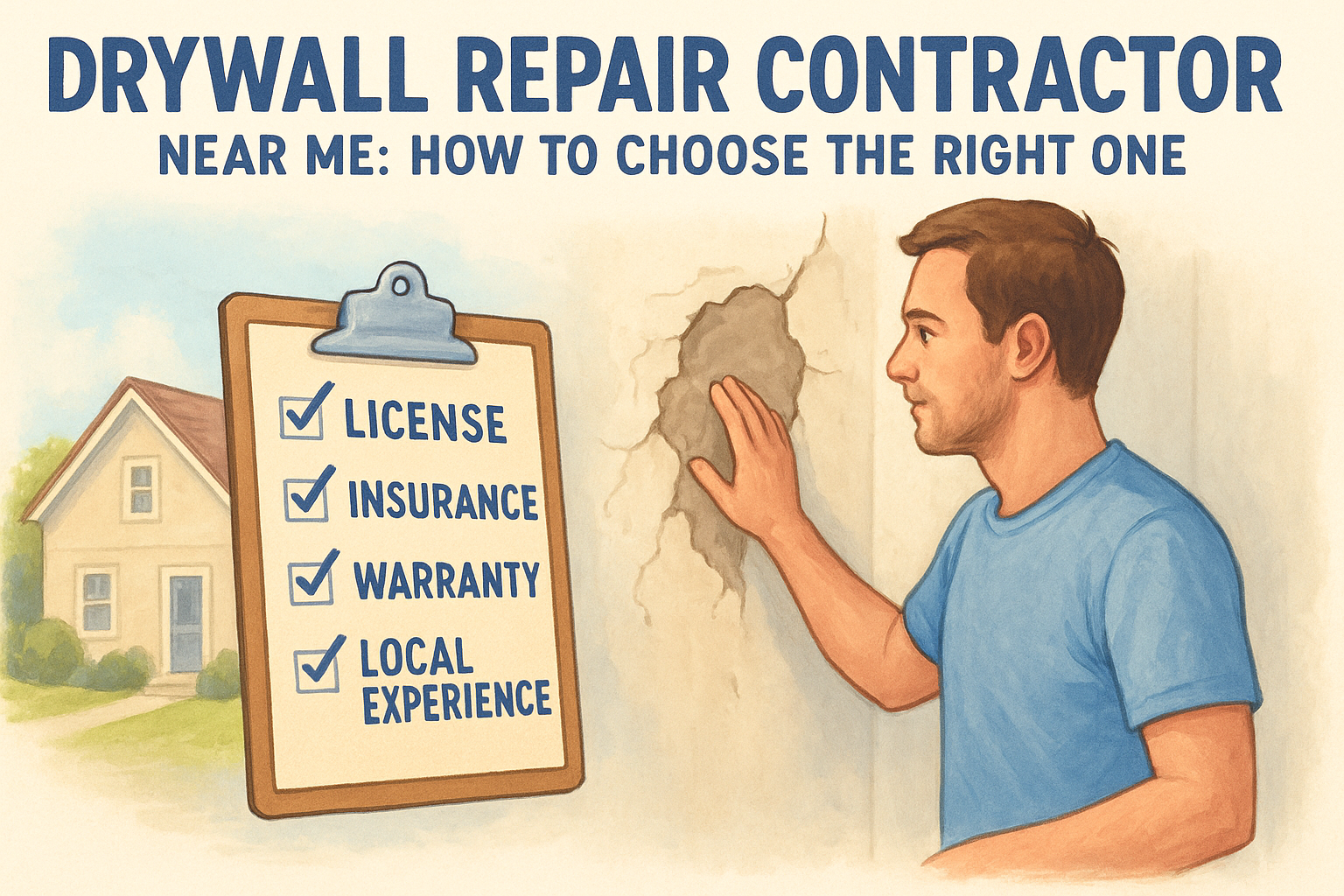
That said, not every ceiling repair is created equal. Larger holes, sagging drywall, or damage tied to water intrusion can turn a simple patch job into something more involved. If the damage is extensive, or if you'd rather skip the ladder work entirely, that's where a company like Super Shooters comes in. With over 30 years of drywall repair experience across the Sacramento Valley and more than 10,000 completed projects , our crew handles ceiling fixes of every size, from hairline cracks to full-panel replacements.

This guide walks you through the tools, materials, and step-by-step process for patching ceiling holes yourself, small, medium, and large. You'll learn how to prep the area, apply joint compound, and finish with a texture match so the repair blends in. By the end, you'll know exactly what's involved and whether it's a project you want to tackle on your own or hand off to a professional .

Prep, safety, and what you need

Before you pick up a putty knife, take a few minutes to assess the damage and set up your work area. Good preparation prevents mistakes and keeps you from turning a small fix into a bigger problem. A ceiling hole that looks minor on the surface can hide water damage, mold, or live wiring above the drywall, so a quick inspection before you start saves real time and money.

Check the area before you start

Your first job is to figure out what caused the hole and whether anything dangerous is nearby. If the damage came from a water leak , look for staining, soft drywall, or a musty smell. Patching over active moisture will cause your repair to fail within weeks, so shut off the water source, let the area dry completely, and confirm the leak is resolved before doing anything else.

Never patch over water damage until you've confirmed the source is fixed and the surrounding drywall is fully dry.

For homes built before 1980, textured or acoustic ceilings may contain asbestos. If your ceiling has a rough, gritty finish and you're not sure of its age, do not sand or disturb the surface until you've had it tested. A certified inspector can take a sample and confirm whether it's safe to proceed. If asbestos is present, professional abatement is required before any repair work begins.

Also scan the area around the hole for electrical wiring or junction boxes . Use a flashlight to look inside the hole before you reach in. If you see wiring close to the damage, turn off the circuit breaker for that room before touching anything.

Gather your tools and materials

Once you've confirmed the area is safe, pull everything together before you climb the ladder. Having all your materials within reach reduces trips up and down, which matters when you're working overhead and learning how to patch a hole in the ceiling for the first time. The exact supplies depend on the size of the hole , but most repairs draw from the same core list.

Here's what you'll typically need:

  • Joint compound (pre-mixed or setting-type drywall mud)
  • Drywall patch kit or a cut piece of drywall for larger holes
  • Drywall screws and a screw gun for medium to large repairs
  • Drywall tape (paper or mesh) to reinforce seams
  • Putty knife or taping knives , 4-inch and 6-inch sizes
  • Sandpaper , 120-grit and 220-grit, or a sanding sponge
  • Drywall primer to seal the patch before painting
  • Texture spray or texture compound to match your existing ceiling finish
  • Drop cloth and painter's tape to protect the floor and walls below
  • Safety glasses and an N95 respirator for sanding

Keep a bucket of clean water and a rag nearby to wipe your knives between coats. Dried compound on your blade creates drag marks in fresh mud, which means more sanding and an extra coat to fix it.

Choose the right repair for your hole

The method you use to patch a ceiling depends almost entirely on how big the hole is . Using the wrong approach, like trying to cover a large gap with just joint compound, leads to cracking, sagging, or a repair that falls out within a few months. Before you learn how to patch a hole in the ceiling , take a measurement and figure out which category your damage falls into.

Match the method to the hole size

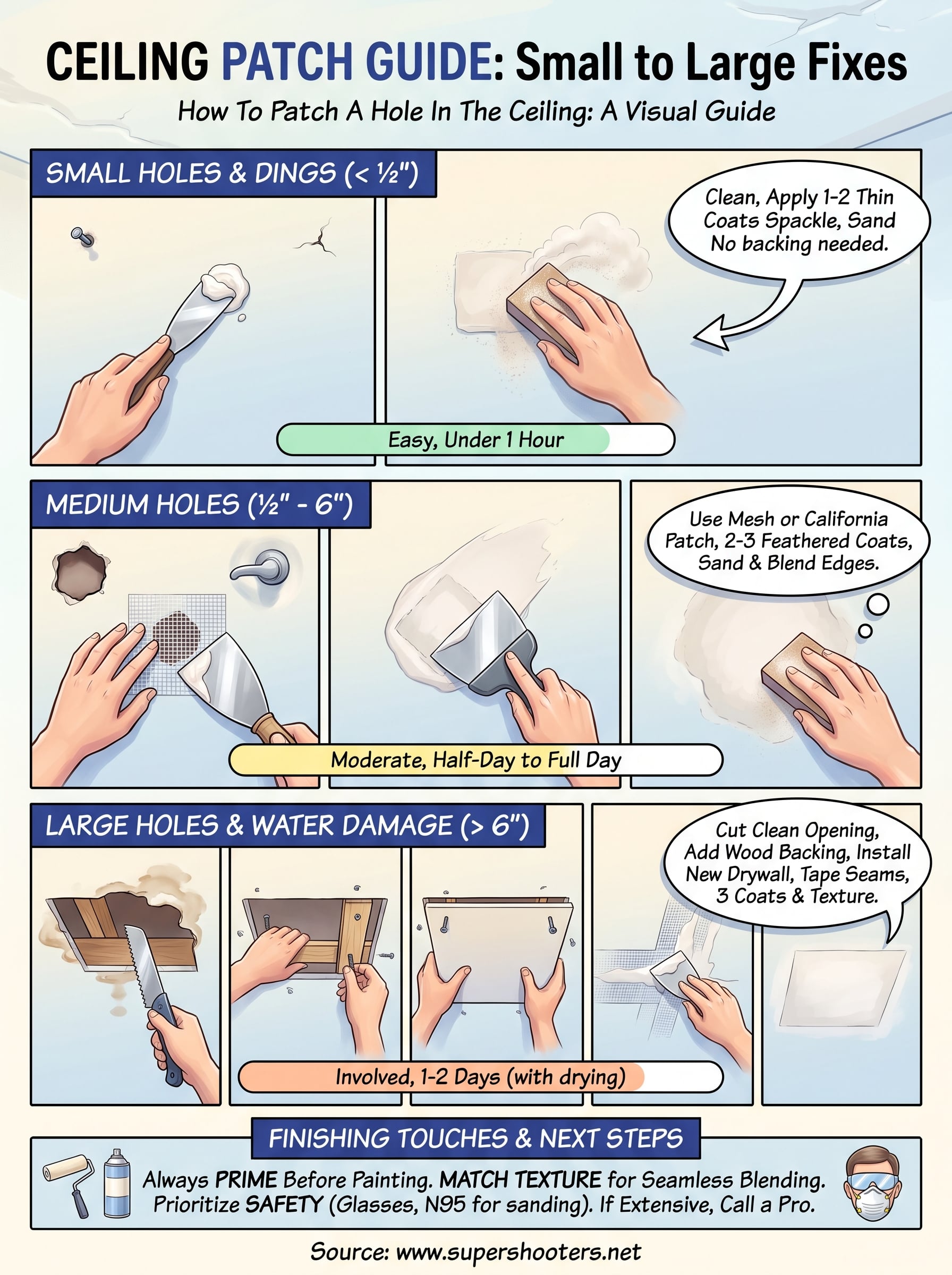
Your repair strategy breaks down into three tiers based on the diameter of the hole . Nail holes and small dings up to about a half-inch wide need nothing more than a little spackling compound or lightweight joint compound. Medium holes between a half-inch and roughly 6 inches call for a self-adhesive mesh patch or a California patch cut from scrap drywall. Anything larger than 6 inches requires removing the damaged section entirely and installing a new piece of drywall backed by wood or metal support.

Hole Size Repair Method Key Materials
Up to ½ inch Spackling or joint compound Putty knife, compound, sandpaper
½ inch to 6 inches Mesh patch or California patch Patch kit or drywall scrap, compound, tape
Over 6 inches Drywall replacement with backing Drywall, wood backing, screws, tape, compound

Watch for signs that change the approach

Even a small hole can require a different method if the surrounding drywall feels soft or crumbles when you press it, or shows brown water staining around the edges. In those cases, cut back to solid material before patching, no matter how tempting it is to skim over the surface and call it done.

If the drywall around the hole gives under light finger pressure, the damage is wider than it looks and you need to cut further back.

Cracks radiating outward from the hole , or a pattern of multiple damaged spots in the same area, often point to a larger underlying issue like a settling ceiling or water damage that was never fully dried out. Fix the root cause first, and the patch will actually hold.

Patch small holes and dings

Small holes, nail pops, screw holes, and minor dings are the easiest ceiling repairs you'll ever make. You don't need backing material or mesh tape, and the whole process takes under an hour including dry time. The key is building up the compound in thin layers rather than trying to fill everything in one thick pass.

Apply the compound

Start by cleaning the hole. If there are loose paper or crumbling edges , press them flat or tear them away so you have a clean surface to work with. Dip your 4-inch putty knife into your joint compound or lightweight spackling , load a small amount onto the blade, and press it firmly into the hole at a slight angle. Drag the knife across the surface to leave a thin, flat layer that sits just above the ceiling plane.

Let each coat dry completely before adding the next, rushing this step leads to shrinkage cracks you'll have to fill all over again.

For a nail hole or ding under a quarter-inch , one coat is usually enough. For slightly larger spots up to a half-inch, plan on two thin coats with light sanding in between. Apply the second coat in a slightly wider arc than the first to feather the edges out and avoid a visible bump once you paint.

Sand and finish the surface

Once the final coat is fully dry and no longer cool to the touch , sand the patch lightly with 220-grit sandpaper or a sanding sponge. Your goal is a surface that's flush with the surrounding ceiling with no ridges or tool marks. Wipe away the dust with a barely damp cloth before priming.

Apply a coat of drywall primer over the patch before painting. Skipping primer causes the patched spot to show through the paint as a dull or flat area, even after two coats of finish paint. This final step is what separates a patch that blends in from one that's obvious the moment the light hits it. If you're learning how to patch a hole in the ceiling for the first time, nail holes are the perfect starting point to build your technique.

Patch medium holes up to about 6 inches

Medium holes, those between a half-inch and 6 inches across, are too wide for a simple skim coat but don't require full drywall replacement. The key to understanding how to patch a hole in the ceiling at this scale is giving the joint compound something solid to grip. Without backing or a reinforced patch, the compound has no support and will crack or fall out as it dries.

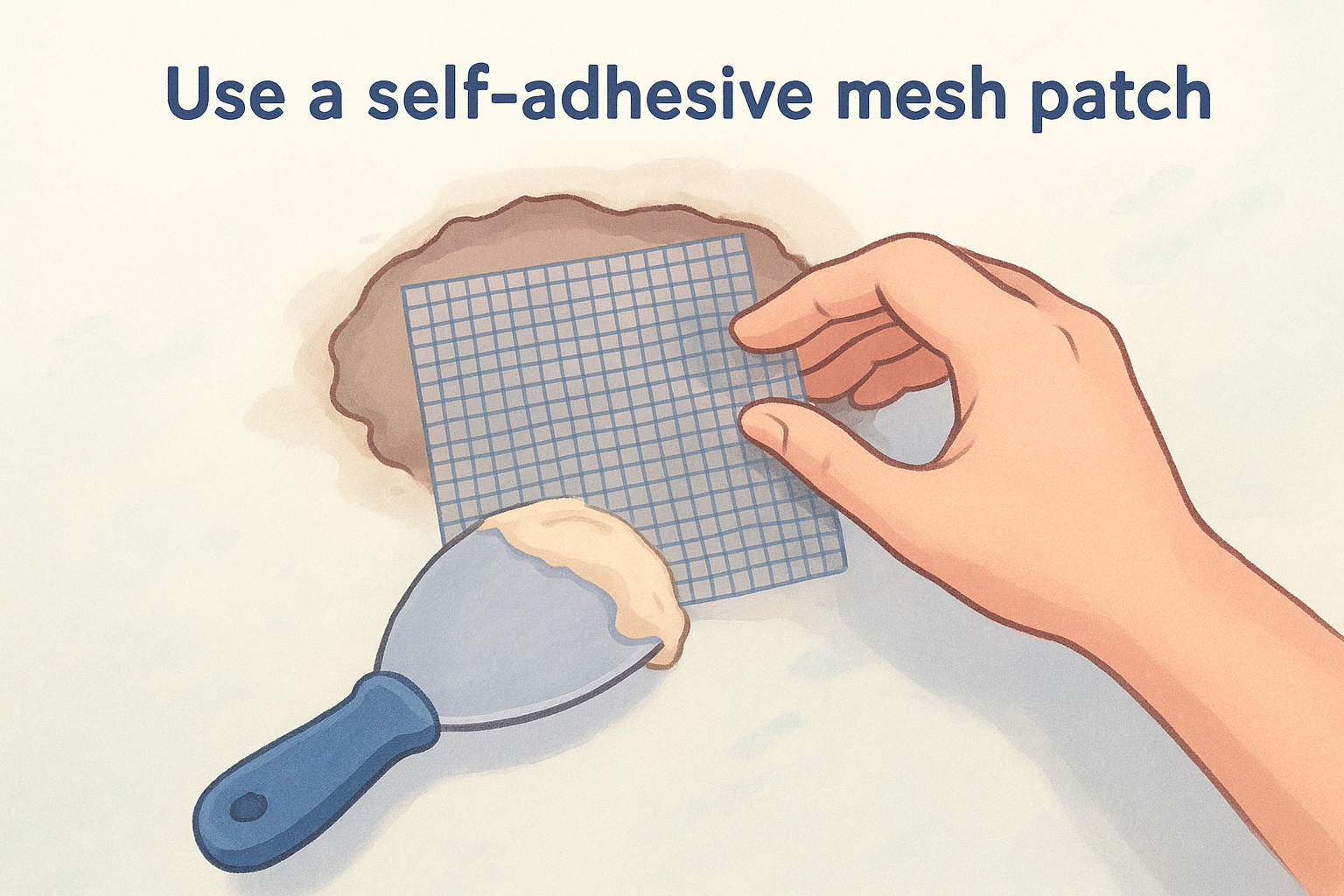
Use a self-adhesive mesh patch

A self-adhesive mesh patch is the fastest option for holes in this size range. You press the patch directly over the hole, and the adhesive holds it in place while you apply compound over the top. For holes closer to 6 inches, cut a piece of scrap drywall using the California patch method instead: score and snap a drywall piece slightly larger than the hole, peel the back paper away from the edges, and press the paper facing into the surrounding ceiling surface so it acts as built-in tape.

The California patch works best when you score clean, straight edges so the drywall core sits flush inside the hole without rocking.

Follow these steps once your patch is in place:

  1. Apply a thin first coat of joint compound over the patch and about 2 inches beyond its edges, feathering outward with a 6-inch knife.
  2. Let the coat dry completely , typically 4 to 6 hours depending on humidity, then sand lightly with 120-grit sandpaper.
  3. Apply a second coat slightly wider than the first to blend the edges into the surrounding ceiling.
  4. Sand again with 220-grit sandpaper once dry for a smooth transition.

Apply and feather the joint compound

Your goal with each coat is a gradual, tapered edge that disappears into the surrounding ceiling rather than a visible raised ridge. Hold your taping knife at a low angle and drag it away from the center of the patch, letting the blade flex slightly against the surface. Plan on two to three coats total for a patch this size. Once the final coat is sanded smooth, prime before painting or applying any texture to match the rest of your ceiling.

Patch large holes and water-damaged areas

Large holes over 6 inches and any damage tied to water require a more thorough approach than a patch kit can handle. You need to cut out the damaged section completely and replace it with a fresh piece of drywall backed by solid framing . Trying to skim over a large hole or brittle, waterlogged drywall just delays failure and means you'll be doing the repair twice.

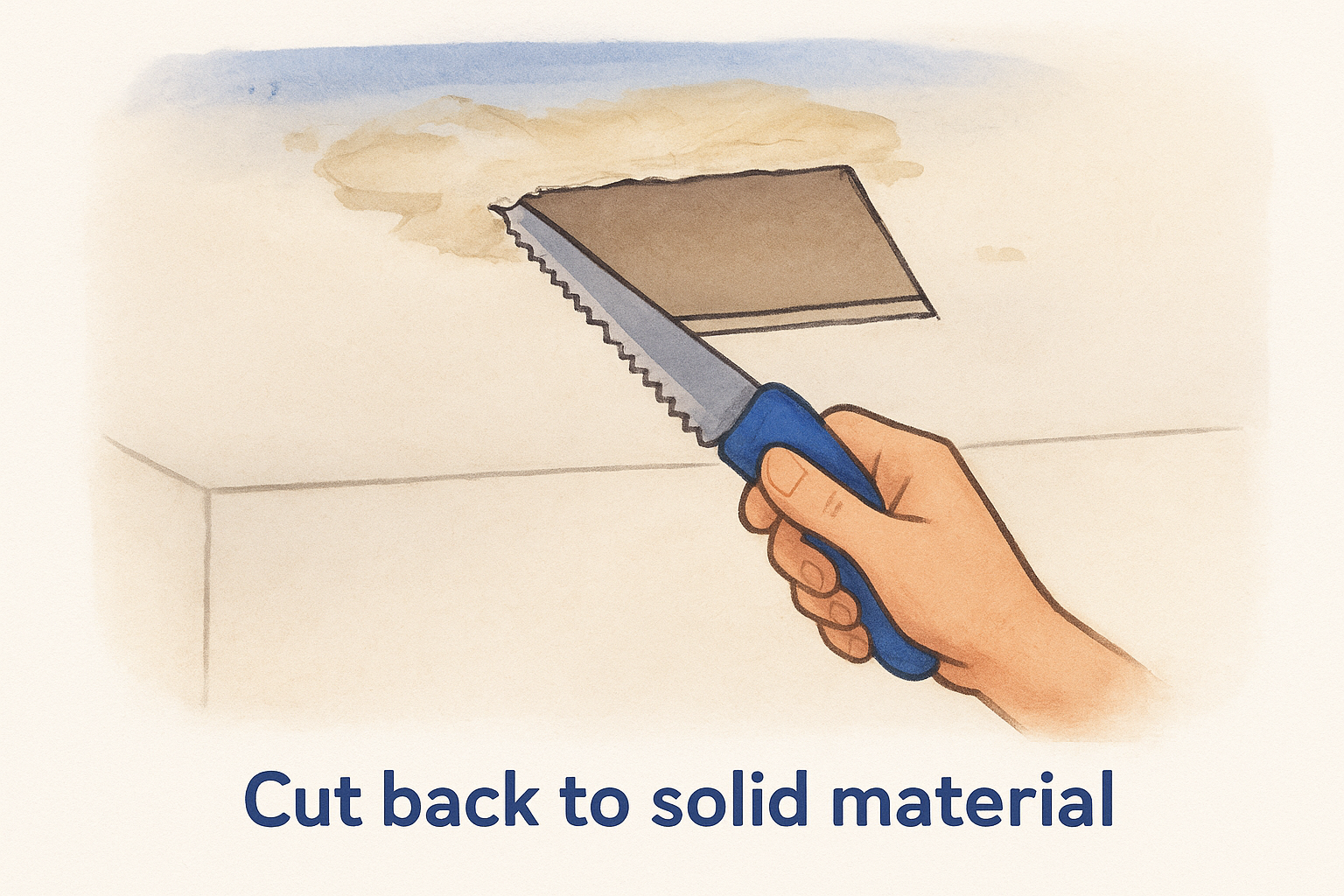
Cut back to solid material

Your first task is removing everything that's compromised. Use a drywall saw or oscillating tool to cut the hole into a clean rectangle or square, working outward from the damage until you reach drywall that feels firm and shows no discoloration or soft spots.

Cut to a size that lands on or near a ceiling joist so you have a solid surface to fasten into on at least one side.

Once you have a clean opening, measure the opening precisely and cut your replacement drywall piece to fit. Use ½-inch drywall to match the thickness of standard residential ceilings. Dry-fit the piece before committing so you're not trimming after the backing is already in place.

Install backing and hang new drywall

If your cut edges don't land on joists, add wood backing to give the new panel something to attach to. Cut two pieces of 1x4 or 2x4 lumber slightly longer than the opening, slide them up through the hole at each end, and drive drywall screws through the existing ceiling into the ends of the boards to lock them in place. This creates a solid perimeter around all four sides.

Set the replacement panel into the opening and fasten it with drywall screws every 6 to 8 inches around the perimeter. Apply mesh tape over every seam, then work through three coats of joint compound, feathering each coat wider than the last. Sand smooth between coats , prime, and texture to match before painting. Knowing how to patch a hole in the ceiling at this scale takes patience, but this sequence produces a repair that holds long-term.

Next steps

You now have a complete picture of how to patch a hole in the ceiling , from tiny nail pops to large sections that need full drywall replacement. The process follows the same core steps regardless of size: remove compromised material, build proper support, apply joint compound in thin layers , and finish with primer and texture before painting. Take your time between coats and you'll get a result that holds.

Most homeowners can handle small to medium repairs on their own with the right tools and a little patience. But if the damage is larger than expected , tied to water intrusion, or involves a textured ceiling you can't easily match, a professional saves you time and avoids a second repair down the road.

The team at Super Shooters has been handling ceiling and wall repairs across the Sacramento Valley for over 30 years. Get a free in-home estimate and we'll take a look at what you're working with.

Recent Posts

By cinchweb May 4, 2026
Learn how to smooth textured walls to get a flat, modern finish. Our guide covers asbestos safety, skim coating, and tools for professional results.
By cinchweb May 3, 2026
Compare 10 types of interior wall finishes, including drywall, plaster, and wood. Learn the pros, cons, and costs to find the best look for your home.
By cinchweb May 3, 2026
Learn how to hang drywall on ceiling like a pro. Our guide covers joist marking, panel lift techniques, and screw patterns for a smooth, crack-free finish.
By cinchweb May 3, 2026
Find out does popcorn ceiling contain asbestos by checking construction dates and testing guides. Learn how to safely test, remove, or cover old textures.
May 1, 2026
Master how to patch drywall with our step-by-step guide. Learn to fix small nail holes, medium cracks, and large damage for a seamless, professional finish.
May 1, 2026
Decide between drywall vs plaster walls. Learn how to tell them apart, compare repair costs, and find the best solution for your home renovation project.
May 1, 2026
Don’t just patch it—fix it for good. Learn how to fix drywall cracks using pro techniques for diagnosing, taping, and texturing for a seamless finish.
April 30, 2026
Learn how to install drywall with this step-by-step guide. We cover measuring, cutting, and hanging panels on walls and ceilings for a flawless finish.
April 30, 2026
Get the 2026 ceiling drywall installation cost per square foot. See room-by-room price breakdowns and labor factors to help you budget for your next project.