Share this article

May 10, 2026

6 Common Types Of Drywall Damage And How To Fix Them Fast

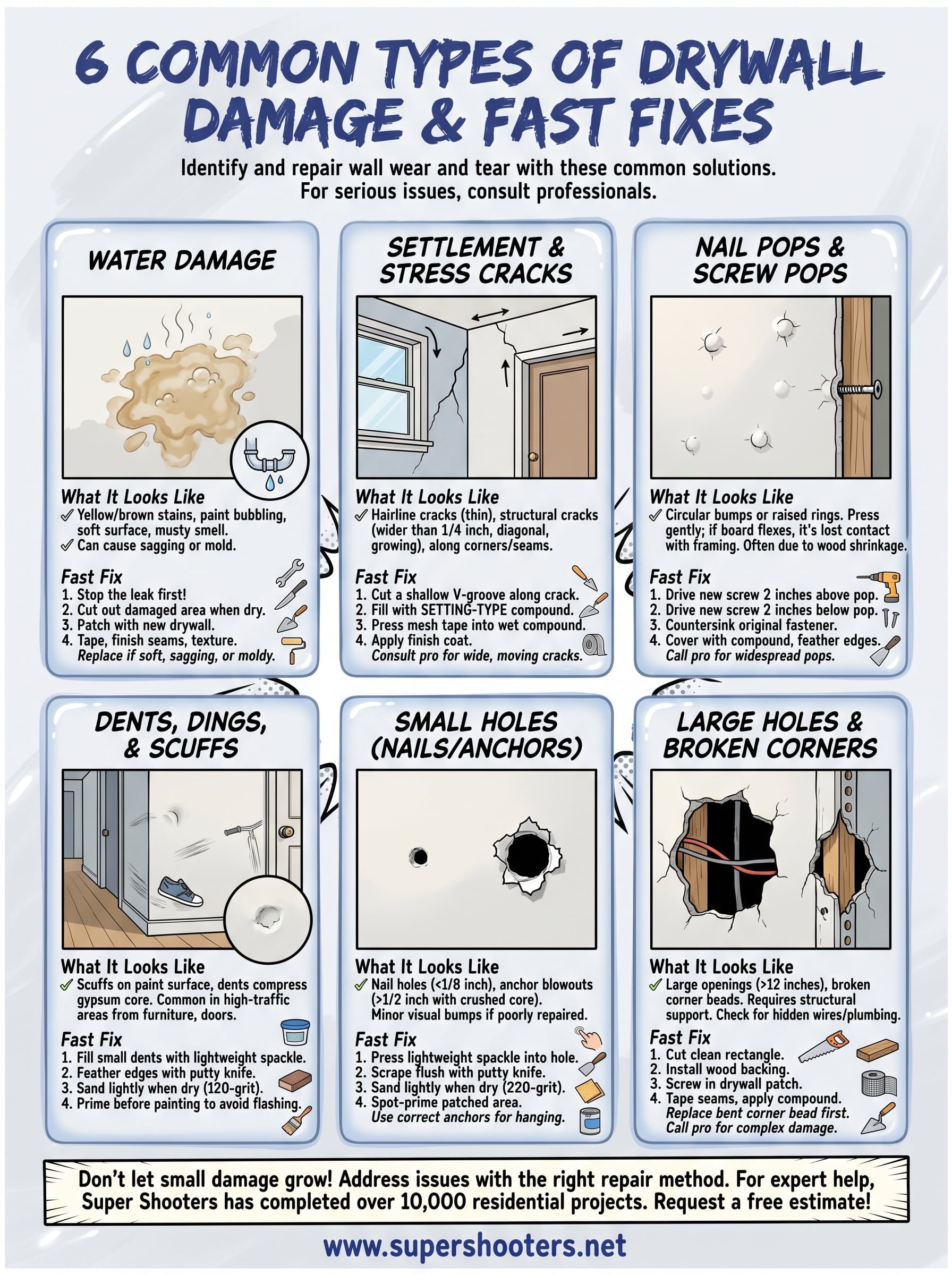
Every home deals with wall wear and tear at some point. Cracks appear along corners, nail heads push through the surface, or a slow leak leaves behind an ugly stain. Knowing the types of drywall damage you're looking at is the first step toward getting it fixed the right way, and avoiding costly mistakes that make things worse. Some issues are simple weekend fixes, while others signal something more serious happening behind the wall.

At Super Shooters, we've repaired drywall in over 10,000 homes across the Sacramento Valley over the past 30+ years. That experience means we've seen every kind of damage a wall can throw at a homeowner, and we know exactly what each one requires. Whether you handle it yourself or call in a professional , this guide will help you identify what's going on with your walls.

Below, we break down six of the most common drywall problems, explain what causes them, and walk you through how to fix each one . Some need nothing more than a putty knife and a little patience. Others, like water damage or large structural cracks, are best left to a licensed contractor who can address the root cause before patching things up.

1. Water damage

Water damage ranks among the most destructive types of drywall damage you'll encounter in a home. Unlike surface scuffs or nail pops, water weakens the gypsum core and can spread silently behind walls before you ever spot the first stain. Catching it early saves you from a much larger repair bill down the road.

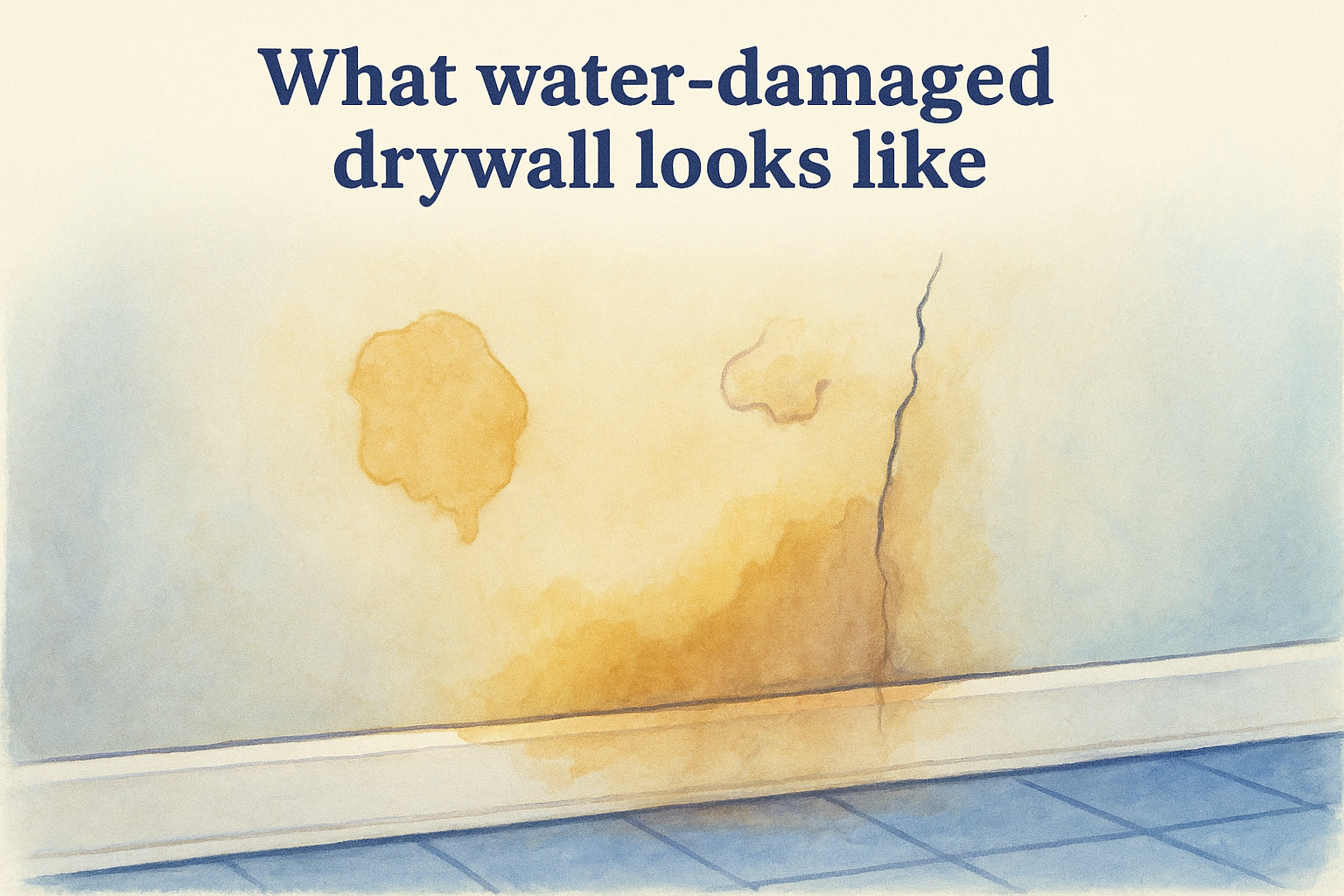
What water-damaged drywall looks like

Yellow or brown staining is usually the first sign you're dealing with moisture. You might also notice paint bubbling, the surface feeling soft when you press it, or a musty smell coming from the wall. In severe cases, the drywall visibly sags or crumbles at the touch.

The most common causes of water damage

Leaky pipes, roof failures, and overflowing fixtures cause most of the water damage we see in Sacramento Valley homes. Bathroom walls near showers are especially vulnerable, as are ceilings directly below upper-floor bathrooms or HVAC units that collect condensation and drip over time.

How to fix it fast without spreading damage

Before you touch the drywall, stop the water source first . Patching over an active leak wastes your time and materials. Once the area is fully dry, cut out the damaged section, replace it with new drywall, and tape and finish the seams before applying your texture coat.

Never skip the drying phase. Trapping moisture inside a sealed wall creates mold that spreads fast and costs far more to fix than the original leak.

When you should replace drywall instead of patching

If the board feels soft, sags, or crumbles , patching is not a lasting fix. Cut out and replace the damaged section entirely. Any drywall showing visible mold growth requires full removal and proper remediation before you install new material, or you risk the problem returning.

How to prevent water stains from bleeding through paint

Apply a stain-blocking primer like Zinsser BIN or Kilz before you paint over any repaired water stain. Skipping this step means the stain bleeds through even multiple coats of finish paint, leaving a visible yellow ring on your otherwise fresh wall.

2. Settlement and stress cracks

Settlement cracks are among the most misread types of drywall damage a homeowner encounters. They range from minor cosmetic annoyances to serious structural warnings, and telling them apart before you reach for the joint compound saves you from wasted effort and missed problems.

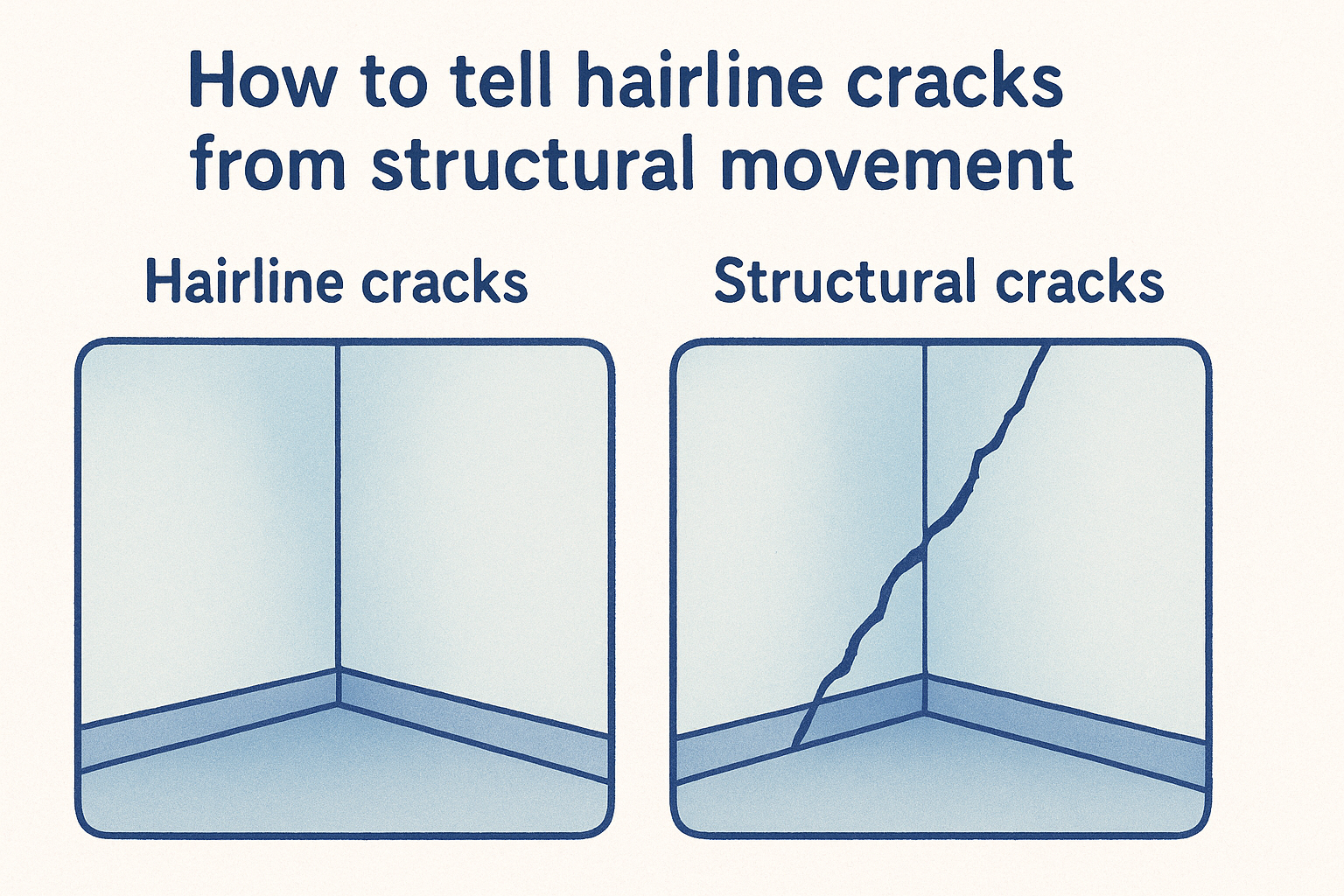
How to tell hairline cracks from structural movement

Hairline cracks are thin, shallow, and typically run along seams or corner joints. Structural cracks tend to be wider than 1/4 inch, diagonal, or continue growing after you patch them. If a crack keeps extending over several weeks, do not ignore it.

The most common places cracks show up

Corners of door frames and window openings are prime locations for stress cracks because the surrounding framing flexes with temperature and humidity changes. You'll also find them along ceiling-to-wall seams and wherever two drywall sheets meet without solid backing behind the joint.

How to fix cracks fast so they do not come back

Cut a shallow V-groove along the crack with a utility knife , then fill it with setting-type joint compound instead of pre-mixed. Setting compound hardens chemically, so it shrinks far less and bonds better through seasonal movement than standard bucket compound.

Always press mesh tape into the filled groove before applying your finish coat. Skipping tape means the crack reopens within a single season.

When cracks point to a bigger problem

Wide, diagonal cracks near load-bearing walls or doors that suddenly stick can signal active foundation movement. Contact a structural engineer before patching anything in those areas.

How to reduce repeat cracking in high-movement areas

Use flexible paintable caulk instead of rigid joint compound along corners where walls meet ceilings. This gives those joints room to shift without splitting open again each time the home settles or the seasons change.

3. Nail pops and screw pops

Nail pops and screw pops are among the most overlooked types of drywall damage , showing up as small bumps that push through your paint. Leaving them alone leads to cracking and flaking around the fastener that spreads with every season.

How to spot nail pops and loose drywall

Look for circular bumps or raised rings on your wall surface. Press the spot gently; if the board flexes, it has lost contact with the framing behind it and needs re-anchoring, not just patching.

Why fasteners pop through drywall over time

Lumber shrinks as it dries after construction, and that shrinkage pushes fasteners outward through the compound covering them. Homes framed with green lumber or located in humid climates see this more frequently.

Pops appearing years after construction almost always trace back to wood movement, not faulty installation.

How to fix pops fast and keep the board tight

Re-anchor the panel first, then finish the surface. Follow these steps:

  • Drive a new screw 2 inches above the pop
  • Drive another 2 inches below it to grip the framing
  • Countersink the original fastener flush
  • Cover all three with setting-type compound and texture to match

How to avoid creating a visible patch circle

Feather your compound outward in a wide, thin layer rather than mounding it directly over the screw. A high-crowned patch catches light and draws the eye straight to the repair.

When widespread pops mean you need a pro

If you find more than a dozen pops spread across multiple rooms, surface patching will not hold for long. A licensed contractor can check whether active framing movement is driving the problem before any repair begins.

4. Dents, dings, and scuffs

Dents, dings, and scuffs represent some of the most common types of drywall damage in lived-in homes, and they're also among the easiest to fix. The key is knowing how deep the damage goes before you pick up a tool.

How to tell surface marks from crushed drywall

Run your hand across the damaged spot . A scuff sits on the paint surface, while a dent compresses the gypsum core beneath it. If the wall feels hollow or the paper face tears away, you're dealing with crushed board, not a surface mark.

The most common causes in busy rooms and hallways

Doorknobs, furniture corners, and moving day accidents cause most dents in high-traffic areas. Hallways take daily hits from luggage, bikes, and anything carried through tight passages on a regular basis.

How to fix it fast with minimal sanding

Fill small dents with lightweight spackle and feather the edges using a wide putty knife. Sand lightly with 120-grit paper and a flat block once the compound dries completely.

Apply two thin coats rather than one thick coat to prevent shrinkage cracking at the center of the patch.

How to match paint and texture so the patch disappears

Prime the patched spot before applying finish paint. Unprimed spackle absorbs paint differently than the surrounding wall, creating a dull flat spot called flashing that shows clearly under angled light.

How to protect high-traffic wall areas going forward

Install corner guards or chair rail molding along walls that take regular hits. These additions absorb impact before it reaches the drywall and eliminate repeat repairs in the same spots over time.

5. Small holes from nails and anchors

Small holes from nails and anchors are among the most frequent types of drywall damage in any home. They look minor, but poor repairs leave behind visible bumps or paint shadows that stand out on a freshly painted wall.

How to size up small holes the right way

Measure the hole before you grab any material. Nail holes typically run under 1/8 inch wide, while anchor blowouts can reach 1/2 inch or wider depending on the anchor type installed.

The difference between nail holes and anchor blowouts

Nail holes leave a clean, tight puncture with minimal paper damage around the edge. Anchor blowouts tear the surrounding drywall paper and often crush the gypsum core , which requires a more deliberate repair than a simple nail hole fill.

How to fix it fast with a smooth finish

Press lightweight spackle directly into the hole with your fingertip or a small putty knife, then scrape it flush. Let it dry fully, sand lightly with 220-grit paper , and the surface is ready for primer.

Never rush the drying time between coats. Sanding wet compound drags the material and leaves grooves that show clearly under paint.

How to keep patched spots from flashing under paint

Spot-prime every patched area before applying your finish coat. Bare spackle absorbs paint unevenly and creates a dull flat spot that catches angled light long after the wall dries.

How to hang items without creating repeat damage

Use picture-hanging strips or anchors rated for your wall type rather than bare nails. Selecting the correct anchor size for the actual load keeps your walls cleaner and prevents the blowout damage you're trying to avoid.

6. Large holes and broken corners

Large holes and broken corners are among the most physically demanding types of drywall damage you'll tackle as a homeowner. These repairs need structural support behind the patch to hold long-term, not just surface filler.

How to assess the hole and check for hidden damage

Shine a flashlight into the opening before cutting anything. Check for electrical wires or plumbing and active mold that could change your entire approach before you remove a single screw.

Common causes like doors, furniture, and accidents

Doorknobs without stoppers cause the vast majority of large holes in residential drywall. Furniture corners, tool handles, and everyday accidents fill out the rest, especially in tight hallways and high-traffic rooms .

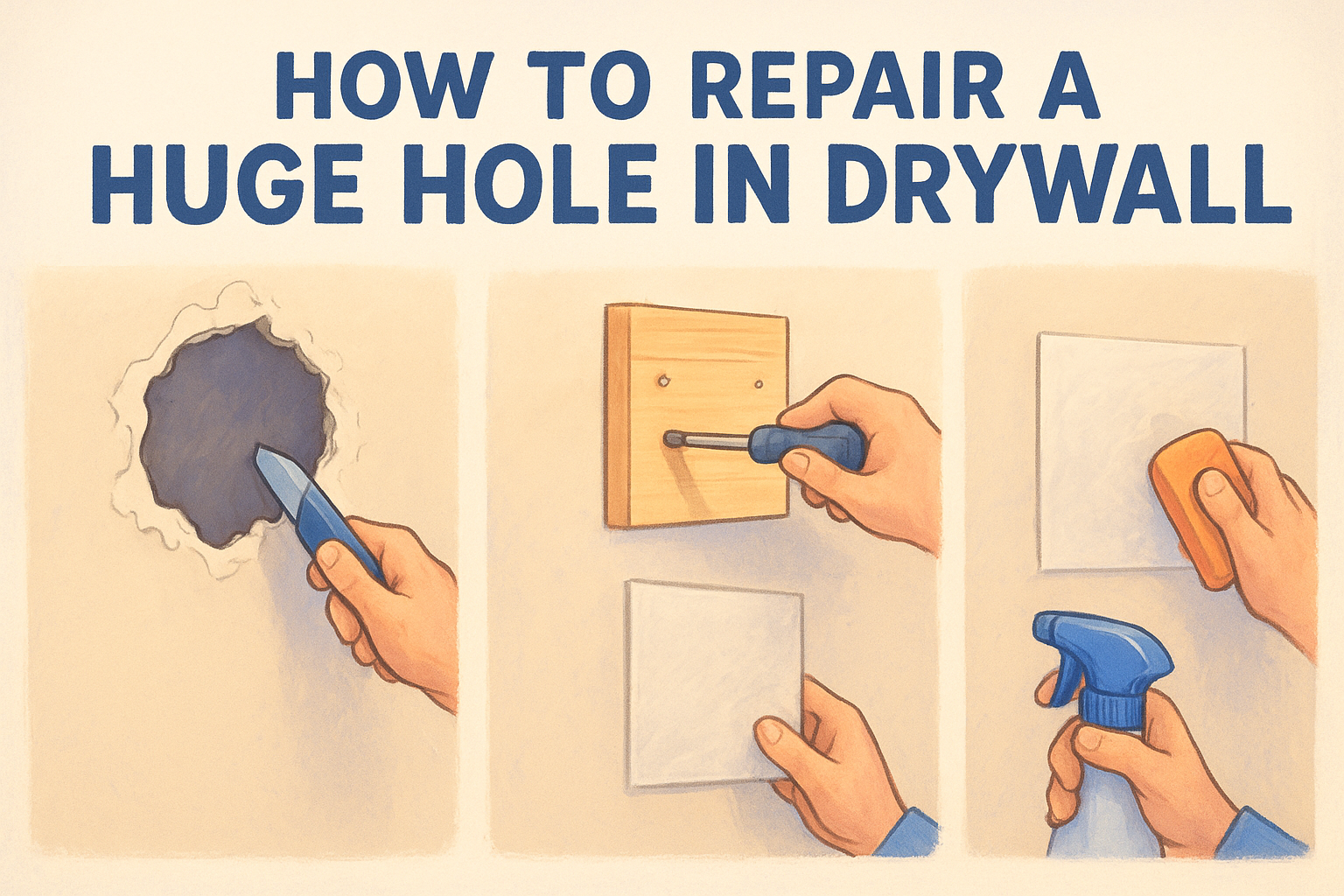
How to fix it fast with a solid backer and patch

Cut the hole into a clean rectangle and attach wood or metal backing strips inside the opening. Then follow these steps:

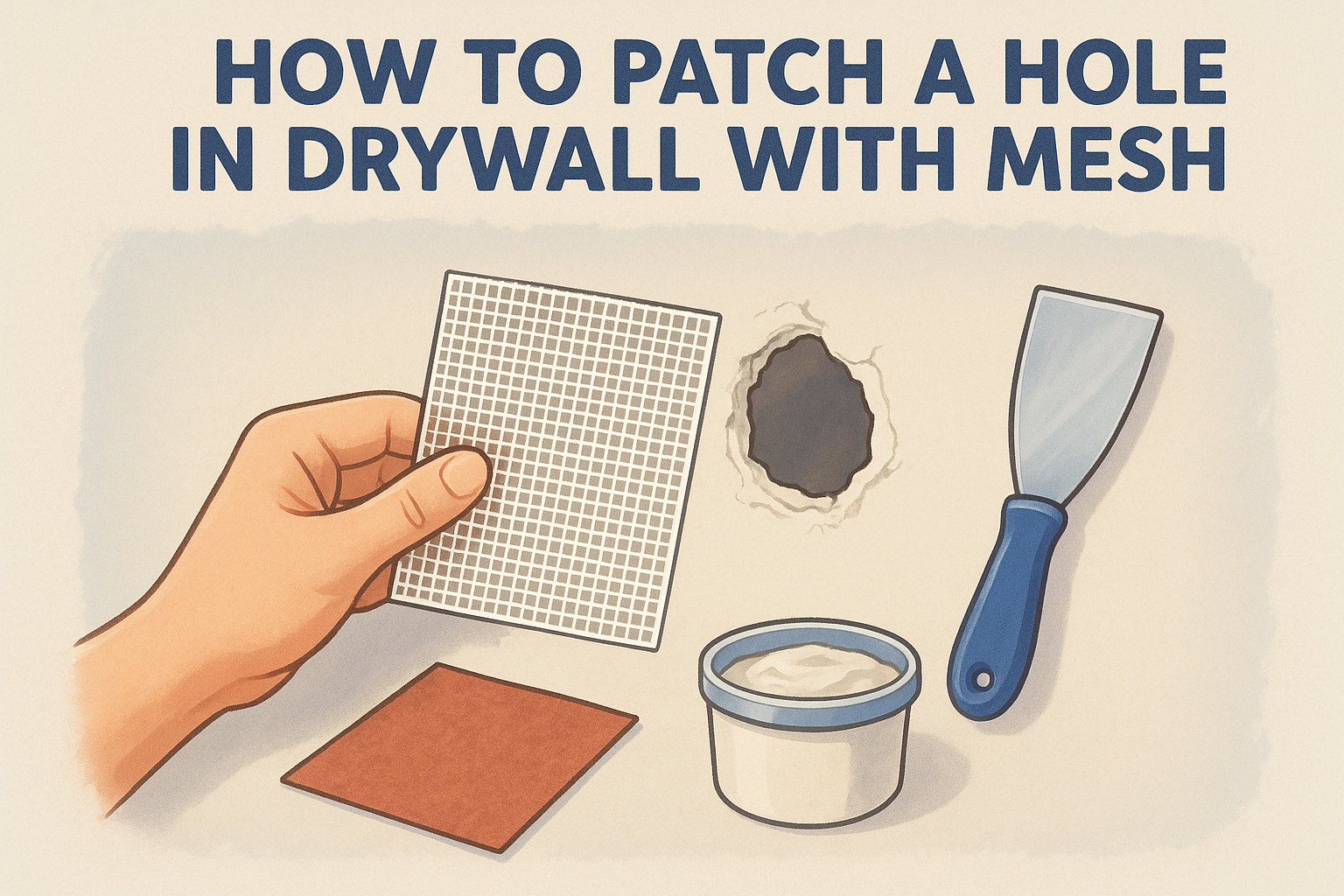
  • Screw a matching drywall patch to the backer
  • Tape all seams with mesh tape
  • Apply two thin coats of joint compound and sand between each coat

Let each compound coat dry fully before sanding to keep seams flat and prevent shrinkage cracks from forming.

How to rebuild and straighten damaged corner bead

Remove any bent corner bead completely before applying new compound. Install fresh metal or vinyl bead, secure it with screws, and build the edge back up with thin compound passes until the corner runs straight.

When you should replace a section instead of patching

If the hole spans more than 12 inches or sits near plumbing or wiring that needs updating, replacing the full panel is faster and more durable than working around multiple obstacles.

Next Steps for a Clean Wall Finish

Now that you can identify the main types of drywall damage in your home, the next step is acting before small problems grow into expensive ones. Water stains spread, cracks widen, and large holes rarely fix themselves. Addressing each issue with the right repair method the first time saves you from redoing the work a season later.

Most of the repairs covered in this guide are manageable for a confident DIYer with the right materials . That said, water damage with mold, active foundation cracks, and large structural holes are situations where professional work pays for itself quickly. Attempting those repairs without the right tools or experience often makes the underlying problem worse.

If your walls need professional attention, the team at Super Shooters has completed over 10,000 residential projects across the Sacramento Valley. Request a free in-home estimate and get a clear picture of exactly what your walls need.

Recent Posts

By cinchweb May 9, 2026
Learn how to fix cracks in plaster walls. Assess the damage, secure loose areas with plaster washers, and apply compound for a seamless, lasting repair.
By cinchweb May 9, 2026
Learn how to texture drywall walls with our guide to orange peel and knockdown finishes. Master mud consistency, tool selection, and expert techniques.
By cinchweb May 7, 2026
Learn how to repair water damaged drywall with our guide. Fix leaks, dry framing, and follow steps to patch and finish walls or ceilings for a seamless look.
By cinchweb May 7, 2026
Learn how to finish drywall with this step-by-step guide. Master professional techniques for taping, mudding, and sanding to get smooth, paint-ready walls.
By cinchweb May 5, 2026
Compare orange peel vs knockdown texture to find the best finish for your home. We break down the costs, cleaning ease, and repair tips for each style.
By cinchweb May 4, 2026
Learn how to patch a hole in the ceiling with our guide for every size. Fix dings, use mesh patches, or replace drywall for a seamless, professional finish.
By cinchweb May 4, 2026
Learn how to smooth textured walls to get a flat, modern finish. Our guide covers asbestos safety, skim coating, and tools for professional results.
By cinchweb May 3, 2026
Compare 10 types of interior wall finishes, including drywall, plaster, and wood. Learn the pros, cons, and costs to find the best look for your home.
By cinchweb May 3, 2026
Learn how to hang drywall on ceiling like a pro. Our guide covers joist marking, panel lift techniques, and screw patterns for a smooth, crack-free finish.
Show More