Share this article

May 31, 2026

What Causes Ceiling Cracks? 5 Common Causes & Red Flags

You noticed a crack running across your ceiling, and now you're staring at it wondering if your house is falling apart. That's a fair reaction. Understanding what causes ceiling cracks is the first step toward figuring out whether you're dealing with a quick cosmetic fix or something that needs immediate professional attention . Most ceiling cracks are harmless, but some aren't, and knowing the difference matters.

At Super Shooters, we've repaired and restored over 10,000 ceilings across the Sacramento Valley in our 30+ years of business. We've seen everything from hairline cracks in aging drywall to deep splits caused by serious structural movement . That hands-on experience is exactly what shaped this guide.

Below, we'll walk you through the five most common causes of ceiling cracks, the red flags that signal real trouble, and when it's time to call a pro instead of reaching for the spackle. By the end, you'll know exactly what you're looking at , and what to do about it.

1. Drywall joint and tape failure

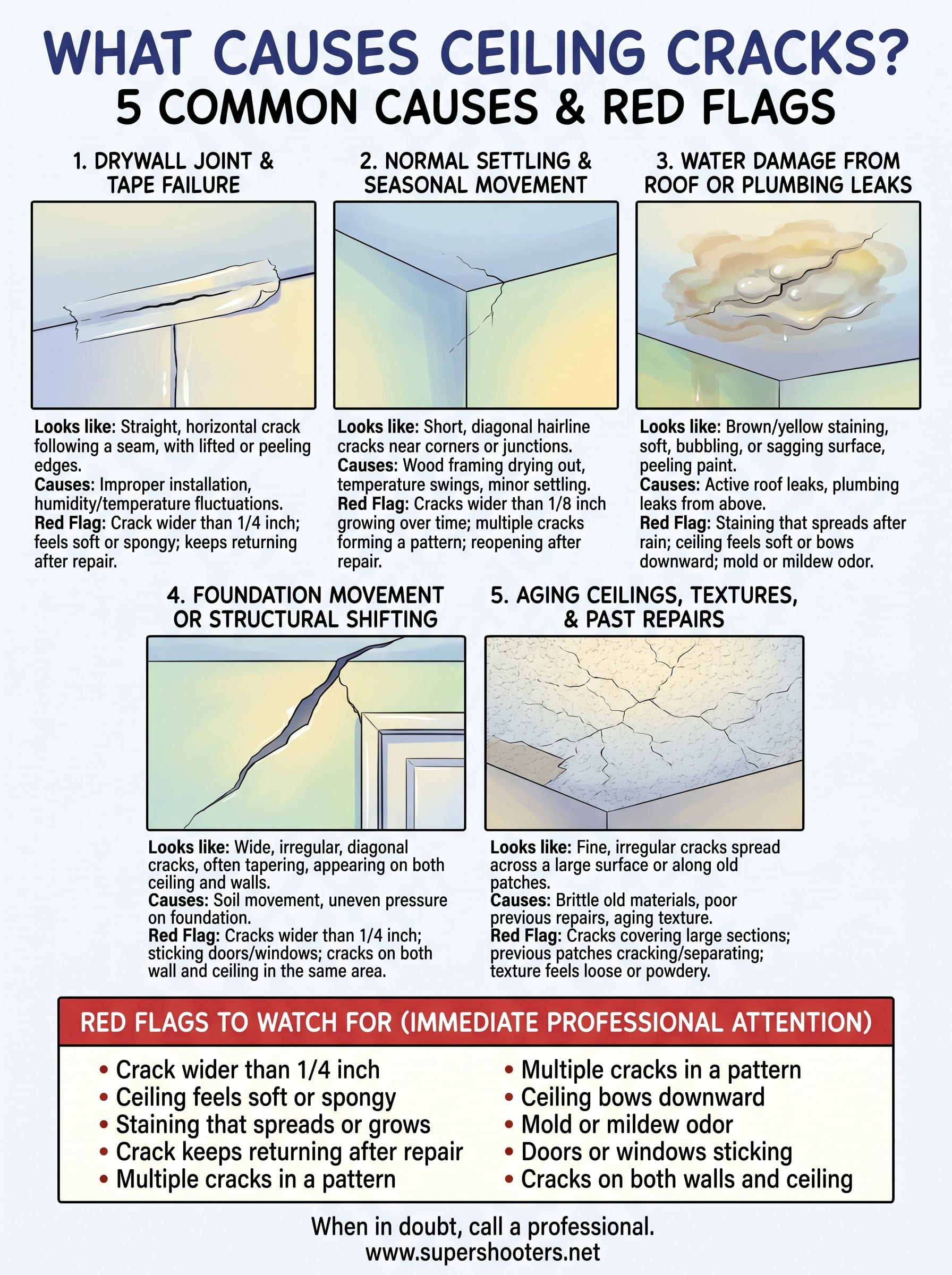
Drywall joint and tape failure is one of the most common answers to what causes ceiling cracks in residential homes. When two sheets of drywall meet, installers cover that seam with joint tape and compound . Over time, that tape can lift, bubble, or separate, and the result shows up as a visible crack running across your ceiling.

What it looks like

You'll typically see a straight, horizontal crack that follows a specific path rather than running randomly across your ceiling. The crack often has slightly raised or peeling edges where the tape has begun to lift from the drywall surface beneath it. In some cases, you can press lightly on the area and actually feel the tape shift under your finger.

Why it happens

This type of failure usually comes down to a few common causes. Improper installation is the biggest one, meaning the original taper applied too little compound, rushed the drying time, or skipped coats entirely. Humidity and temperature fluctuations also cause the drywall and framing to expand and contract repeatedly, putting ongoing stress on that seam across years and decades.

Red flags to watch for

Most joint and tape failures are purely cosmetic , but a few signs tell you to pay closer attention :

  • The crack is wider than 1/4 inch along any part of its length
  • The ceiling surface feels soft or spongy near the crack, which points to moisture
  • The crack keeps returning after you've already repaired it once or twice

If a repaired joint crack keeps coming back, something is driving the movement and the repair alone will not solve it.

What to do next

A qualified drywall contractor can re-tape and re-coat the seam properly, feathering the compound out far enough to blend with your surrounding ceiling. Patching only the visible crack without addressing the tape underneath almost always means the crack returns within a year or two.

2. Normal settling and seasonal movement

All houses move. Wood framing absorbs moisture, concrete foundations shift slightly over decades, and temperature swings cause materials to expand and contract repeatedly across every season. That ongoing movement is one of the most misunderstood answers to what causes ceiling cracks in older homes.

What it looks like

Settling cracks typically appear as short, diagonal hairline cracks near the corners of rooms or at the junction where walls meet the ceiling. They're usually thin, under 1/16 inch wide, and don't follow a straight seam the way tape failures do.

Why it happens

Wood framing dries out and shrinks as a house ages, and Sacramento Valley's dry summers and wet winters push that cycle hard every year. The result is minor, repeated movement that gradually shows up at the ceiling's weakest points.

Red flags to watch for

  • Cracks wider than 1/8 inch that grow over time
  • Multiple cracks forming in a pattern across the room
  • Cracks that reopen shortly after repair

A crack that keeps growing is no longer a settling issue, it's a signal that something structural needs a closer look.

What to do next

Most hairline settling cracks are cosmetic and a drywall contractor can fill, texture, and paint them to match your existing ceiling cleanly.

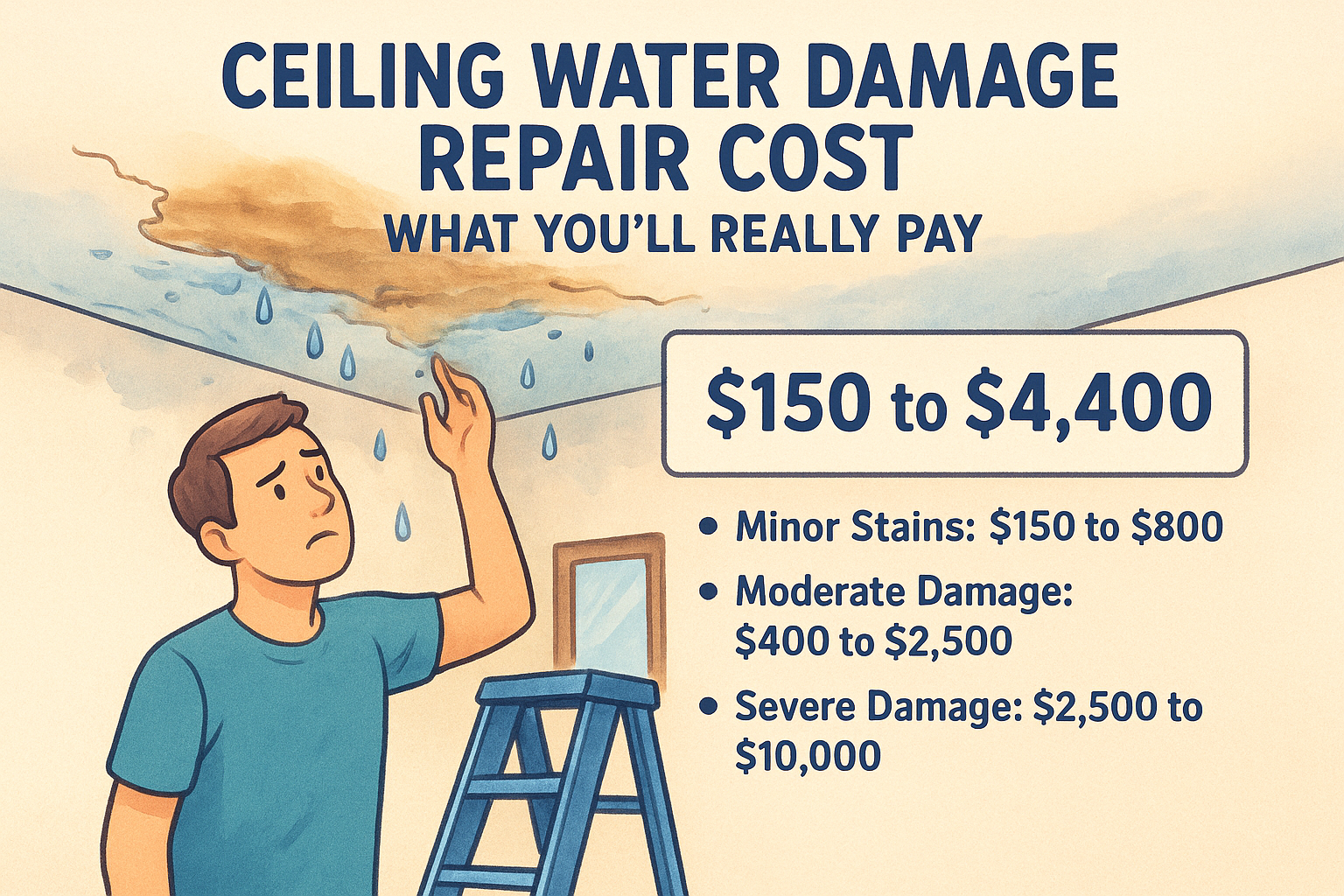
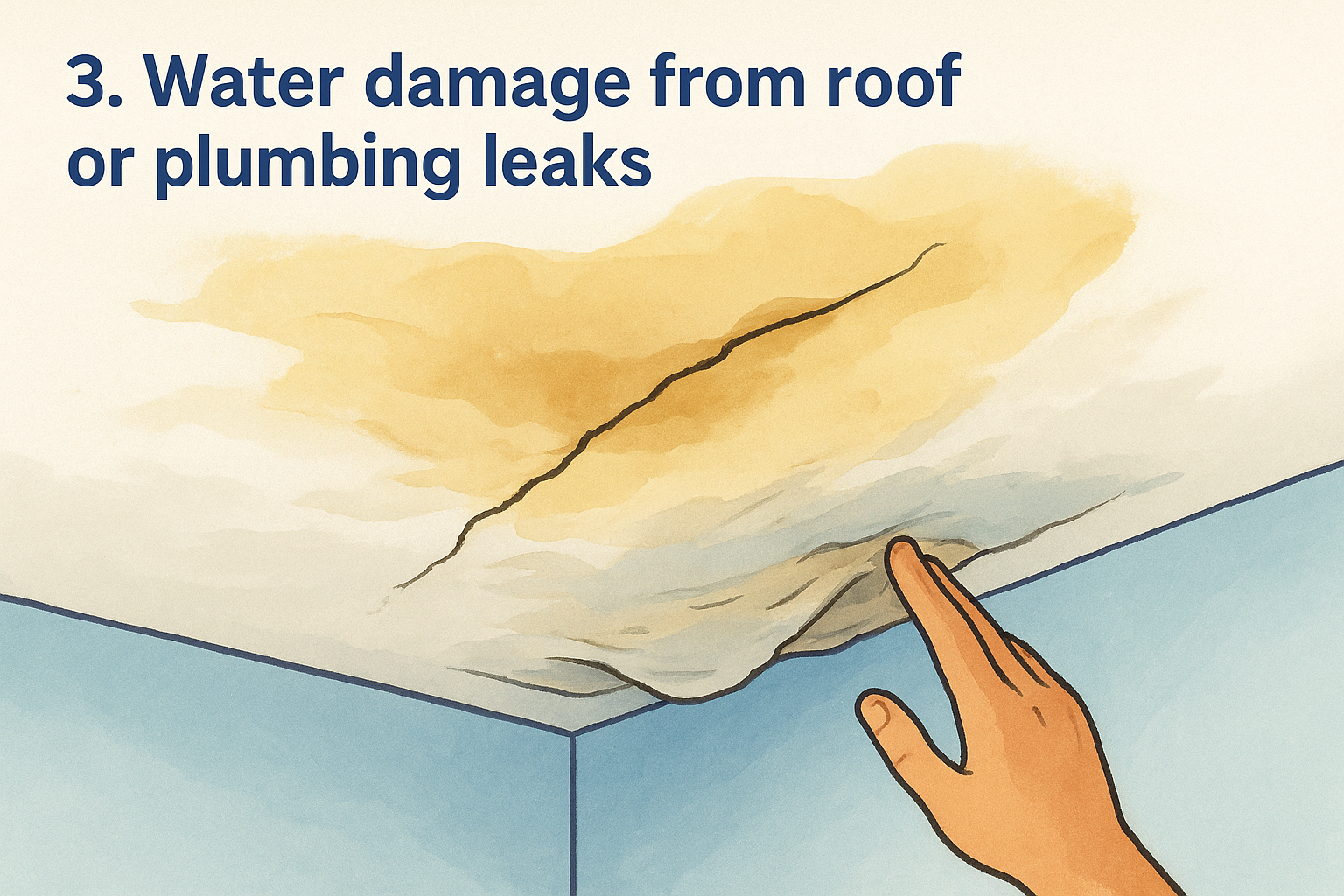
3. Water damage from roof or plumbing leaks

One of the more urgent answers to what causes ceiling cracks is water intrusion, because it points to an active problem somewhere above your ceiling that will not fix itself.

What it looks like

Water-damaged ceilings usually show brown or yellow staining around or along the crack. The drywall surface often feels soft, bubbled, or sagging near the damaged area, and paint may be peeling away from the edges.

Why it happens

Roof leaks and plumbing leaks from pipes or fixtures above the ceiling are the two primary culprits. Water soaks into the drywall, weakens the paper facing, and causes the material to crack, sag, or separate at seams.

Red flags to watch for

  • Staining that spreads or grows larger after rain
  • A ceiling that feels soft or bows downward when you press it
  • Any mold or mildew odor near the cracked area

A sagging, wet ceiling can collapse without warning, so treat any soft or bulging area as an urgent safety concern.

What to do next

Find the water source first before touching the ceiling itself. Repairing the drywall before fixing the leak wastes money, because the damage will return. A contractor can assess the full extent of the water damage and replace the affected drywall once the source is resolved.

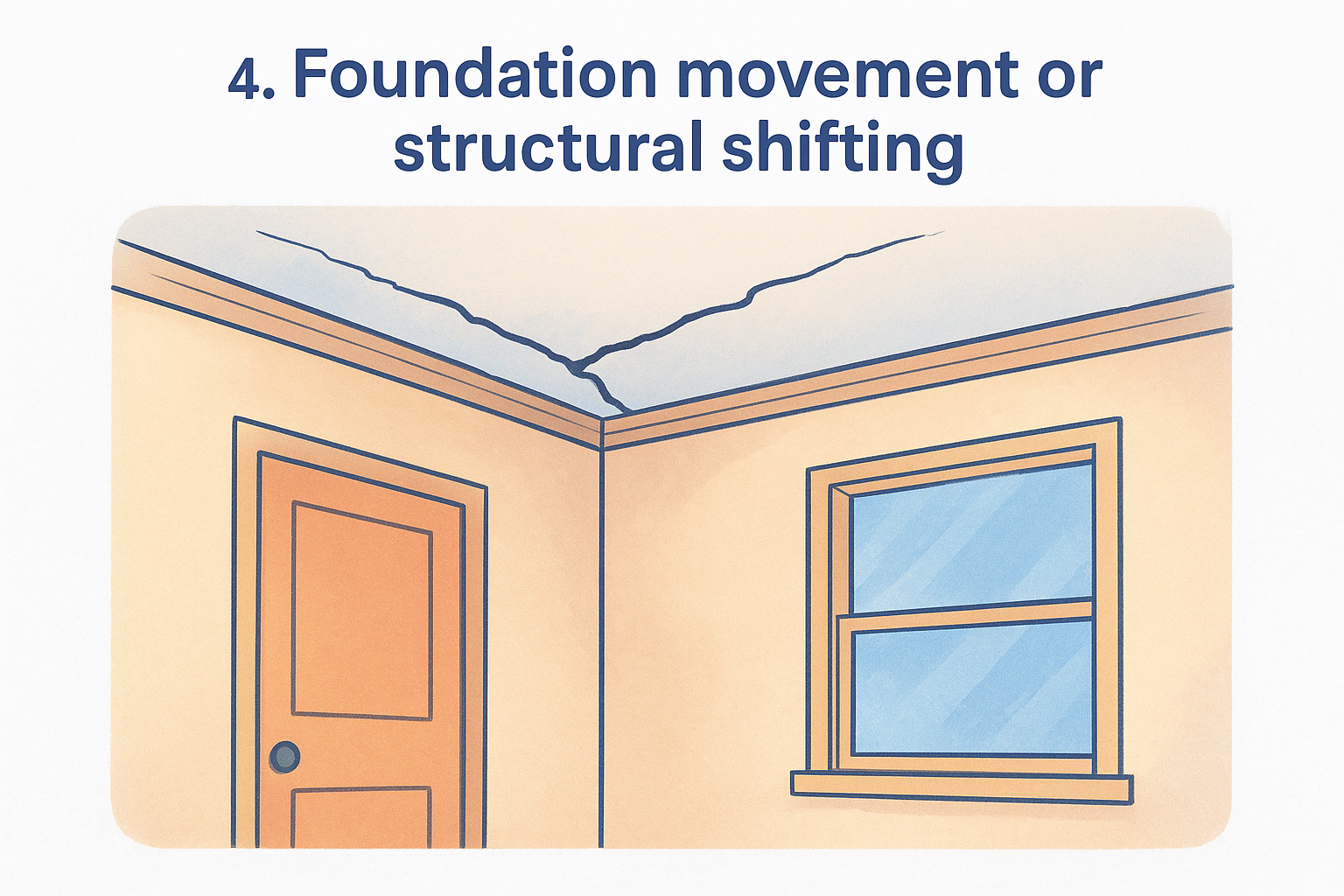
4. Foundation movement or structural shifting

Foundation movement is one of the most serious answers to what causes ceiling cracks , and it's the category that demands your full attention. When your foundation shifts, that movement travels up through your walls and into the ceiling framing, producing cracks that can point to real structural damage .

What it looks like

Foundation-related cracks typically run diagonally across the ceiling or appear at corners where the ceiling meets interior walls. They're usually wider and more irregular than normal settling cracks, often tapering from wide at one end to narrow at the other.

Why it happens

Soil movement beneath your foundation is the primary driver. Expansive clay soils common in the Sacramento Valley swell when wet and shrink in dry periods, putting uneven pressure on your slab or footings year after year.

Red flags to watch for

  • Cracks wider than 1/4 inch
  • Doors or windows that stick or won't close properly
  • Cracks forming on both walls and ceiling in the same area

Ceiling cracks paired with sticking doors or sloping floors are a signal to contact a structural engineer before scheduling any cosmetic repairs.

What to do next

Do not patch these cracks until a professional evaluates the underlying cause. A licensed contractor can assess the ceiling damage itself, but a structural engineer or foundation specialist needs to address the root problem first.

5. Aging ceilings, textures, and past repairs

Older homes carry decades of patching, repainting, and retexturing, and that history shows on your ceiling. Age itself is a legitimate answer to what causes ceiling cracks, particularly in homes where popcorn or acoustic textures have been applied over drywall that has shifted for 30 or more years.

What it looks like

You'll notice fine, irregular cracks spread across a larger surface area rather than following one line. Old texture coatings can shrink and crack in a pattern that resembles dried mud, or cracks may appear right along the edges of previous patch jobs.

Why it happens

Older drywall compound and texture materials lose flexibility over time and become brittle. When previous repairs were made with incompatible or low-quality products , those spots fail faster than the surrounding ceiling.

Red flags to watch for

Watch for a few specific warning signs that tell you the problem goes beyond simple aging:

  • Cracks covering large sections of the ceiling
  • Previous patches that are cracking or separating at their edges
  • Texture that feels loose or powdery when touched

If the majority of your ceiling surface shows cracking, a full resurfacing will save you more money long-term than repeated spot repairs.

What to do next

A drywall contractor can evaluate whether targeted repairs are enough or whether resurfacing the entire ceiling makes more practical sense given the full extent of the aging.

What to do now

Now that you know what causes ceiling cracks , you can make a smarter decision about your next step. Most cracks fall into one of the five categories above, and most of them are repairable without major disruption to your home or your budget. The key is matching the repair to the actual cause rather than just covering the crack and hoping it stays hidden.

Your safest move is to get a professional set of eyes on the damage before you commit to any repair approach. What looks like a simple tape failure can sometimes mask a moisture problem underneath, and a contractor with real experience will catch that quickly. If your ceiling shows any of the red flags covered in this guide, act sooner rather than later.

Super Shooters has completed over 10,000 ceiling and drywall projects across the Sacramento Valley. Schedule a free drywall repair estimate and find out exactly what your ceiling needs.

Recent Posts

By cinchweb June 2, 2026
See what you'll pay for hanging and finishing in 2026. Learn the drywall labor cost per sheet to help you budget your project and find a fair quote.
By cinchweb June 1, 2026
Get smooth walls with these pro drywall finishing tips. Master mud consistency, tape application, and sanding to achieve a flawless, professional finish.
By cinchweb May 31, 2026
Estimate your water damage drywall repair cost with our 2026 guide. Compare labor rates, square foot pricing, and learn when to repair vs. replace panels.
By cinchweb May 31, 2026
Is your ceiling bowing? Learn how to fix a sagging ceiling by identifying water damage, securing loose fasteners, and spotting structural red flags.
By cinchweb May 28, 2026
Fix your home with this guide to drywall repair after water damage. Learn to dry wall cavities, replace panels, and match textures for a seamless finish.
By cinchweb May 28, 2026
Follow these drywall installation steps to hang, tape, and finish your walls like a pro. Learn everything from framing prep to achieving a seamless finish.
By cinchweb May 26, 2026
Calculate the cost to drywall a room in 2026. This guide breaks down square foot rates, labor factors, and material costs to help you budget for your project.
By cinchweb May 25, 2026
Learn how to repair plaster walls by stabilizing loose areas, fixing cracks with mesh tape, and matching textures for a finish that makes damage invisible.
By cinchweb May 25, 2026
Learn how to calculate drywall needed for your project. Our guide covers measuring, subtracting openings, and adding waste for an accurate sheet count.
Show More