Share this article

June 12, 2026

Drywall Repair Cost Estimate: 2026 Prices By Repair Type

A small hole from a doorknob, a long crack running down the hallway, water stains spreading across the ceiling, drywall damage comes in all shapes, and so do the bills to fix it. Getting a clear drywall repair cost estimate before you hire anyone is the difference between paying a fair price and getting taken for a ride. But with so many variables, repair size, damage type, materials, labor rates , it's hard to know what "fair" actually looks like.

That's exactly what this guide breaks down. We've pulled together 2026 pricing data across common repair types so you can compare quotes with confidence. Whether you're dealing with a fist-sized hole, ceiling damage from a roof leak, or settlement cracks snaking through your walls, you'll find real cost ranges organized by the specific work involved.

At Super Shooters, we've completed over 10,000 drywall and ceiling projects across the Sacramento Valley in our 30+ years of business. We see repair quotes, and the confusion around them, every single day during our free in-home consultations. This article reflects what we've learned from decades of hands-on experience pricing and performing these repairs. Use it to understand what drives costs up or down, spot inflated bids, and walk into your next estimate already knowing what to expect.

Why a drywall repair cost estimate matters

Walking into a contractor conversation without knowing typical price ranges puts you at an immediate disadvantage. You won't know whether a $450 quote for a small ceiling patch is reasonable or inflated, and you won't have a clear benchmark to push back on line items that don't add up. A proper drywall repair cost estimate arms you with the context to make smart decisions rather than just trusting that the number you're given is fair.

What happens when you skip the research

Most homeowners collect one or two quotes before hiring someone, and that's often not enough. Drywall repair pricing varies significantly between contractors even in the same zip code, not because the work is different, but because overhead costs, crew size, and profit margins differ across companies. If you only have two quotes and both happen to be inflated, you have no frame of reference to catch that.

Knowing the market rate before you call anyone shifts the entire dynamic of the conversation in your favor.

Without doing any research first, you're also more likely to agree to unnecessary work. Some contractors will suggest replacing a full drywall sheet when a targeted patch repair would cost a fraction of that and hold up just as well over time. When you already know what each repair type typically costs, those upsells are much easier to identify and decline .

Understanding what you're actually paying for

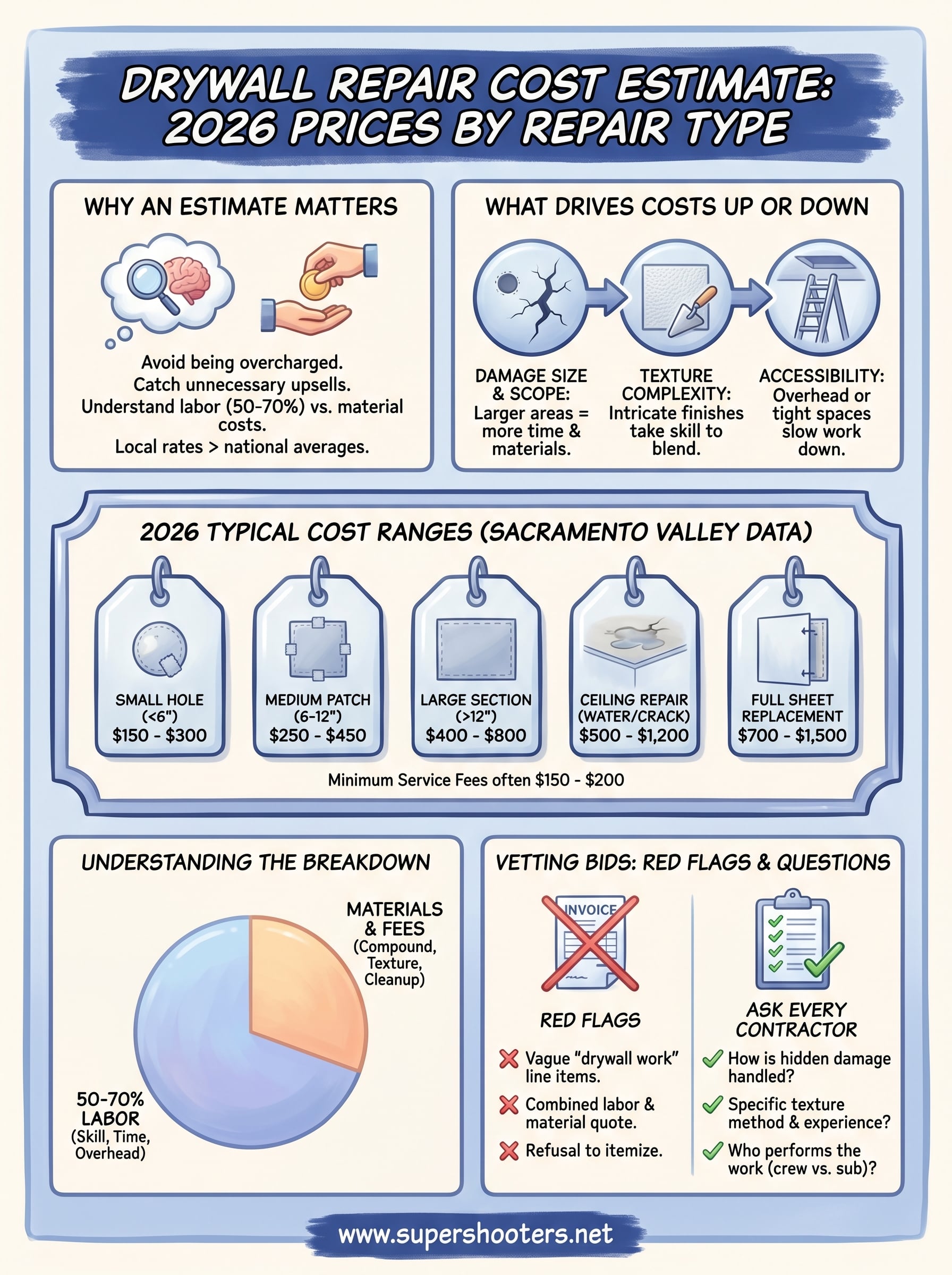
Labor typically makes up 50 to 70 percent of any drywall repair quote. The rest covers materials, which are relatively inexpensive on their own, along with any fees for texture matching, primer, or cleanup. Knowing this breakdown helps you understand why quotes can swing so much on the same job. A contractor with higher overhead, a larger crew, or more comprehensive insurance will price differently than a solo handyman.

Understanding that breakdown also helps you have a more productive conversation with whoever you hire. Asking specific questions about labor hours versus material costs signals that you're paying attention. That alone can discourage price padding, because contractors know that informed customers read line items closely and ask follow-up questions.

Why local rates matter more than national averages

National pricing guides give you a useful starting point, but your actual repair cost depends heavily on where you live. Labor rates in Sacramento differ from those in smaller rural markets, and material costs shift with local supply chains and regional demand. Local experience built over decades in a specific region gives you a much more accurate frame of reference than a national average compiled from data across dozens of states.

Regional rates also reflect local code requirements, permit considerations, and the real cost of running a legitimate contractor business in your market. A contractor who operates in your specific area will give you a quote grounded in current local conditions, not a ballpark figure pulled from somewhere else and applied without adjustment.

Average drywall repair costs in 2026

Most homeowners pay somewhere between $150 and $900 for a standard drywall repair in 2026, with the midpoint of most professional quotes landing around $300 to $500 for a single mid-size patch. Those numbers move up or down based on damage size, repair type, and whether the contractor needs to match an existing texture on your walls or ceiling. A thorough drywall repair cost estimate breaks all three of those factors into separate line items so you know exactly what you're paying for before work begins.

An estimate that gives you one lump sum without any breakdown is nearly impossible to verify or compare against other bids.

Typical cost ranges at a glance

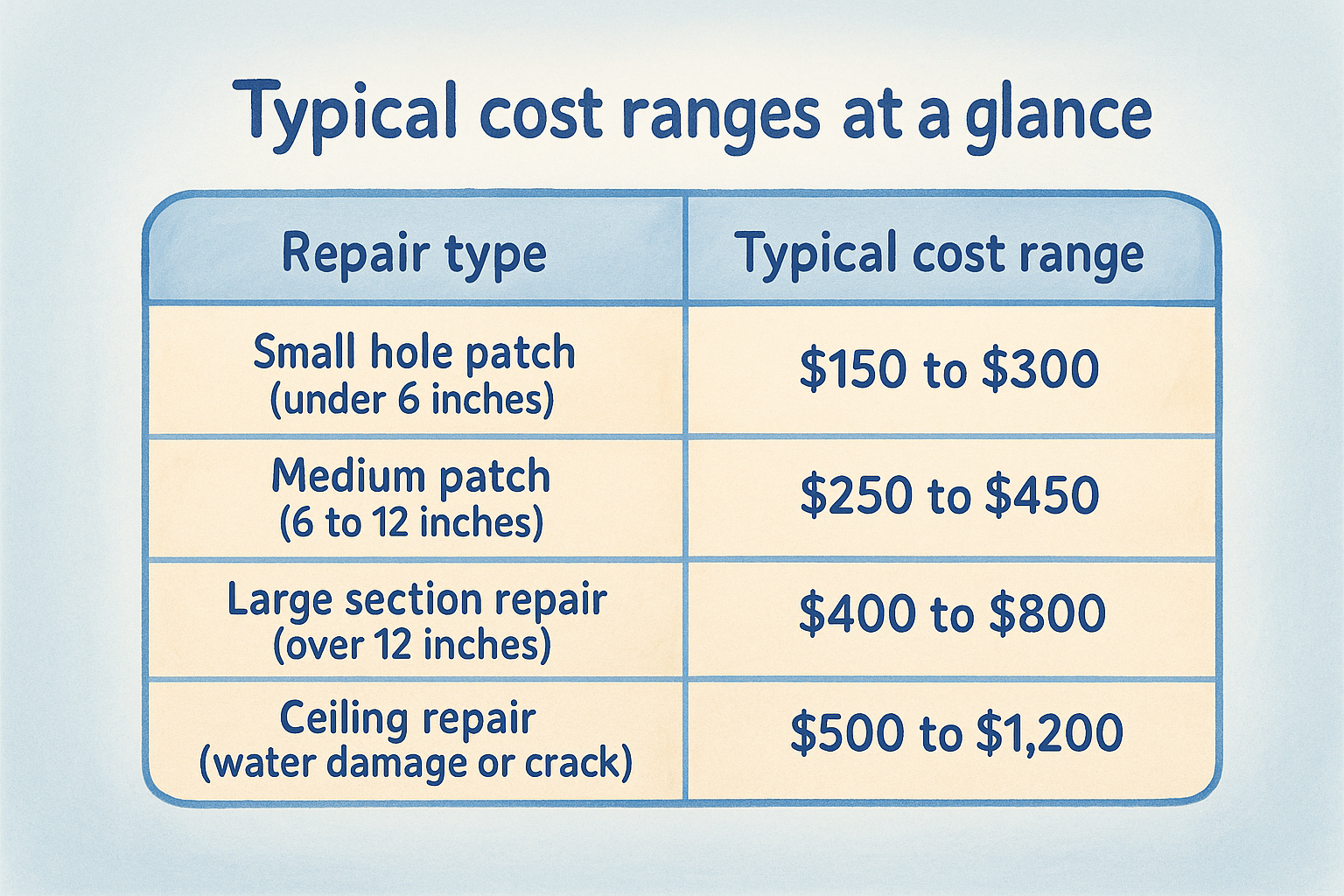
Getting a realistic picture of where most repairs land helps you quickly spot quotes that are out of range in either direction. The table below covers 2026 pricing based on repair scope and labor rates consistent with the Sacramento Valley market.

Repair type Typical cost range
Small hole patch (under 6 inches) $150 to $300
Medium patch (6 to 12 inches) $250 to $450
Large section repair (over 12 inches) $400 to $800
Ceiling repair (water damage or crack) $500 to $1,200
Full drywall sheet replacement $700 to $1,500

These ranges assume professional labor , standard materials, and one round of texture application. Jobs requiring multiple coats, specialty texture matching, or paint will consistently push toward the higher end of each range.

Minimum service fees to watch for

Many contractors apply a minimum service fee regardless of how minor the damage is, and in 2026 that floor typically runs between $150 and $200 across the Sacramento market. If you receive a quote below that threshold, ask directly whether the price covers full labor or whether additional charges apply once work starts. Opening bids that quietly expand after a crew arrives on site are one of the most common frustrations homeowners report after drywall repairs, and knowing this upfront helps you avoid that situation entirely.

2026 prices by drywall repair type

Not all drywall damage costs the same to fix, and grouping repairs by type gives you a much sharper drywall repair cost estimate than relying on a single average. The sections below break out the most common repair categories so you can match your specific damage to a realistic price range before you get a single quote.

Small holes and standard patch repairs

Small holes from anchors, doorknobs, or minor impacts are the most common repairs homeowners request, and they're also the most straightforward to price. For holes under six inches , expect to pay between $150 and $300 in 2026, which covers the patch material, joint compound, and one pass of texture to blend the repair into the surrounding wall.

Medium-sized holes between six and twelve inches require a backing board or California patch method, which adds labor time and pushes the cost range to $250 to $450. If your wall has a distinct texture, matching it precisely will land you closer to the top of that range.

Ceiling repairs and water damage

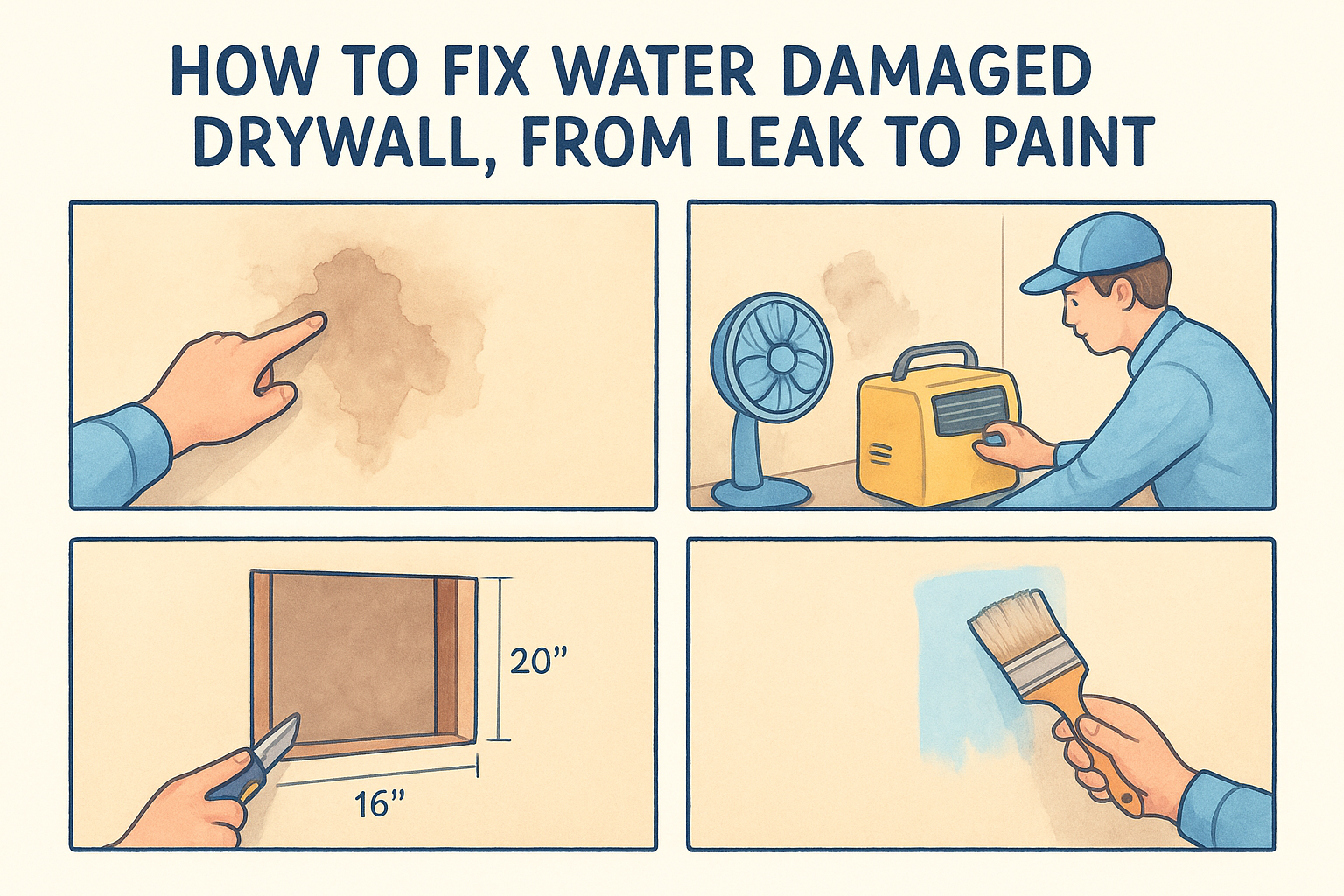
Ceiling work costs more than wall repairs at the same damage size because it requires overhead labor, which is physically demanding and slower. A standard ceiling patch from a fixture install or minor impact runs $300 to $600. Water damage repairs are more expensive because the contractor needs to confirm the moisture source is resolved before patching, and wet or soft drywall sections often require full panel replacement rather than a simple patch.

Water-damaged ceiling repairs commonly run $500 to $1,200 depending on how far the moisture spread before you caught it.

Cracks and settlement damage

Hairline cracks along seams or corners typically run $150 to $300 when the underlying cause isn't structural. Settlement cracks, which are wider and may recur if the foundation is still shifting, require more prep work and cost $300 to $600 per affected area . A contractor who skips asking about your home's age or foundation history before quoting a crack repair is cutting corners on the diagnosis.

What changes your quote the most

Several factors push a drywall repair cost estimate higher or lower, and understanding them helps you anticipate how contractors will price your specific job. Two identical-looking repairs in different homes can carry very different price tags once a contractor accounts for the variables below.

Damage size and scope

The size of the damaged area is the single biggest driver of your final quote. Small holes and hairline cracks require minimal materials and quick labor, which keeps costs at the low end. Larger sections of damage require more compound, more drying time between coats, and additional labor hours, all of which add up fast.

Scope also matters beyond the visible damage. A repair that looks surface-level can involve soft or compromised drywall behind the damaged area , which a contractor won't fully assess until work begins. Getting a quote that accounts for a potential worst-case scenario upfront protects you from surprise charges once the wall is opened.

Ask any contractor to explain their process for handling additional damage discovered after work starts, and get that answer in writing before signing anything.

Texture matching complexity

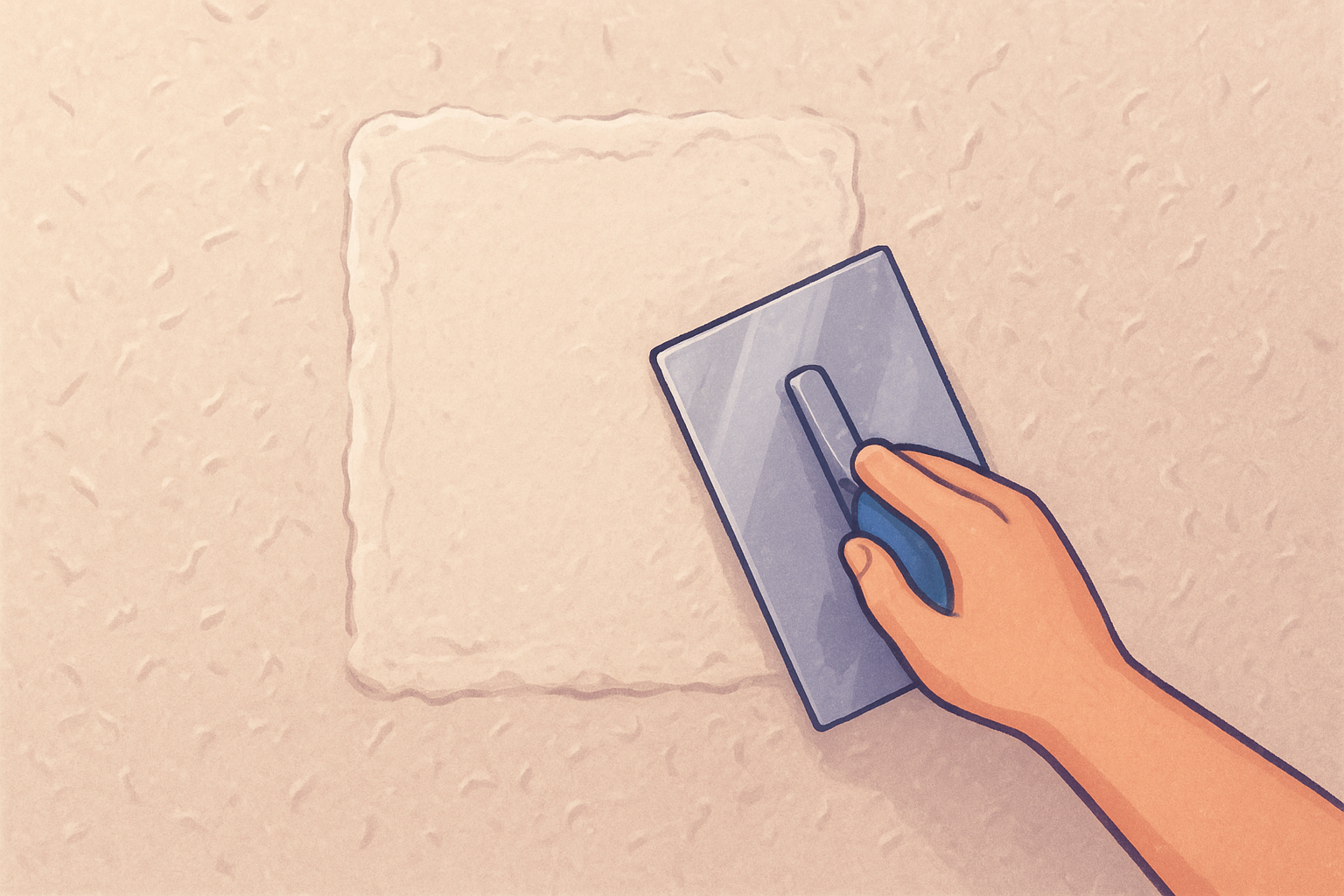
Your walls likely have a specific texture applied to them, and blending a patch invisibly into that texture takes skill and time. Common textures like orange peel or knockdown are relatively easy to replicate. More intricate finishes, including hand-applied skip trowel or Spanish lace, require a more experienced applicator and add measurable labor cost to the job.

Failing to match the texture properly leaves a visible patch that's obvious to anyone who walks into the room, so this isn't a step you want a contractor to rush or undercharge.

Accessibility and location

Where the damage sits in your home affects how quickly a crew can work. Ceiling repairs require overhead labor , which slows production and strains the crew, driving up the hourly labor cost compared to the same repair on a flat wall. Tight spaces like closets, stairwells, or areas crowded with furniture also slow down setup and movement , and most experienced contractors price that friction into their quotes.

How to get an accurate estimate and vet a bid

Getting an accurate drywall repair cost estimate starts before the contractor ever walks through your door. Describe your damage clearly when you call, including the approximate size, location, whether moisture is involved, and what texture your walls have. Contractors who ask follow-up questions before scheduling are already signaling that they care about quoting the actual job rather than giving you a low number to win the bid.

Collect at least three estimates for any job over $400 so you have a real comparison, not just two data points that may both be off.

Questions to ask every contractor

Before you agree to any bid, ask each contractor the same set of questions so you can compare their answers side by side. Consistent questions produce comparable answers , which makes it much easier to spot outliers.

  • How do you handle additional damage found after opening the wall?
  • What texture method will you use, and have you matched this type before?
  • Does this quote include all coats of compound, texture, and cleanup?
  • Who performs the work , your crew or subcontractors?
  • Is your license current, and does your insurance cover residential repairs?

Contractors who hesitate or deflect on any of these questions are worth removing from your list. A reputable company answers these confidently because they deal with them on every job.

Red flags in a written bid

A written bid tells you as much about a contractor as any conversation does. Vague line items like "drywall work" or "repairs as needed" without any specifics give the contractor flexibility to charge more once work begins, and you have no written protection against that.

Watch for bids that list materials and labor as a single combined number with no breakdown. That structure makes it impossible to verify whether the material cost is accurate or whether labor hours are inflated. Request an itemized quote, and if a contractor refuses to provide one, treat that as a firm reason to move on to someone else.

A simple next step

You now have a working drywall repair cost estimate framework that covers what typical repairs cost, what drives prices up or down, and what to look for in a written bid. That knowledge puts you in a much stronger position when you talk to contractors, because you know what questions to ask and what answers should sound like before anyone starts throwing numbers at you.

Putting that knowledge to work starts with one phone call or a quick visit to our site. Super Shooters has handled over 10,000 residential drywall and ceiling projects across the Sacramento Valley, and we offer free in-home consultations with no payment required until your project is complete. Our estimates are itemized, straightforward, and backed by 30 years of local experience . If you're ready to get a fair, accurate number for your specific repair, start with our drywall repair and patching service page.

Recent Posts

By cinchweb June 12, 2026
Compare labor and material prices with this 2026 drywall cost breakdown. Learn how to budget for your project and avoid overpaying for installation.
By cinchweb June 11, 2026
Understand what is drywall finishing, including levels 0-5 and essential tools, to ensure your home’s walls are smooth, professional, and crack-free.
By cinchweb June 11, 2026
See what does knockdown texture look like on walls and ceilings. Learn how these flat-topped patterns hide imperfections and modernize your home’s interior.
By cinchweb June 8, 2026
Fix cracks, holes, and sagging with these plaster ceiling repair tips. Learn how to address root causes, stabilize surfaces, and get a professional finish.
By cinchweb June 7, 2026
Learn how to blend drywall patch texture for invisible repairs. Match patterns, feather edges, and prime like a pro for a seamless finish on every wall.
By cinchweb June 6, 2026
Update your home with these 11 popcorn ceiling replacement options. Compare modern finishes like wood planks, tiles, and professional removal techniques.
By cinchweb June 6, 2026
Discover 5 types of knockdown wall texture like splatter, stomp, and lace. Learn how each is applied and find the perfect look for your home’s interior.
By cinchweb June 4, 2026
Compare 5 common types of drywall texture finishes, from orange peel to knockdown. Learn the pros and cons of each to find the best look for your home.
By cinchweb June 4, 2026
Fix wall holes and cracks with this step-by-step guide to drywall repair for beginners. Learn to patch, sand, and finish your walls like a professional.
Show More