Share this article

July 18, 2026

Asbestos Popcorn Ceiling Removal Cost: Price Breakdown

If your home still has that bumpy popcorn ceiling from the 60s or 70s, you're probably wondering what it will actually cost to get rid of it, especially once asbestos enters the conversation. Asbestos popcorn ceiling removal cost varies more than most homeowners expect, and quotes can swing wildly depending on who you call and what they find during testing.

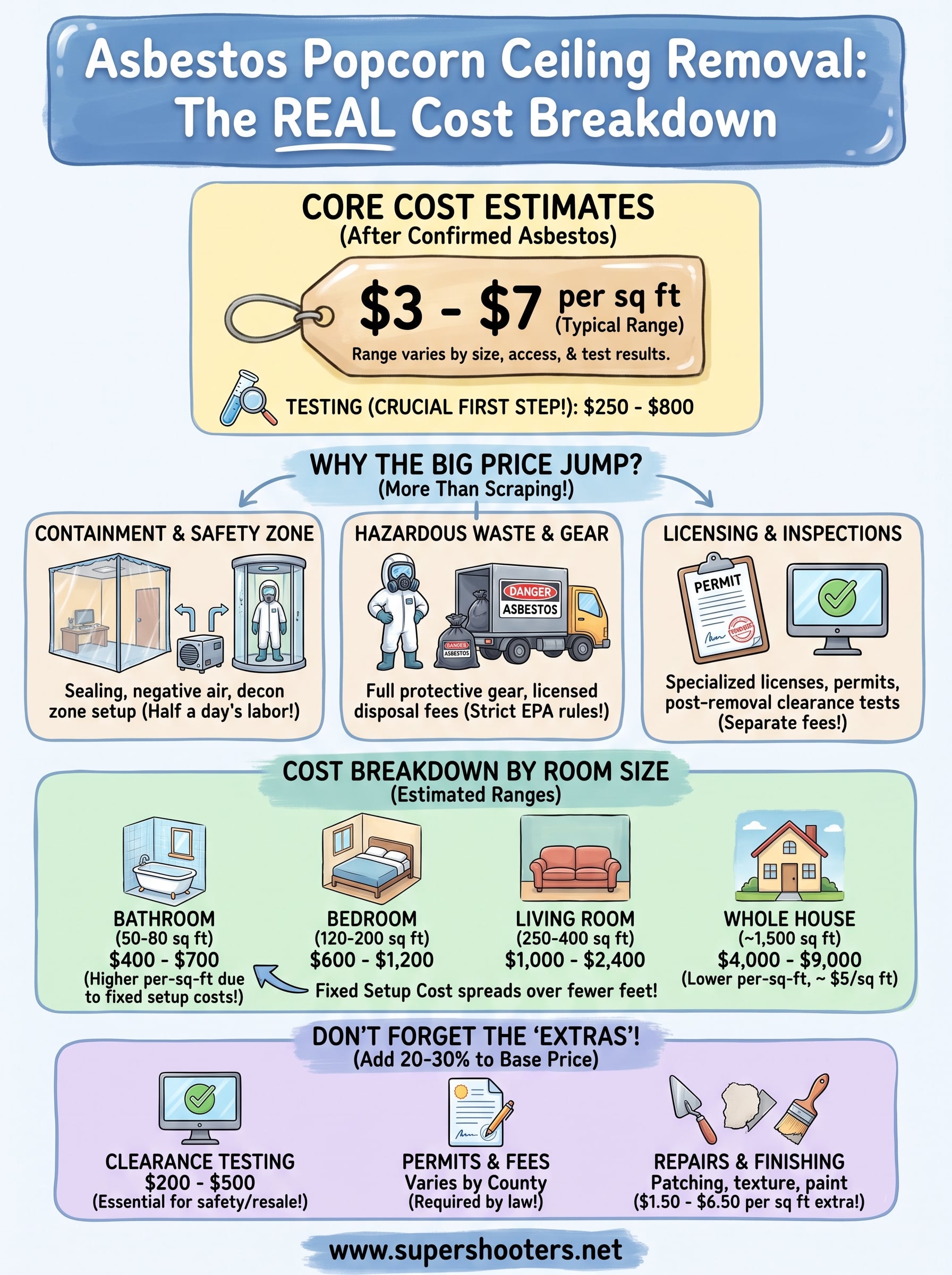
Most Sacramento Valley homeowners pay somewhere between $3 and $7 per square foot once asbestos abatement is confirmed, though that range shifts based on ceiling size, accessibility, and whether the material tests positive at all. Testing alone runs $250 to $800, and that step matters because skipping it can turn a simple weekend project into a health and legal liability.

We've handled thousands of these jobs across the Sacramento region over 30 years, and we know exactly where the money goes on a project like this. This breakdown walks through per-square-foot pricing, testing fees, abatement costs, and the extra charges that catch homeowners off guard, so you know what a fair quote actually looks like before you sign anything.

Why asbestos removal costs so much more than standard scraping

Scraping a plain popcorn ceiling with no asbestos is a messy but simple job. A crew wets the texture, scrapes it off, patches the surface, and hauls a few bags of debris to the curb. That job runs $1 to $3 per square foot in most cases. Asbestos-containing ceilings flip that entire process on its head, because now every step has to follow federal and state safety rules instead of just good technique.

Containment changes everything

Once a ceiling tests positive, the crew can't just scrape and go. They have to seal off the work area with plastic sheeting, run negative air machines to keep fibers from drifting into the rest of your home, and set up a decontamination zone for workers moving in and out. That setup alone can take half a day before any actual removal starts, and it's labor you're paying for even though no ceiling material has come down yet.

Containment and disposal rules, not the scraping itself, are what push asbestos removal costs so much higher than standard popcorn ceiling scraping.

Protective gear and disposal aren't optional

Workers wear full-body suits, respirators, and gloves for the entire job, and none of that gear gets reused between projects once it's contaminated. The debris itself becomes hazardous waste , which means it can't go in a regular dumpster. It has to be double-bagged, labeled, and hauled to a licensed disposal facility that accepts asbestos-containing material. The California Department of Toxic Substances Control tracks this waste stream closely, and disposal fees alone can add several hundred dollars to a project that would otherwise cost almost nothing to haul away.

Licensing and inspection add their own line items

Abatement contractors also carry different licensing than a general remodeling crew, and that licensing isn't free to maintain. Depending on your county, a permit or notification may be required before work starts, and some jurisdictions require air clearance testing once the job wraps up to confirm the space is safe to reoccupy. That clearance test is a separate expense from the initial testing that identified the asbestos in the first place, and it's one more step a standard scraping job never has to deal with.

Add it all up and you're not just paying for someone to remove texture from your ceiling. You're paying for containment setup, protective equipment, specialized disposal, licensing, and sometimes a follow-up inspection. Each of those steps exists because airborne asbestos fibers cause serious lung disease, and the U.S. Environmental Protection Agency treats this material as a genuine health hazard, not a formality to check off. That's the real reason the price per square foot jumps so much once testing comes back positive.

How to get an accurate cost estimate for your ceiling

A phone quote for popcorn ceiling work is basically a guess. You need someone in your home, looking at your actual ceiling, before any number means much. Ceiling condition, room layout, and existing damage all change labor time, and none of that shows up in a photo you text over.

Start with in-home testing, not a verbal estimate

Before anyone gives you a real price, a sample needs to come off your ceiling and go to a lab. Reputable contractors either send a certified inspector or work with a third-party lab that follows EPA-recognized testing methods. Skip this step and you're pricing a job blind, because the number changes completely depending on whether the lab comes back positive.

Ask contractors these questions before signing anything

  • Do you pull your own samples, or do I need a separate inspector?
  • Is testing included in the estimate, or billed separately?
  • What's included in the abatement price: containment, disposal, and clearance testing?
  • Do you carry the licensing required for asbestos work in this county?
  • Is the estimate written, itemized, and free with no upfront deposit?

Get multiple quotes, but compare apples to apples

Two estimates that look close on paper can hide very different scopes. One contractor might quote containment and disposal, while another leaves those out and adds them later as change orders. Push every bidder to break down labor, testing, containment, disposal, and any repair work separately, so you're not comparing a stripped-down number against a full-service one.

We walk every Sacramento Valley home in person before quoting a job, because square footage alone never tells the whole story. Ceiling height, furniture that needs moving, and how many rooms connect to the work area all shift labor time. A free, itemized in-home estimate protects you from surprise charges once the crew is already tearing into your ceiling.

Cost breakdown by square footage and room size

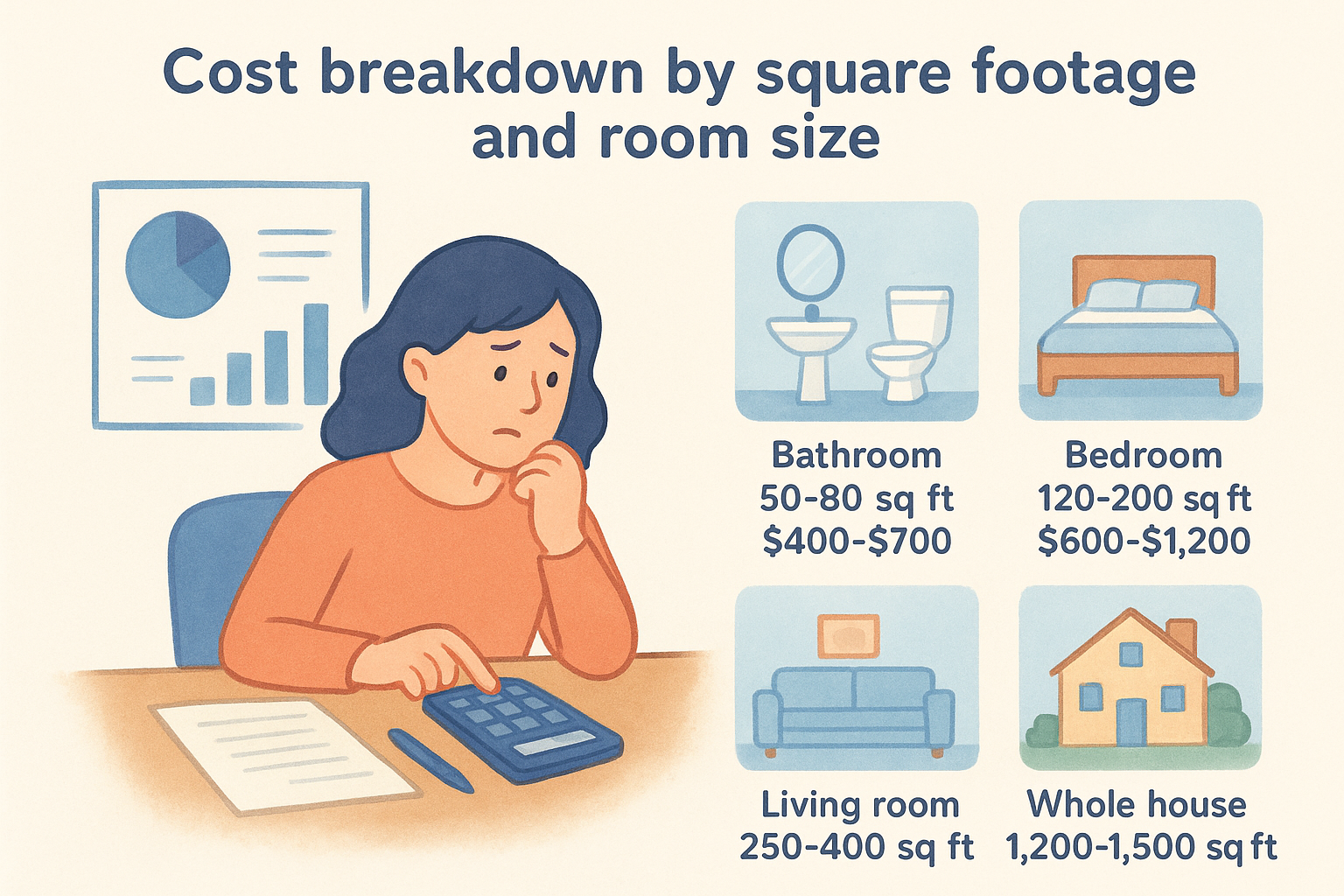
Room size drives the total more than any other single factor, but the relationship isn't perfectly linear. A tiny bathroom ceiling might cost more per square foot than a great room because containment setup takes almost the same time regardless of size. Small rooms carry a fixed setup cost that gets spread over fewer square feet, so the per-foot price looks worse even though the crew isn't working any harder.

Typical price ranges by room

Here's what Sacramento Valley homeowners generally pay once asbestos is confirmed, based on average ceiling square footage for common room types:

Room type Typical ceiling size Estimated cost range
Bathroom 50-80 sq ft $400-$700
Bedroom 120-200 sq ft $600-$1,200
Living room 250-400 sq ft $1,000-$2,400
Whole house (1,500 sq ft) 1,200-1,500 sq ft $4,000-$9,000

Small rooms often cost more per square foot than large ones because containment setup takes nearly the same time no matter how much ceiling you're actually removing.

Why whole-house jobs get more efficient

Larger projects usually bring the per-square-foot price down because containment goes up once and covers the entire job, disposal runs get consolidated into fewer trips, and crews don't lose time breaking down and rebuilding barriers between rooms. A 1,500-square-foot home often lands closer to $5 per square foot, while a single small bathroom might run $8 or $9 per square foot for the same abatement work.

Ceiling height and access matter too

Vaulted ceilings, popcorn texture above stairwells, or rooms packed with built-in cabinetry all slow crews down regardless of square footage. Scaffolding rental, extra safety gear for elevated work, and the time spent protecting furniture that can't be moved out of the room all add labor hours that a flat square-footage number won't capture. Any contractor quoting strictly by square footage without walking through your specific rooms is leaving out real cost drivers.

Extra costs: testing, permits, repairs, and finishing

The per-square-foot number you get quoted almost never covers the whole project. Testing, permits, and finishing work all sit outside that base price, and homeowners who don't ask about them upfront often end up with a final bill that's noticeably higher than the estimate they signed.

Testing and clearance fees

Initial lab testing to confirm asbestos runs $250 to $800, and that's before any removal starts. Once the ceiling comes down, some counties require a post-removal air clearance test to confirm the space is safe to reoccupy, and that adds another $200 to $500. Skipping clearance testing to save money isn't worth it if you're selling the home later, since buyers and inspectors will ask for that documentation.

Permits and disposal

Many Sacramento Valley jurisdictions require a notification or permit before abatement work begins, and fees vary by county. Disposal adds its own line item too, since asbestos debris has to go to a licensed facility rather than a standard landfill.

Testing, permits, and finishing work often add 20 to 30 percent on top of the base removal price, and a fair contractor lists every one of those costs upfront.

Repairs and finishing after removal

Once the popcorn texture is gone, the ceiling underneath rarely looks presentable. Drywall patching and new texture usually follow, and that work isn't automatically included in abatement pricing. Common finishing costs include:

  • Drywall patching for cracks or damage exposed during removal: $1-$3 per sq ft
  • New texture application (smooth, orange peel, or knockdown): $1-$2 per sq ft
  • Primer and paint to finish the ceiling: $0.50-$1.50 per sq ft

We include repair and texture work in our quotes precisely because homeowners get frustrated finding out later that a bare, patchy ceiling was the "finished" product all along.

DIY versus hiring a licensed abatement contractor

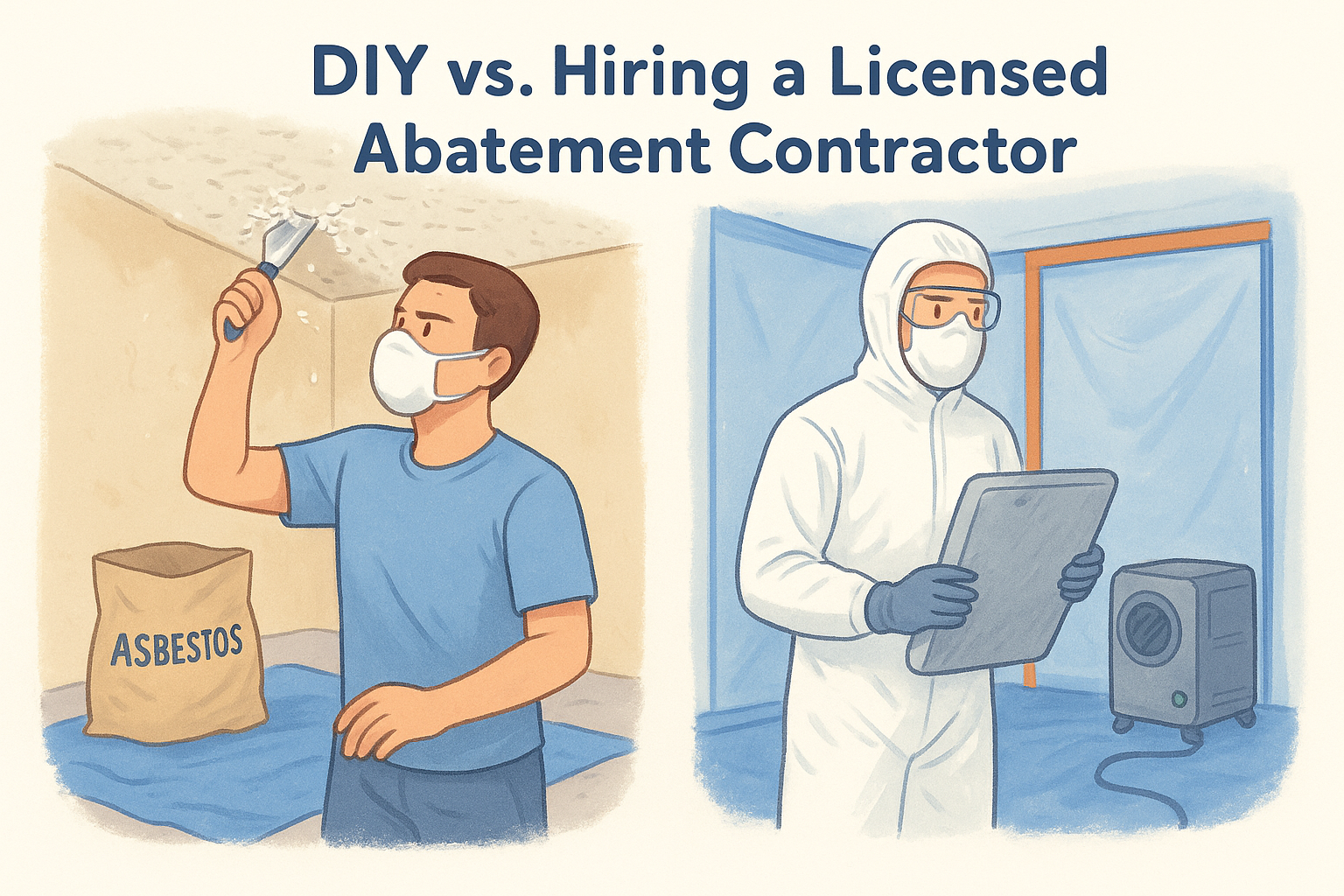
Saving money by scraping the ceiling yourself sounds reasonable until you factor in what's actually at stake. DIY asbestos removal isn't illegal in every state, but California treats it as a serious regulatory issue, and for good reason. Disturbing asbestos-containing texture without containment sends fibers into your home's air, where they settle into carpet, HVAC ducts, and furniture for years afterward.

Why DIY almost never pays off

A homeowner without training can't legally dispose of asbestos waste at a regular landfill, and most transfer stations will turn you away if they suspect the material is contaminated. You'd also need to rent negative air machines, buy disposable protective suits, and seal off the work area correctly, costs that add up fast once you price out the equipment. Get the containment wrong and you're not saving money, you're spreading a health hazard through your ductwork.

The money you save doing it yourself rarely covers what it costs to fix a contamination mistake.

What a licensed contractor brings to the job

Licensed abatement crews carry insurance that covers contamination incidents, follow documented safety protocols, and know exactly which local disposal facilities accept the waste legally. That licensing also protects you if you sell the home later, since buyers' inspectors often ask for abatement documentation before closing. Here's a quick comparison of what each path actually involves:

Factor DIY approach Licensed contractor
Legal compliance Homeowner liability Contractor certified and insured
Equipment cost Rented, one-time use Included in quote
Disposal Often refused at landfills Handled through licensed facility
Health risk High, no containment training Minimized through protocol

We've cleaned up more than one contamination mess left behind by a well-meaning homeowner who thought a dust mask and a tarp would be enough. It never is.

Budgeting for a safer, updated ceiling

Getting rid of an asbestos popcorn ceiling costs more than a standard scrape job, but now you know exactly why. Testing, containment, disposal, and finishing each add their own line item, and a fair contractor lists all of them before work starts instead of surprising you halfway through the project. Budget for the full picture, not just the per-square-foot number someone quotes over the phone.

A safer ceiling is worth the investment, especially once you factor in resale value and the health risks of disturbed fibers. Skipping proper abatement to save a few hundred dollars almost always costs more later, whether that's contamination cleanup or a buyer's inspector flagging undocumented work.

If you're ready to find out what your ceiling actually needs, schedule a free asbestos abatement estimate and get a real, itemized number instead of a guess.

Recent Posts

By cinchweb July 20, 2026
Learn how to fix water damaged ceiling drywall: find the leak source, cut and patch drywall, match texture, and know when to call Super Shooters.
By cinchweb July 18, 2026
Paper tape vs mesh tape drywall: learn which suits butt joints, corners, and patches to avoid bubbling, cracking, and seam failures in Sacramento homes.
By cinchweb July 17, 2026
See the real popcorn ceiling asbestos removal cost per room and square foot, plus permits, testing, and disposal fees homeowners often miss.
By cinchweb July 16, 2026
Learn how to install drywall on ceiling alone using a DIY T-brace, chalk lines, and screw patterns—plus when to call Super Shooters for help.
By cinchweb July 14, 2026
See how popcorn ceiling removal cost per square foot breaks down by room size, asbestos testing, and DIY vs. pro rates—plus real Sacramento Valley pricing.
By cinchweb July 13, 2026
Learn drywall taping tips and tricks for pro-smooth walls: mud consistency, tape embedding, feathering coats, and corner finishing techniques.
By cinchweb July 13, 2026
Learn what drywall taping is, the 5-step process, paper vs mesh tape, tools needed, common mistakes, and costs from Sacramento Valley pros.
By cinchweb July 12, 2026
See real 2026 price ranges by room and learn how much does popcorn ceiling removal cost near Sacramento Valley, plus hidden fees to budget for.
By cinchweb July 10, 2026
Learn how to clean walls before painting with our step-by-step guide covering supplies, dust removal, TSP mixing, rinsing, and drying to prevent peeling.
Show More