June 6, 2026
5 Types Of Knockdown Wall Texture: Splatter, Stomp, Lace
Knockdown texture is one of the most popular wall finishes in Sacramento Valley homes, and for good reason. It adds dimension and character without overwhelming a room. But if you've started researching types of knockdown wall texture , you've probably noticed that "knockdown" isn't just one look. There are actually several distinct styles , each with its own application method and visual result.
At Super Shooters, we've applied thousands of texture finishes across over 10,000 completed projects in more than 30 years of drywall and ceiling work. That hands-on experience has taught us exactly how each knockdown variation behaves on the wall, and which ones work best in different rooms and home styles .
This article breaks down five specific types of knockdown texture: splatter, stomp, lace, and two more you should know about. For each one, you'll see how it's applied , what it looks like when finished, and where it tends to work best. By the end, you'll have a clear picture of which style fits your next project .
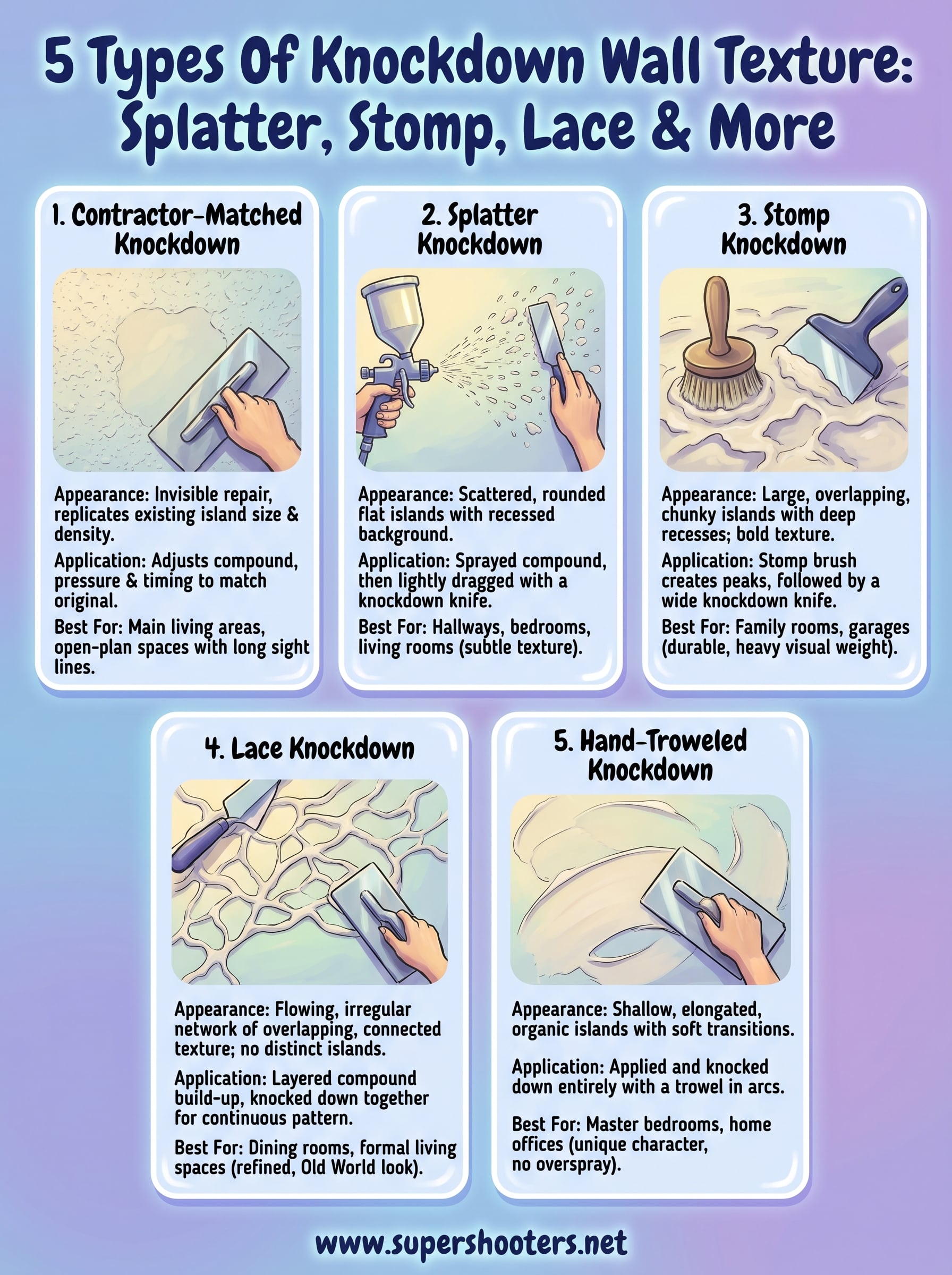
1. Contractor-matched knockdown texture
Contractor-matched knockdown isn't a style you pick from a catalog. It's the process of replicating the texture already on your walls when you need a repair or partial refresh. This approach applies to every one of the types of knockdown wall texture covered in this article, because any style can require matching work after a patch or drywall replacement.
What it looks like on finished walls
A successful contractor-match is invisible. The repaired section should carry the same depth, island size, and pattern as the surrounding wall. If the match is off, you'll notice it under natural side light , especially near windows during late afternoon.
How pros match an existing knockdown pattern
Experienced applicators start by studying the existing texture closely , noting island size, how flat the mud sits after knocking down, and overall pattern density. They then adjust compound consistency, spray pressure, and knife timing to replicate those characteristics before touching the new surface.
Matching texture is more about careful observation than raw technique. Getting it wrong shows immediately; getting it right takes real practice.
Where this approach makes the biggest difference
Repairs in main living areas and open-plan spaces benefit most from contractor-matching because those rooms have long, uninterrupted sight lines. A mismatched patch in a closet barely registers, but the same patch in a great room under raking light draws the eye every time.
Common prep steps that affect the final look
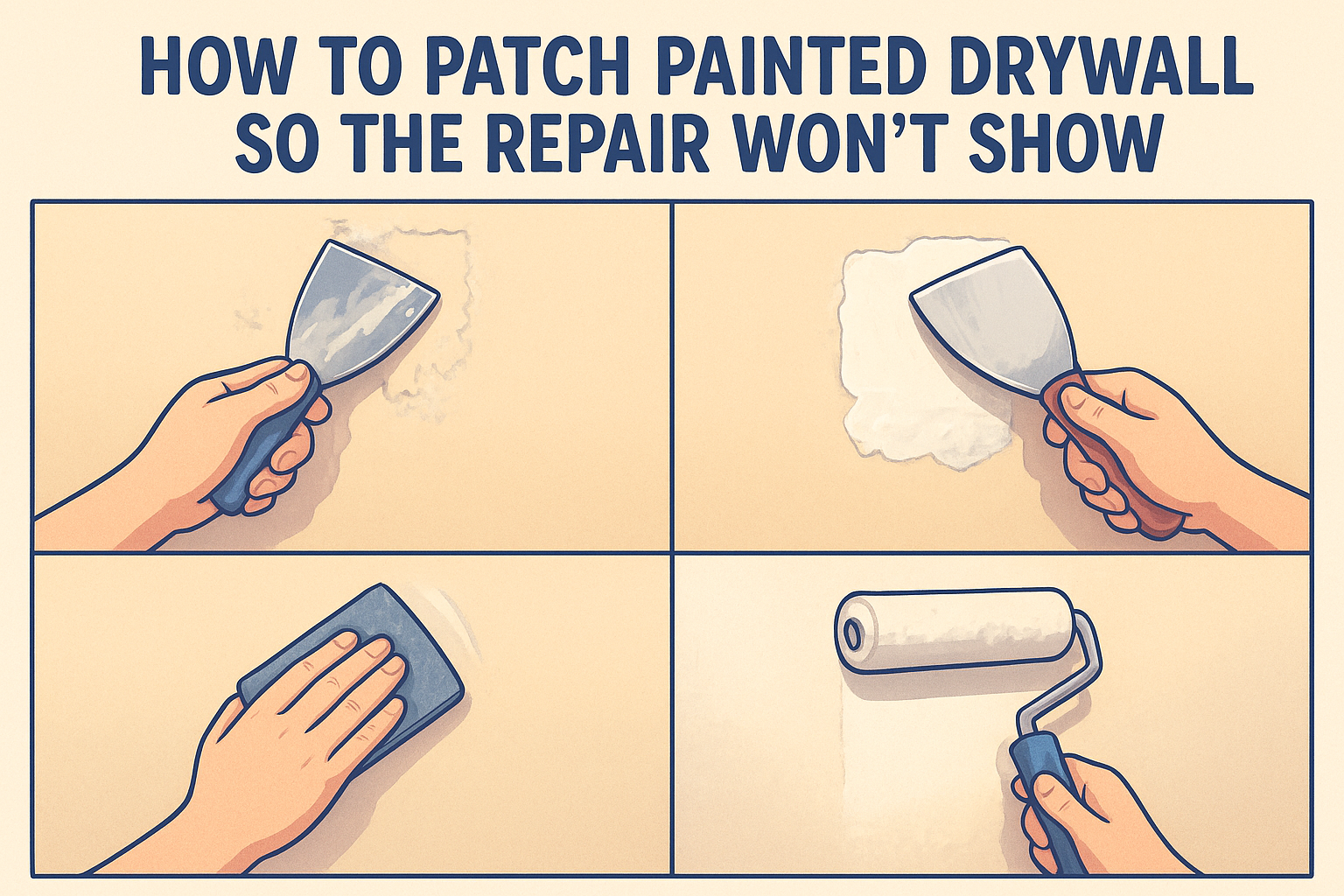
Priming patched drywall before texture application matters more than most homeowners expect. Unprimed drywall absorbs compound faster than surrounding painted surfaces, causing the texture to dry too quickly and shrink , producing a pattern that won't match no matter how carefully you apply it.
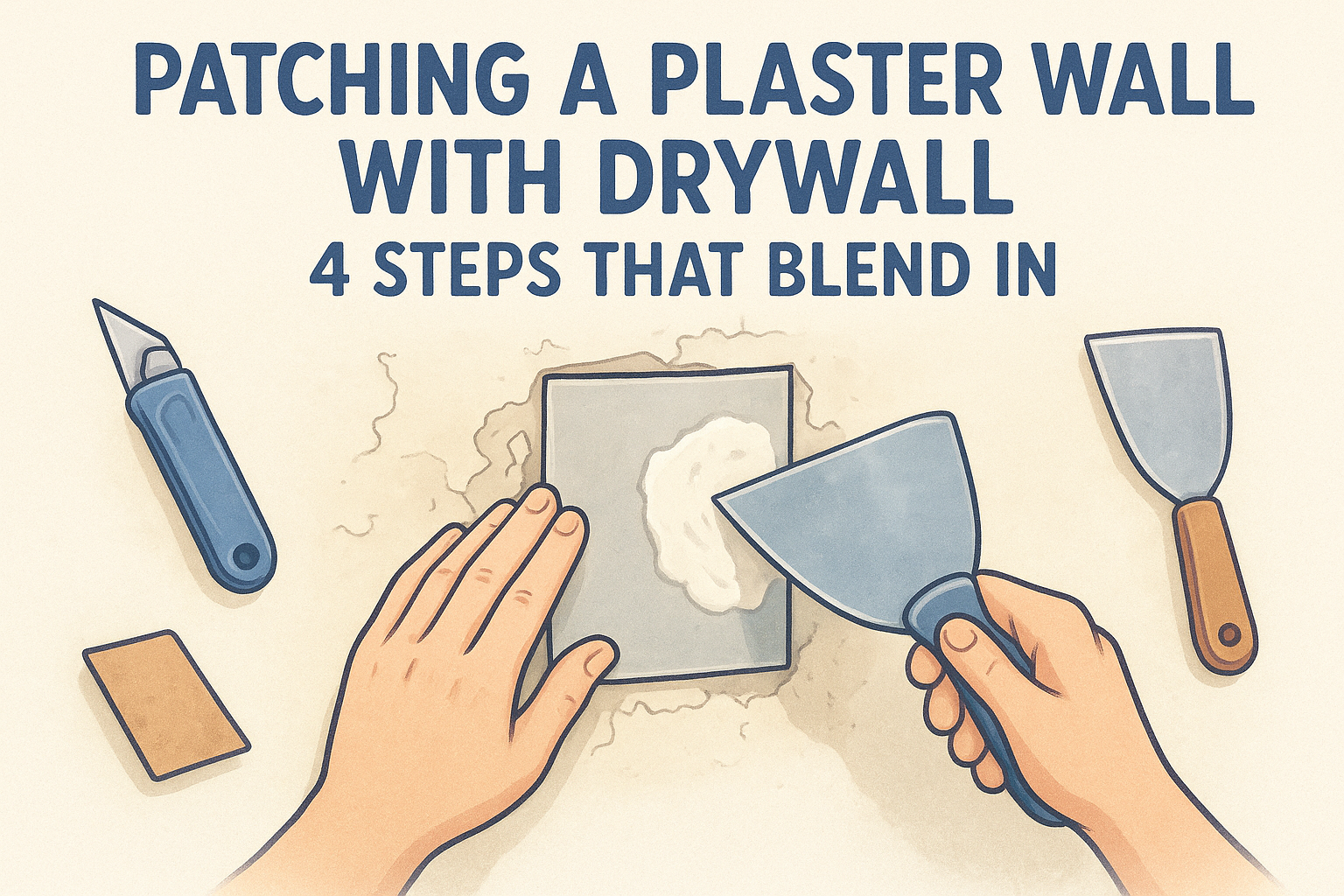
Repair and blend expectations after drywall patches
Even skilled crews rarely nail a perfect match on the first attempt. Plan for one or two test spots before full application, and expect the finished area to need at least one coat of matching paint to fully disappear into the surrounding wall.
Cost drivers in the Sacramento Valley
Pricing in the Sacramento Valley depends on patch size, texture complexity, and ceiling height . Larger open rooms with intricate existing patterns take more time to analyze and replicate, which increases labor hours and material use compared to small, straightforward repairs.
2. Splatter knockdown
Splatter knockdown is one of the most recognizable types of knockdown wall texture . It features irregular flat patches created by spraying joint compound onto the wall and then flattening the peaks with a trowel knife before the mud fully sets.
What it looks like
The finished surface shows scattered, rounded islands of flattened compound set against a recessed background. Island size varies based on spray distance and compound thickness, so no two walls look exactly the same.
Tools and material setup
Applicators use a hopper gun or hand pump sprayer loaded with thinned joint compound. Spray tip size controls the droplet diameter, which directly determines the pattern scale before any flattening occurs.
How installers apply it step by step
First, the crew primes the surface , then sprays compound in a single consistent pass at a controlled distance from the wall. Once the mud loses its wet sheen, they lightly drag a knockdown knife across the peaks to flatten them into the characteristic islands.
Timing the knockdown pass correctly is everything. Too early and the mud smears; too late and it tears instead of flattening cleanly.
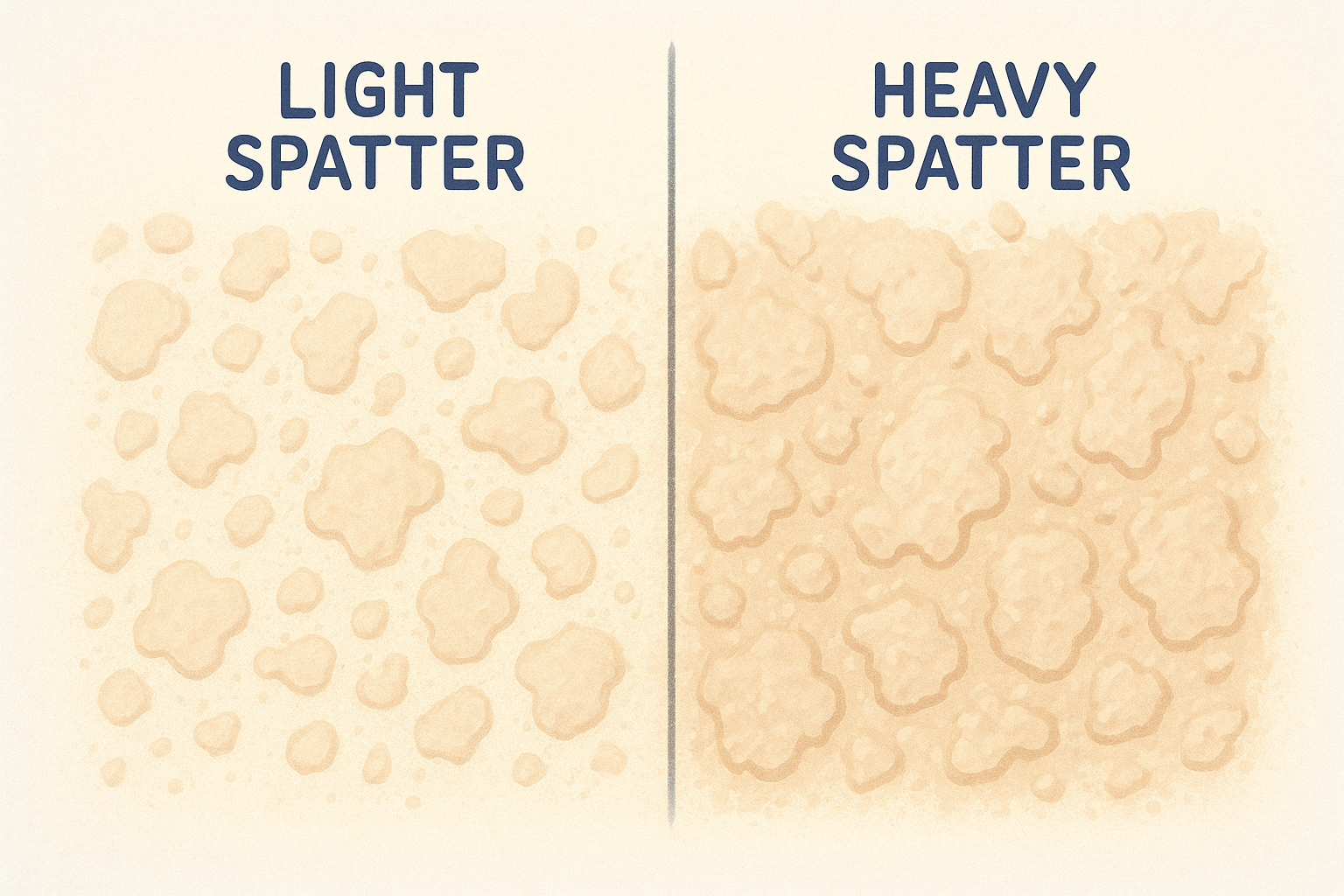
Light vs heavy splatter and how to spot the difference
Light splatter leaves more exposed wall between islands, giving a subtle, open look. Heavy splatter produces larger, denser coverage with less background visible between flattened patches.
Where it works best in a home
Splatter suits hallways, bedrooms, and living rooms where you want visible texture without heavy visual weight pulling the room down.
Repair and repaint tips that keep it from flashing
Always prime the repaired section before painting. Matching the same paint sheen as the surrounding wall prevents the patch from catching light at a different angle and drawing attention.
3. Stomp knockdown
Stomp knockdown is one of the boldest types of knockdown wall texture you can choose. It creates a chunky, irregular pattern that gives walls and ceilings a strong tactile quality distinct from the finer splatter style.
What it looks like
The finished surface shows large, overlapping islands of flattened compound with deeper recesses between them. The overall effect is rougher and more pronounced than splatter knockdown, with a pattern that reads clearly from across a room.
Tools that create the stomp pattern
Applicators load joint compound onto the wall with a roller or brush , then press a stomp brush or broom head into the wet mud repeatedly to pull up peaks before the knockdown pass flattens them.
How installers apply it step by step
The crew applies a consistent layer of compound across the surface, then stomps the brush into the mud in an overlapping pattern. Once the peaks firm up slightly, they run a wide knockdown knife across the surface to flatten the tops into islands.
The angle and pressure on the knockdown pass directly controls how flat and wide each island becomes, so small adjustments produce noticeably different results.
How timing changes the final knockdown "islands"
Knocking down earlier produces softer, wider islands with gentle edges. Waiting longer creates crisper, more defined islands because the compound holds its shape better under the knife.
Where it works best in a home
Stomp texture suits family rooms and garages where you want visual weight and durability rather than a subtle finish.
Repair tips for stomp patterns without obvious borders
Feather the new compound well beyond the patch edge and blend the stomp pattern into the surrounding area gradually. Stopping abruptly creates a visible border that stands out under side lighting.
4. Lace knockdown
Lace knockdown stands apart from other types of knockdown wall texture by building a layered, interlocking pattern rather than separate islands. The result is a continuous web of texture that feels more intricate than splatter or stomp.
What it looks like
The finished wall shows a flowing, irregular network of overlapping raised areas with shallow recesses between them. The effect reads as organic and continuous rather than patchy, setting it apart from other knockdown styles.
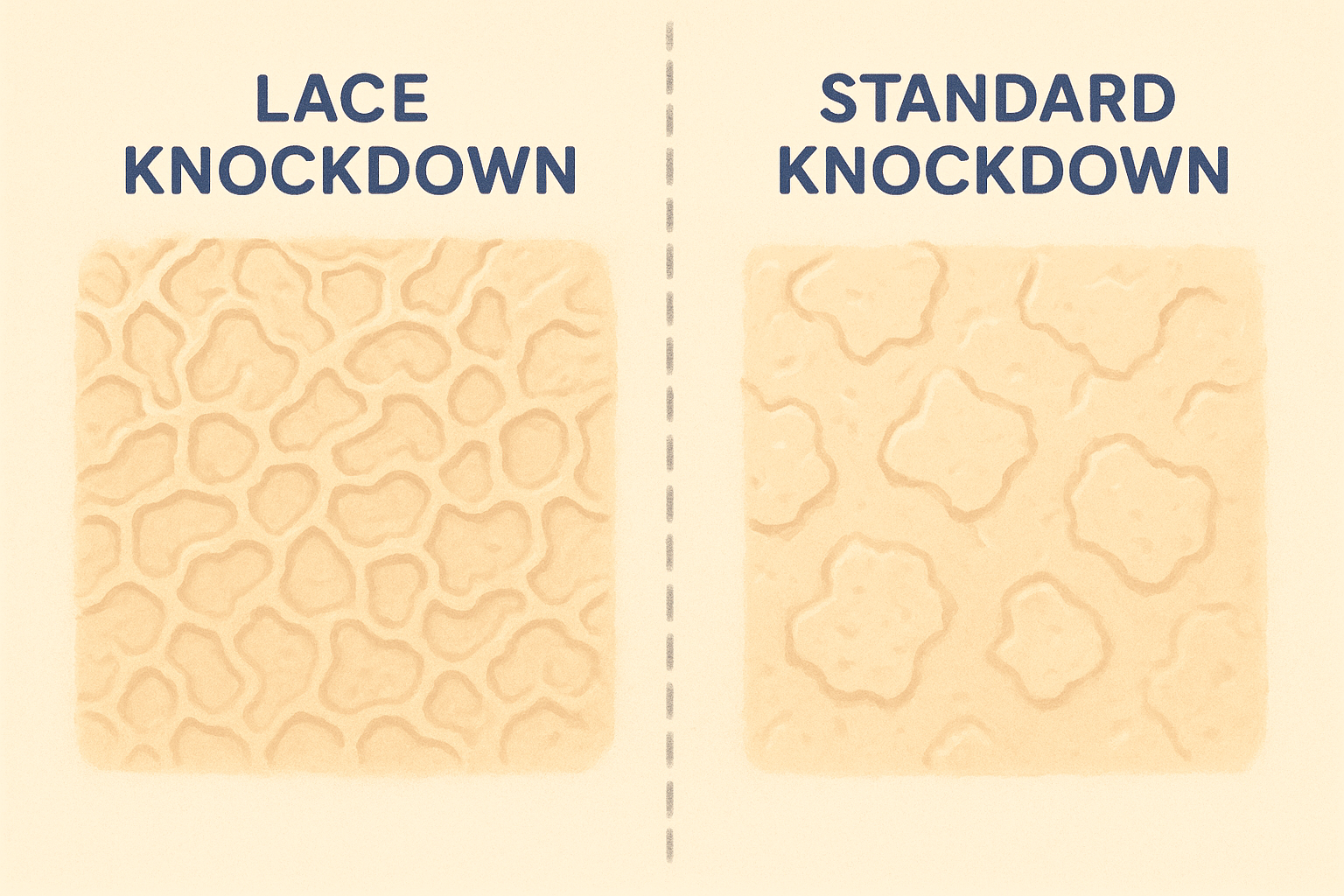
How lace differs from standard knockdown
Standard knockdown creates distinct, separated islands with visible background between them. Lace builds overlapping layers so the compound forms a connected surface pattern with minimal exposed wall between texture peaks.
How installers build the pattern in layers
Applicators apply compound, let it firm slightly, then add a second thin pass before knocking both layers down together. This layered approach produces the interlocking web that defines a true lace finish.
Timing between passes matters most here; rush it and the layers merge into a shapeless mass rather than a defined pattern.
Why lace can look "Spanish" or "Mediterranean"
Its continuous, hand-worked quality closely resembles Old World plaster finishes. That similarity is why designers often pair lace texture with Spanish or Mediterranean interior styles .
Where it works best in a home
Lace suits dining rooms and formal living spaces where you want a refined, textured surface that adds visual depth without overpowering the room.
Repair challenges and when full re-skim makes sense
Matching lace on a small patch is difficult because the layered build requires consistent timing across the whole surface. When damage covers more than a few square feet, a full re-skim delivers cleaner results than attempting a spot repair.
5. Hand-troweled knockdown
Hand-troweled knockdown is the most hands-on of all the types of knockdown wall texture . Instead of using a spray rig, applicators build the pattern entirely with a trowel, giving each wall a unique, slightly irregular character that no two rooms share.
What it looks like
The finished surface shows shallow, elongated islands of flattened compound with soft transitions between high and low points. The overall feel is more organic than sprayed textures because the trowel naturally varies pressure with each pass.
When installers choose hand-applied over sprayed
Crews choose hand application in tight spaces or occupied homes where spray equipment creates overspray risk. It also works well when only small sections need texture without setting up a full spray rig.
How installers apply it step by step
Applicators spread thinned joint compound across the surface with a wide trowel in overlapping arcs, then lightly drag the flat blade back over the peaks before the mud sets fully.
The angle of that final trowel pass controls how flat the islands sit, so consistency across the whole wall takes deliberate focus.
How it compares to skip trowel and smooth finishes
Skip trowel leaves larger, thicker islands with more depth, while smooth finishes eliminate texture entirely. Hand-troweled knockdown sits between the two in both texture depth and visual weight.
Where it works best in a home
This texture suits master bedrooms and home offices where you want a refined surface without a heavy repeating pattern dominating the room.
How to patch hand-troweled knockdown without ridges
Feather compound edges thin and match your trowel arc direction to the surrounding wall. Leaving hard ridges at patch borders is the most common mistake and the hardest to correct without redoing the full section.
Next steps for choosing a knockdown texture
Now that you've seen all five types of knockdown wall texture up close, the decision comes down to two factors: the look you want and the room where it will live. Splatter and hand-troweled styles suit quieter spaces like bedrooms and home offices, while stomp and lace work well in rooms that can carry heavier visual weight .
Matching existing texture on repairs is the step most homeowners underestimate. Getting the compound consistency, timing, and spray pressure right takes experience, and a mismatched patch shows every time the light hits the wall at an angle.
If you need a repair done right the first time, our team has matched and applied every texture style covered here across thousands of Sacramento Valley homes. Check out our drywall repair and patching service to schedule a free in-home estimate with no upfront payment required.