Share this article

July 17, 2026

Popcorn Ceiling Asbestos Removal Cost: What to Expect

If your home still has that bumpy popcorn texture overhead, you're probably wondering about popcorn ceiling asbestos removal cost before you commit to anything. Homes built before the mid-1980s often have acoustic ceilings mixed with asbestos, and pulling that material down isn't a weekend DIY job. It's a licensed abatement process with real pricing behind it, and the number depends on more than just square footage.

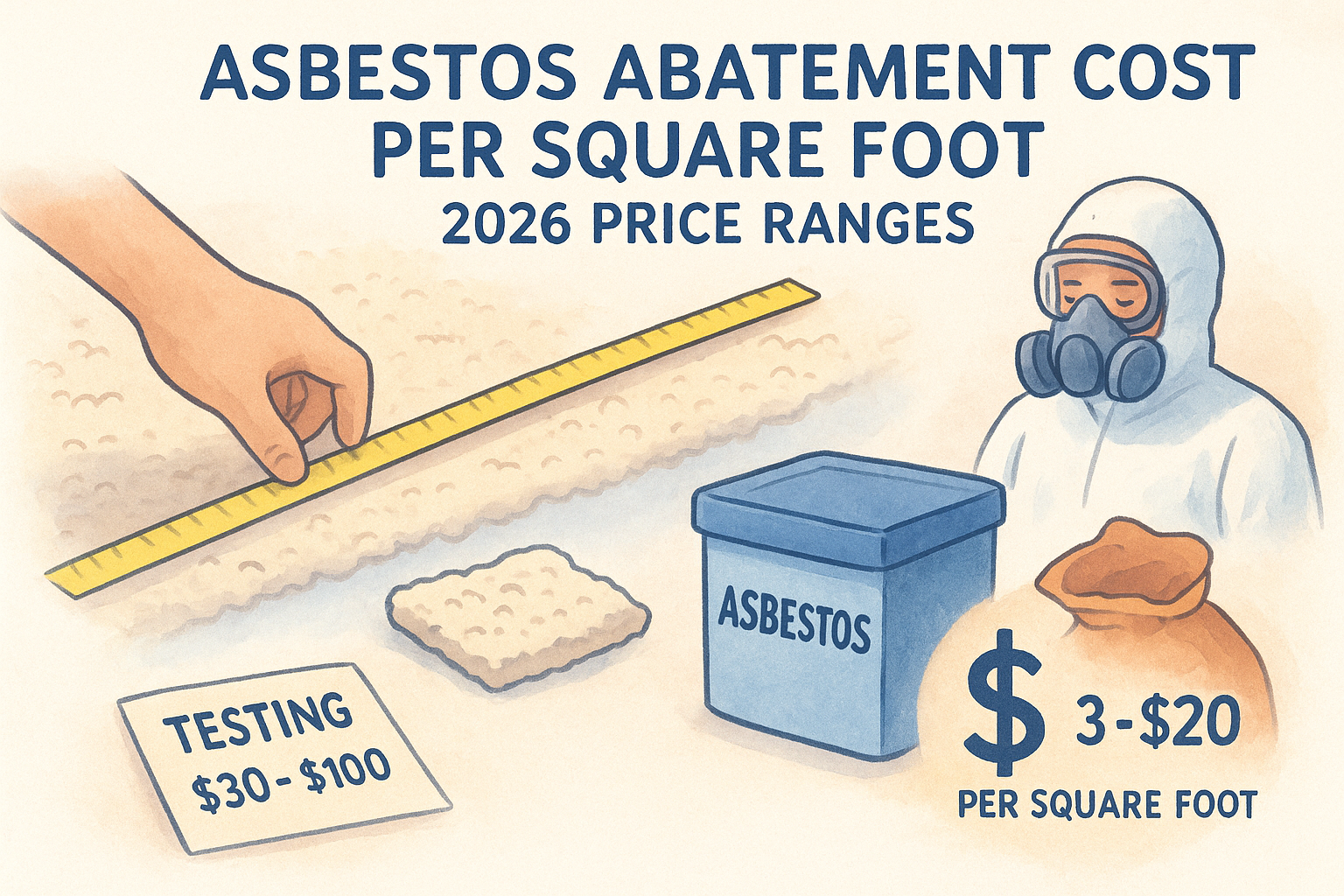
Most Sacramento Valley homeowners pay somewhere between $3 and $12 per square foot for asbestos-containing popcorn ceiling removal, with total project costs shaped by testing requirements , ceiling condition, and whether disposal and permits are handled by the contractor. A small bedroom runs far less than a whole-house project, and skipping proper containment to save money almost always costs more later in health risks and rework.

In this article, we break down the real per-square-foot pricing, the factors that push costs up or down, and where permits, testing, and insurance fit into the picture. We've completed over 10,000 ceiling projects across the region, so this is what homeowners actually pay, not just a rough estimate.

Why asbestos changes the cost of ceiling removal

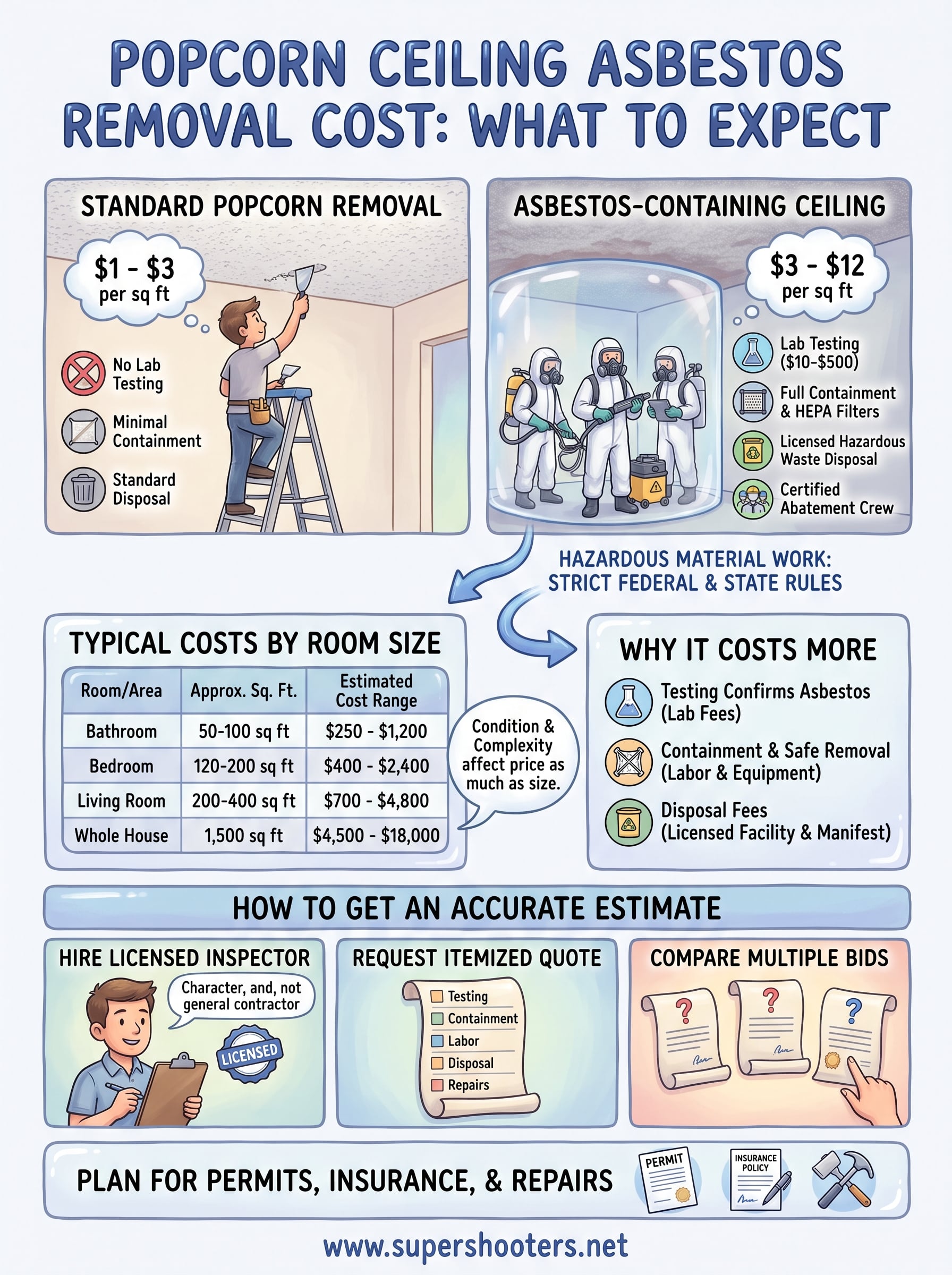
Scraping a plain popcorn ceiling with no asbestos runs $1 to $3 per square foot in most cases. Once asbestos-containing material enters the picture, that number climbs to $3 to $12 per square foot, and the jump isn't padding on a contractor's invoice. Federal and state rules classify asbestos abatement as hazardous material work, which means licensed crews, specialized equipment, and documented disposal every step of the way. You're not paying more for the same job done slower. You're paying for a completely different process with legal requirements attached.

Asbestos abatement costs more because the law treats it as hazardous waste removal, not home renovation.

Testing confirms whether asbestos is present

Before any removal begins, a lab-confirmed asbestos test tells you and your contractor exactly what you're dealing with. Testing usually costs $10 to $40 per sample if you send it yourself, or $200 to $500 if you hire a certified inspector to collect samples and interpret results. Homes built before 1980, and many built through the mid-1980s, are the ones most likely to test positive, since asbestos was a common additive in acoustic texture until manufacturers phased it out. Skipping this step isn't an option if you want a legitimate abatement estimate, because pricing and permitting both depend on confirmed lab results.

Containment and safe removal add labor

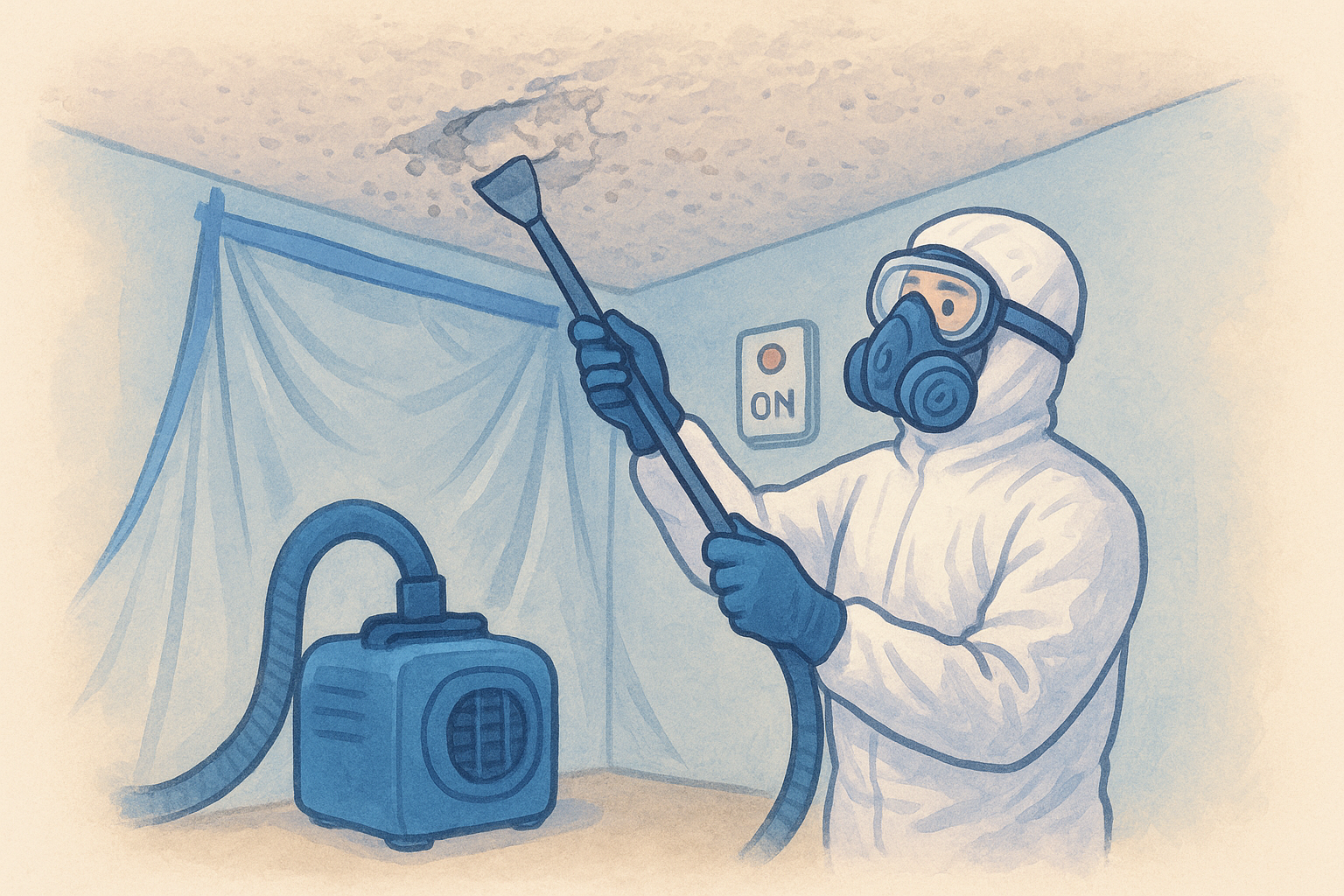
Once asbestos is confirmed, the work area has to be sealed off completely. Crews build negative air containment using plastic sheeting and HEPA-filtered air scrubbers, so fibers can't escape into the rest of your home. Workers wear disposable protective suits and respirators, and the ceiling material gets wet down before scraping to keep dust from becoming airborne. This slows the job down considerably compared to standard popcorn removal, and that added labor time is baked directly into the per-square-foot price.

Disposal fees follow strict rules

Asbestos debris can't go in a regular dumpster. It has to be double-bagged, labeled, and hauled to a licensed hazardous waste facility that accepts asbestos-containing material, with a documented waste manifest tracking where it goes. Transportation and disposal fees typically add $200 to $600 to a project, depending on how much material comes down and how far the nearest approved facility is. Homeowners sometimes ask why a contractor can't just skip this paperwork to save money. The honest answer is that they legally can't, and any contractor willing to skip it is one you should avoid.

Cost Factor Standard Popcorn Removal Asbestos-Containing Ceiling
Price per sq ft $1 to $3 $3 to $12
Lab testing required No Yes, $10 to $500
Containment setup Minimal Full negative air containment
Disposal Standard debris haul-off Licensed hazardous waste facility
Crew certification General contractor Licensed abatement crew

Getting familiar with these differences up front helps you spot a lowball quote before it turns into a bigger problem. According to the EPA's guidance on asbestos in homes, improper handling can release fibers that pose long-term health risks, which is exactly what all this extra cost and process is designed to prevent.

How to get an accurate removal cost estimate

Getting a real number for your project starts with a licensed asbestos inspector , not a general contractor eyeballing your ceiling from a ladder. A proper estimate combines the lab test results with an in-person walkthrough, so the contractor can measure square footage, check for water damage or multiple ceiling layers, and note anything that complicates removal, like popcorn texture painted over or hidden behind a drop ceiling. Anyone quoting you a firm price before testing is guessing, and guesses on hazardous material jobs tend to run over budget fast.

Request a written, itemized quote

Once testing confirms asbestos, ask for a written breakdown that separates testing, containment, labor, disposal, and any drywall or texture work needed afterward. A vague lump-sum number hides where your money is actually going and makes it hard to compare bids fairly.

  • Lab testing and inspection fees
  • Containment setup and equipment rental
  • Labor hours for removal and cleanup
  • Hazardous waste transport and disposal
  • Ceiling repair, texture, or paint after removal

Compare multiple licensed bids

Homeowners who only get one quote often overpay or underestimate the scope. Pulling three separate estimates from licensed abatement contractors gives you a realistic price range for your specific square footage and ceiling condition, and it exposes any bid that seems suspiciously low.

The safest way to price abatement is to compare written, itemized bids from licensed crews, not phone estimates.

Confirm licensing and insurance upfront

Before signing anything, verify the contractor holds an active contractor's license and current liability insurance covering asbestos work specifically. California's Contractors State License Board lets you check license status online, and a legitimate abatement company will have no problem sharing proof of certification. Skipping this step is how homeowners end up with unlicensed crews cutting corners on containment, which turns a cost-saving decision into a health and legal liability.

Cost breakdown by room size and ceiling condition

Once you know your ceiling tests positive, the next question is simple: what will removal actually cost for your specific rooms? Pricing scales with square footage , but it also shifts based on how many layers of texture or paint sit on top of the asbestos-containing material, and whether water damage or sagging drywall complicates the job. A single bathroom ceiling and a whole-house project don't just differ in size, they differ in how much containment and labor time the crew needs.

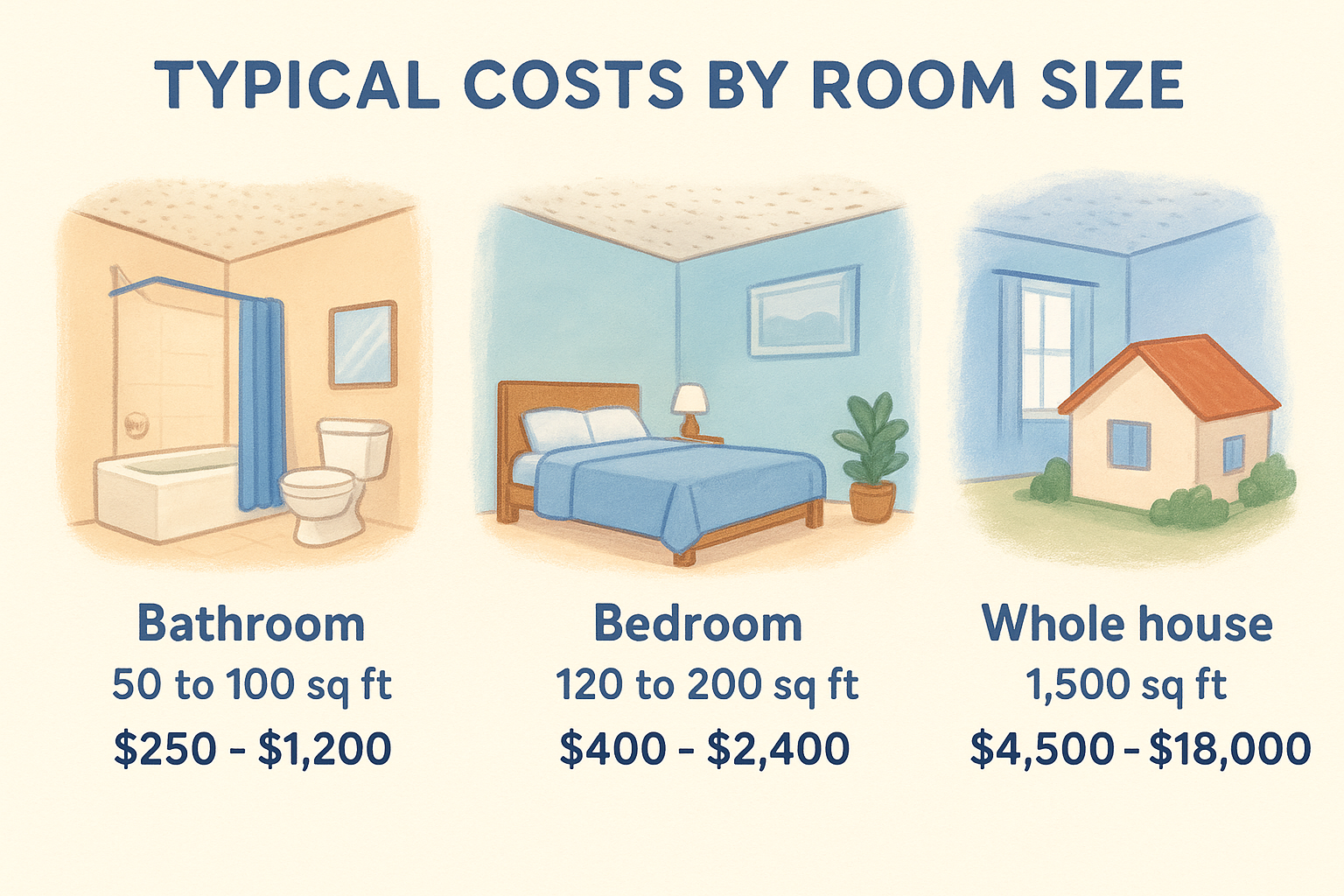
Typical costs by room size

Below is a realistic range based on projects we've completed across the Sacramento Valley. These figures assume standard containment and disposal, not unusual complications like multiple ceiling layers or extensive water damage.

Room or Area Approx. Square Footage Estimated Cost Range
Bathroom 50 to 100 sq ft $250 to $1,200
Bedroom 120 to 200 sq ft $400 to $2,400
Living room 200 to 400 sq ft $700 to $4,800
Whole house (1,500 sq ft) 1,500 sq ft $4,500 to $18,000

Bigger square footage doesn't scale costs evenly, condition and containment complexity move the price just as much as room size.

Ceiling condition changes the math

A flat, single-layer popcorn ceiling in good shape is the cheapest scenario, since crews can wet it down and scrape it in one pass. Ceilings that have been painted over require extra scoring or wetting time to break through the sealed surface, which adds labor hours. Multiple texture layers, sometimes from a previous remodel that skipped proper removal, mean the crew has to work through each layer separately, and that alone can push a project toward the higher end of the per-square-foot range.

Water damage and structural issues add cost

Water-stained or sagging ceilings often mean the drywall underneath needs replacing, not just the texture on top. When water damage shows up during inspection, expect additional costs for cutting out and replacing damaged sections, plus matching texture on the new drywall so the ceiling looks uniform once the project wraps up. Homeowners dealing with an older home that's had roof leaks or plumbing issues should budget for this possibility rather than being surprised by it mid-project.

Permits, insurance, and other costs to plan for

Beyond testing, containment, and disposal, a few other line items shape your final bill, and homeowners who skip researching them often get caught off guard mid-project. Local permitting rules and insurance coverage both play a bigger role in asbestos abatement than they do in standard drywall or texture work, and neither should be an afterthought once you've committed to the project.

Permits are usually required for abatement work

Most California counties, including those across the Sacramento Valley, require a notification or permit filing before asbestos abatement begins, even in a single-family home. Fees typically run $50 to $300 depending on your jurisdiction, and the contractor usually handles the filing as part of the job rather than leaving it to you. Skipping this step isn't just a paperwork shortcut, it's a violation that can halt work mid-project or trigger fines if an inspector finds out. The EPA's asbestos regulations page outlines the notification requirements that many local agencies base their permitting rules on, so checking with your county building department before work starts is worth the phone call.

Skipping the permit doesn't save you money, it just delays the moment you find out the hard way.

Homeowners insurance rarely covers removal

Most standard homeowners policies treat asbestos abatement as a maintenance or improvement cost, not a covered peril, which means you're paying out of pocket in the vast majority of cases. The exception is when asbestos removal is required as part of repairing damage from a covered event, like a fire or a burst pipe that exposed the material. Calling your insurance agent before the project starts, rather than after, tells you exactly where you stand and avoids a surprise denial once the invoice arrives.

Post-removal repairs round out the budget

Once the asbestos-containing texture is gone, most ceilings need new drywall finishing or texture matching to look presentable again, and that's a separate cost from abatement itself. Budget an additional $1 to $3 per square foot for skim coating, texture application, or paint, depending on how finished you want the ceiling to look when the crew packs up.

What this means for your ceiling project

Asbestos doesn't have to derail your renovation, but it does demand a different budget and a different process than a standard popcorn scrape. Popcorn ceiling asbestos removal cost runs $3 to $12 per square foot once testing confirms asbestos, and that price covers licensed containment, proper disposal, and the paperwork that keeps you protected legally and physically. Skipping any of that to save a few hundred dollars almost never pays off once you factor in health risks, fines, or a botched job that needs redoing.

Treat testing, permits, and repair costs as part of one project, not separate surprises. Get itemized bids, confirm licensing, and budget for texture matching afterward so your ceiling looks finished, not patched. If you're ready for a real number instead of a guess, schedule a free asbestos ceiling inspection and get a written quote based on your actual square footage and ceiling condition.

Recent Posts

By cinchweb July 16, 2026
Learn how to install drywall on ceiling alone using a DIY T-brace, chalk lines, and screw patterns—plus when to call Super Shooters for help.
By cinchweb July 14, 2026
See how popcorn ceiling removal cost per square foot breaks down by room size, asbestos testing, and DIY vs. pro rates—plus real Sacramento Valley pricing.
By cinchweb July 13, 2026
Learn drywall taping tips and tricks for pro-smooth walls: mud consistency, tape embedding, feathering coats, and corner finishing techniques.
By cinchweb July 13, 2026
Learn what drywall taping is, the 5-step process, paper vs mesh tape, tools needed, common mistakes, and costs from Sacramento Valley pros.
By cinchweb July 12, 2026
See real 2026 price ranges by room and learn how much does popcorn ceiling removal cost near Sacramento Valley, plus hidden fees to budget for.
By cinchweb July 10, 2026
Learn how to clean walls before painting with our step-by-step guide covering supplies, dust removal, TSP mixing, rinsing, and drying to prevent peeling.
By cinchweb July 9, 2026
Learn how many coats of drywall mud you need, the tools for each pass, drying times, finish levels, and common mistakes to avoid.
By cinchweb July 8, 2026
Learn how to tape drywall corners like a pro: prep tools, bed and feather coats, fix cracks, and get smooth finishes step by step.
By cinchweb July 7, 2026
Find the best options for asbestos ceiling testing near me. Compare professional inspector costs, DIY kits, and accredited labs to safely test your home.
Show More