May 17, 2026
Skim Coating 101: How To Smooth A Textured Ceiling Fast
That bumpy popcorn ceiling might have been stylish in the 1980s, but it's doing your home zero favors now. If you've been searching for how to smooth a textured ceiling , you're not alone, it's one of the most common renovation projects homeowners across the Sacramento Valley tackle when updating older properties. The good news? Skim coating is a straightforward method that can give you clean, modern ceilings without a full tear-off.
Here at Super Shooters, we've removed and refinished over 10,000 ceilings in our 30+ years of business, so we know exactly what this process demands, the prep work, the pitfalls, and the techniques that actually produce a flat, professional-looking result. We've written this guide to walk you through the real steps involved , whether you're planning a weekend DIY project or just want to understand the scope of the work before deciding to call in a pro.
In this article, you'll get a clear breakdown of skim coating from start to finish: tools and materials you'll need , surface prep, application technique, sanding, and finishing. We'll also cover when scraping or sanding might be a better approach than skim coating, and how to tell if your ceiling contains asbestos, a critical safety concern in homes built before 1990. By the end, you'll know exactly what it takes to transform that rough, outdated texture into a smooth surface you're actually proud to look up at.
What to know before you start
Before you tackle how to smooth a textured ceiling , you need a realistic picture of what this project actually involves. Skim coating is not a quick weekend task you can knock out in a few hours. It requires multiple thin coats of joint compound , proper drying time between each coat, and careful sanding. Going in underprepared is the fastest way to end up with a wavy, uneven finish that looks worse than the texture you started with, so understanding the scope upfront will save you a lot of frustration.
The biggest reason DIY skim coating jobs fail is skipping proper prep work or rushing the drying time between coats.
Tools and materials you'll need
Having the right tools on hand before you start saves you multiple trips to the hardware store and keeps the job moving at a steady pace. You don't need professional-grade equipment, but cutting corners with the wrong tools will show up in your final finish. Here's a complete list of what a standard skim coat project requires:
- Joint compound (all-purpose or topping compound, pre-mixed)
- 10-inch and 12-inch drywall knives with flexible blades
- A mud pan for loading and cleaning your knife
- A pole sander with 120-grit and 150-grit sandpaper
- Drywall primer or PVA primer for sealing the surface before painting
- Plastic sheeting and painter's tape for protecting floors and walls
- A pump garden sprayer for wetting popcorn texture before scraping (if applicable)
- Safety goggles, an N95-rated dust mask , and work gloves
Pre-mixed all-purpose joint compound is the best starting point for most DIYers since it comes ready to use, spreads well with a knife, and sands down without too much effort once dry. You can find all of these materials at any major home improvement retailer before you start.
Realistic time and skill expectations
Skim coating a single ceiling typically takes two to three full days when you account for two or three coats of compound, drying time of roughly 24 hours per coat under normal indoor conditions, and a final sanding and priming session. If your ceiling has a heavy knockdown or orange peel texture, add extra time for building up those low spots in the surface.
Your skill level plays a direct role in the result. Achieving a flat, paint-ready ceiling with no visible lap marks or ridges takes practice with a drywall knife. Most patient DIYers can get a solid, acceptable finish on their first attempt, but if you want a result that looks professionally done with zero imperfections under raking light, expect a steeper learning curve than most online tutorials suggest.
Step 1. Identify your ceiling texture and risks
Before you pick up a trowel or start researching how to smooth a textured ceiling, take a good look at what you're actually working with. The type of texture on your ceiling determines which removal or smoothing method will work best, and identifying it correctly from the start keeps you from wasting materials on the wrong approach. Run your hand lightly across the surface with gloves on and note whether the peaks are sharp, rounded, or heavily layered.
Recognize your texture type
Different textures require different levels of prep before skim coating. Popcorn ceilings are the most common in homes built between the 1950s and 1990s, and they tend to absorb compound quickly, which means you need to seal them before applying any skim coat. Orange peel and knockdown textures are denser and sit closer to the drywall surface, so they respond well to direct skim coating with minimal pre-treatment.
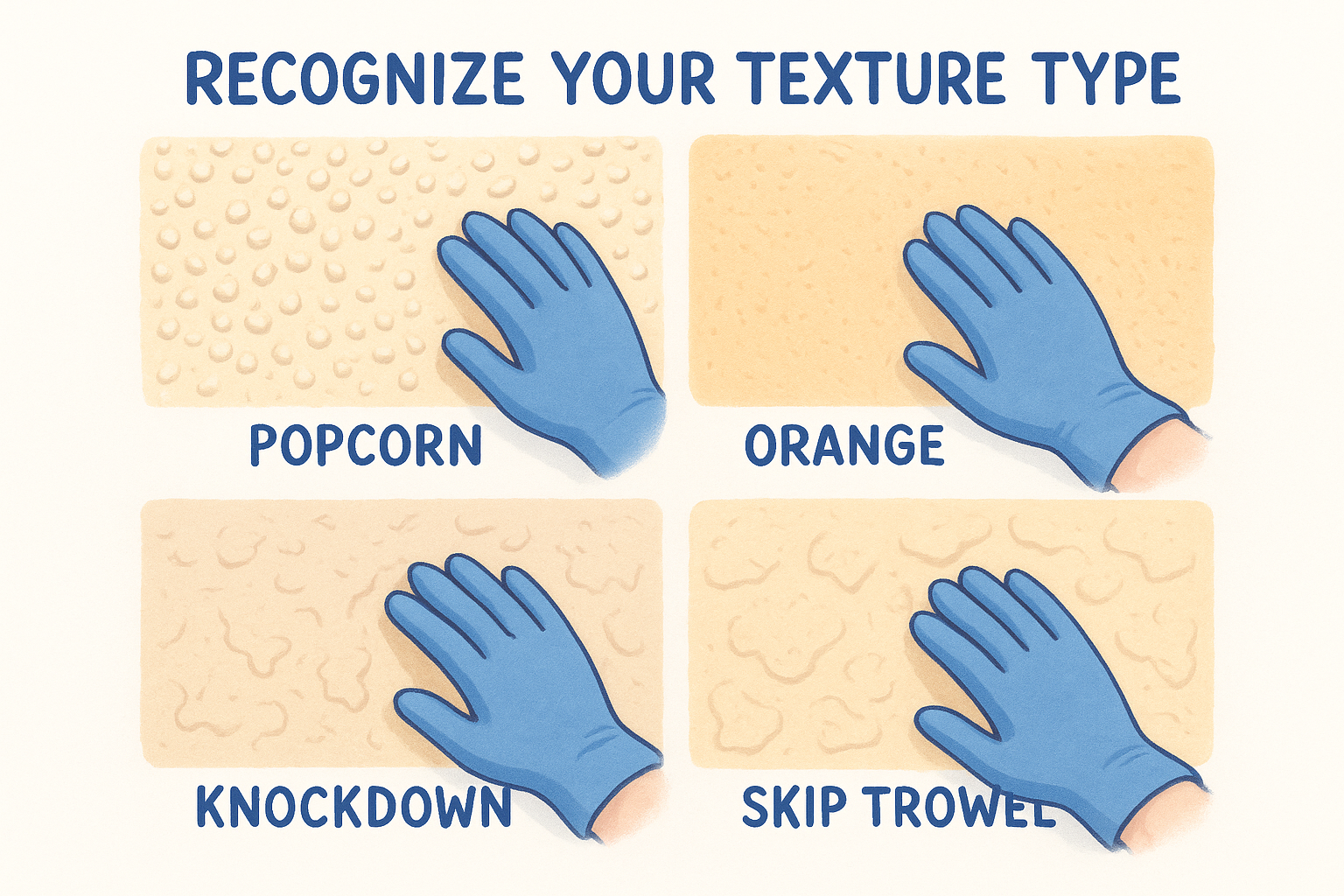
| Texture Type | Description | Typical Era |
|---|---|---|
| Popcorn / Acoustic | Bumpy, cottage-cheese appearance | 1950s-1990s |
| Orange Peel | Fine, dimpled surface | 1970s-present |
| Knockdown | Irregular flat patches with valleys | 1980s-present |
| Skip Trowel | Thicker, hand-applied random patches | 1990s-present |
Test for asbestos before touching anything
This is the step most DIYers skip, and it's the most critical one on this entire list. Popcorn ceilings installed before 1978 frequently contain asbestos fibers, which remain harmless when undisturbed but become dangerous when scraped, sanded, or drilled into. If your home was built before 1990, purchase an EPA-recognized asbestos test kit at a hardware store or hire a certified inspector before disturbing any ceiling material.
Do not scrape, sand, or drill into any ceiling texture in a pre-1990 home until you confirm the material is asbestos-free.
Step 2. Pick the right approach for your ceiling
Once you know what texture you're dealing with and have confirmed your ceiling is asbestos-free, you need to choose your method. Three main approaches exist for how to smooth a textured ceiling: skim coating directly over existing texture, scraping first and then skim coating, or sanding the texture down before applying compound. The right choice depends on your texture type , its depth, and how much prep work you're willing to put in. Your texture type is the single biggest factor that determines which approach will give you the flattest final result.
Skim coat directly over light texture
If your ceiling has orange peel or light knockdown texture , you can apply joint compound directly without scraping first. This approach saves time and keeps dust levels lower, but you'll need at least two to three thin coats to fully bridge the texture peaks and fill the valleys beneath them. Seal the surface first with a coat of PVA primer so the compound doesn't absorb unevenly into the existing texture.
Skipping the PVA primer coat on a porous texture causes your compound to dry at different rates, leaving visible patches and an inconsistent sheen once you paint.
Scrape first, then skim coat
Popcorn and heavy acoustic textures work best with scraping before you skim coat, because the depth of that material makes it nearly impossible to bridge cleanly with compound alone. Wet the surface with a pump garden sprayer, wait about five minutes for the water to penetrate , then use a 6-inch drywall knife to scrape the softened material off in sections. Keep the knife at a low angle to avoid gouging the drywall paper underneath, which creates extra repair work before you've even started skim coating. Once the ceiling dries overnight, apply a coat of PVA primer before starting your first skim coat pass.
Step 3. Prep the room and protect your surfaces
Good prep work is the difference between a clean job and a mess that takes hours to undo. Before you apply a single coat of compound, remove everything from the room you can physically carry out, including furniture, light fixtures, and ceiling fans. What stays behind needs complete coverage with plastic sheeting taped down at the baseboards.
Clear and cover the room
Pull furniture out of the room entirely if possible, or push it to the center and cover it with heavy-duty plastic sheeting . Tape plastic directly to the floor at the wall edges with painter's tape so joint compound drips land on the sheeting rather than your hardwood or carpet. Cover every wall surface from ceiling to floor as well, because skim coating kicks up fine dust during sanding that settles on everything it can reach.
Use this checklist to confirm every surface is protected before you open any compound:
- Floors: plastic sheeting taped at wall edges
- Walls: plastic sheeting from ceiling line to baseboard
- Remaining furniture: covered with drop cloth or plastic
- Electrical boxes: taped over with plastic after fixture removal
- HVAC vents: sealed with painter's tape to block dust
Skipping floor protection on a skim coat job is a mistake you'll spend an afternoon scrubbing off hardwood or scraping off tile.
Remove fixtures and prep the surface
Turn off the circuit breaker for the room before removing light fixtures or ceiling fans. Cap the wires with wire nuts and tape plastic over each electrical box opening. Once fixtures are out, run your hand across the existing ceiling texture to locate any loose or peeling sections. Press those areas back with a drywall screw or scrape them off completely so your skim coats have a stable surface to grip.
Knowing how to smooth a textured ceiling correctly always comes back to this step. A clean, stable workspace ensures your joint compound bonds evenly to the ceiling surface without lifting or bubbling later.
Step 4. Skim coat the ceiling for a flat finish
With your room protected and your ceiling primed, you're ready to apply compound. Skim coating is a layered process , and keeping each coat thin and even is the key to knowing how to smooth a textured ceiling without ending up with cracks or ridges. Thick coats crack as they dry, leave ridges at the edges, and create more sanding work for you later.
Mix and load your compound
Pre-mixed all-purpose joint compound typically needs a small amount of water added to reach the right consistency for ceiling work. Target a consistency similar to thick yogurt , thin enough to spread easily but thick enough to stay on a ceiling without dripping. Stir the compound thoroughly in the bucket before loading your mud pan, and avoid introducing air bubbles by mixing slowly with a drill and paddle attachment.
Over-thinning your compound is one of the most common mistakes on ceiling jobs. If it drips off your knife without tilting it, add more compound to the pan before continuing.
Apply and feather each coat
Hold your 12-inch drywall knife at a 15 to 20 degree angle and pull compound across the ceiling in long, overlapping strokes. Work in sections of about four feet at a time so the compound doesn't start setting before you feather the edges. Feathering means thinning the compound to nearly nothing at each stroke edge so you don't build up ridges that show through paint later.
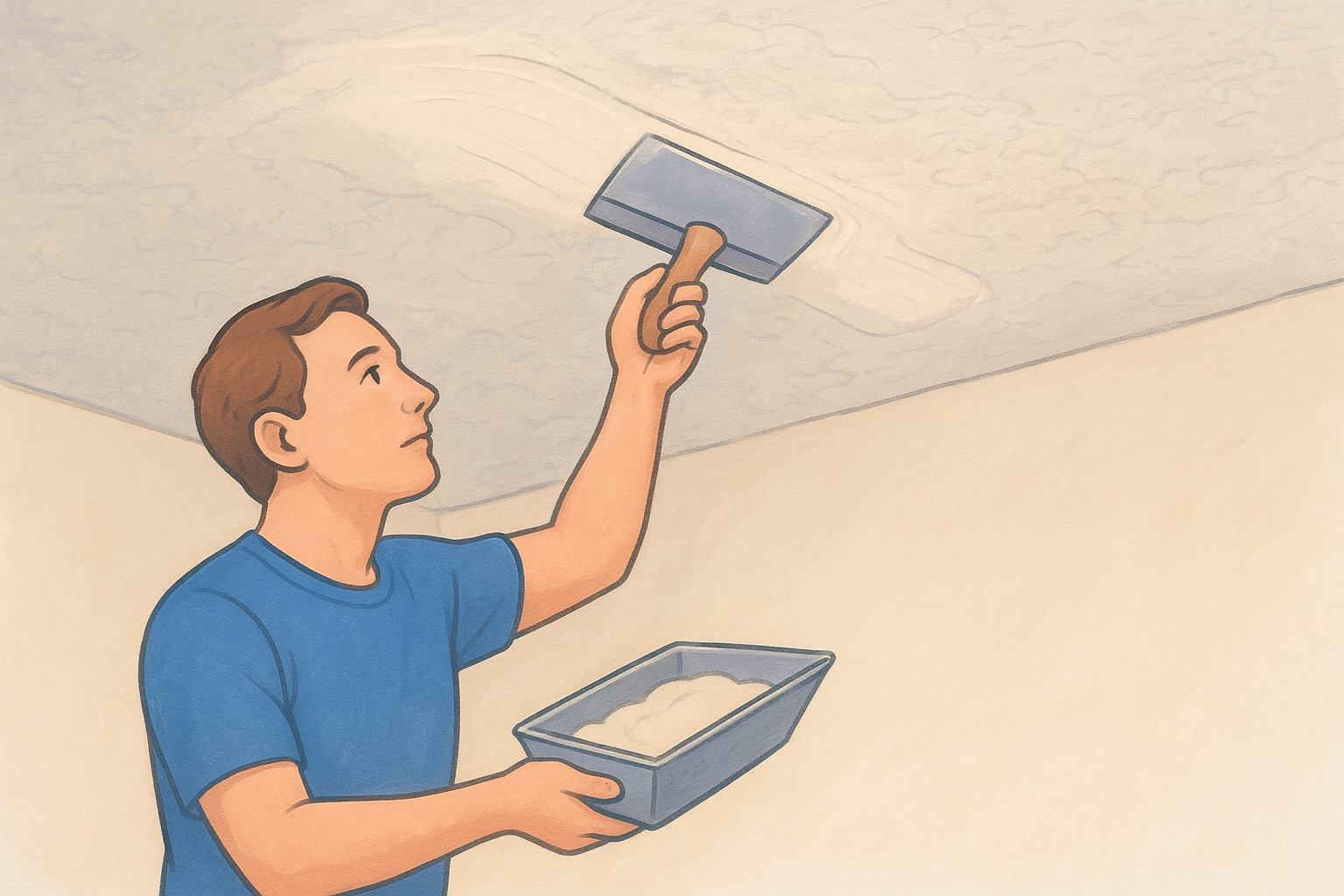
Your first coat fills the deepest texture valleys . Let it dry fully for 24 hours, then apply a second thin coat to level the surface further. Most ceilings need two to three coats total. Sand lightly between coats with 120-grit paper on a pole sander to knock down any high spots before adding the next layer.
Step 5. Sand, prime, paint, and fix imperfections
Once your final coat of compound is fully dry and white all the way through (no gray damp spots), you're ready to sand. This step is where knowing how to smooth a textured ceiling pays off, because the quality of your sanding determines whether the finish looks flat or lumpy under a coat of paint. Rushing the sanding stage is the most common reason a finished ceiling looks uneven in natural light.
Sand to a flat, paint-ready surface
Start with 120-grit sandpaper on a pole sander and work in long, overlapping passes across the ceiling. Keep your pressure light and consistent so you level the high spots without gouging the compound in the low areas. Switch to 150-grit paper for a final pass to smooth out any scratches left by the coarser grit.
Sand in good lighting and hold a work light at a low angle to the ceiling surface so ridges and high spots cast visible shadows before you prime.
After sanding, wipe the entire ceiling with a dry microfiber cloth or a lightly dampened sponge to remove dust. Any dust left on the surface will show through paint as a rough, grainy texture.
Prime, inspect, and paint
Apply a coat of drywall primer (PVA primer works well here) before any paint touches the ceiling. Primer seals the sanded compound so paint absorbs evenly across the surface instead of flashing in patches. Let it dry completely, then inspect the ceiling under raking light one more time. Fill any remaining hairline cracks or divots with a thin layer of compound, let it dry, sand the spot smooth, and spot-prime before painting. Finish with two coats of flat ceiling paint for a clean, matte result.
Next steps if you want a pro-level finish
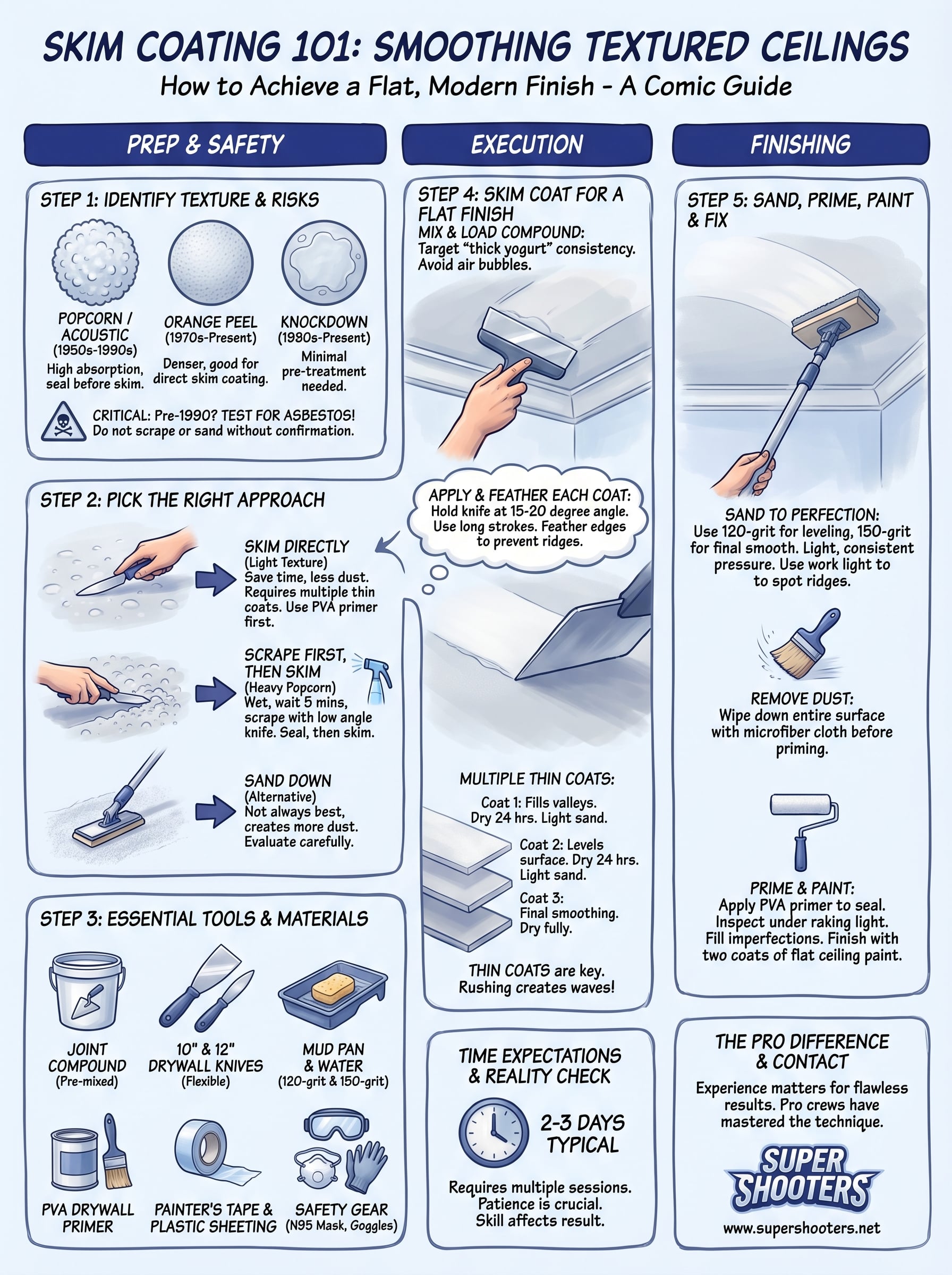
You now have a complete picture of how to smooth a textured ceiling , from identifying your texture type and checking for asbestos to applying compound, sanding, and painting. Following these steps correctly gives you a solid, flat result that updates your home's look without a full ceiling replacement. That said, the gap between a good DIY finish and a truly seamless, professional result comes down to one thing: years of hands-on experience with drywall knives, compound consistency, and reading a ceiling surface under different lighting conditions.
If you want a finish with zero visible lap marks, perfect flatness, and zero risk of asbestos exposure , the fastest path is working with a crew that has done this thousands of times. Super Shooters has completed over 10,000 ceiling projects across the Sacramento Valley with free in-home estimates and no upfront payment required. Get your free ceiling estimate today and see what a pro-level finish actually looks like.
Recent Posts