Share this article

May 5, 2026

Orange Peel Vs Knockdown Texture: Key Differences & Cost

Choosing between orange peel vs knockdown texture is one of the most common decisions homeowners face during a drywall project. Both options hide imperfections, add character to your walls and ceilings, and cost less than a smooth finish, but they look and feel noticeably different. Picking the wrong one can leave you stuck with a style that clashes with your home's overall aesthetic .

The two textures differ in appearance, application method, durability, and price. Orange peel has a fine, bumpy surface similar to citrus skin. Knockdown starts the same way but gets flattened with a knife, creating broader, smoother patches with subtle variation. Each has trade-offs when it comes to maintenance, repairability, and how it plays with lighting, details that matter more than most people realize before the mud is on the wall .

At Super Shooters, we've applied both textures across more than 10,000 ceiling and wall projects throughout the Sacramento Valley over the past 30+ years. That hands-on experience gives us a clear picture of how each texture performs in real homes. This guide breaks down the key differences, costs, pros, and cons so you can make a confident choice for your next project.

Orange peel vs knockdown at a glance

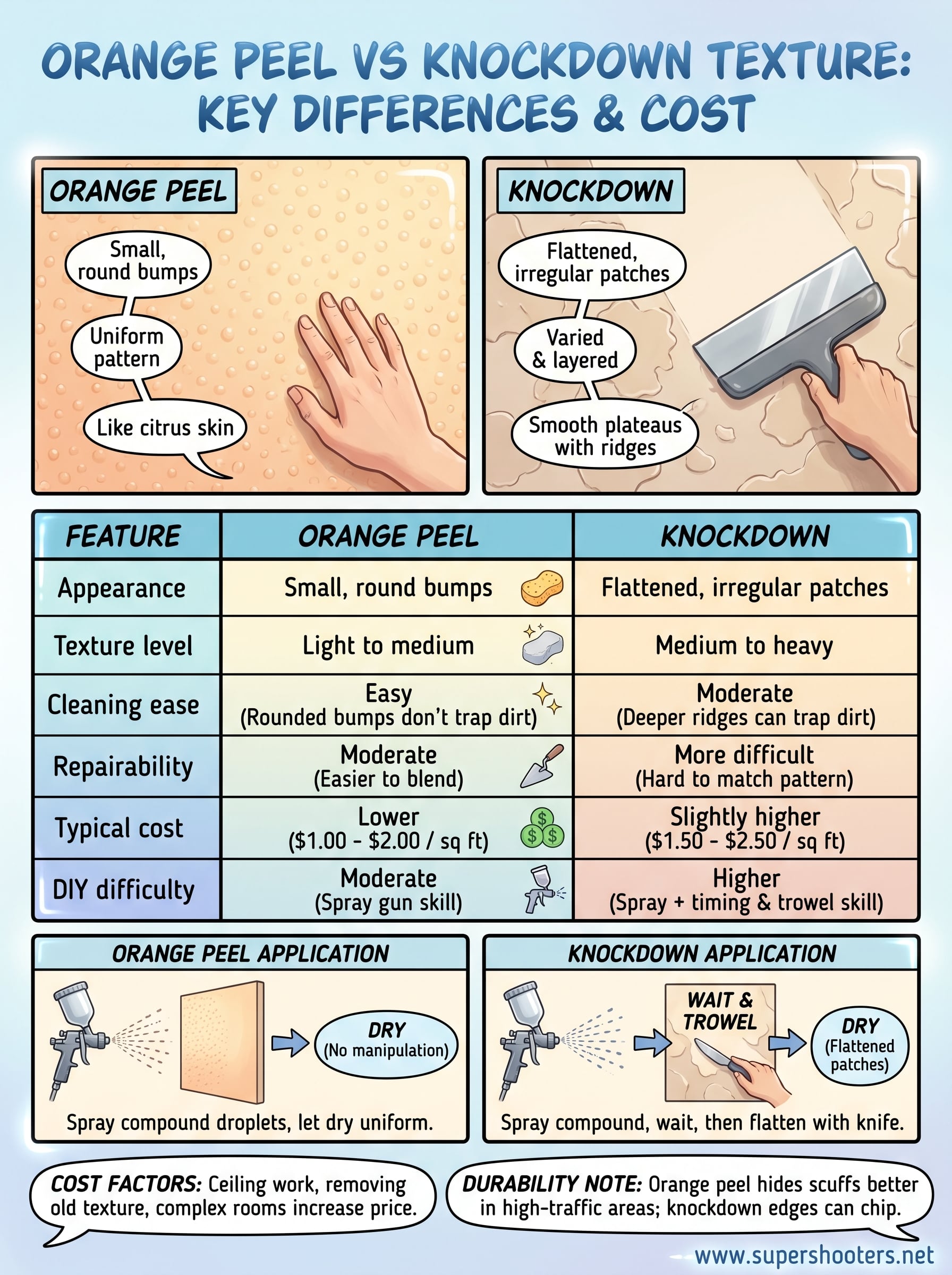
Understanding the core differences between orange peel and knockdown texture helps you narrow down your choice before a contractor shows up with a hopper gun. Both textures start with drywall compound sprayed onto the wall surface , but what happens next separates them completely. The table below gives you a fast side-by-side comparison across the categories that matter most.

Feature Orange Peel Knockdown
Appearance Small, round bumps like citrus skin Flattened, irregular patches
Texture level Light to medium Medium to heavy
Cleaning ease Easy Moderate
Repairability Moderate More difficult
Typical cost Lower Slightly higher
DIY difficulty Moderate Higher

Orange peel is generally the easier texture to match and repair, which is a practical advantage in homes where walls take regular wear.

Orange peel texture

Orange peel gets its name from the surface of a citrus fruit. A spray gun applies watered-down joint compound in small droplets that land on the wall and dry without any further manipulation. The result is a uniform, rounded bump pattern that covers the full surface at a consistent density. Because nothing flattens the droplets after they land, the texture stays soft and relatively forgiving to the touch.

Your best candidates for this finish are high-traffic areas like hallways, kids' rooms, and living spaces where walls take regular bumps and scuffs . The continuous pattern makes minor damage harder to notice and easier to blend during repairs compared to more complex finishes.

Knockdown texture

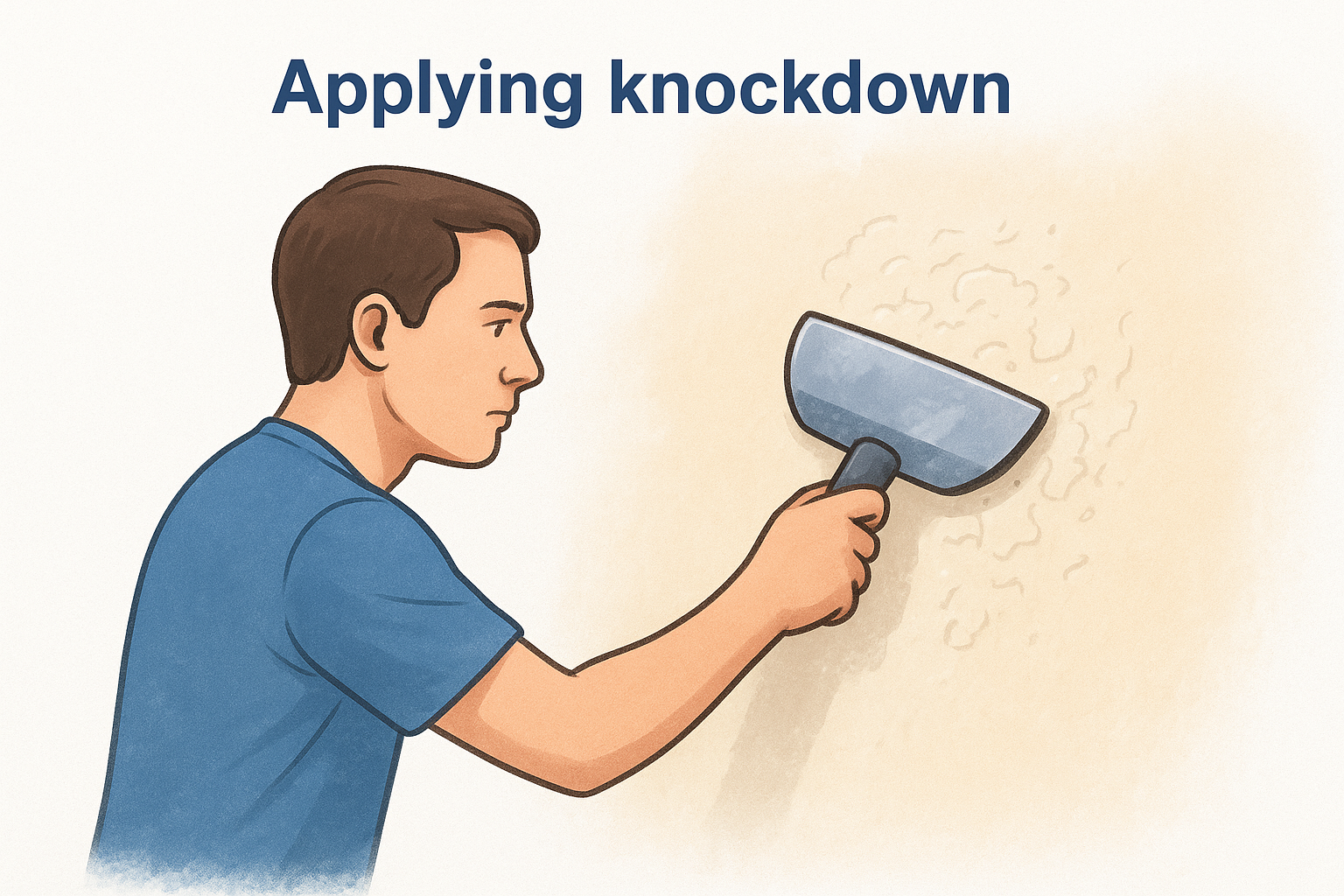
Knockdown starts the same way as orange peel, with compound sprayed onto the wall, but a drywall knife or trowel then skims across the surface before the material fully dries. That step flattens the tops of the droplets into irregular, island-like patches with smoother faces and defined edges . The visual result is more varied and layered, which many homeowners prefer in formal living spaces or master bedrooms.

When you compare orange peel vs knockdown texture side by side, the depth and shadow contrast of knockdown stands out clearly under directional lighting like recessed fixtures or wall sconces.

Visual differences and how to identify each

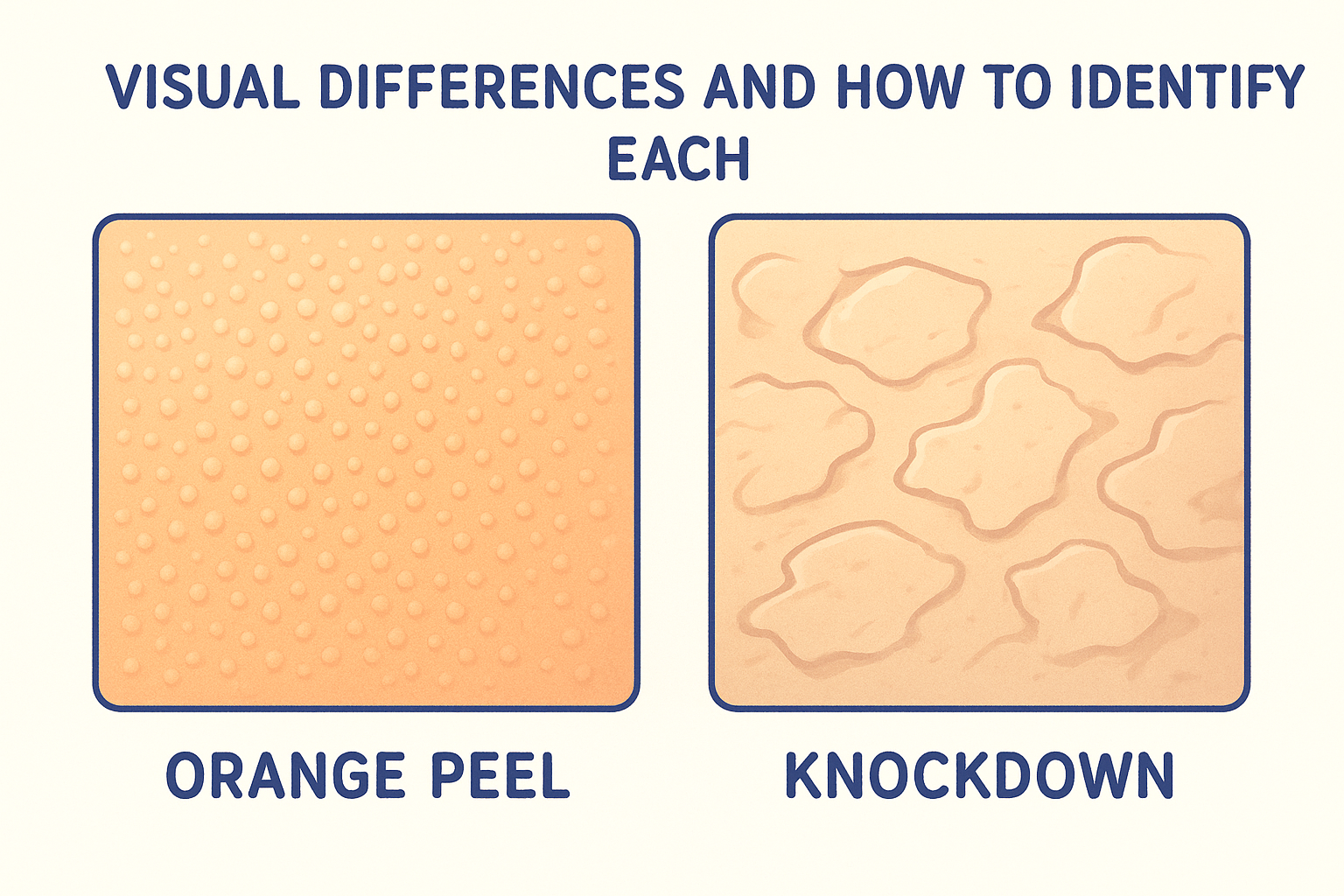
Standing a few feet back from your wall is usually enough to tell the two textures apart. Orange peel texture shows a tight, uniform field of small rounded bumps with no flat spots or variation in pattern. Knockdown texture shows larger, irregular patches with flattened tops and visible gaps between them, giving the surface a more deliberate, varied look.

Identifying orange peel

Run your hand across the surface and pay attention to the feel. Orange peel produces a consistent, slightly gritty sensation across the entire wall, similar to the skin of a basketball. Under flat or diffused lighting, the texture blends into the background. Under raking or directional light , the small bumps cast tiny shadows that make the pattern more visible but still appear even and repetitive throughout the surface.

Identifying knockdown

Knockdown looks noticeably different once you know what to look for in the orange peel vs knockdown texture comparison. The flattened islands are larger than orange peel droplets, and the gaps between patches expose the smoother base coat beneath . Under directional lighting, knockdown creates stronger shadow contrast because the patches have distinct raised edges.

If you shine a flashlight at a low angle across your wall and see irregular flat patches with defined borders, you have knockdown texture.

Your fingers will feel smooth plateaus interrupted by slight ridges on knockdown, a noticeably different sensation from the consistent bump pattern of orange peel.

Cost differences and what affects pricing

When comparing orange peel vs knockdown texture , expect to pay more for knockdown in most markets. The extra labor from the troweling step adds time to the job, and that time shows up directly on your invoice. For reference, orange peel typically runs $1.00 to $2.00 per square foot for labor and materials, while knockdown ranges from $1.50 to $2.50 per square foot depending on your location and the contractor you hire.

The gap in price between the two textures is usually modest, but it adds up quickly across an entire room or full house.

What drives the price up

Several factors push the final number higher regardless of which texture you choose. Ceiling work costs more than walls because of the overhead positioning involved, which slows application and increases physical demand on the crew. Removing existing texture before applying a new finish adds another layer of labor that many homeowners overlook when building their initial budget.

Room size also plays a direct role in what you pay. Smaller rooms with complex angles, corners, or obstacles like built-in shelving increase labor time relative to square footage, which raises your cost per square foot. Larger, open spaces let crews move efficiently and often bring that number down. If you need repairs rather than a full application, matching an existing texture pattern takes additional skill and time, a cost factor that applies more often to knockdown because of its irregular, hand-manipulated pattern.

Application methods and DIY difficulty

Both textures start with similar equipment , but the skill required to finish each one differs significantly. For orange peel, you need a hopper gun or airless sprayer and the right compound consistency. Mix it too thick and you get oversized blobs; too thin and the droplets won't hold their shape. Knockdown demands that same spraying skill plus a separate troweling step that requires a steady hand and good timing.

Applying orange peel

Orange peel is the more approachable option for a motivated DIYer. You load thinned joint compound into a hopper gun , spray it across the surface in even passes, and let it dry. The main challenge is maintaining consistent spray distance and pressure throughout the application. Practice on a scrap piece of drywall or cardboard before moving to your walls.

Renting a hopper gun from a local equipment supplier costs far less than hiring a crew to fix an uneven application.

Applying knockdown

Knockdown is harder to pull off without experience. After spraying the compound , you wait for the surface to partially set, then drag a wide knockdown knife across the peaks at a low angle. The timing window is narrow. Move too early and the compound smears. Wait too long and the trowel tears the surface instead of flattening it. In the orange peel vs knockdown texture comparison, knockdown consistently demands more skill and patience to execute well.

Durability, cleaning, and repair considerations

Both textures hold up well under normal use, but they respond differently to daily wear, cleaning, and damage. When weighing orange peel vs knockdown texture , the practical maintenance differences are just as important as the visual and cost factors you've already considered.

The texture you choose now will affect how easily you can touch up damage five or ten years down the road.

How each texture handles wear and cleaning

Orange peel performs well in high-traffic areas because its continuous bump pattern distributes surface impact across many small points, making individual scuffs less noticeable. Knockdown's larger patches can show edge chipping more readily when bumped in hallways or rooms with heavy daily activity.

Cleaning orange peel is more straightforward. The rounded bumps don't trap dirt or grease the way knockdown's deeper ridges and gaps do, and a damp sponge handles most marks without much effort. Knockdown requires more deliberate cleaning technique to avoid catching the raised edges, especially in kitchens and bathrooms.

Repairing damaged texture

Orange peel repairs are easier to blend. The uniform spray pattern is simple to replicate with a can of spray texture available at most hardware stores, and the continuous field hides the repair naturally. Most homeowners can handle small touch-ups themselves with minimal practice.

Knockdown repairs demand more skill because you need to match irregular patch shapes and trowel angles that vary across the original surface. Getting the repair to disappear into the surrounding texture usually requires a professional contractor with experience matching existing patterns.

Next steps for your walls and ceilings

Now that you understand the orange peel vs knockdown texture comparison, you can move forward with a clear picture of what each finish requires. Your choice comes down to a few practical factors: how much traffic the room sees , how important easy repairs are to you, and what visual style fits your home best.

If you want a professional result without the trial and error of a DIY attempt, working with an experienced contractor makes a real difference. Matching an existing texture or applying a fresh finish across multiple rooms requires equipment, materials, and the kind of pattern control that comes from years of hands-on work. The Sacramento drywall and ceiling specialists at Super Shooters offer free in-home estimates with no upfront payment required, and the team has completed over 10,000 projects across the Sacramento Valley, so your walls and ceilings get consistent, experienced attention from start to finish.

Recent Posts

By cinchweb May 4, 2026
Learn how to patch a hole in the ceiling with our guide for every size. Fix dings, use mesh patches, or replace drywall for a seamless, professional finish.
By cinchweb May 4, 2026
Learn how to smooth textured walls to get a flat, modern finish. Our guide covers asbestos safety, skim coating, and tools for professional results.
By cinchweb May 3, 2026
Compare 10 types of interior wall finishes, including drywall, plaster, and wood. Learn the pros, cons, and costs to find the best look for your home.
By cinchweb May 3, 2026
Learn how to hang drywall on ceiling like a pro. Our guide covers joist marking, panel lift techniques, and screw patterns for a smooth, crack-free finish.
By cinchweb May 3, 2026
Find out does popcorn ceiling contain asbestos by checking construction dates and testing guides. Learn how to safely test, remove, or cover old textures.
May 1, 2026
Master how to patch drywall with our step-by-step guide. Learn to fix small nail holes, medium cracks, and large damage for a seamless, professional finish.
May 1, 2026
Decide between drywall vs plaster walls. Learn how to tell them apart, compare repair costs, and find the best solution for your home renovation project.
May 1, 2026
Don’t just patch it—fix it for good. Learn how to fix drywall cracks using pro techniques for diagnosing, taping, and texturing for a seamless finish.
April 30, 2026
Learn how to install drywall with this step-by-step guide. We cover measuring, cutting, and hanging panels on walls and ceilings for a flawless finish.
Show More