May 4, 2026
How To Smooth Textured Walls For A Flat, Modern Finish
If you've ever run your hand across a bumpy, outdated wall and thought "this has to go," you're not alone. Thousands of Sacramento Valley homeowners ask us how to smooth textured walls every year, and for good reason. That old orange peel or knockdown texture can make even a well-maintained home feel stuck in the past. The good news? A flat, modern finish is absolutely achievable , whether you tackle it yourself or bring in a pro.
At Super Shooters, we've completed over 10,000 wall and ceiling projects across the Sacramento Valley in our 30+ years of business. We know textured walls inside and out, what works, what doesn't, and where DIY efforts tend to go sideways. That hands-on experience is exactly what shaped this guide, so you get real-world advice instead of guesswork .
This article walks you through the most reliable methods for smoothing textured walls, from skim coating to sanding to full replacement. You'll learn what tools and materials you actually need , how to prep your surfaces properly, and how to avoid the mistakes that lead to costly do-overs. By the end, you'll have a clear plan for getting those walls flat, clean, and ready for paint or wallpaper .
What to know before you start
Before you grab a pole sander and start attacking your walls, there are two things you need to confirm first : whether your texture contains asbestos and exactly what kind of texture you're dealing with. Skipping these steps can turn a weekend project into a health hazard or a costly redo that far exceeds what a professional would have charged to do it right the first time.
Check for asbestos before touching anything
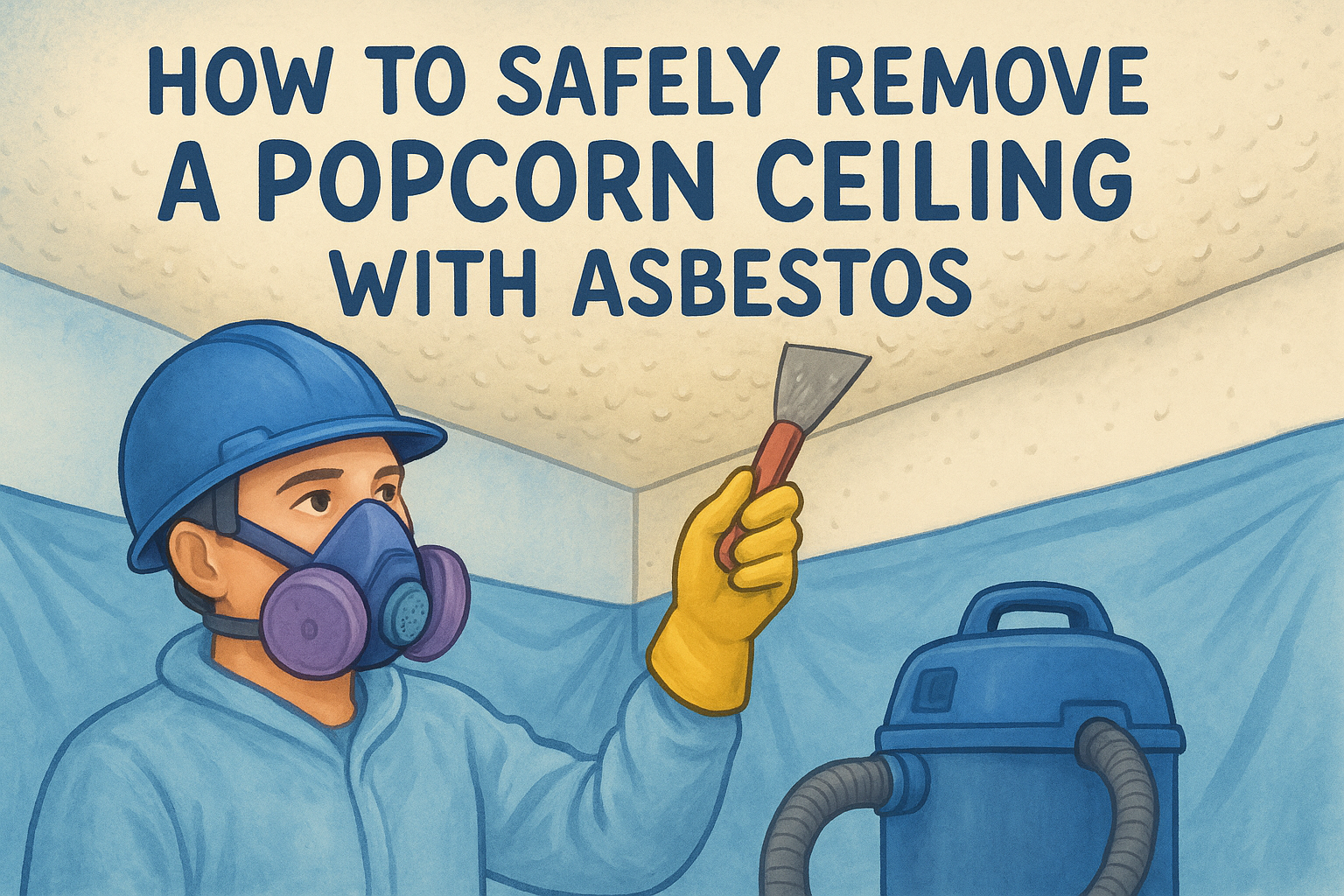
Homes built before 1980 commonly used asbestos-containing materials in wall and ceiling textures. If your home falls in that age range, test a sample before you disturb the surface in any way. You can purchase a certified DIY test kit or hire a licensed inspector to collect and submit samples for lab analysis. Disturbing asbestos-containing texture without proper precautions is a serious health risk and may put you in violation of local regulations.
If your home was built before 1980, treat all texture as potentially hazardous until you have a confirmed test result in hand.
Know your texture type
Different textures require different approaches , so identifying yours before you buy supplies saves time and money. Orange peel is a light, bumpy surface that responds well to a single skim coat. Knockdown texture is thicker and usually needs more compound to flatten out completely. Heavy skip trowel or Santa Fe finishes may require multiple coats or, in severe cases, full drywall replacement.
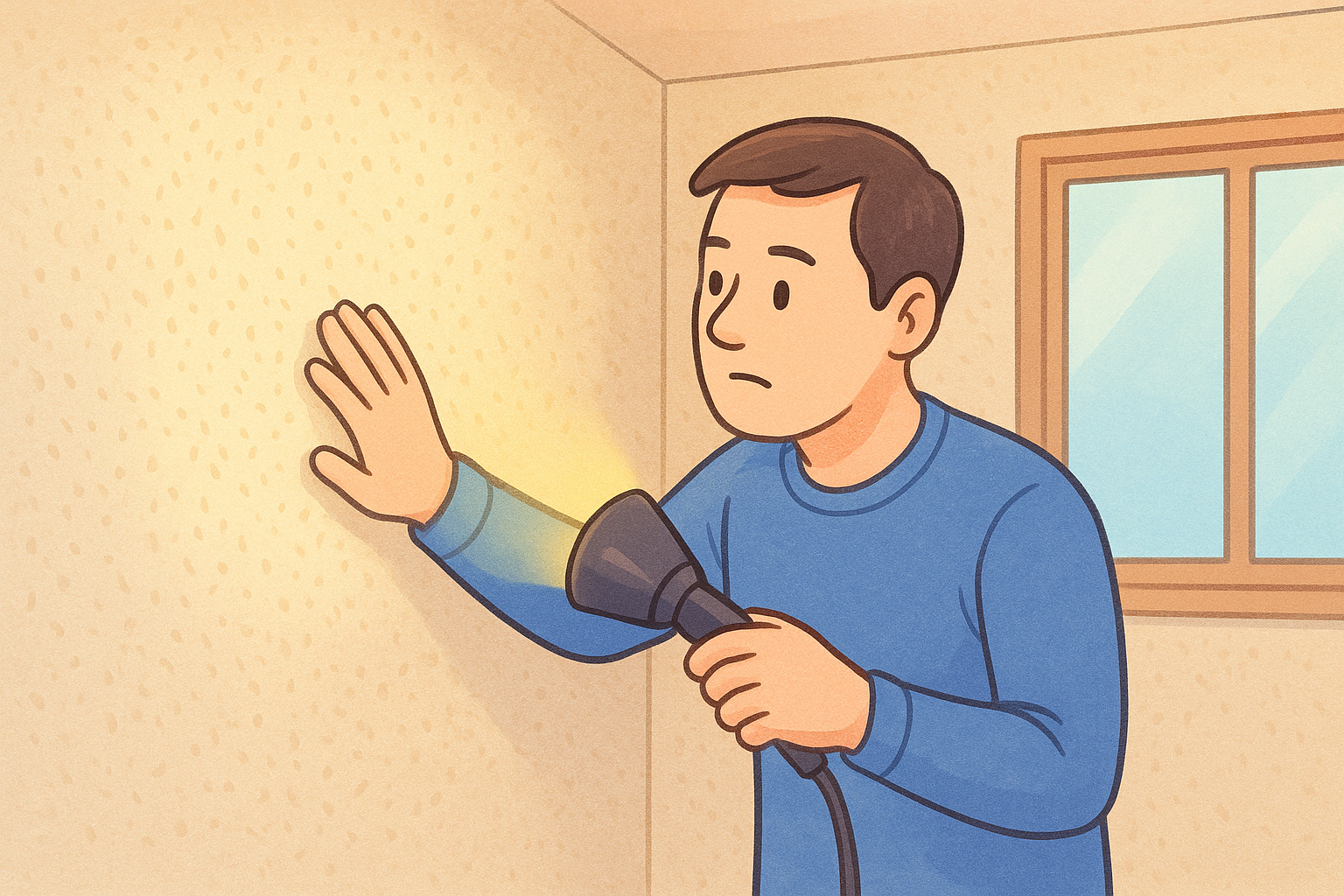
Run your hand across the wall and look at it under raking light from a lamp held close to the surface. The more pronounced the peaks and valleys , the more prep work and compound you'll need.
Gather your tools and materials
Understanding how to smooth textured walls gets much easier when everything is staged and ready before you start. Here's what a standard skim coat job requires:
- Pre-mixed all-purpose joint compound
- 6-inch and 12-inch taping knives
- Pole sander with 80-grit and 120-grit sandpaper
- Drywall primer (high-build)
- Drop cloths and painter's tape
- Safety glasses and an N95 respirator
Step 1. Prep the room and protect yourself
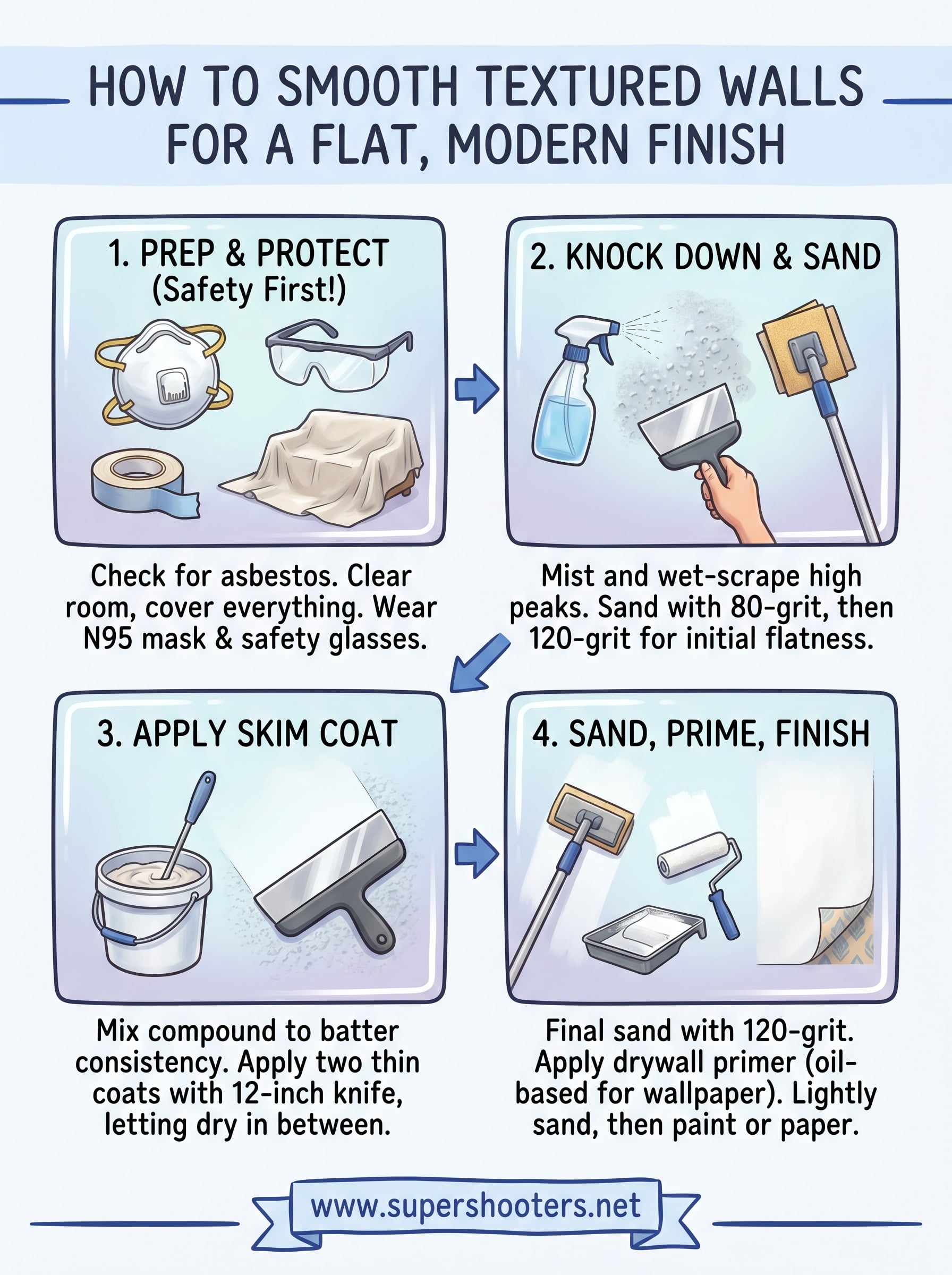
Good prep work sets up every step that follows. Before you mix a single drop of joint compound to learn how to smooth textured walls properly, clear the room as much as possible and lay drop cloths across the entire floor. Pull furniture to the center or move it out entirely. Tape plastic sheeting over doorways to keep dust from spreading through the rest of your home.
Protect yourself from dust and debris
Sanding and scraping texture creates fine airborne particles that you do not want in your lungs. Wear an N95 respirator rated for fine dust throughout every stage of this process. Safety glasses protect your eyes from falling debris, especially when working near the ceiling line.
Never skip the respirator, even for a small job. Cumulative dust exposure adds up quickly.
Here is the personal protective equipment you need on hand before you start:
- N95 respirator
- Safety glasses or goggles
- Work gloves
- Old clothes or a disposable coverall
Seal off electrical outlets and vents
Joint compound and sanding dust will find their way into every opening available. Cover all electrical outlets, switch plates, and HVAC vents with painter's tape and plastic before you begin. Turn off the circuit breaker to any outlets in the work area as an extra precaution.
Step 2. Knock down texture and sand the surface
Now that your room is protected, it's time to physically reduce the texture before you apply any compound. The goal here is to knock down the highest peaks so the wall surface is as flat as possible. A flatter starting surface means fewer coats of joint compound and a much cleaner final result.
Wet scraping to remove raised texture
Lightly mist the wall with water from a spray bottle, then drag a 6-inch taping knife held at a shallow angle across the surface to shave off the raised texture. Work in small, manageable sections and keep the blade nearly parallel to the wall to avoid gouging the drywall beneath.
Wetting the texture first softens it and makes scraping far easier, especially on walls with older, brittle finishes.
Sand the surface flat
Once the peaks are knocked down, attach 80-grit sandpaper to your pole sander and work across the wall in overlapping horizontal passes. This is a key part of learning how to smooth textured walls correctly because it removes loose material and levels out any remaining high spots. After the initial pass, wipe off the dust with a dry cloth, then follow up with 120-grit sandpaper for a final smoothing pass before you move on to skim coating.
Step 3. Skim coat with joint compound
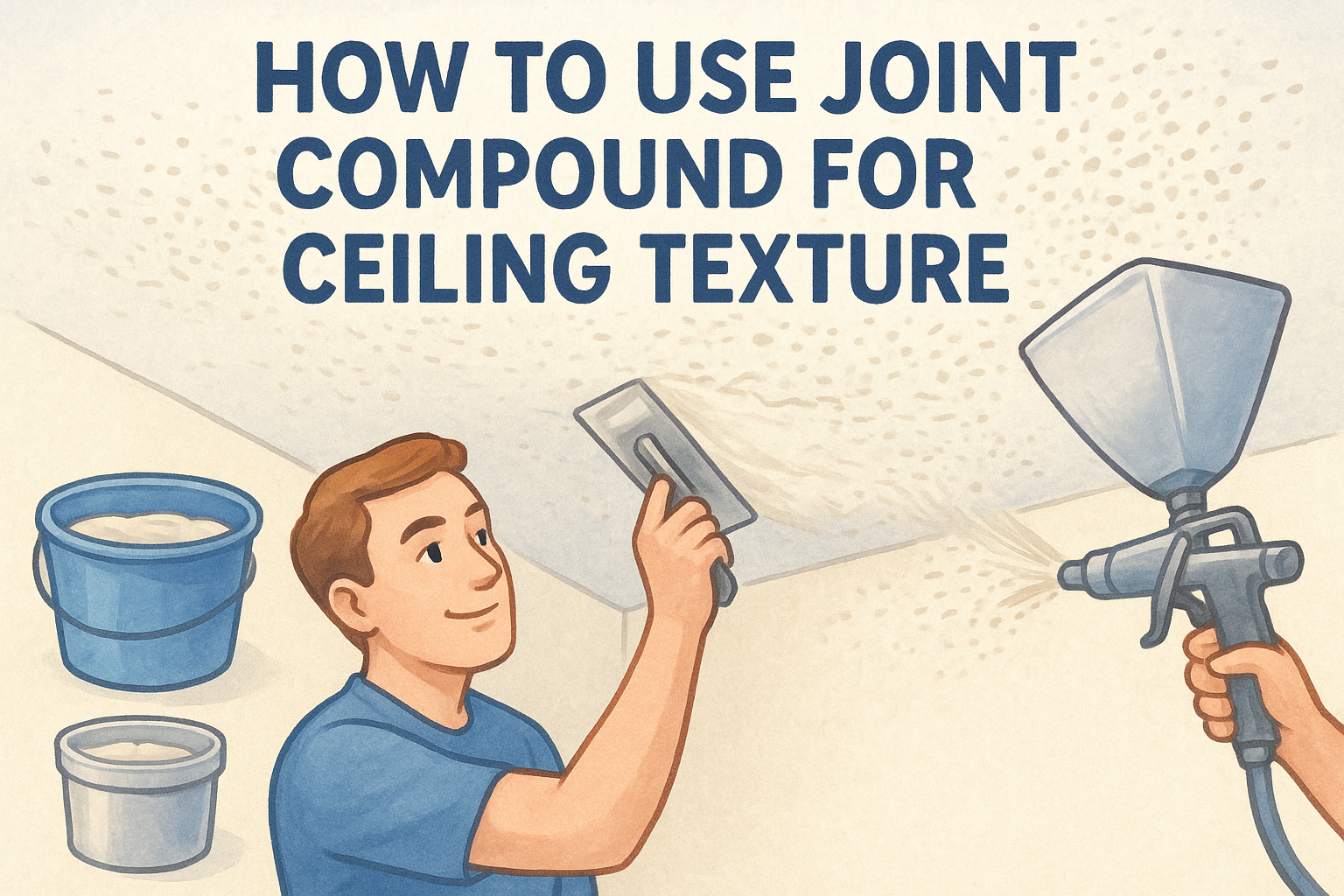
Skim coating is the heart of learning how to smooth textured walls , and getting your mix right separates a clean finish from a patchy, uneven result. Thin your pre-mixed all-purpose joint compound with water until it reaches a consistency similar to thick pancake batter. Too thick and it drags across the wall; too thin and it slides off before it sets.
Apply the first coat
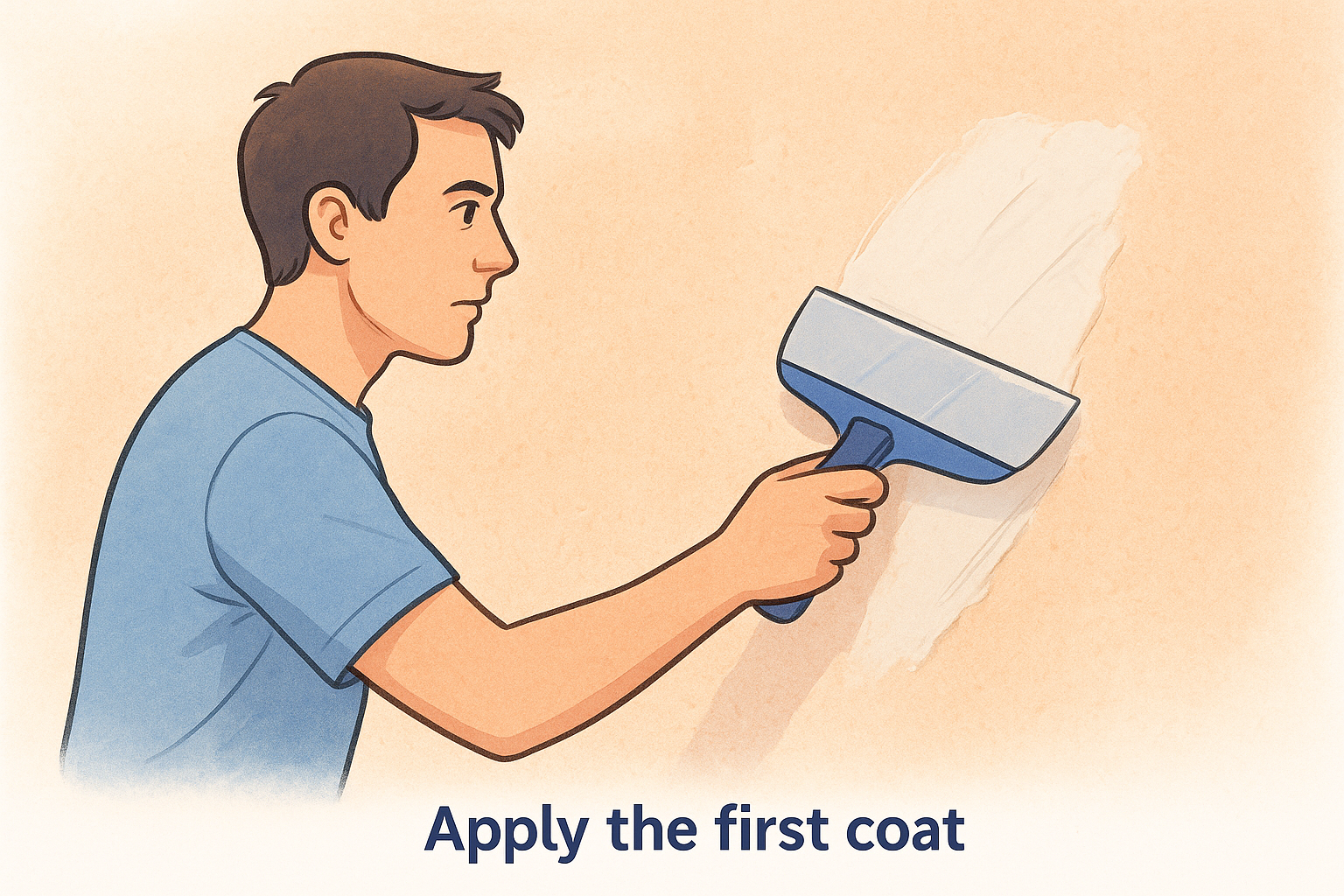
Load your 12-inch taping knife with a generous amount of compound and spread it across the wall in long, overlapping strokes. Work from the top of the wall down, keeping the knife at a 15 to 20 degree angle to the surface. Apply firm, even pressure to push the compound into any low spots left by the texture.
Don't try to make the first coat perfect. Its job is to fill the texture, not deliver a finished surface.
Apply the second coat
Once the first coat dries completely (typically 24 hours), apply a second thin coat using the same technique. This second pass fills any remaining depressions and levels out slight ridges left from the first application. Keep your strokes long and consistent for the smoothest possible result before moving on to sanding.
Step 4. Sand, prime, and finish for paint or wallpaper
Once your final skim coat dries completely, this step determines the quality of your finished surface . Rushing through sanding and priming will undo all the careful work you've put in, so treat this stage as seriously as any other part of learning how to smooth textured walls from scratch.
Sand the dried skim coat
Attach 120-grit sandpaper to your pole sander and work across the wall in long, overlapping passes. Keep your pressure steady and even to avoid shallow divots that will telegraph through paint. Wipe off all dust with a dry cloth before you prime.
Hold a work light at a raking angle against the wall to catch any remaining ridges or low spots before you move on.
Prime before painting or hanging wallpaper
Drywall primer seals the joint compound and gives paint a uniform surface to grip. Roll on one full coat, let it dry completely, then lightly sand with 220-grit sandpaper before your final application. For wallpaper, use an oil-based primer since water-based formulas can raise the paper face of drywall and reintroduce surface texture you just worked to remove.
Here is the finishing sequence to follow in order:
- Sand dried skim coat with 120-grit
- Wipe the wall clean of all dust
- Apply drywall primer (oil-based for wallpaper)
- Sand lightly with 220-grit once primer dries
- Apply paint or hang wallpaper
Ready for smooth walls
Now you have a complete picture of how to smooth textured walls from start to finish. The process takes patience, the right materials, and careful attention at each stage, but the results are worth the effort when you step back and see flat, clean surfaces ready for paint or wallpaper .
Most homeowners handle light orange peel texture without much trouble. Heavy skip trowel finishes or walls with suspected asbestos are a different story, and pushing through those jobs without the right experience often creates more work and expense than it saves.
If your walls fall into the more complicated category, or you simply want the job done right the first time, our team is ready to help. With over 30 years of experience and more than 10,000 completed projects across the Sacramento Valley, we deliver smooth, professional results on every job. Request your free in-home estimate today and find out how straightforward the process can be.