May 31, 2026
Water Damage Drywall Repair Cost: 2026 Pricing Guide
A burst pipe, a roof leak, or even a slow drip behind the wall, water finds drywall fast, and the damage it leaves behind isn't cheap to fix. If you're searching for water damage drywall repair cost estimates, you're probably staring at a stained, bubbling, or crumbling wall right now and wondering what this is going to run you. Fair question, and the answer depends on several factors that most generic pricing guides gloss over.
The reality is that water-damaged drywall repair can cost anywhere from a couple hundred dollars for a small patch to several thousand for full-panel replacements across multiple rooms. Material costs, labor rates, the extent of moisture penetration, and whether mold remediation is involved all move that number significantly. Where you live matters too , pricing in the Sacramento Valley, for example, differs from national averages, and knowing the local range helps you budget with actual numbers instead of guesswork.
At Super Shooters, we've completed over 10,000 residential ceiling and wall projects across the Sacramento Valley over the past 30 years, and water damage restoration is one of the most common calls we get. We've seen every scenario, from minor ceiling stains to walls that need to be gutted back to the studs. This guide breaks down real 2026 pricing data , explains what drives costs up or down, and gives you the information you need to make a confident decision before hiring a contractor.
Why water-damaged drywall costs vary so much
Water damage doesn't follow a script. One homeowner pays $300 for a small patch repair; another pays $4,000 for the same square footage because the water sat longer, soaked deeper into the framing, and grew mold in the process. Water damage drywall repair cost swings this widely because several independent variables stack on top of each other, and each one can push your final bill significantly higher. Understanding what those variables are helps you set a realistic budget before a contractor ever walks through your door.
The source and duration of the leak
Where the water came from and how long it was present before you caught it are the two biggest cost drivers. A clean-water leak from a supply line is far cheaper to address than water from a sewage backup or a roof leak that soaked through for days. Clean-water damage to a small section of drywall may need only drying and a patch, while contaminated water requires more extensive removal to meet safety and health standards.
Duration matters just as much as source. Drywall is a paper-faced gypsum product, meaning it absorbs moisture quickly. A leak you caught within 24 to 48 hours may only affect the surface layer. A leak that went unnoticed for days saturates the gypsum core, warps the paper facing, and soaks into wall framing and insulation behind the board, all of which adds labor and material costs.
The longer water sits in drywall, the more likely it has traveled well beyond the visible damage area, which means more material to remove, more drying time, and more labor hours on your bill.
How far the moisture spread
Moisture migration is one of the most underestimated factors in any water damage repair estimate. Water doesn't stay in one spot. It wicks through drywall panels, runs along studs, and pools inside wall cavities where it stays completely invisible to the eye. A ceiling stain that looks like a 12-inch circle can mean a full 4x8 sheet of soaked drywall above it, plus saturated insulation pressing against the joists.
The actual size of the affected area drives material costs, labor hours, and the time your contractor needs to dry out the space before installing new board. Professionals use moisture meters to map the true extent of damage, and what they find behind the visible stain routinely expands the scope of work in ways that a surface inspection alone would never reveal.
Mold and hidden structural damage
If water sat in your drywall for more than 48 hours, mold growth becomes a serious concern. Mold remediation is a separate line item from drywall repair, and it can easily double your total project cost if the growth has spread behind the wall surface. In California, contractors follow specific protocols when mold is present, which adds both time and cost to the job.
Damaged framing is another variable that surprises homeowners. When wood studs or ceiling joists absorb enough moisture, they can swell, weaken, or begin to rot. Before new drywall goes up, any compromised framing needs to be dried, treated, or replaced. Skipping that step means you're covering a problem rather than fixing it, and the same damage will return within a year or two.
Typical price ranges in 2026
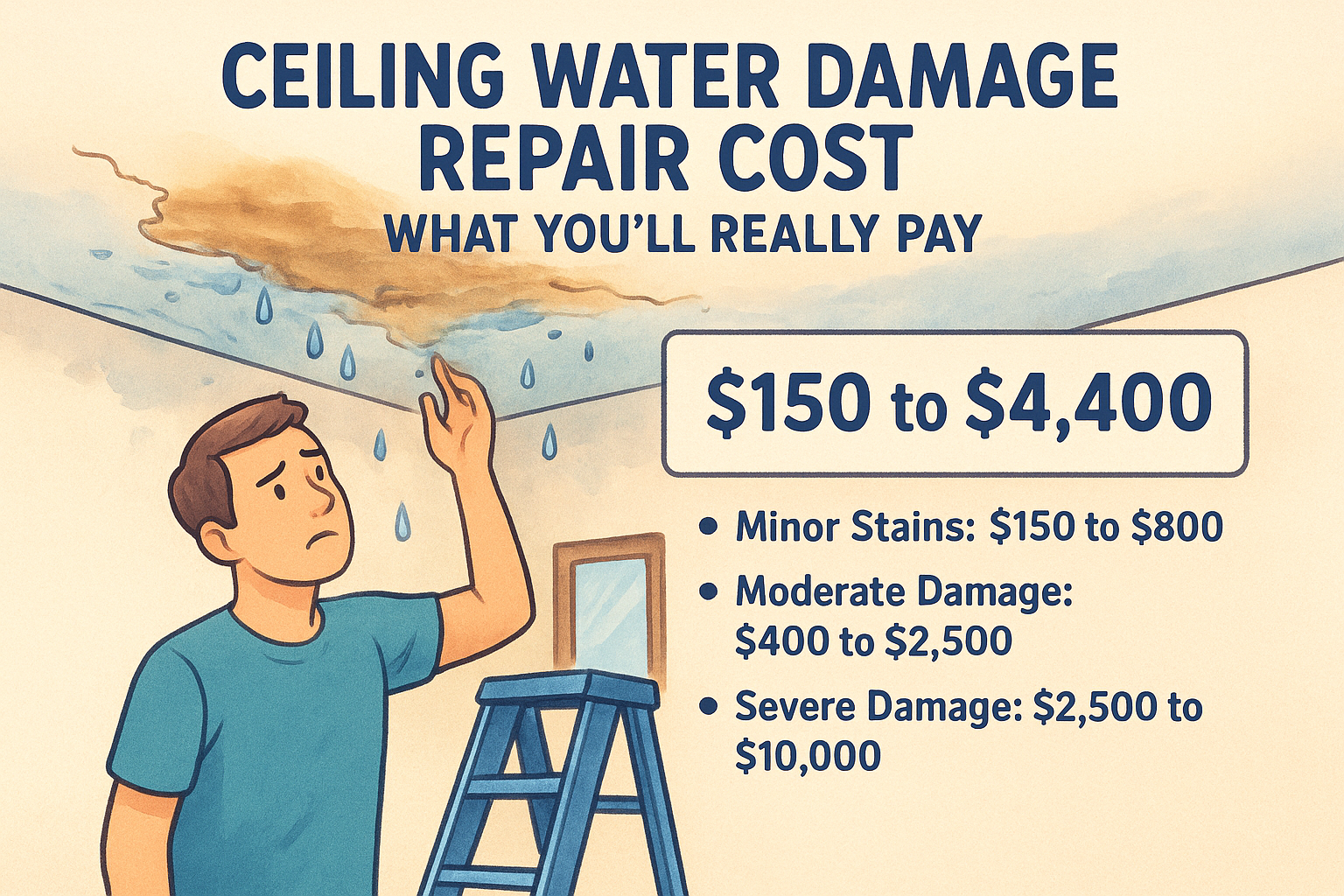
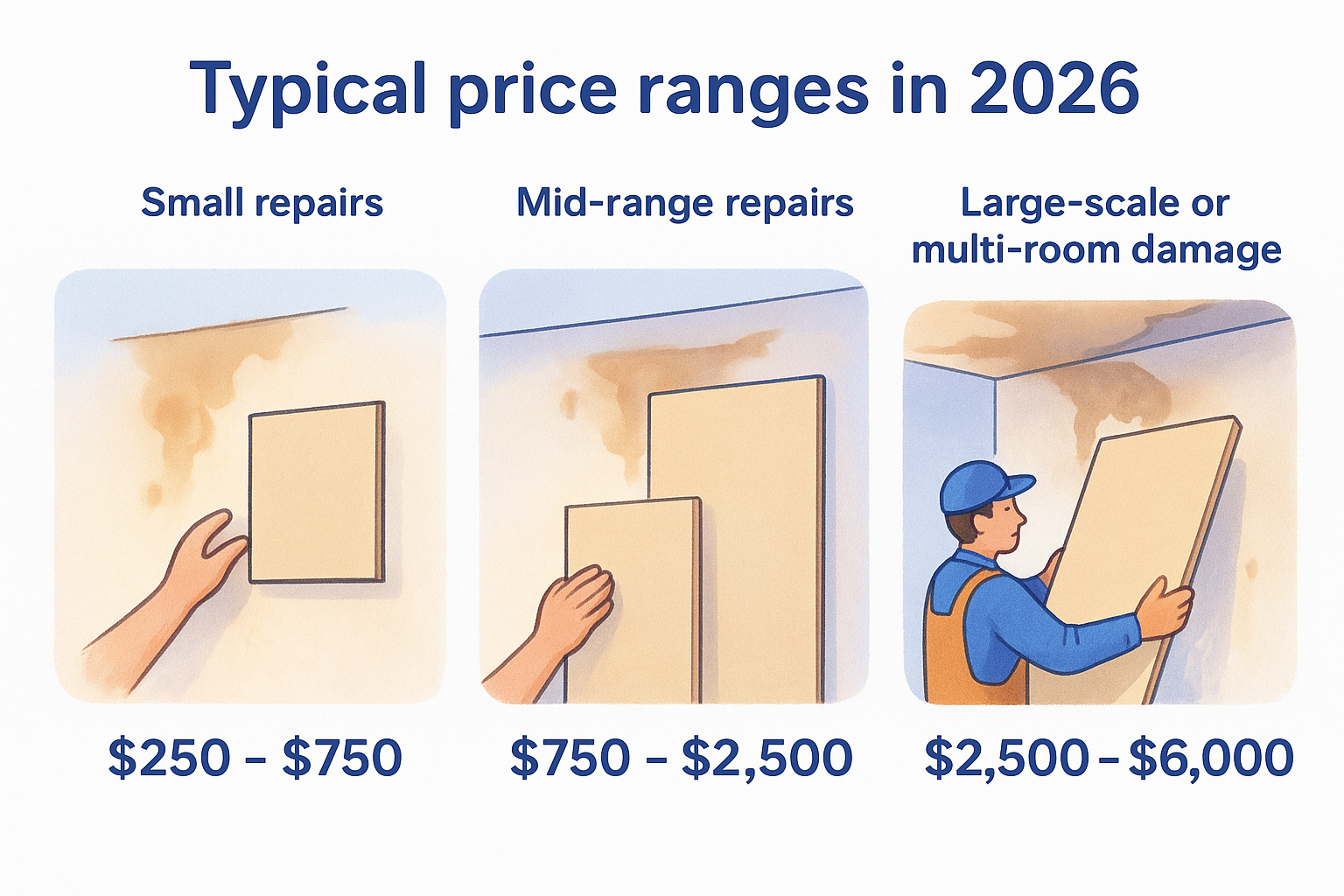
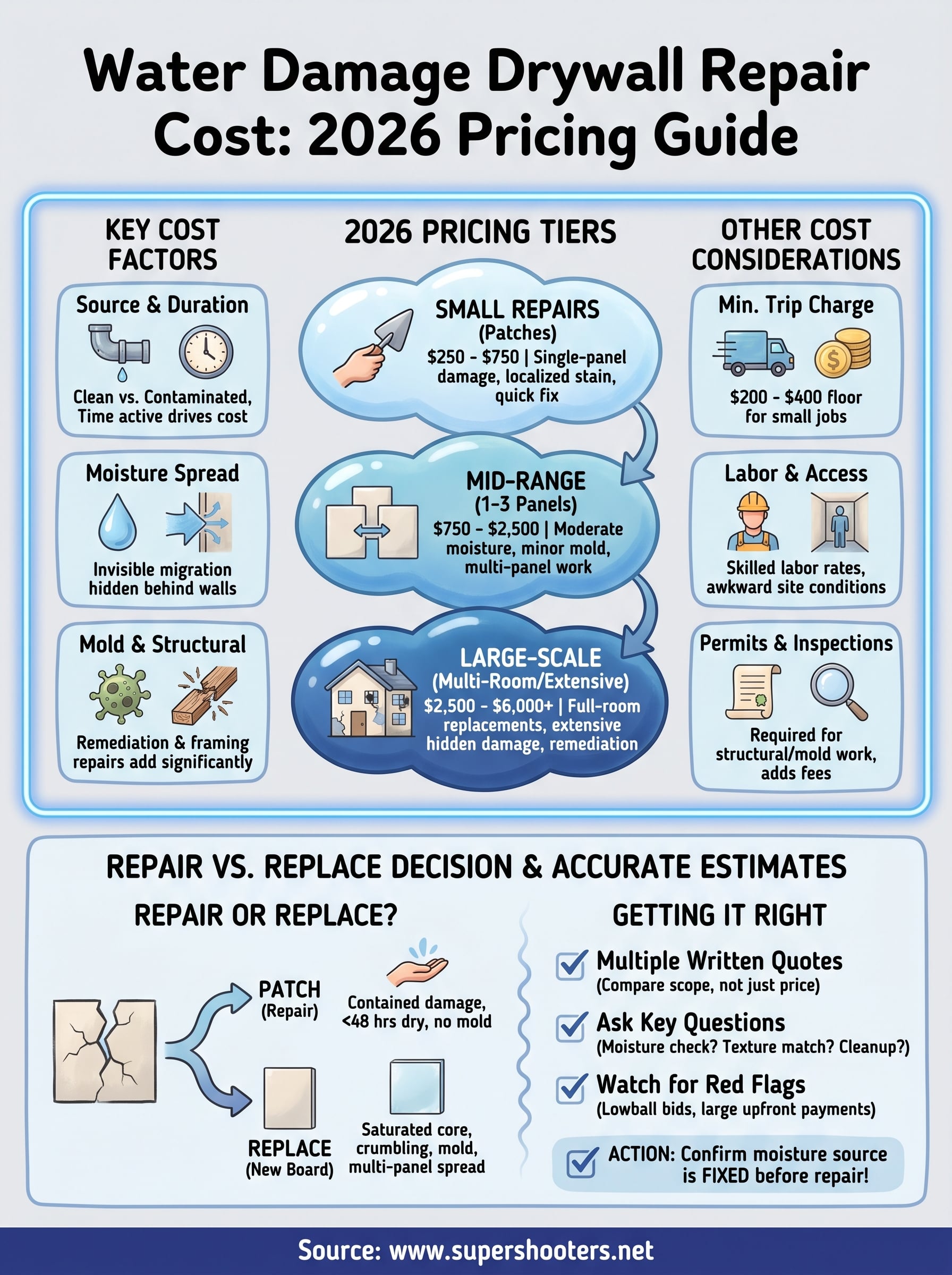
Water damage drywall repair cost breaks down into three broad tiers based on the scope of work involved. Knowing where your situation falls on that spectrum gives you a working budget before you call a single contractor. The ranges below reflect current labor and material costs in the Sacramento Valley, though they align closely with national pricing trends for 2026.
Small repairs and isolated patches
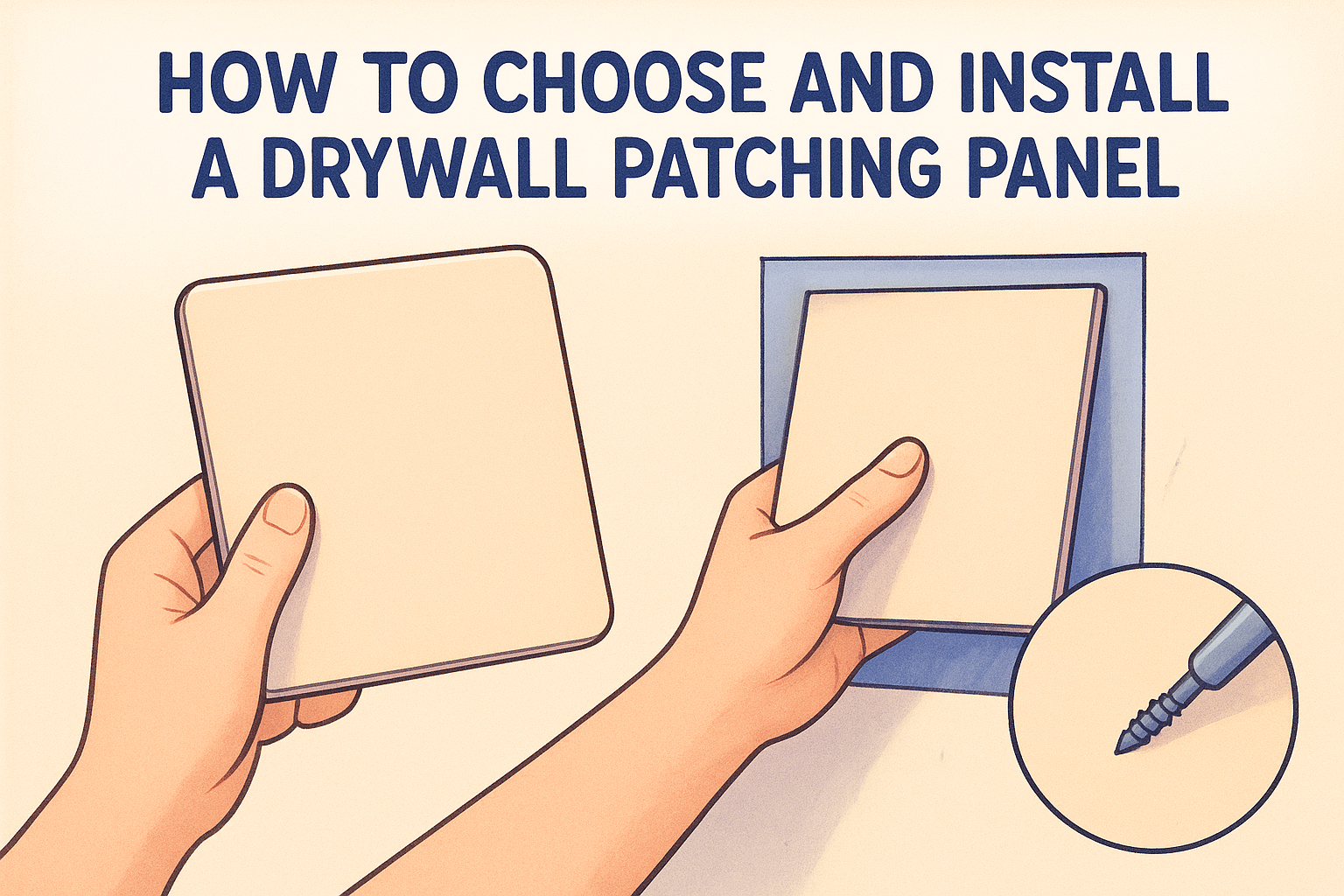
Small repairs cover single-panel damage or localized staining where the moisture didn't travel far and the framing behind the wall came through dry. In most cases, this means cutting out the damaged section, installing a backer board, patching with new drywall, and retexturing to match the surrounding surface.
For minor water damage caught early, most homeowners in the Sacramento Valley pay between $250 and $750 for a complete patch, texture match, and cleanup.
At this price tier, the job typically wraps in a single visit. You're paying for skilled labor and a clean, invisible repair, not material volume.
Mid-range repairs: one to three panels
Mid-range jobs involve replacing full 4x8 panels, addressing moderate moisture spread, and sometimes dealing with minor mold or softened framing. This category covers the most common scenarios: a ceiling section under a bathroom, a wall adjacent to a leaking pipe, or a garage wall with persistent moisture intrusion.
Expect to pay between $750 and $2,500 for this tier. The final number depends on whether insulation needs replacing, how much drying time is required before new board goes up, and the complexity of the texture match. Jobs with multiple affected panels on both walls and ceilings sit at the higher end of that range.
Large-scale or multi-room damage
Extensive water damage that spans multiple rooms, affects ceiling joists, or requires mold remediation before drywall work can begin pushes costs significantly higher. Full-room replacements, combined ceiling and wall repairs, or projects that uncover rotted framing can run anywhere from $2,500 to $6,000 or more depending on scope.
These larger projects take multiple days, require coordinated drying and inspection steps, and involve higher material volumes. Getting a written scope of work from your contractor before any demolition starts protects you from cost surprises mid-project.
Cost per square foot and minimum trip charges
When you ask a contractor for a ballpark number, they'll often quote a per-square-foot rate as a starting point. For water damage drywall repair, that rate typically runs between $2.50 and $7.00 per square foot in the Sacramento Valley for 2026, depending on material grade, texture complexity, and whether any structural drying work preceded the installation. That range reflects material and labor combined, but it doesn't capture the full picture for smaller jobs.
Per-square-foot pricing explained
Per-square-foot pricing covers the cost of the drywall board itself , joint compound, tape, screws, and the labor to hang, mud, tape, and texture. Standard half-inch drywall runs roughly $0.50 to $0.80 per square foot in materials alone, so the remainder of that rate goes to skilled labor. Texture matching adds to the per-foot cost because recreating an existing orange peel, knockdown, or smooth finish requires experience and extra material passes, especially on ceiling surfaces where overhead work slows everything down.
Small jobs under 50 square feet don't scale down proportionally, because the contractor still needs to drive to your home, set up, and invest time in a precise texture match regardless of how contained the patch area is. That's where minimum trip charges take over as the primary cost driver.
Per-square-foot rates work well for scoping medium to large repairs. For small patches, the minimum charge will likely define your water damage drywall repair cost more than any square-foot calculation.
Minimum trip charges and flat-rate factors
Most professional drywall contractors set a minimum job charge that covers their time, fuel, and setup regardless of how small the repair is. In the Sacramento Valley, that minimum typically falls between $200 and $400 for a single-visit repair job. You'll pay that floor even if the actual material and labor for the patch would add up to far less on paper.
Flat-rate pricing for defined tasks like a single-panel ceiling repair or a 2-foot wall patch is common among experienced contractors. It removes guesswork from your budgeting and keeps the pricing conversation straightforward before any work begins.
What drives the final bill
Several line items beyond raw square footage determine your water damage drywall repair cost , and knowing them in advance keeps you from being caught off guard when an estimate comes in higher than the per-foot math suggested. The biggest cost variables are labor rates, site conditions, and local permit requirements, each of which adds real dollars to the final number independent of material costs.
Labor rates and contractor experience
Skilled drywall labor is the largest single cost on most repair jobs. In the Sacramento Valley, licensed residential contractors typically charge between $60 and $100 per hour for experienced crews, with specialty work like overhead ceiling texture matching sitting at the higher end of that range. A contractor with decades of project history will cost more per hour than an unlicensed handyman, but the result is a texture match that blends invisibly with your existing wall surface rather than a visible patch that lowers your home's value.
Experience also affects job efficiency . A seasoned crew completes the same repair faster and cleaner than a less experienced one, which often offsets the higher hourly rate when you look at the total labor hours billed.
Accessibility and site conditions
Tight or awkward spaces add labor time regardless of how simple the actual patch work is. A ceiling repair above a stairwell, a wall behind built-in cabinetry, or a high vaulted ceiling all require more setup, staging, and careful maneuvering, which translates directly into more hours on your invoice. Water damage in an attic crawl space or inside a garage with limited clearance falls into the same category.
Difficult access can add 20 to 40 percent to your labor cost even when the damaged area itself is small.
Permits and inspection requirements
Certain repair scopes in California require a building permit, particularly when structural framing repairs are involved or when mold remediation precedes drywall installation. Permit fees in Sacramento-area jurisdictions typically range from $100 to $300 for residential interior repair work, and they add a mandatory inspection step that extends the project timeline by at least a few days before final work can close out.
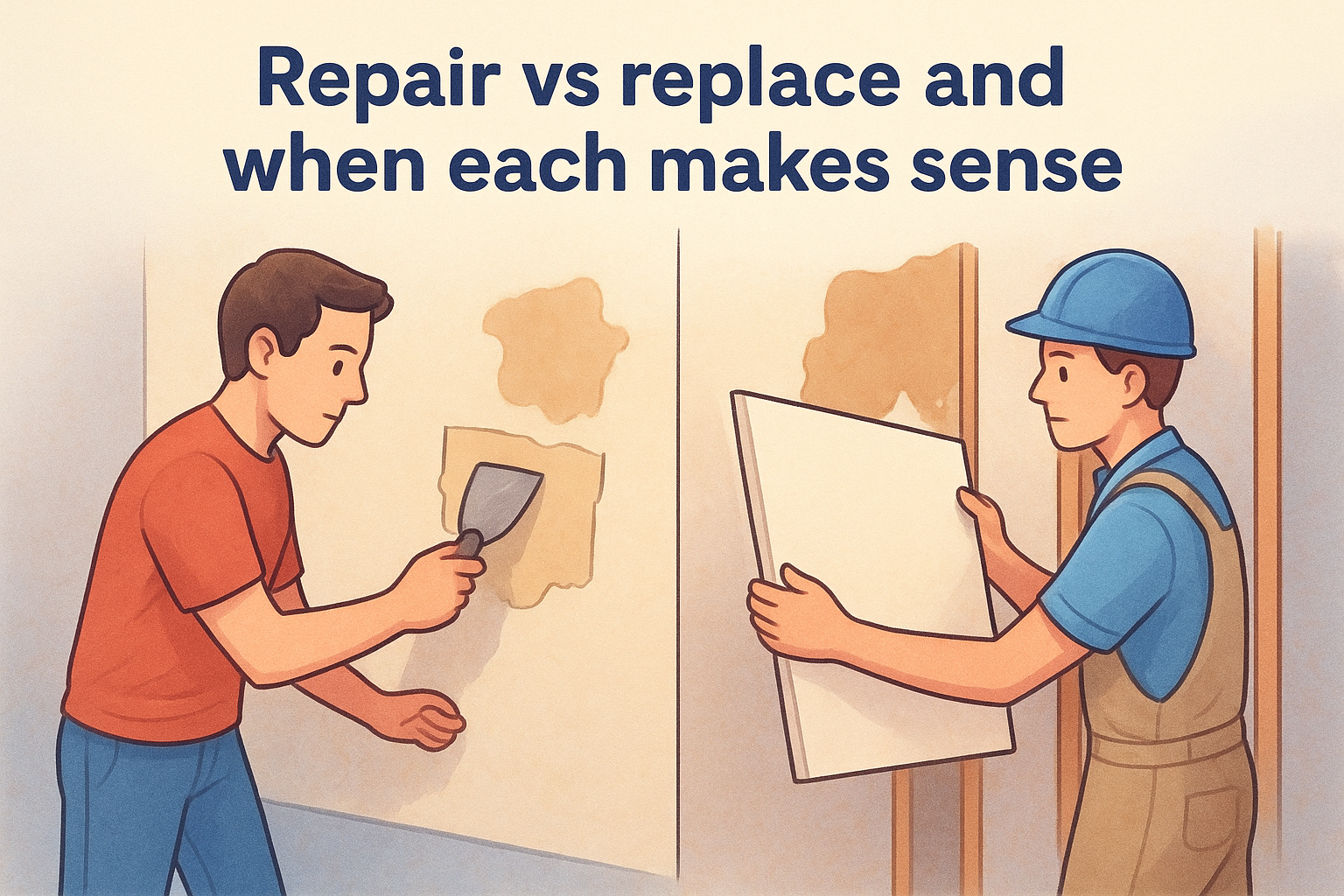
Repair vs replace and when each makes sense
The decision between patching existing drywall and pulling it out entirely comes down to two factors: how far the moisture penetrated and what condition the material is in after drying. Getting this call right matters, because under-repairing leaves hidden moisture problems that come back as mold or structural damage, while over-replacing drives your water damage drywall repair cost higher than the job actually requires.
When a repair is the right call
A targeted patch repair works when you caught the leak quickly and the damage is contained to a defined area without deep moisture migration into framing or insulation. If a moisture meter shows dry readings within 12 inches of the visible stain, and the surrounding drywall feels firm rather than soft or crumbly, a patch is the appropriate and cost-effective solution.
Drywall that dried completely within 24 to 48 hours and shows no signs of mold growth is almost always a strong candidate for repair rather than full replacement.
Surface staining alone , even if it looks severe, does not automatically mean the panel needs to come down. A contractor can cut out the stained section, install a backer, hang new material, and texture-match the patch to the rest of the ceiling or wall. The result is invisible when done by an experienced crew.
When full replacement makes more sense
Full panel or full-room replacement becomes necessary when moisture has soaked through multiple layers, the drywall core feels soft and crumbles when pressed, or when mold growth appears behind the surface. Trying to patch over waterlogged or mold-affected drywall is not a long-term fix. The weakened material won't hold screws reliably, and any mold left behind will continue spreading regardless of what covers it.
You should also lean toward replacement when multiple non-adjacent areas on the same wall show moisture damage. Cutting and patching in three or four separate spots often costs more in labor hours than hanging a fresh panel from stud to stud. A full replacement gives you a clean, structurally sound surface and a single seamless texture match rather than several visible patches competing for your eye across the wall.
How to get an accurate estimate and avoid surprises
Getting a reliable water damage drywall repair cost estimate comes down to preparation. The more clearly you can describe what happened, when it happened, and what you've already done to address the moisture source, the more accurate your contractor's quote will be before any work begins.
Get multiple written quotes
Collecting at least two or three written estimates from licensed contractors gives you a realistic picture of what the job should cost in your area. Verbal ballparks are not enough. A written quote forces the contractor to specify exactly what work they plan to do, what materials they'll use, and what falls outside the scope of the job. That specificity protects you if additional costs come up once demolition starts.
A written estimate that lists individual line items for drying, drywall material, taping, texturing, and any mold-related work gives you a clear baseline for comparing bids side by side.
Significant price gaps between quotes usually signal a difference in scope, not just pricing. If one contractor quotes $600 and another quotes $1,800 for what looks like the same job, ask each one to walk you through exactly what they're planning to do. One may be skipping a moisture inspection or leaving mold treatment out of the bid entirely.
Ask the right questions before signing
The right questions before you commit save you from mid-project surprises that balloon the final bill. Before signing any agreement, ask your contractor the following:
- Does your quote include a moisture meter inspection before any new drywall goes up?
- Is mold testing or remediation included, or is that a separate line item if you find it?
- What happens if you discover damaged framing behind the wall during demolition?
- Does the price include texture matching to blend the repaired area with the rest of the ceiling or wall?
- Is final cleanup and debris removal part of the job or billed separately?
Watch for red flags in estimates
Unusually low bids and requests for full payment upfront are two warning signs worth taking seriously. Legitimate residential contractors in California work under a licensed agreement and do not require full payment before completing the job. A contractor who skips a moisture inspection before quoting is also a concern, because that step determines the true scope of what needs to come out and what stays.
Next steps for a dry, safe wall
Now that you understand what shapes your water damage drywall repair cost , the next move is straightforward: confirm the moisture source is fully resolved before any repair work begins. Patching over an active leak or unaddressed moisture problem wastes your money and guarantees the damage returns within months. Once your plumber, roofer, or waterproofing contractor signs off that the source is fixed, you're ready to bring in a drywall professional for a proper assessment.
Your best next step is to schedule a free in-home estimate with an experienced contractor who will inspect the full extent of the damage, not just the visible surface. At Super Shooters, we've handled water-damaged walls and ceilings across the Sacramento Valley for over 30 years, and we never require payment upfront. Visit our drywall repair and patching service page to request your free estimate and get a clear, written quote before any work starts.
Recent Posts