Share this article

July 1, 2026

What Is Drywall Mud? Uses, Types, Vs. Spackle And Plaster

If you've ever watched a drywall project come together, seams disappearing, screw holes vanishing, rough surfaces turning smooth, the material doing most of that work is drywall mud . Also called joint compound, it's one of the most essential materials in residential construction and repair, yet most homeowners don't fully understand what it is or how it works until they need it.

At Super Shooters, we've used thousands of buckets of the stuff across more than 10,000 ceiling and wall projects throughout the Sacramento Valley. Over 30+ years of drywall installation, repair, and finishing, our crew has worked with every type of mud on the market, and learned exactly which ones perform best for specific jobs.

This article breaks down what drywall mud actually is, what it's made of, and how it's used in real-world applications. We'll cover the different types of joint compound , explain when each one makes sense, and clear up the common confusion between drywall mud, spackle, and plaster, three materials that look similar but behave very differently on your walls.

What drywall mud is made of and how it works

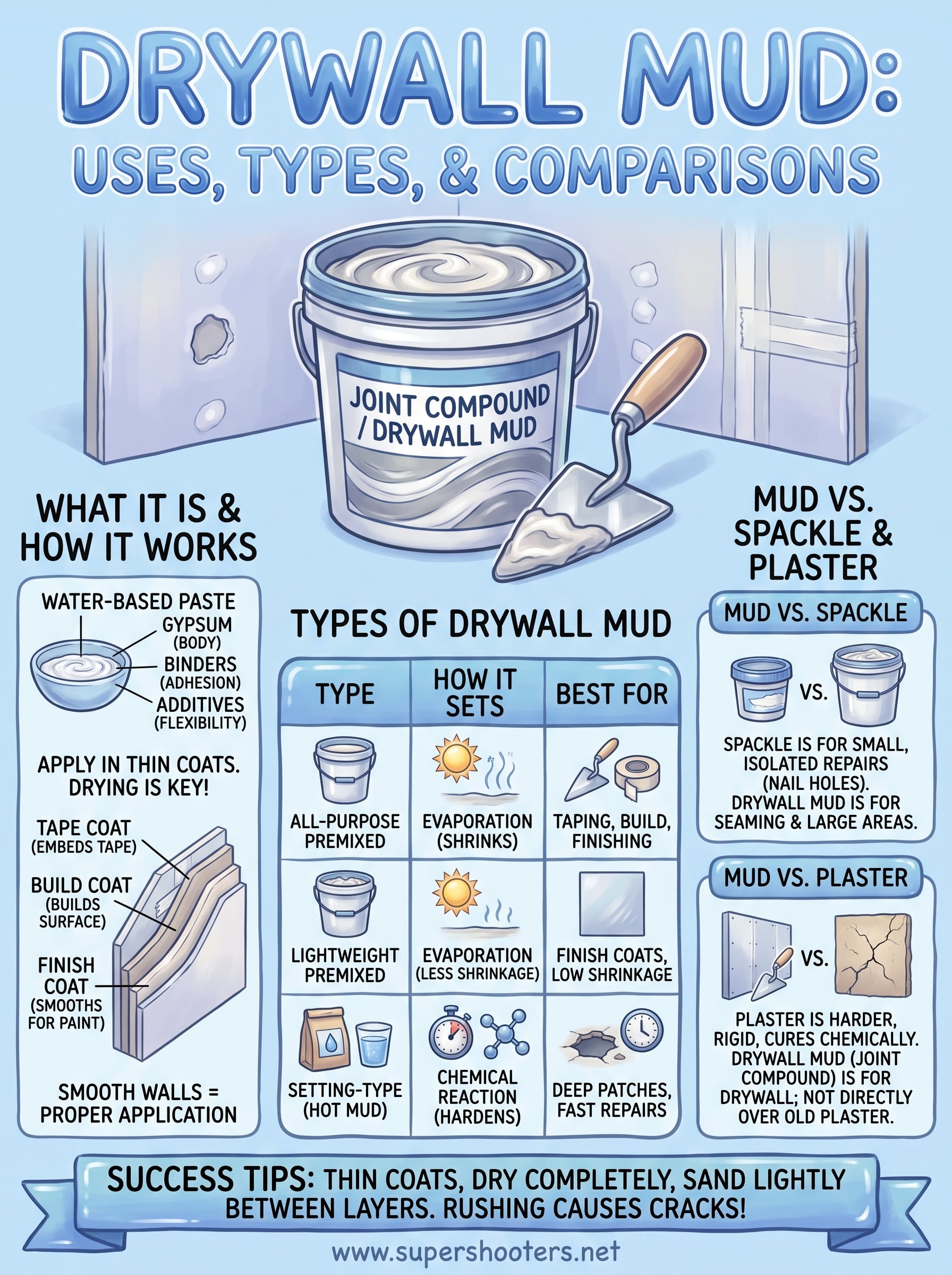
Understanding what is drywall mud starts with its ingredients. At its core, joint compound is a water-based paste made primarily of gypsum powder mixed with water, binders, and additives like preservatives. The gypsum provides the compound's body and structural hardness , while the binders help it adhere to drywall panels and paper tape. Manufacturers also add polymers that improve flexibility once the material dries, which helps prevent hairline cracks from forming across finished surfaces.

The base ingredients

Most premixed joint compounds you buy in a bucket contain calcium sulfate dihydrate (gypsum) as the main solid ingredient, combined with several supporting materials that affect how the compound handles and cures. The exact recipe varies by product type and intended use, but most formulations share a common set of components:

  • Limestone and perlite for lightweight body and texture
  • Talc or mica for smoother application and crack resistance
  • Chemical thickeners to control spread consistency
  • Preservatives to extend shelf life in the bucket

How it sets and dries

Premixed joint compound dries through evaporation , meaning moisture leaves the material over time and the compound shrinks slightly as it cures. This is why most finishing jobs require two to three separate coats , with each coat allowed to dry fully before the next one goes on.

Skipping the drying time between coats traps moisture beneath the surface, which causes cracking and poor adhesion no matter how carefully you apply the next layer.

Setting-type compounds work on a completely different principle. Instead of drying through evaporation, they harden through a chemical reaction between water and calcined gypsum, similar to how plaster cures. This gives setting-type mud a predictable hardening window regardless of temperature or humidity, making it the right choice for patches that need a fast turnaround.

Why drywall mud matters for smooth walls

When you look at a finished wall, you're not seeing just drywall panels. You're seeing layers of joint compound applied carefully to hide every seam, fastener, and imperfection underneath. Without drywall mud, every screw hole and panel joint would show through your paint, leaving your walls looking rough and unfinished. Understanding what is drywall mud helps you recognize why proper application directly determines the final quality of your walls .

The smoothness of a finished wall comes almost entirely from how well the joint compound was applied, not from the drywall panels themselves.

The role of multiple coats

Most professional drywall jobs require three separate coats of mud: a tape coat to embed the joint tape, a second coat to build out the surface, and a finish coat to achieve a smooth, paintable layer. Each coat serves a distinct purpose , and cutting corners on any one of them shows up clearly once paint goes on.

Applying the coats correctly, with adequate drying time and light sanding between each layer, is what separates a wall that looks polished from one that looks patchy. Rushing the process traps moisture beneath the surface and leads to visible cracking and bubbling that require additional repair work.

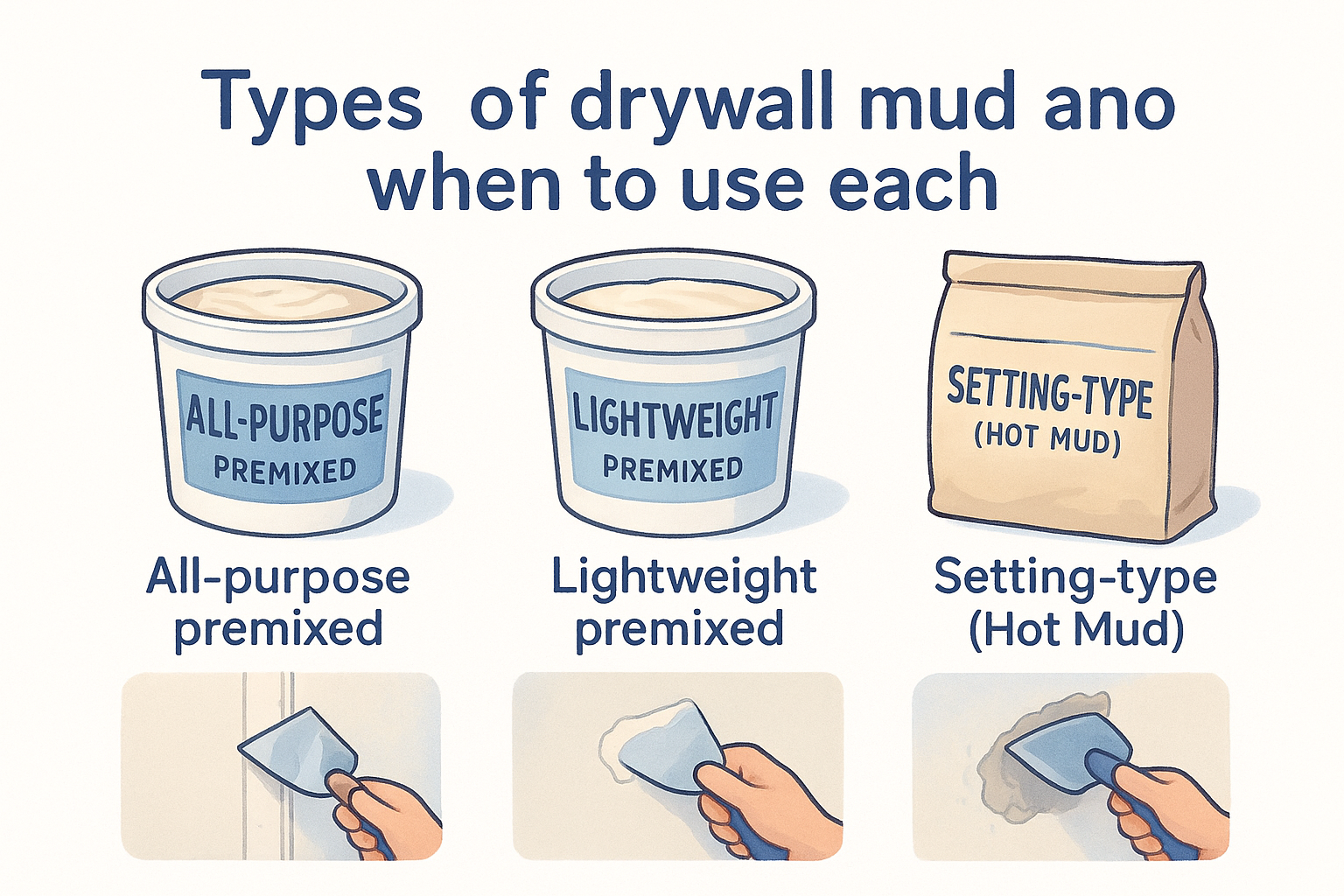
Types of drywall mud and when to use each

Not all joint compound works the same way . Different formulations target specific stages of the job , and picking the wrong type for a particular task wastes time and produces poor results.

Type How it sets Best for
All-purpose premixed Evaporation Taping, build coats, finishing
Lightweight premixed Evaporation Finish coats, low shrinkage
Setting-type (hot mud) Chemical reaction Deep patches, fast repairs

Premixed all-purpose compound

All-purpose compound comes ready to use and handles taping, building coats, and finish work without switching products mid-project. It dries through evaporation, so you need to let each coat dry fully before applying the next one.

Lightweight all-purpose compound is the most forgiving option for homeowners doing small repairs on their own.

Lightweight versions of premixed compound shrink less as they cure , which makes them a better choice for finish coats where any surface imperfection will show through paint.

Setting-type compound

Setting-type mud comes as a dry powder you mix with water yourself. It hardens through a chemical reaction and sets in 20 to 90 minutes depending on the product. Use it in these situations:

  • Filling deep voids or large holes
  • Fast-turnaround repairs where waiting for evaporation isn't practical
  • First coats on patches thicker than 1/4 inch

How to use drywall mud for repairs and finishing

Knowing what is drywall mud is one thing; applying it correctly is another. Your repairs blend seamlessly only when you apply compound in thin, successive coats , let each one dry completely, and sand lightly between layers.

Thin coats dry faster and shrink less, which reduces the risk of cracking after the job is done.

Patching small holes and cracks

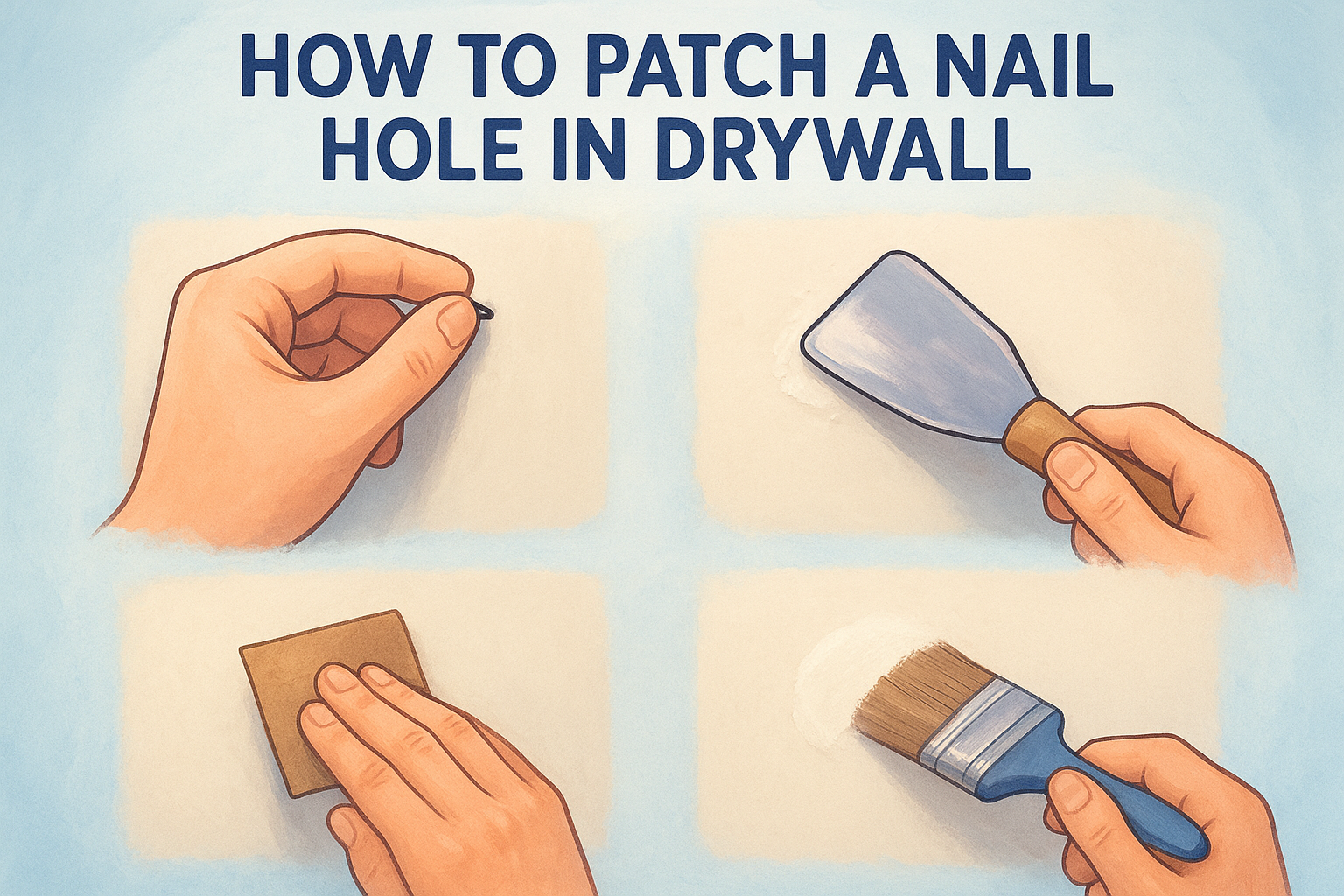
For small holes and surface cracks , premixed lightweight compound handles the job well. Fill the area flush with the wall, let it dry, then sand smooth. Keep each coat no thicker than 1/4 inch to avoid cracking during the cure.

  • Clean loose debris from the damaged area before you fill
  • Apply compound with a putty knife or small taping knife
  • Sand with 120-grit sandpaper once the patch is fully dry

Finishing new drywall seams

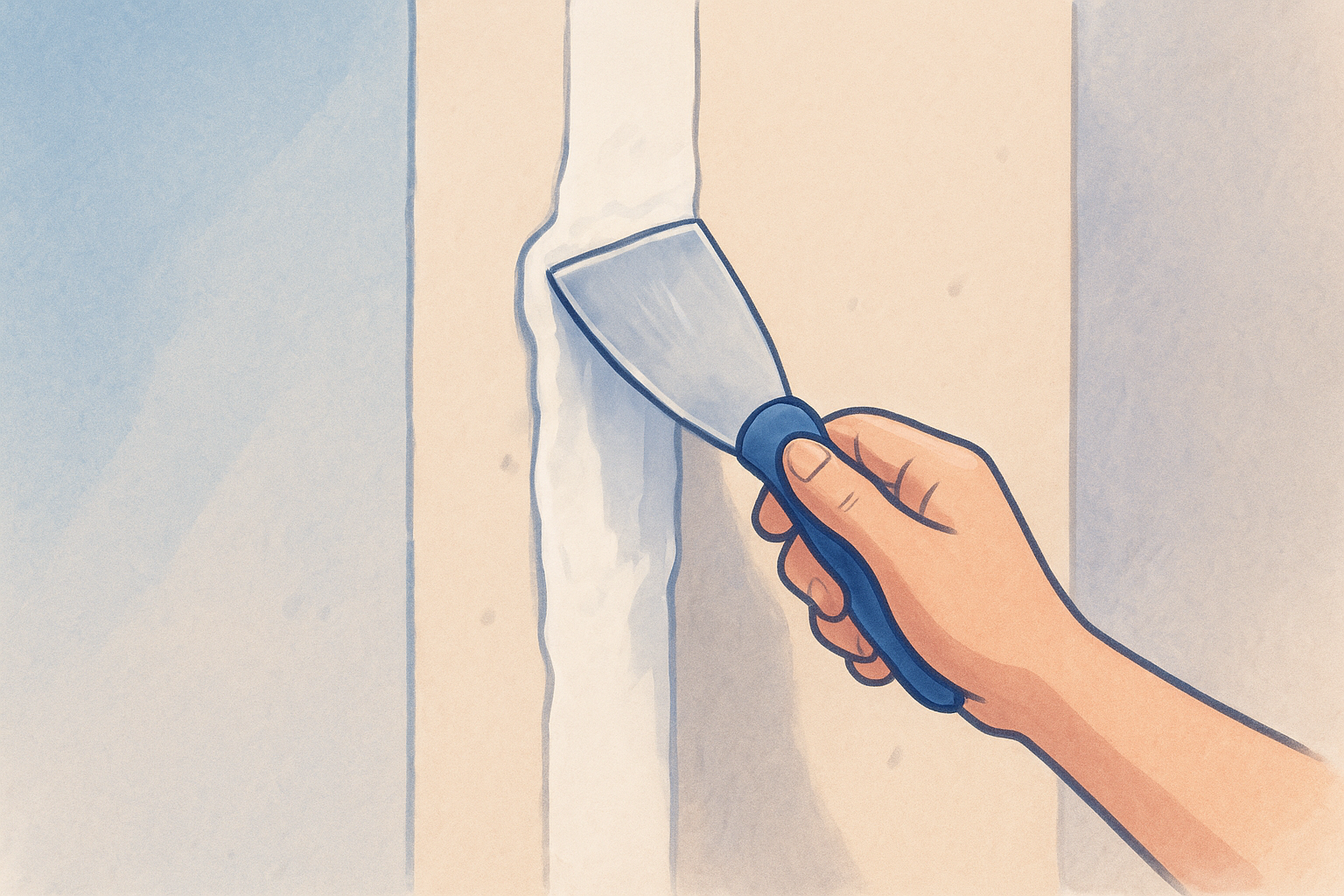
New seams require paper or mesh tape pressed into a wet base coat before you apply any additional layers. Smooth the tape flat, let it cure fully, then add build and finish coats feathered wider with each pass.

You should plan for at least three coats on every seam. Feather each coat wider than the last so the transition from the seam to the flat wall surface is gradual enough that paint won't reveal the joint underneath.

Drywall mud vs spackle and plaster

Understanding what is drywall mud becomes clearer when you compare it to spackle and plaster. All three materials fill and smooth wall surfaces , but each one is formulated for a different scale of work and behaves very differently once applied. Choosing the wrong material leads to repairs that shrink, crack, or fail to bond.

Reaching for spackle on a large wall repair is one of the most common mistakes homeowners make before calling a professional.

Drywall mud vs spackle

Spackle is a lightweight patching compound built specifically for small, isolated repairs like nail holes and minor surface dings. It dries faster than joint compound but lacks the flexibility and coverage area required for seaming drywall panels or feathering repairs across wider surfaces.

Use spackle only for:

  • Filling nail holes and small punctures
  • Patching minor dings on already-painted walls

Drywall mud vs plaster

Plaster is a much harder and more rigid material that cures through a chemical reaction rather than evaporation. Older homes with traditional plaster walls require compatible patching plaster for repairs, not joint compound. Applying drywall mud directly over damaged plaster often produces weak bonds that crack and peel over time, creating more work than you started with.

Next steps for your drywall project

Now that you understand what is drywall mud and how it works, you can make smarter decisions about your next wall or ceiling project. Choosing the right compound type, applying it in thin coats, and giving each layer adequate drying time are the three factors that separate a clean finish from a repair that needs to be redone . Small jobs like nail holes or hairline cracks are manageable with lightweight premixed compound and basic tools. Larger repairs involving seams, damaged sections, or multiple coats take more experience and the right technique to get right.

For repairs that go beyond a simple patch, working with an experienced contractor saves you time and avoids costly mistakes. Super Shooters has completed more than 10,000 residential projects across the Sacramento Valley, and our team brings the same level of care to a single repair as to a full installation. Contact us to learn more about our drywall repair and patching services.

Recent Posts

By cinchweb July 3, 2026
Master how to apply drywall mud for perfectly smooth walls. Learn professional techniques for mixing, feathering edges, and finishing seams like a pro.
By cinchweb July 2, 2026
Learn how to mix drywall mud for a smooth, professional finish. Master the right ratios and consistencies for every coat to save time on sanding.
By cinchweb June 30, 2026
Master drywall installation for beginners with our guide. Learn how to hang panels, tape seams, and apply a smooth finish for professional-looking walls.
By cinchweb June 30, 2026
Learn exactly what to do after removing wallpaper. Our guide covers scrubbing adhesive, repairing drywall damage, and priming for a smooth paint finish.
By cinchweb June 29, 2026
Master drywall repair after wallpaper removal with our guide. Learn how to seal torn paper, patch gouges, and skim coat your walls for a professional finish.
By cinchweb June 28, 2026
Hang sheetrock like a pro with these 7 drywall installation tips. Learn how to handle framing, layout, and fastening for a smooth, crack-free finish.
By cinchweb June 26, 2026
Compare drywall vs plywood for garage walls to find the best fit for your home. Learn about California fire codes, workshop durability, and 2026 costs.
By cinchweb June 26, 2026
Find the best drywall contractors roseville ca for 2026. Compare 10 local experts for repairs, texturing, and ceiling removal to hire with confidence.
By cinchweb June 25, 2026
Learn how to tell if wall cracks are serious with our checklist. Identify structural risks, monitor growth, and know when to call a professional for repairs.
Show More