July 2, 2026
How To Mix Drywall Mud: Perfect Consistency For Every Coat
Getting how to mix drywall mud right is the difference between a smooth, professional finish and a frustrating mess of lumps, drag marks, and cracking seams. Whether you're working with powdered joint compound or a premixed bucket, the consistency you mix to directly affects how well the mud spreads, adheres, and dries on your walls and ceilings. Too thick, and you'll fight it across every joint. Too thin, and it sags , slides, and shrinks.
At Super Shooters, we've completed over 10,000 drywall projects across the Sacramento Valley in our 30+ years of business. Our crews mix and apply mud daily, for taping, finishing, texturing, and repairs. That hands-on experience has taught us exactly what works and what causes problems. We're sharing that knowledge here so you can get the right consistency for whatever coat or application you're tackling.
This guide covers mixing instructions for both powdered and premixed compounds, proper water-to-mud ratios , the ideal consistency for each coat, and how to avoid common mistakes like air bubbles and premature drying. By the end, you'll know how to mix drywall mud that actually performs the way it should, smooth, workable, and ready to finish .
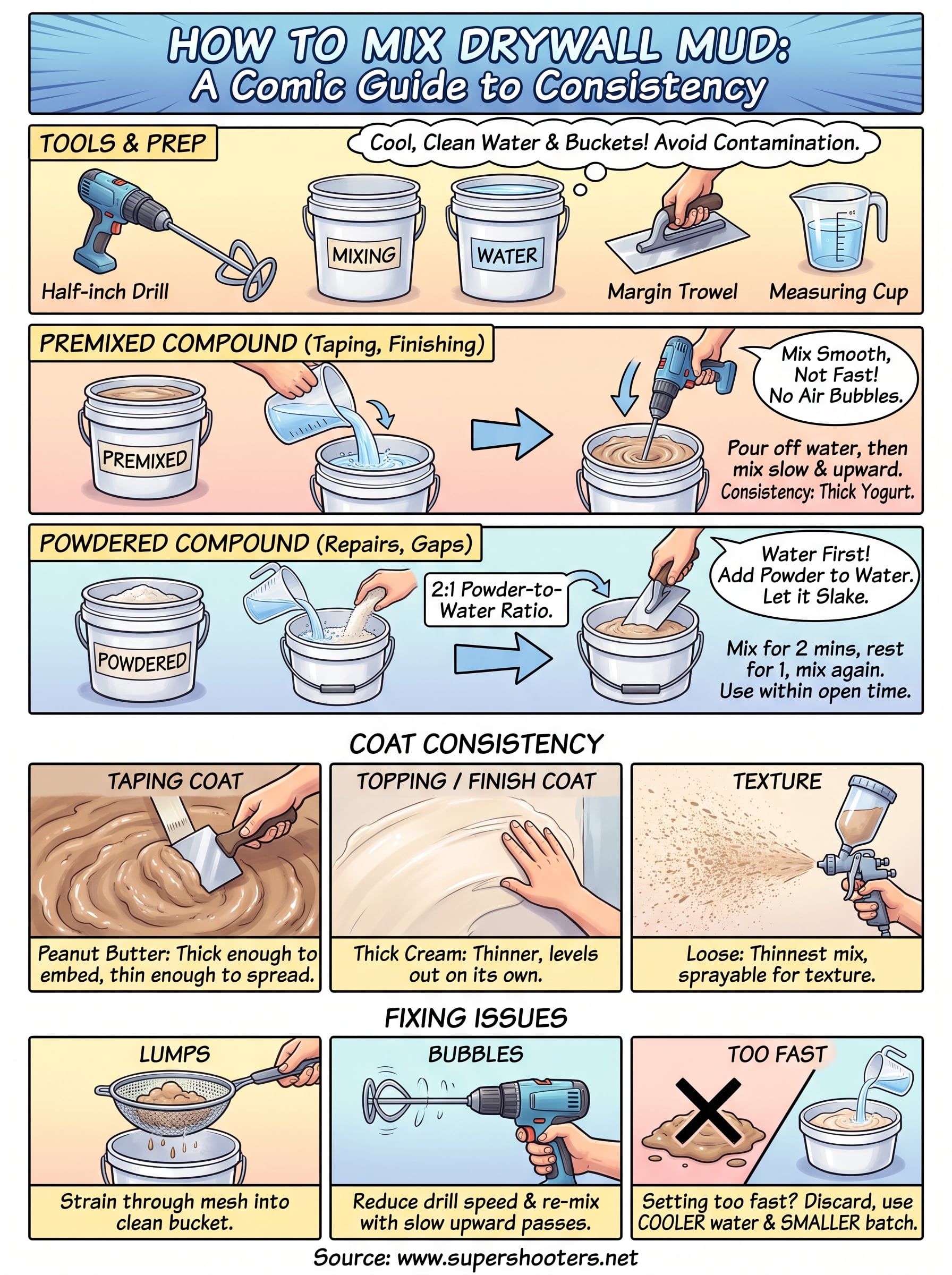
What you need: tools, water, and clean containers
Before you learn how to mix drywall mud correctly, you need the right setup. Starting with the wrong tools or a dirty bucket introduces contamination, lumps, and uneven consistency before you even begin mixing. Getting organized first saves you from throwing out a ruined batch.
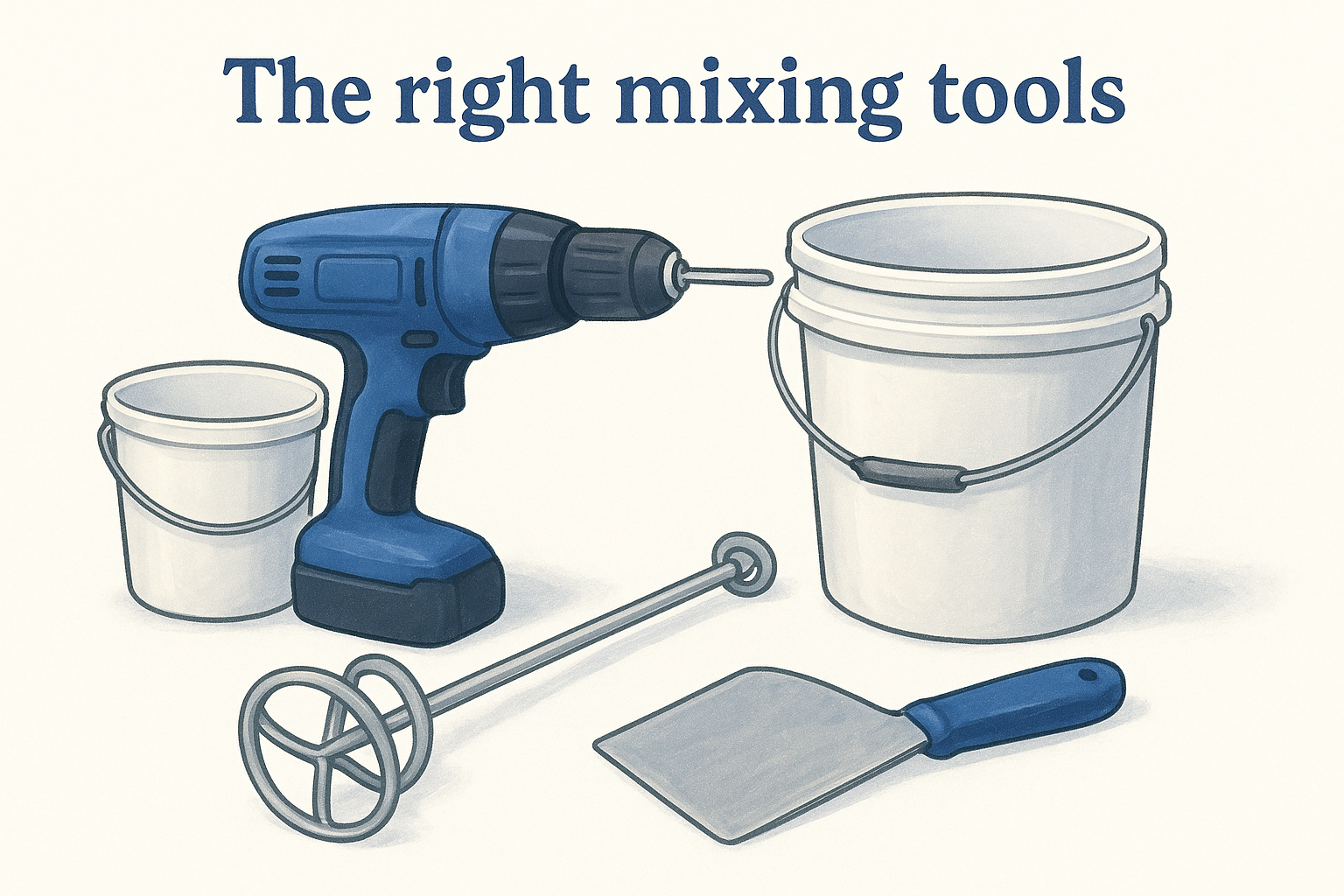
The right mixing tools
Your most important tool is a mixing paddle attached to a half-inch drill. A standard paint stirrer won't cut it for drywall compound. You want a mud paddle , also called a mixing blade, that moves material from the bottom of the bucket to the top without folding in excess air. For small patch jobs, a wide plastic or metal mud knife works for hand-mixing, but for anything larger than a quart, use the drill and paddle.
- Drill : Half-inch, variable speed, minimum 6 amps
- Mixing paddle : Spiral-style or cage-style blade, 5-inch minimum
- Buckets : Two clean 5-gallon buckets (one for mixing, one for water)
- Mud knife or margin trowel : For scraping down the sides
- Measuring cup : For tracking water additions on powdered compound
Water temperature and clean containers
Use cool, clean water every time. Hot water accelerates the setting time of powdered compounds, which can cause your mud to stiffen before you finish a wall. Dirty buckets with dried chunks from a previous batch will break up during mixing and create lumps you can't remove.
Always rinse your mixing bucket completely before starting a new batch. Dried compound contamination is one of the most common causes of lumpy mud.
Step 1. Choose premixed or powdered mud and batch size
The type of compound you choose shapes everything about how to mix drywall mud correctly. Premixed compound comes ready to use from the bucket, while powdered setting compound requires water before it's usable. Both work well, but for different stages of the job.
Premixed compound
Premixed mud is best for taping coats, finish coats, and all-purpose repairs . It stays workable for hours and is easy to adjust. Mix small batches of one to two gallons at a time so the surface doesn't skin over before you finish the wall.
For most residential drywall work, premixed all-purpose compound gives you the most flexibility and forgiveness.
Powdered setting compound
Powdered compound sets through a chemical reaction , not just drying. This makes it ideal for first coats over deep gaps, repairs, and high-moisture areas . Mix only what you can use before it sets. Common options and their open times:
- Easy Sand 20 : 20-minute open time
- Easy Sand 45 : 45-minute open time
- Durabond 90 : 90-minute open time
Step 2. Mix premixed mud smooth and workable
Premixed compound separates during storage , leaving water pooled on top and stiff material settled at the bottom. Before you apply it to anything, you need to reintegrate those layers completely. This is the most approachable part of learning how to mix drywall mud , but skipping steps here leads to streaky walls and poor adhesion.
Preparing the bucket
Pour off any standing water that has pooled on top, but keep it nearby. You may need to add a small amount back if the mud turns out too stiff. Insert your mixing paddle and run the drill at medium speed, working from the bottom of the bucket upward in slow, controlled passes.
Never mix at full speed. High RPMs fold air into the compound, creating bubbles that show up as pinholes in your finished coat.
Checking consistency
The mud should drop cleanly off a trowel and spread with the resistance of thick yogurt. If it drags or tears, add water one tablespoon at a time and mix again until it moves smoothly and evenly across the surface without clumping or pulling.
Step 3. Mix powdered mud: water first, then powder
Powdered compound demands a specific mixing order that most beginners get backward. Pour water into your clean bucket first, then gradually add the powder on top. This approach prevents the dry clumps that form when you dump powder into an empty bucket and try to work water in afterward.
Always add powder to water, never water to powder. Reversing the order traps dry pockets that resist mixing no matter how long you run the drill.
Getting the ratio right
Start with a 2:1 ratio by volume : two parts powder to one part water. Mix at medium speed for two full minutes, using your margin trowel to scrape the sides and bottom of the bucket as you go. Once the paddle runs freely, let the batch rest for one minute before mixing again. This slaking period allows the powder to fully hydrate, so you can judge accurately whether a small splash of water is needed to hit your target consistency. Getting this right is essential to mastering how to mix drywall mud from a powdered compound.
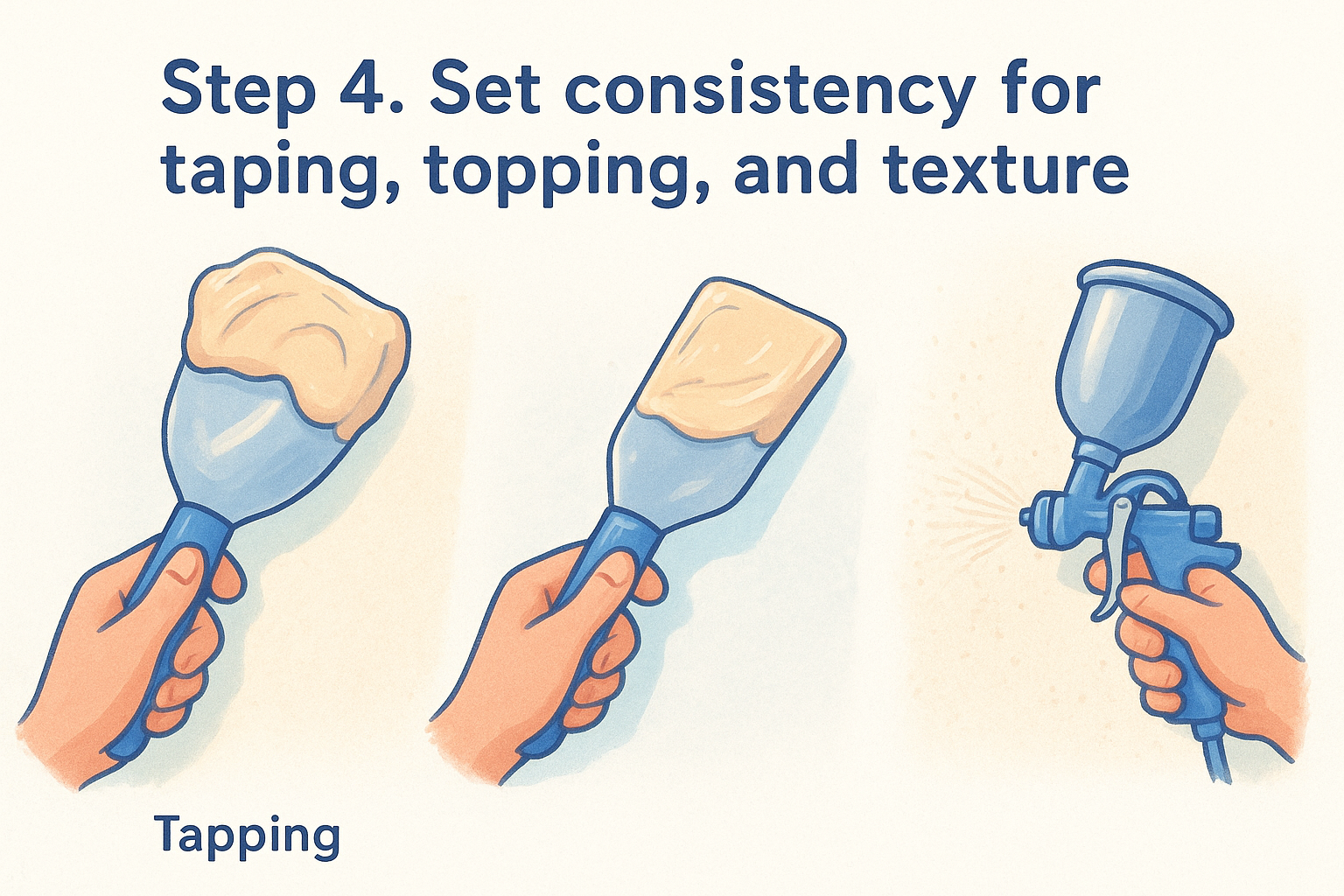
Step 4. Set consistency for taping, topping, and texture
Once your mud is mixed, adjusting the consistency for each specific application is what separates a workable coat from one that tears, sags, or shows tool marks. The right thickness varies by coat, and knowing those differences is central to understanding how to mix drywall mud properly.
Taping coat
Your taping coat should hold the consistency of peanut butter , thick enough to embed tape without sliding, but thin enough to spread without lifting the paper. If your knife drags and pulls , add water one tablespoon at a time until it moves cleanly across the joint.
Topping and finish coat
Finish coats need a thinner mix , closer to thick cream. Add water gradually until the mud levels out on its own within a few seconds of spreading.
The thinner your finish coat, the less sanding you need before paint.
Texture applications
Knockdown and orange peel textures require the thinnest mix of all, loose enough to spray or splatter without clogging your hopper or brush. Always test the consistency on a scrap piece of drywall before moving to the wall.
Step 5. Fix lumps, bubbles, and set-time surprises
Even when you follow every step on how to mix drywall mud correctly, problems still happen . Lumps, air bubbles, and early setting are the most common issues, and each has a fix you can apply before the coat is ruined.
Lumps and air bubbles
Lumps come from dried chunks in a dirty bucket or from powder that never fully hydrated . Press the mud through a strainer screen into a clean bucket to remove them. Use this quick-reference list for each problem:
- Lumps : strain through a mesh screen into a clean bucket
- Bubbles : reduce drill speed and re-mix with slow upward passes
- Skin on top : scrape it off, never fold it back in
Mix at medium speed only, using slow upward passes from the bucket bottom to keep air out.
When mud sets too fast
Setting compound that stiffens early means your batch was too large or your water too warm. Discard it and start fresh with cooler water and a smaller pour .
Never add water to partially set mud. The chemical reaction has already started, and thinning it at that stage only weakens the final bond.
When you want a perfect finish
Knowing how to mix drywall mud correctly gets you most of the way to a clean, professional result. The right consistency for each coat means less sanding, fewer passes, and walls that hold up over time. Every adjustment you make at the bucket saves you hours of corrective work on the wall. Keep your tools clean, use cool water, and mix only what you can apply before the surface starts to skin.
Some jobs go beyond what a well-mixed bucket can fix. Water-damaged walls, settlement cracks, or full drywall installations require more than the right mud consistency. They need experienced hands and the right technique from start to finish. If your project is bigger than a patch or a single room, our team at Super Shooters handles it all. Get a free estimate from our drywall repair and patching specialists and see what a 30-year crew can do for your home.