Share this article

June 30, 2026

Drywall Installation for Beginners: Hang, Tape, Finish

Hanging drywall looks straightforward until you're standing in your garage holding a 4x8 sheet and realizing it's heavier than you expected. Drywall installation for beginners can feel overwhelming, there are sheets to measure, screws to set at the right depth, joints to tape, and mud to apply without leaving a lumpy mess. But here's the thing: thousands of homeowners figure it out every year , and you can too.

At Super Shooters, we've completed over 10,000 drywall and ceiling projects across the Sacramento Valley in our 30+ years of business. We know exactly where DIYers run into trouble because we've been called in to fix those mistakes. That experience is what shaped this guide, we want to give you an honest look at what the job actually involves , so you can decide whether to tackle it yourself or hand it off to a pro.

This guide walks you through the full process: choosing the right drywall panels, gathering your tools, hanging sheets on walls and ceilings, taping seams, and applying joint compound for a smooth finish. Each step includes practical tips to help you avoid the rookie errors that turn a weekend project into a week-long headache. Let's get into it.

Prep and safety checklist for first-time drywall

Before you lift a single sheet, proper preparation makes the difference between a clean install and one that costs you extra time fixing problems. Rushing the prep stage is the most common mistake in drywall installation for beginners, and it shows up later in wavy seams, missed studs, and safety hazards that could have been avoided with 30 minutes of planning.

Tools and materials to gather before you start

You don't need a professional rig, but you do need the right basic tools on hand before you begin. Missing a utility knife or not having enough screws mid-project forces frustrating stops that break your rhythm. Here's what to have ready:

Category What You Need
Cutting Utility knife, T-square, measuring tape
Fastening Drywall screws (1-5/8" for walls, 1-1/4" for ceilings), screw gun with dimpler bit
Lifting Drywall lift (rental) for ceilings, a partner for walls
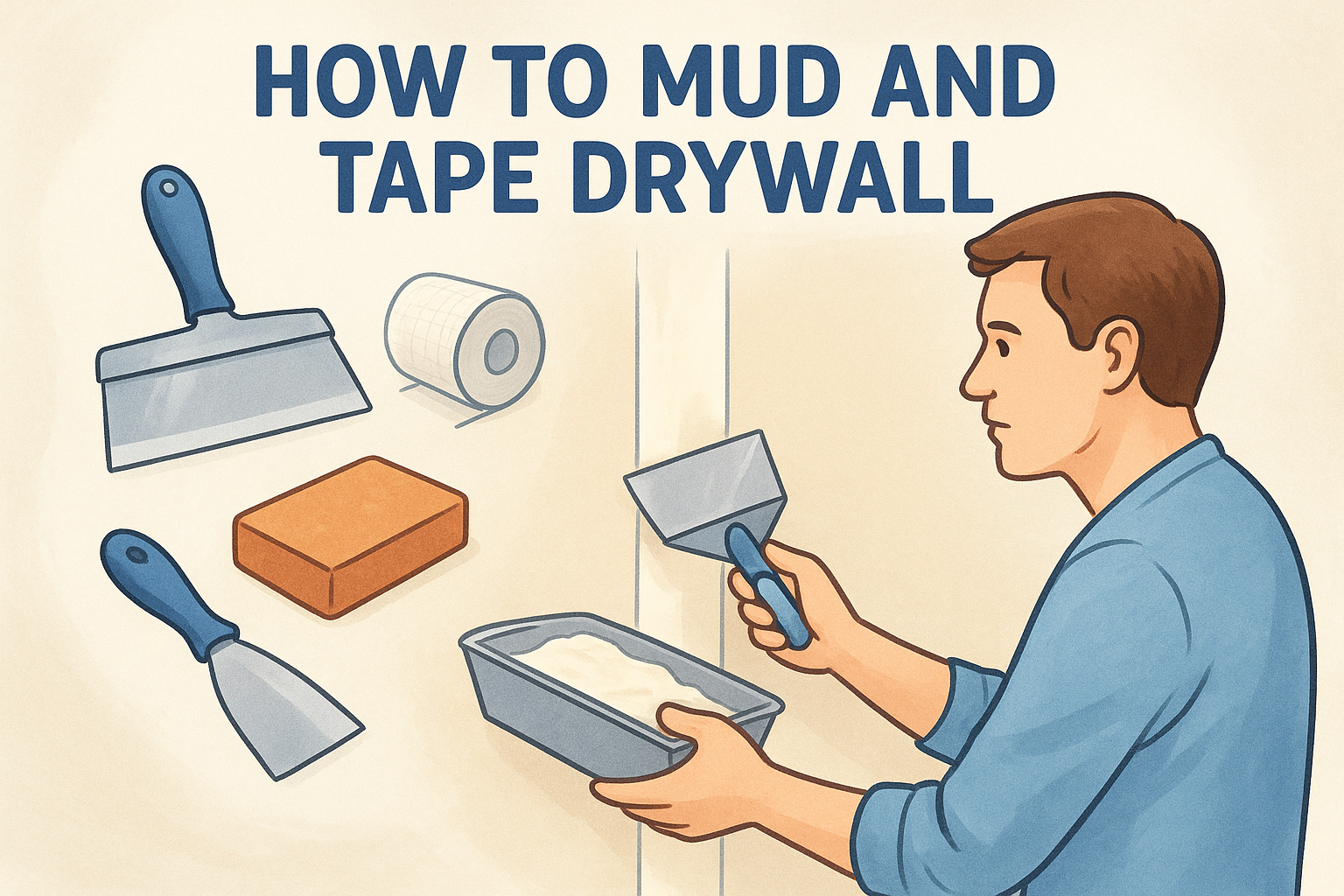
Finishing Joint compound, drywall tape, 6" and 12" taping knives
Sanding 120-grit sanding sponge or pole sander

For materials, use 5/8" Type X drywall in garages or fire-rated areas, and 1/2" standard drywall for most interior walls.

If you're working in a bathroom or high-moisture area, use moisture-resistant drywall (green board or cement board) to prevent mold growth behind the surface.

Safety steps you need to take first

Personal protective equipment isn't optional when cutting and sanding drywall. Gypsum dust irritates your lungs and eyes, so wear an N95 respirator and safety glasses during both steps. Before you hang a single sheet, run through this quick safety checklist:

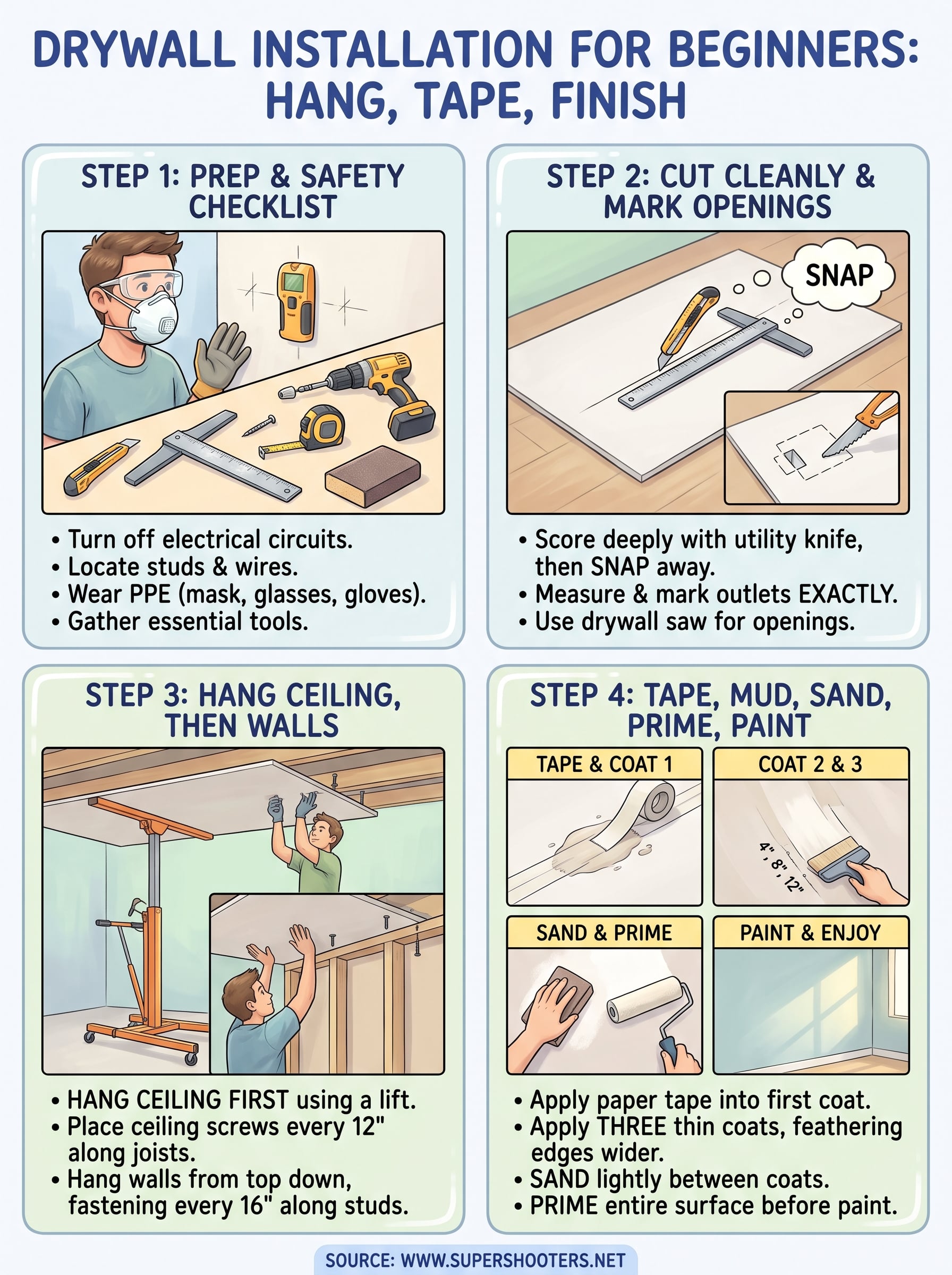
  • Turn off electrical circuits in the work area
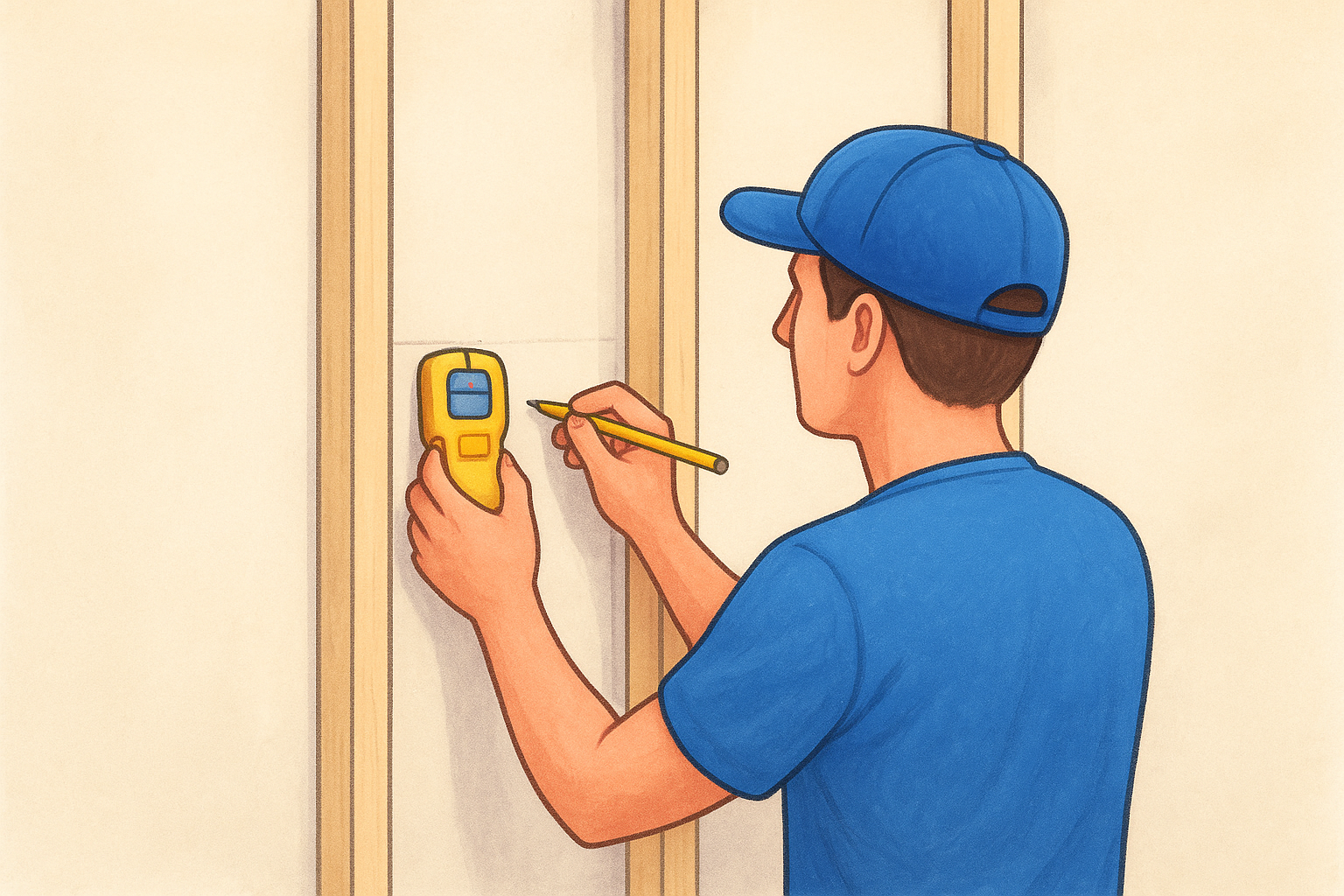
  • Use a stud finder to locate wires and pipes behind walls
  • Wear work gloves when handling sheet edges (they cut)
  • Keep the work area ventilated when sanding
  • Never cut toward your body when scoring with a utility knife

Step 1. Plan your layout and find framing

One of the first lessons in drywall installation for beginners is that planning your sheet layout before you buy materials saves you wasted trips to the hardware store and reduces your seam count on finished walls. Horizontal hanging on walls (long edge parallel to the floor) is standard for most rooms because it crosses more studs and results in fewer visible seams than vertical hanging. Sketch a simple room diagram with measurements before you buy anything.

Map your sheet layout before you measure

A quick layout sketch tells you exactly how many sheets you need and where cuts will fall. Mark each sheet's position on your diagram, including where seams will land relative to door and window frames. Seams should never fall directly at the corner of an opening, because that is where cracks start.

Plan seams to land in the center of a stud, never between two studs with no backing behind the joint.

Find and mark your framing

Use a stud finder to locate every stud and ceiling joist in your work area, then mark them with a pencil line running floor to ceiling so you can see the marks clearly once your sheet is in position. Standard framing sits 16 inches on center, so once you find the first stud, you can measure across the wall consistently.

Step 2. Cut drywall cleanly and mark openings

Cutting drywall accurately is where drywall installation for beginners either moves forward smoothly or grinds to a halt with wasted materials. The good news is that drywall doesn't require a saw for most straight cuts. A sharp utility knife and a T-square handle the majority of cuts you'll make on a standard residential project.

Score and snap for straight cuts

Place your sheet on a flat surface, measure your cut line, and run your T-square along it as a guide. Score the face paper deeply with one firm pass of your utility knife, then snap the sheet away from you along the score line. Flip the sheet over and cut the back paper to separate the piece cleanly.

Always score with one confident pass rather than multiple shallow strokes, which tear the paper and leave a ragged edge that's harder to finish.

Mark and cut openings for outlets and fixtures

Measure the exact location of each electrical box from the nearest sheet edge and transfer those measurements directly onto your drywall panel before the sheet goes up. Use a drywall saw or oscillating tool to cut openings for outlets, switches, and light fixtures. Double-check every measurement before cutting, since a hole that's too large cannot be undone without replacing the sheet.

Step 3. Hang the ceiling first, then the walls

Hanging order matters more than most people expect during drywall installation for beginners . Always hang the ceiling before the walls , because the wall sheets will butt up against the ceiling panels and help support their edges, which reduces the number of screws you need and creates a tighter fit at that joint.

Use a drywall lift for the ceiling

Trying to hold a ceiling sheet overhead while driving screws is genuinely dangerous and physically exhausting. Rent a drywall lift from your local hardware store, which allows one person to crank the sheet up to the joists and hold it there hands-free while you fasten it. Place screws every 12 inches along each joist , keeping them about 3/8 inch from the sheet edge to avoid blowing out the paper.

Never space ceiling screws more than 12 inches apart, as excess span between fasteners causes panels to sag over time.

Hang walls from the top down

Start your wall sheets at the ceiling line and work downward, leaving a small gap at the floor since the baseboard will cover it. Press each sheet firmly against the ceiling panel above it before driving screws, and fasten every 16 inches along each stud for a secure hold.

Step 4. Tape, mud, sand, prime, and texture

This finishing stage is where drywall installation for beginners most often goes wrong. Rushing dry time or skipping coats creates visible flaws once paint goes on. Plan for at least three coats of joint compound across all seams and screw dimples, and budget two to three days just for this phase.

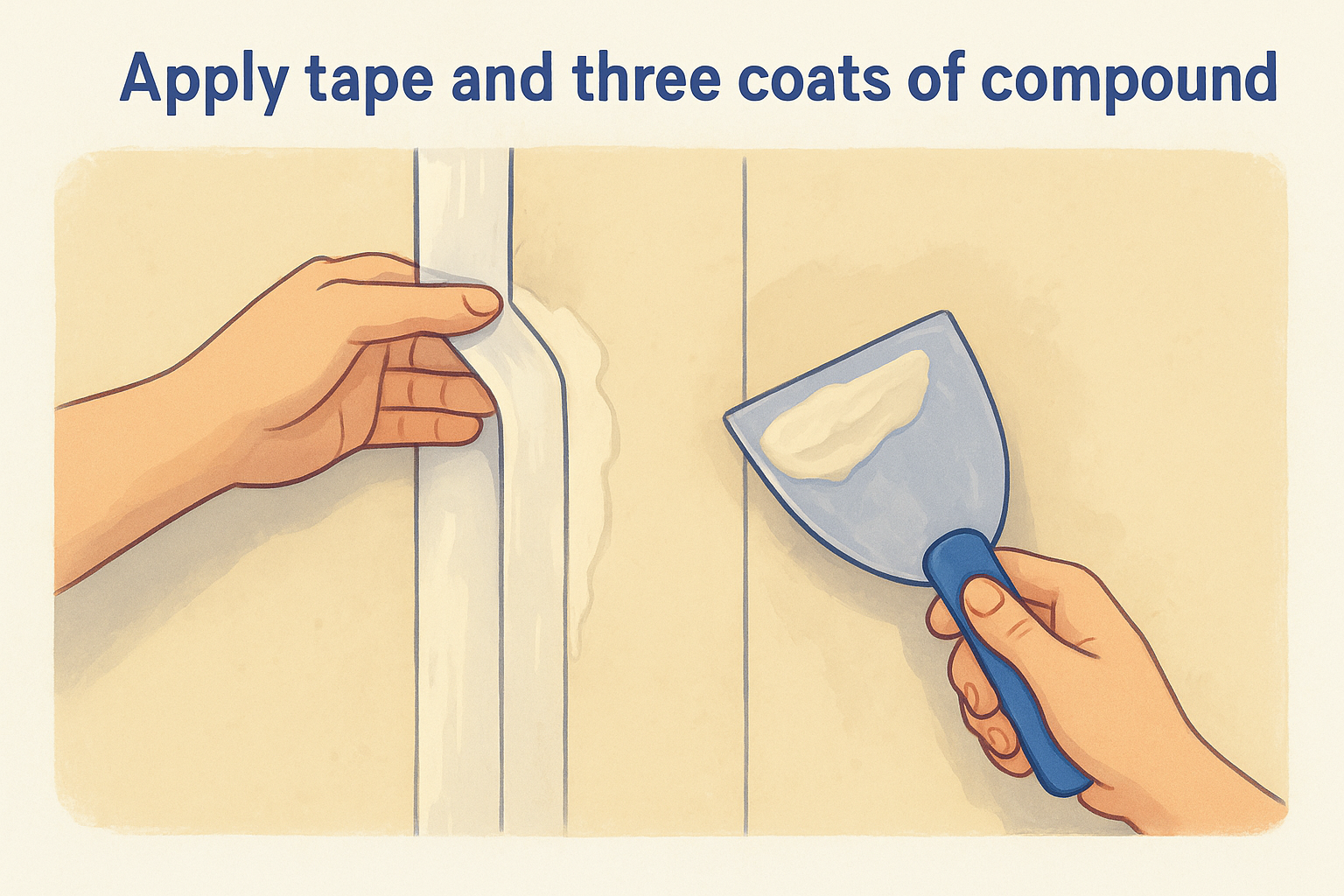
Apply tape and three coats of compound

Press paper tape into a thin layer of wet mud over every seam right after hanging. Apply your first coat thin and flat, feathering the edges out about 4 inches on each side. Also fill every screw dimple flush with the wall surface during this first pass.

Let each coat dry completely before adding the next one; rushing this step causes bubbling and shrinkage cracks that require you to start over.

Widen your feather edge to 8 inches on the second coat and 12 inches on the third. This gradual widening is what makes seams disappear under paint rather than show as ridges.

Sand, prime, and texture

Sand lightly with 120-grit between coats and more thoroughly after the final coat. Prime the entire surface to seal the paper before applying texture. The three most common texture options are:

  • Orange peel : light spray, subtle dimpled surface
  • Knockdown : troweled pattern, partially smoothed
  • Smooth : fully flat finish, most labor-intensive

Ready for paint

Once your texture dries completely, your walls are ready for a primer coat followed by your finish paint. This is the moment where your work either looks polished or reveals every rushed step from earlier in the project. Take time to inspect the surface under raking light (a flashlight held at a low angle to the wall) before you prime, since this is your last easy chance to spot low spots or ridges worth a quick touch-up.

That covers the full process of drywall installation for beginners , from layout planning and hanging sheets to taping, sanding, and finishing. Each step builds on the last, and patience during the finishing stage is what separates a paint-ready wall from one that needs another round of mud and sanding.

If you'd rather hand the job to an experienced crew, Super Shooters has completed over 10,000 projects across the Sacramento Valley in 30+ years. Request your free estimate through our drywall installation service page.

Recent Posts

By cinchweb June 30, 2026
Learn exactly what to do after removing wallpaper. Our guide covers scrubbing adhesive, repairing drywall damage, and priming for a smooth paint finish.
By cinchweb June 29, 2026
Master drywall repair after wallpaper removal with our guide. Learn how to seal torn paper, patch gouges, and skim coat your walls for a professional finish.
By cinchweb June 28, 2026
Hang sheetrock like a pro with these 7 drywall installation tips. Learn how to handle framing, layout, and fastening for a smooth, crack-free finish.
By cinchweb June 26, 2026
Compare drywall vs plywood for garage walls to find the best fit for your home. Learn about California fire codes, workshop durability, and 2026 costs.
By cinchweb June 26, 2026
Find the best drywall contractors roseville ca for 2026. Compare 10 local experts for repairs, texturing, and ceiling removal to hire with confidence.
By cinchweb June 25, 2026
Learn how to tell if wall cracks are serious with our checklist. Identify structural risks, monitor growth, and know when to call a professional for repairs.
By cinchweb June 23, 2026
Learn how to get a smooth ceiling after popcorn removal. Our step-by-step guide covers skim coating, sanding, and priming for a professional, flat finish.
By cinchweb June 22, 2026
Learn how long does drywall repair take for projects of any size. We break down timelines by patch size, material choice, and drying steps for your home.
By cinchweb June 20, 2026
Learn how long does drywall patch take to dry before you paint. We cover drying times for various compounds and expert tips to finish your repair faster.
Show More