August 15, 2026
Drywall Repair Contractors: What They Do and What to Expect
That crack over your bedroom door, the dented hallway wall, the ceiling patch that never quite matches, these are the small problems that make a house look neglected even when everything else is in good shape. Hiring one of the many drywall repair contractors in Sacramento Valley shouldn't be complicated, but most homeowners have no idea what actually happens once someone shows up at their door with a toolbox and a bid.
This article breaks down exactly what these contractors do day to day, from patching nail holes and settlement cracks to blending texture so a repair disappears into the surrounding wall. You'll also learn what a fair estimate looks like , how long a typical job takes, and which red flags separate a rushed patch job from lasting work.
We've spent over 30 years fixing walls and ceilings across the Sacramento Valley, so we're writing from experience, not guesswork. By the end, you'll know what questions to ask, what a professional repair should include, and how to spot quality work before you sign anything.
Why hiring a professional drywall contractor matters
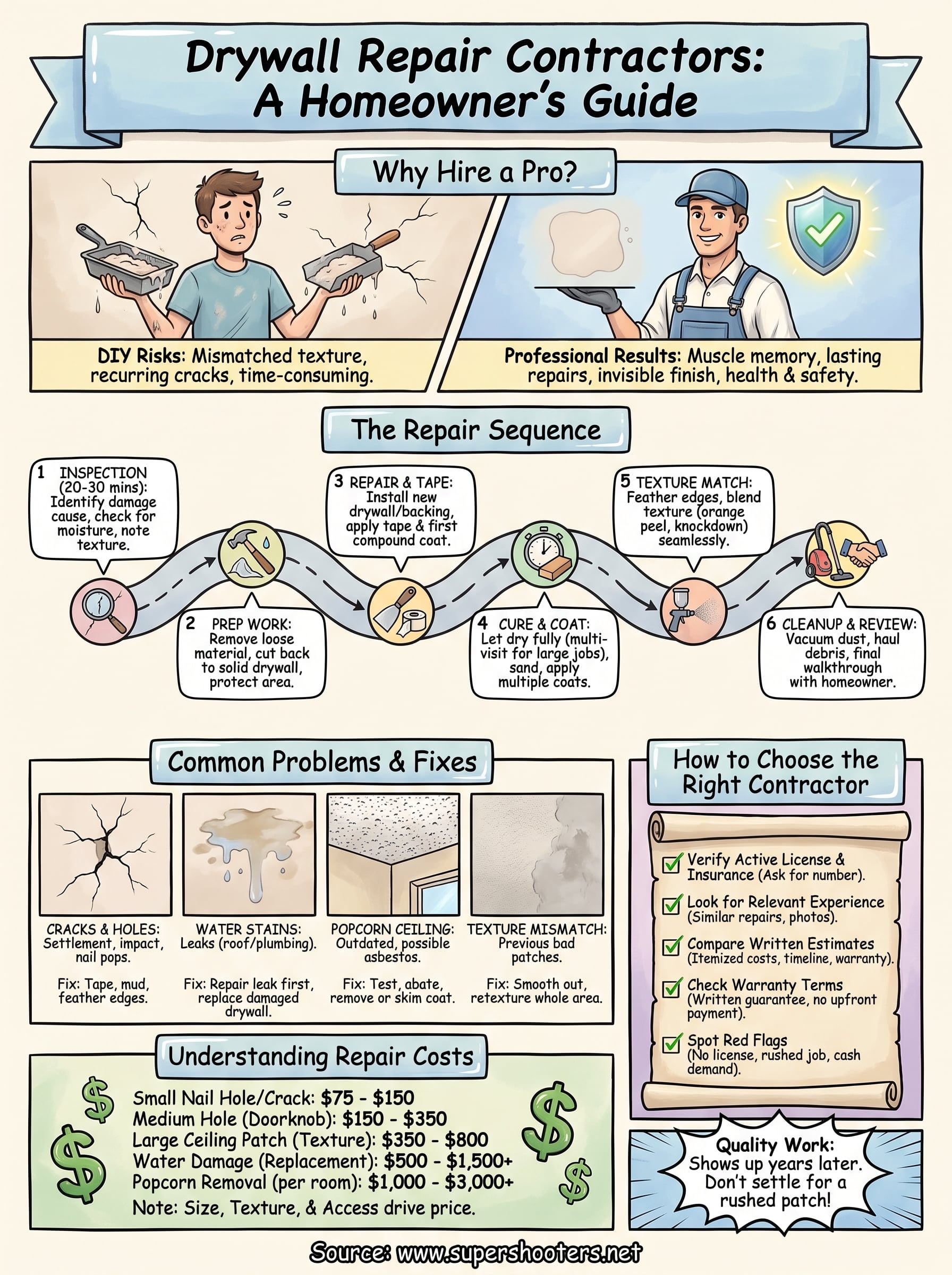
Drywall looks simple until you're the one holding the mud pan. Professional drywall repair contractors bring years of muscle memory to a job that looks easy on a video but falls apart in your living room. They know how much joint compound to load on a knife, how many coats a crack needs before it stops reappearing, and how to feather an edge so it vanishes under paint instead of casting a shadow across your ceiling.
The hidden risks of DIY repairs
Homeowners often start a patch job with confidence and end up with a bigger mess than they began with. Cracked corners reopen within months when the tape isn't embedded correctly, and mismatched texture turns a small repair into an eyesore that draws the eye across the whole room. Skipping proper prep work, like removing loose material or addressing the moisture source behind a water stain, means the same problem returns in a year.
A patch that doesn't match is worse than the hole it covered.
Why experience changes the outcome
Sacramento Valley homes span everything from 1960s ranch houses with popcorn ceilings to brand-new ADU drywall contractor projects, and each type of wall behaves differently under a taping knife. A contractor who has worked on thousands of houses recognizes settlement cracks that signal a foundation issue versus ones that are purely cosmetic. That judgment call matters, because patching over a structural problem wastes money and delays a repair that will only get more expensive down the road.
Health and safety considerations
Older homes built before the 1980s sometimes have acoustic ceilings containing asbestos , and disturbing that material without proper containment and testing puts your family's health at risk. Removing or repairing these ceilings requires asbestos acoustic ceiling removal by a licensed crew, not a weekend project with a scraper and a dust mask from the hardware store. According to the EPA, asbestos fibers become dangerous once they're airborne, which is exactly what happens when someone scrapes a popcorn ceiling without testing it first.
What professional work actually protects
Licensing and warranty coverage give you recourse if something goes wrong after the crew leaves. Super Shooters includes a Super Shield warranty with every job, so a repair that fails prematurely gets fixed at no extra cost. Value shows up later, when your walls still look seamless two years after the work is done instead of cracking again by the next season. Choosing a licensed, experienced contractor isn't about avoiding a little effort, it's about protecting your home's long-term appearance and your family's safety at the same time.
How to choose the right drywall repair contractor
Finding the right person for the job starts long before anyone picks up a taping knife. Local drywall repair contractors vary widely in skill, so you need a way to vet a drywall repair contractor and separate the crews who do this every day from the ones who took a side gig after watching a few tutorials. A quick search will turn up dozens of names, but the real work happens when you start asking questions.
Verify licensing and insurance first
Ask for a contractor's license number and confirm it's active before anyone steps foot in your house. California requires licensing for jobs over a certain dollar amount, and a legitimate company will hand over that number without hesitation. Insurance matters just as much, because if someone falls off a ladder in your living room, you don't want that liability landing on your homeowner's policy.
If a contractor won't share their license number, that's your answer.
Look for relevant experience
Experience with your specific problem beats a generic drywall background every time. Someone who's spent years texturing drywall walls with orange peel and knockdown patterns will get a better result than a contractor who mostly hangs new sheets in new construction. Ask how many similar repairs they've completed and whether they can show photos of past work.
Compare written estimates
Gathering multiple quotes protects you from both overpaying and underestimating the scope of work. Before you commit, check for these details in every bid:
- Itemized cost breakdown for materials, labor, and texture matching
- Estimated timeline from start to finish
- Warranty terms in writing, not just a verbal promise
- No demand for payment before the work begins
Super Shooters offers free in-home estimates with no upfront payment required, which lets you evaluate the plan before any money changes hands.
What to expect during a drywall repair project
Knowing the sequence of events ahead of time takes the mystery out of hiring residential drywall contractors . Most jobs follow a predictable rhythm: inspection, prep, repair, texture matching, and cleanup. Understanding each stage helps you spot a crew that's cutting corners versus one that's doing the job right.
The initial walkthrough
Before any work starts, a good contractor walks the space and identifies the cause behind the damage, not just the damage itself. They'll check for moisture behind water stains , tap along cracks to test for movement, and note the existing texture pattern so the patch blends instead of standing out. This step usually takes fifteen to thirty minutes for a standard repair and sets the scope for everything that follows.
The repair sequence
Once the plan is set, the actual work follows a set order that shouldn't be skipped, even under time pressure:
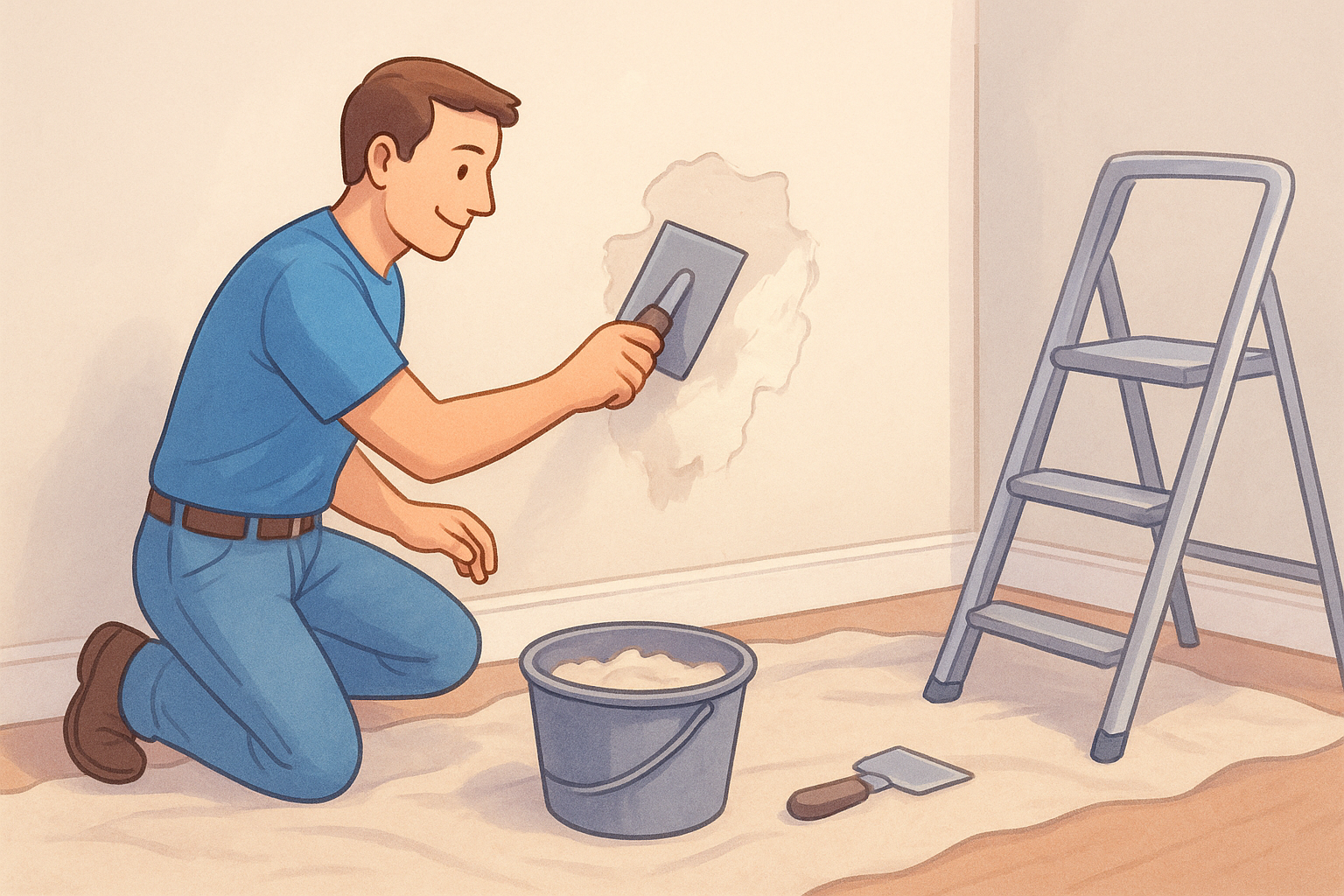
- Remove damaged material and cut back to solid drywall
- Install new drywall or backing if the hole is larger than a few inches
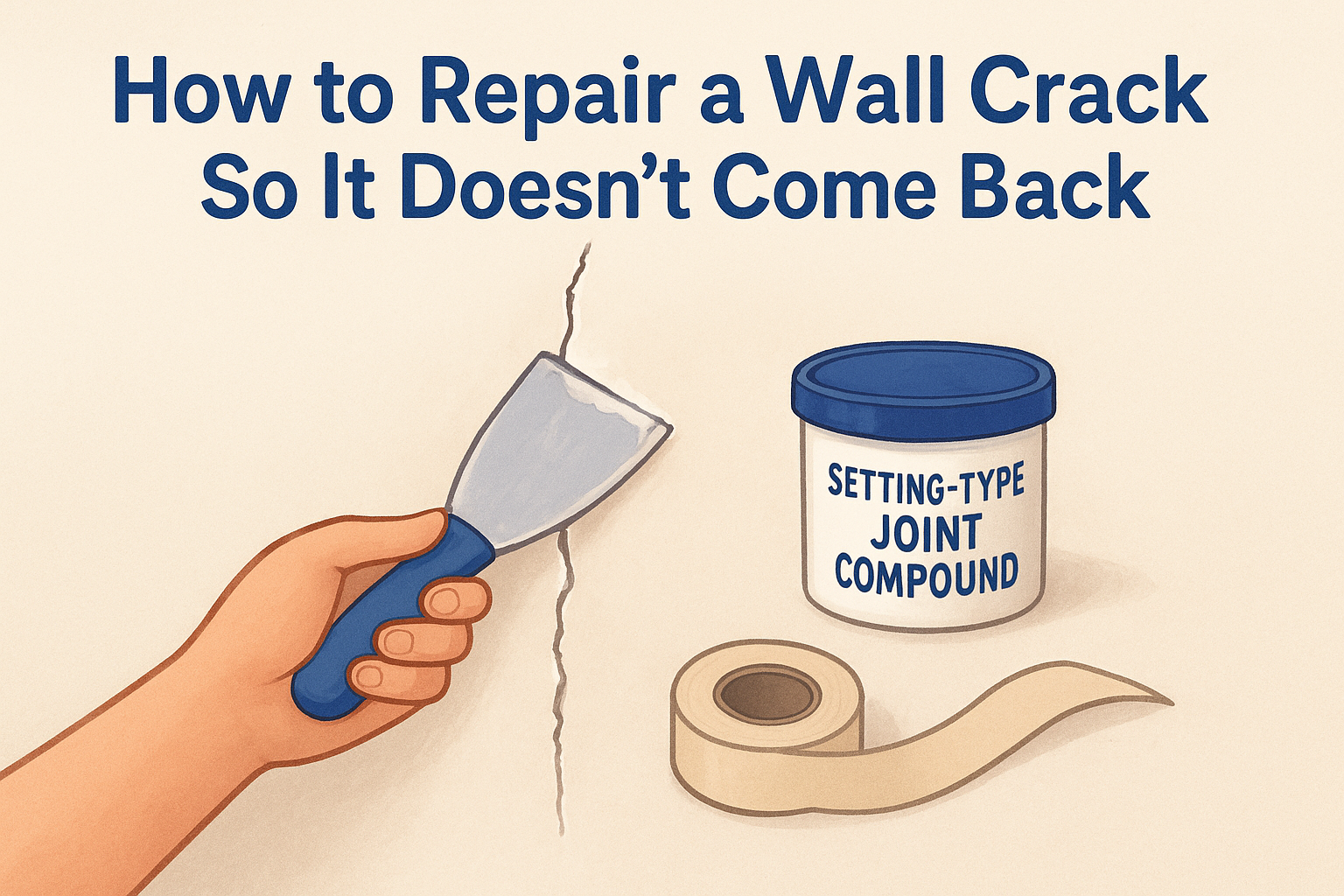
- Apply joint tape and the first coat of compound
- Let the compound cure, then sand and apply additional coats
- Match and apply texture to blend with surrounding surfaces
- Prime and prepare the area for paint
Rushing the drying time between coats is the fastest way to guarantee a callback.
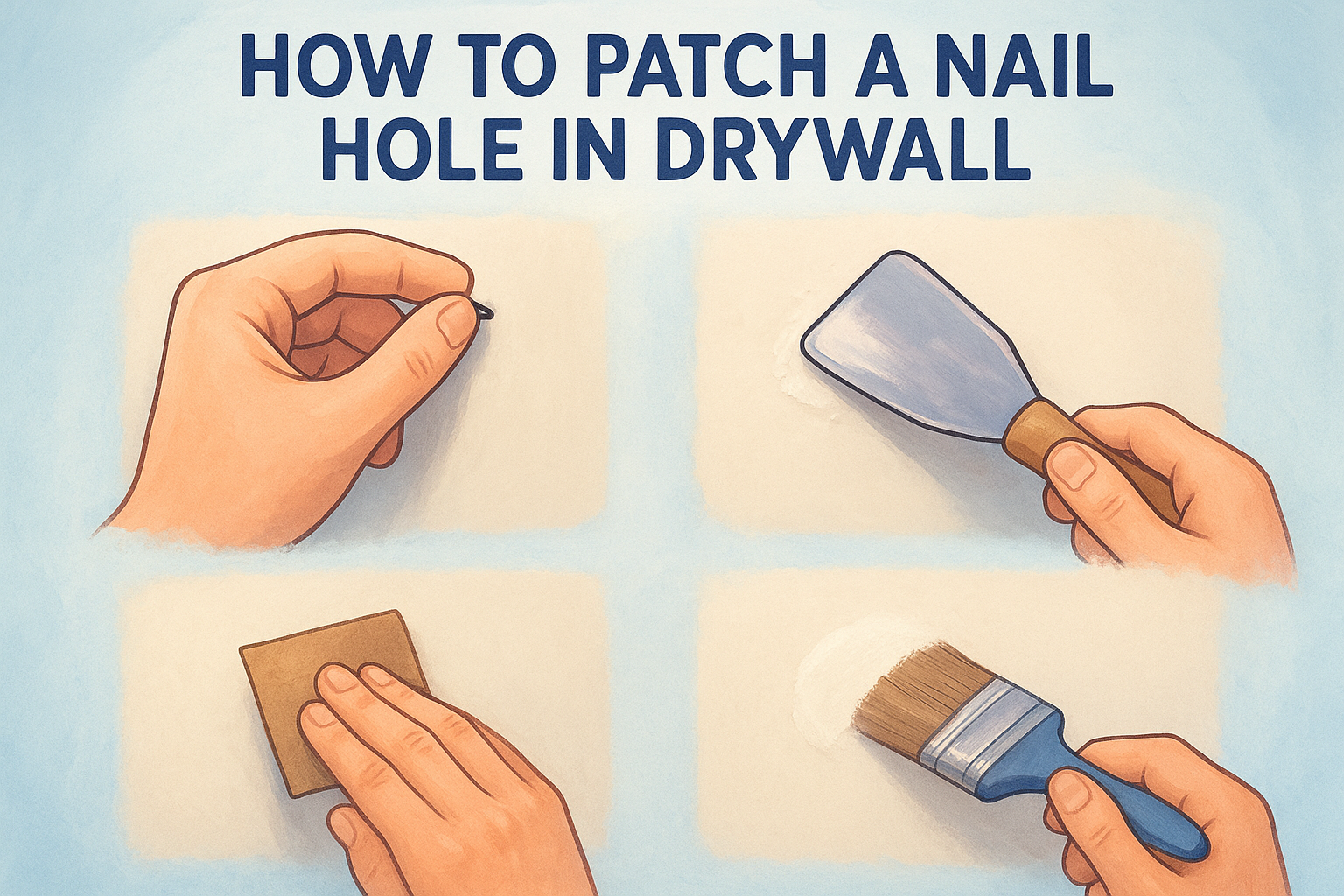
Smaller jobs, like a nail hole or a small settlement crack, can wrap up in a single visit, since repair timelines vary by patch size. Larger repairs, especially those needing multiple compound coats or texture matching across a whole ceiling, often stretch across two to three visits so each layer dries properly.
Cleanup and final review
Experienced crews protect your floors and furniture with drop cloths before they start, then vacuum dust and haul away debris when they finish. A final walkthrough should happen before the contractor leaves, giving you a chance to run your hand over the patch and confirm it's invisible under the room's lighting. Super Shooters includes this review on every job, backed by our Super Shield warranty if anything needs a second look.
Common drywall and ceiling problems contractors fix
Walking through Sacramento Valley homes for three decades shows you the same handful of problems over and over, just with different causes each time. Drywall repair contractors see everything from tiny nail pops to ceilings that need a full asbestos abatement before anyone can even think about patching. Knowing what's common helps you describe your problem accurately when you call for an estimate.
Cracks, holes, and impact damage
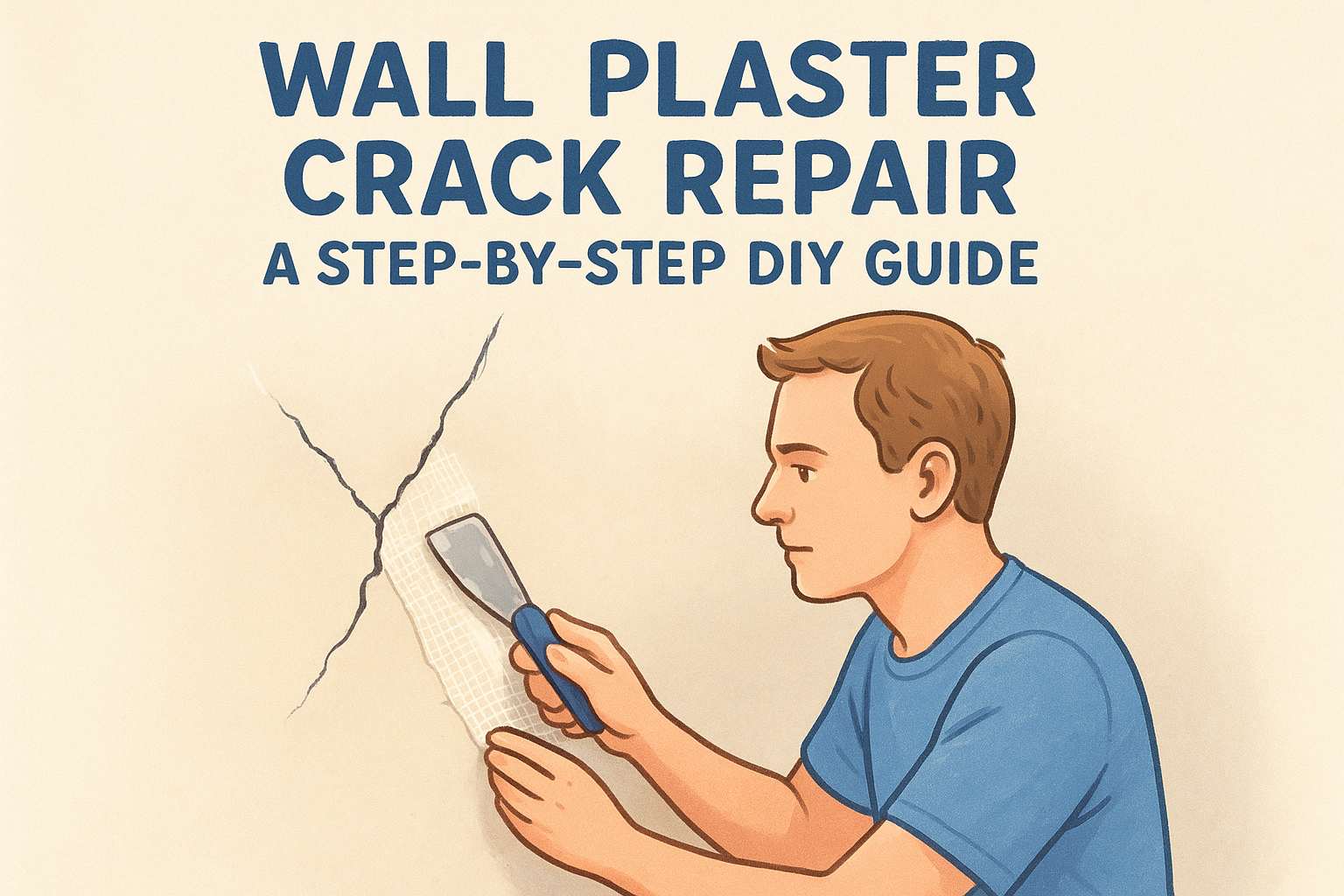
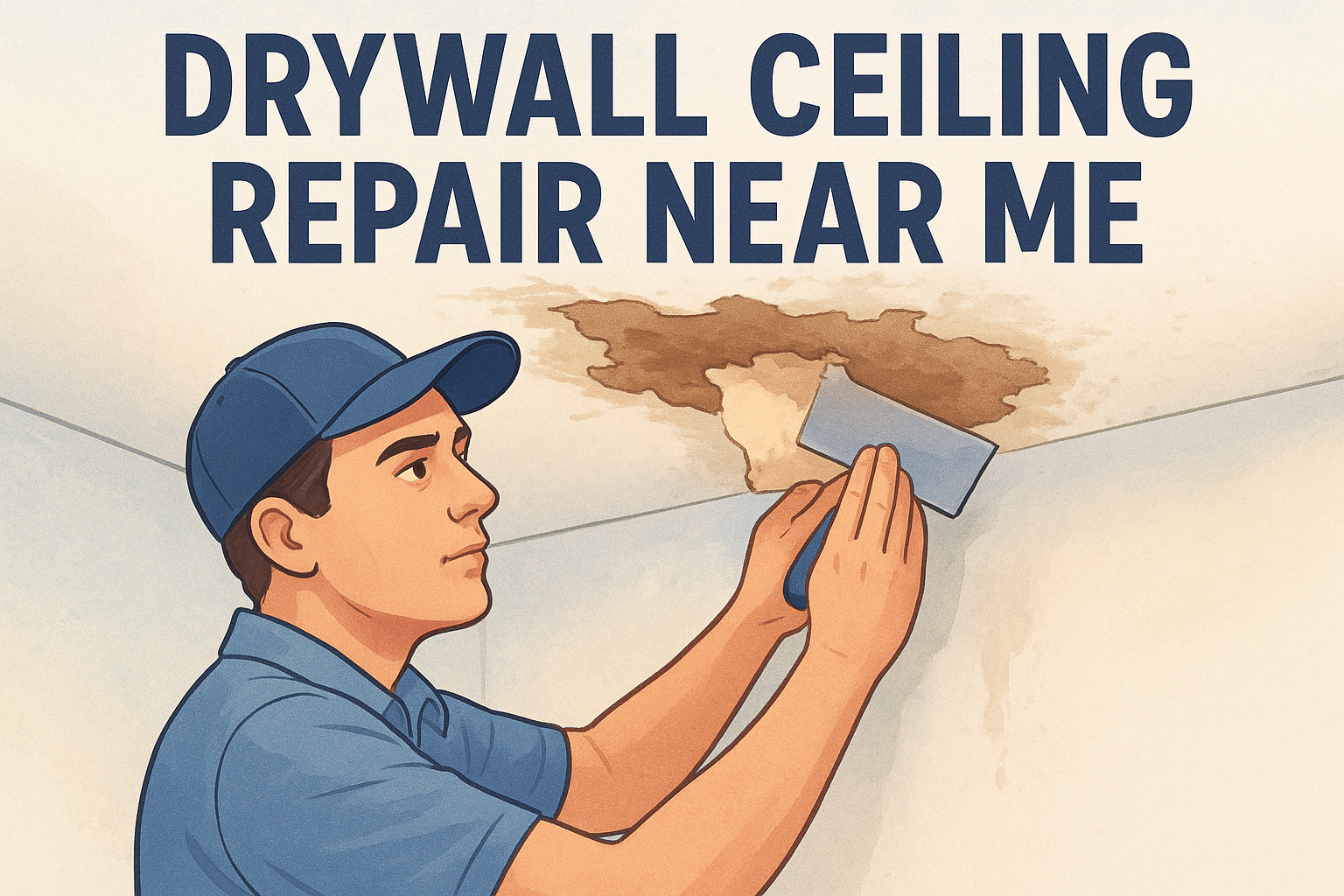
Settlement wall cracks show up above doorways and window corners as a house naturally shifts over the years, and most are cosmetic rather than structural. Doorknob holes and drywall dents come from everyday accidents, kids, moving furniture, a door swung open too fast. Water stains signal a leak that needs fixing before any patch goes on, and restoring a water-damaged wall means replacing the affected sheetrock, otherwise the new drywall bubbles and stains again within months.
Patching over an active leak just buys you a second repair bill.
Texture and ceiling issues
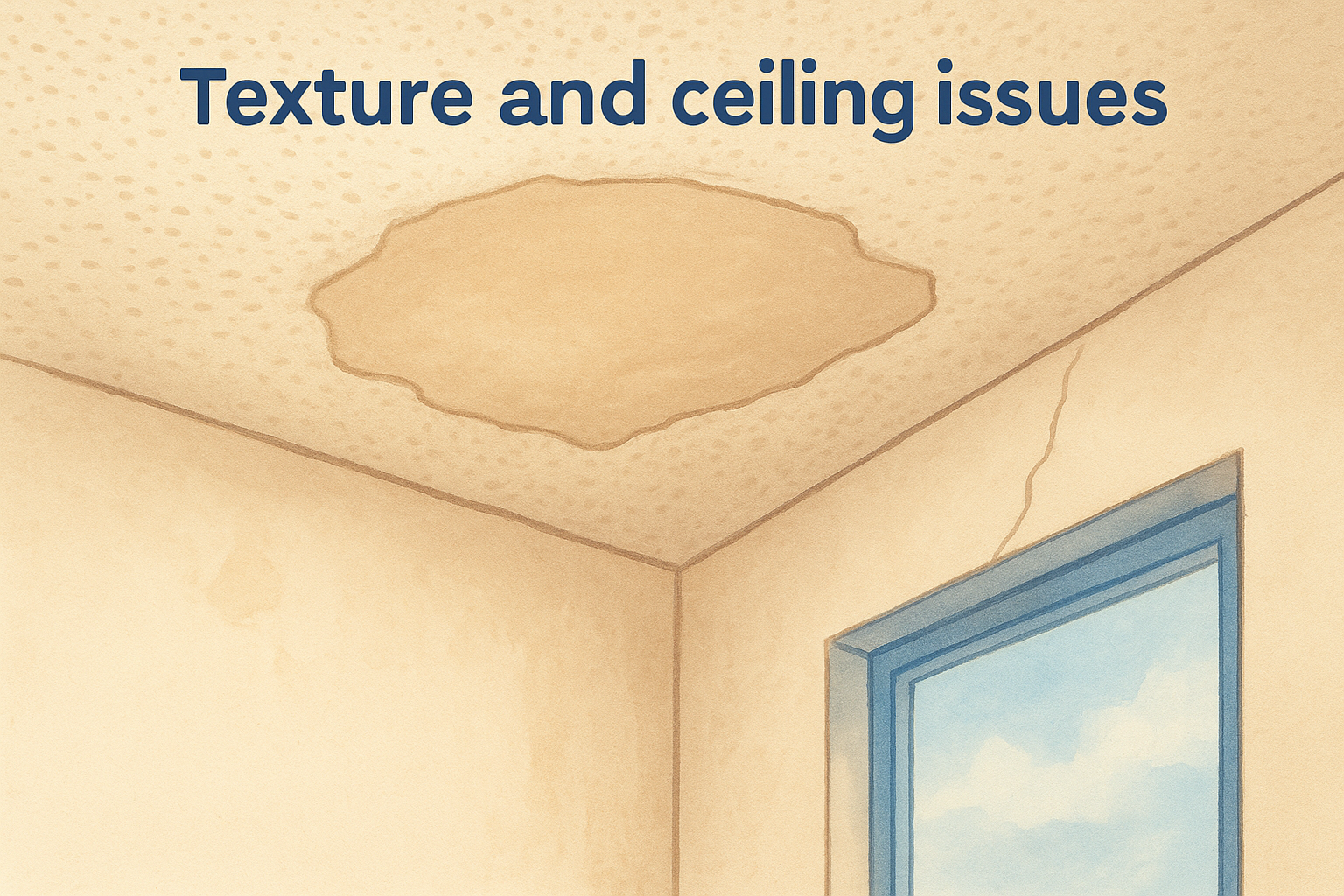
Older homes often have getting rid of a textured popcorn ceiling on the to-do list, either for a cleaner look or because the ceiling contains asbestos and needs professional testing first. Texture mismatches happen when a previous patch used the wrong technique, leaving an orange peel wall with a smooth or knockdown patch stuck in the middle of it.
| Problem | Typical Cause | Fix |
|---|---|---|
| Settlement cracks | Foundation shifting, seasonal movement | Tape, mud, feather edges |
| Water stains | Roof or plumbing leak | Fix source, replace drywall, repaint |
| Popcorn ceiling | Age, outdated style, possible asbestos | Test, abate if needed, remove or skim coat |
| Nail pops | Framing shrinkage | Reset fastener, patch, retexture |
| Wallpaper damage | Old adhesive, moisture | Strip, repair substrate, texture |
Garage walls and ADU projects
Finishing garage walls and ADU drywall completion bring their own set of problems, since these spaces often skip proper insulation or fire-rated drywall the first time around. Contractors regularly get called in to bring garages up to code or finish an ADU that a previous crew left incomplete.
Understanding drywall repair costs
Money questions come up fast once you start calling around, and drywall repair pricing varies more than most homeowners expect, which is why it pays to know how to find cheap drywall repair near you without overpaying. A single nail hole costs almost nothing to fix, while a water-damaged ceiling with texture matching and possible asbestos testing can run into the thousands. Understanding what drives the price helps you compare quotes without guessing whether you're getting a fair deal or getting taken for a ride.
What drives the price up or down
Size matters most, since a two-inch hole takes ten minutes while a four-foot section of ceiling means cutting new drywall, taping, and multiple coats of compound. Ceiling and wall texturing adds labor because getting orange peel or knockdown to blend seamlessly takes a skilled hand, not just a spray can from the hardware store. Access also plays a role, since a repair on a vaulted ceiling requires scaffolding or lifts that a wall patch never needs.
The size of the hole rarely predicts the size of the bill, the texture and access do.
Typical price ranges
Here's a rough breakdown of what Sacramento Valley homeowners typically see for common jobs:
| Repair Type | Typical Cost Range |
|---|---|
| Small nail hole or crack | $75 - $150 |
| Medium hole (doorknob damage) | $150 - $350 |
| Large ceiling patch with texture | $350 - $800 |
| Water-damaged section with drywall replacement | $500 - $1,500 |
| Popcorn ceiling removal (per room) | $1,000 - $3,000+ |
Asbestos testing or abatement adds to that last figure significantly, since containment and disposal require licensed handling.
Getting an accurate number
Online calculators and phone estimates only get you so far, since they can't account for what's actually behind your wall. Super Shooters provides free in-home estimates with no payment due until the job is finished, so you know the real cost before committing to anything. Comparing that written number against other bids gives you the clearest picture of whether you're paying a fair price for the work in front of you.
Making the right call for your walls
That crack over your door or the dented hallway wall doesn't have to stay on your list of things to fix someday. Drywall repair contractors who know what they're doing turn a two-hour job into a repair you'll never think about again, while a rushed patch just guarantees a callback next season. You now know what a fair estimate looks like, what questions to ask about licensing and warranty coverage, and which problems signal something bigger than a hole in the wall.
Thirty years of patching Sacramento Valley homes has taught us that quality work shows up years later , not just on the day the crew leaves. If you're ready to stop staring at that patch and get it done right, see our drywall repair and patching service and request a free in-home estimate before you spend a dime.