June 7, 2026
How To Blend Drywall Patch Texture For A Seamless Match
You patched the hole, let the mud dry, sanded it smooth, and now there's a perfectly flat spot on your wall that sticks out like a sore thumb. Knowing how to blend drywall patch texture is often the difference between a repair that disappears and one that catches your eye every time you walk past it . It's the step most DIYers underestimate, and it's the reason a lot of homeowners end up calling a pro after the fact.
The challenge is that existing wall and ceiling textures vary widely, from orange peel and knockdown to skip trowel and heavy splatter. Each one requires a slightly different approach to replicate, and factors like mud consistency, application pressure, and drying time all affect the final result. Get one of those variables wrong and you'll see the patch line clearly , even under a fresh coat of paint.
At Super Shooters, we've completed over 10,000 drywall and ceiling projects across the Sacramento Valley in our 30+ years of business. Texture matching is something our crews do daily, from small patch repairs to full wall restorations after water damage. We know what works, and what creates more problems. This guide walks you through the practical steps to match your patch texture to the surrounding wall or ceiling so the repair blends in and stays that way. If at any point the project feels like more than you want to tackle, we're always available for a free in-home estimate.
What makes a drywall patch stand out
A freshly patched section of drywall stands out for several reasons, and texture mismatch is usually the main culprit. When you apply joint compound over a repair, it creates a flat, smooth surface that contrasts directly with the surrounding wall. The area around the patch has built-up texture, primer, and multiple layers of paint that change how light hits the surface. Even a small patch without proper texture work will cast a shadow or reflect light differently than the rest of the wall.
Texture matching is the most commonly skipped step in DIY drywall repair, and it becomes the most visible mistake once paint goes on.
The role of surface porosity and paint absorption
New joint compound absorbs paint at a much higher rate than the surrounding, already-sealed wall surface. Without a proper coat of primer over the patch, it pulls in the first coat of paint unevenly, leaving a dull, flat spot even after the paint dries. Professionals call this "flashing," and it's one of the main reasons a patch remains visible even when the texture looks correct from across the room. Priming the patch before painting is non-negotiable if you want the repair to disappear.
How light exposes edge lines and depth differences
The second factor that makes a patch obvious is edge visibility . If the joint compound isn't feathered out wide enough from the repair site, the transition from new mud to old wall leaves a slight ridge. That ridge catches raking light (light hitting the wall at a low angle from a window or lamp) and creates a hard shadow line around the patch. The wider you feather your repair, the softer that transition becomes. Recognizing these two root causes, porosity and edge lines, gives you a clear target when you work through how to blend drywall patch texture step by step.
Step 1. Identify and match the existing texture
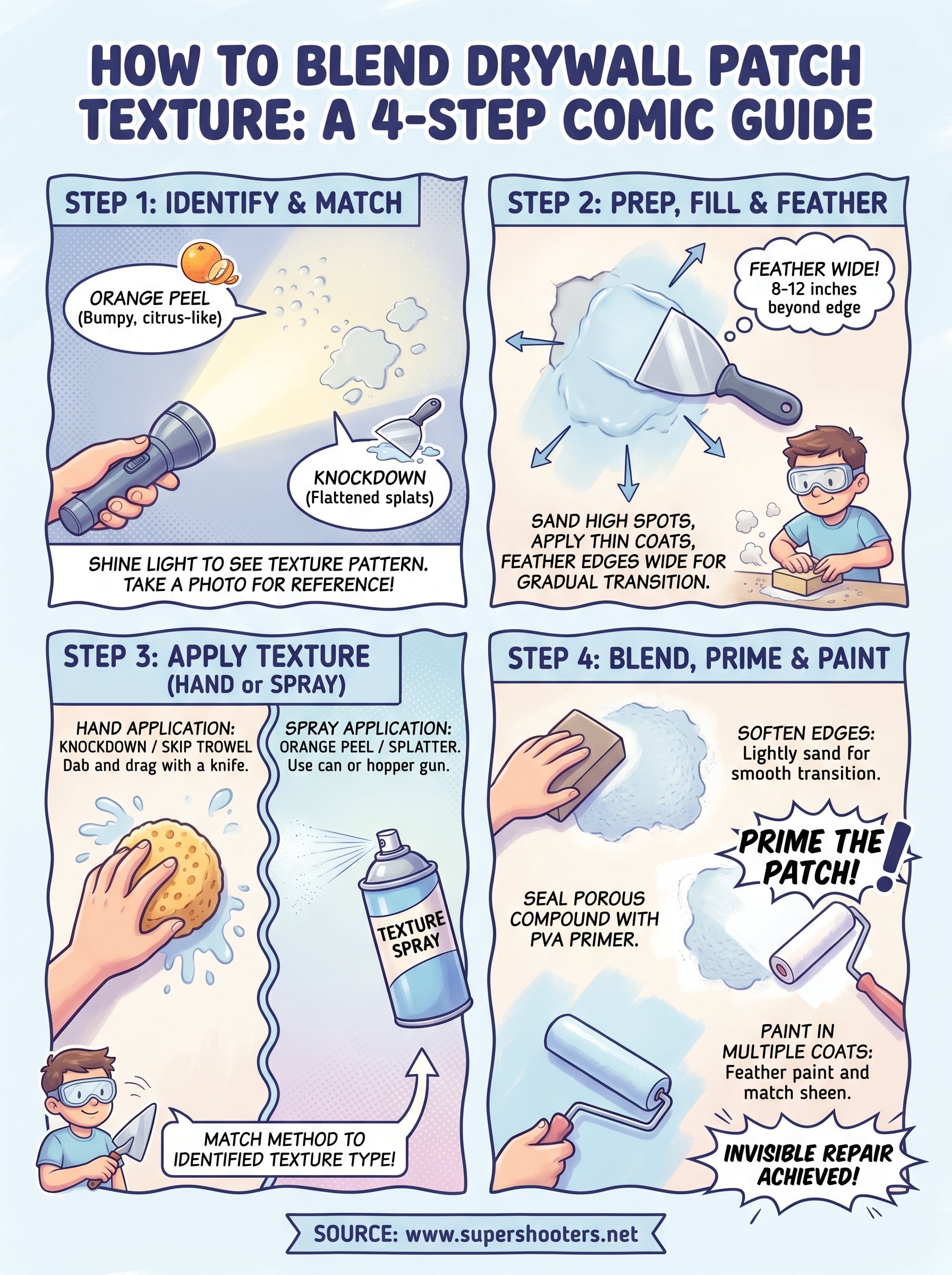
Before you touch a trowel or spray can, take a close look at your wall. Identifying the exact texture on the surrounding surface is the first real step in learning how to blend drywall patch texture effectively. Matching something you can't name is pure guesswork , and guesswork shows.
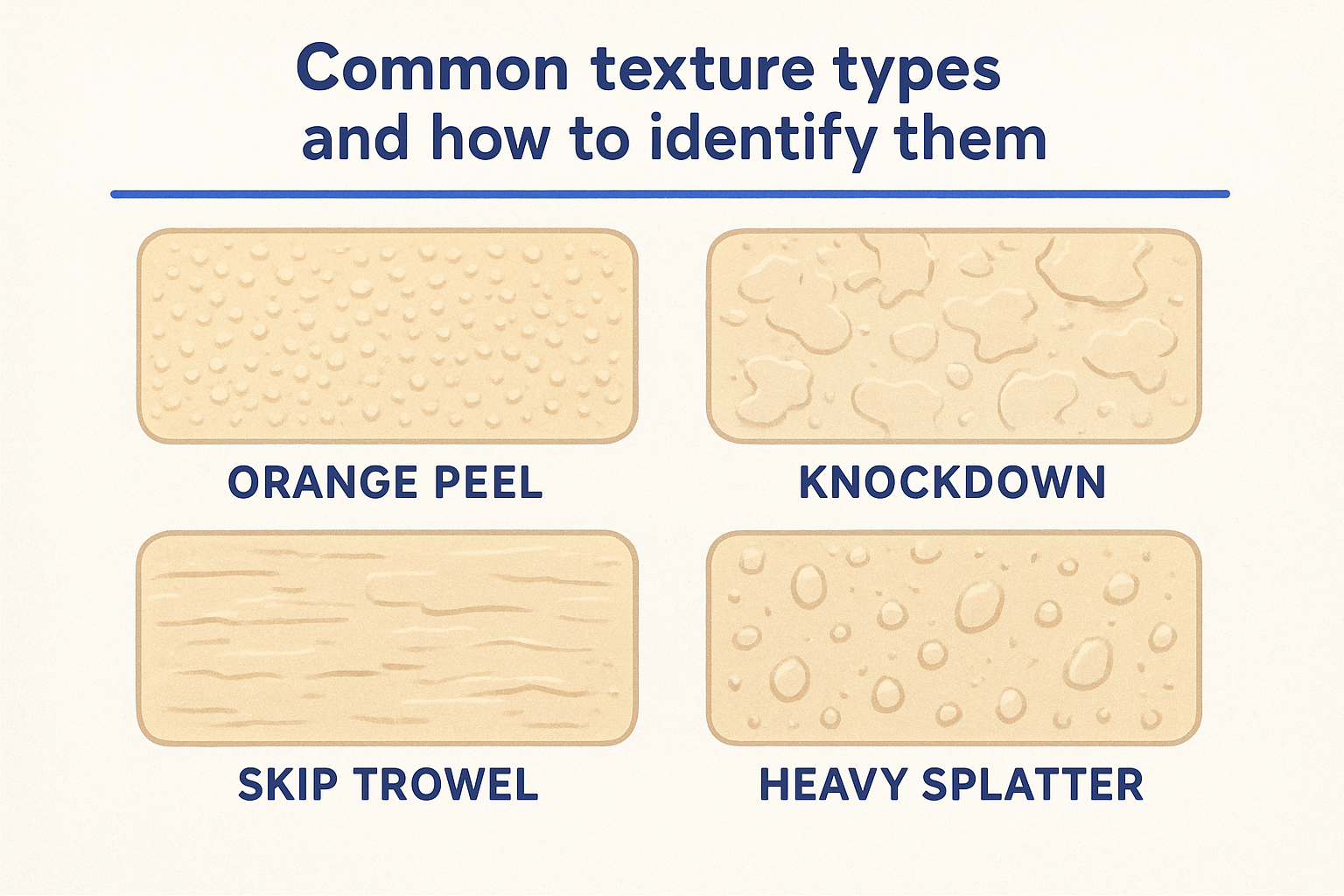
Common texture types and how to identify them
The most common residential textures fall into a few recognizable categories. Orange peel looks like the surface of a citrus fruit, with small rounded bumps applied by spray. Knockdown has larger, irregular flattened splats created by spraying texture and then lightly dragging a knife across the peaks. Skip trowel shows wider, hand-applied swipes with visible trowel edges. Heavy splatter uses bigger drops with more spacing between them.
Shine a flashlight at a low angle across your wall to read the texture depth and pattern clearly before you try to replicate it.
Take a photo under raking light and, if possible, collect a small chip of the existing texture from inside a closet or behind an outlet cover to use as a reference while you work.
Step 2. Prep, fill, and feather the patch correctly
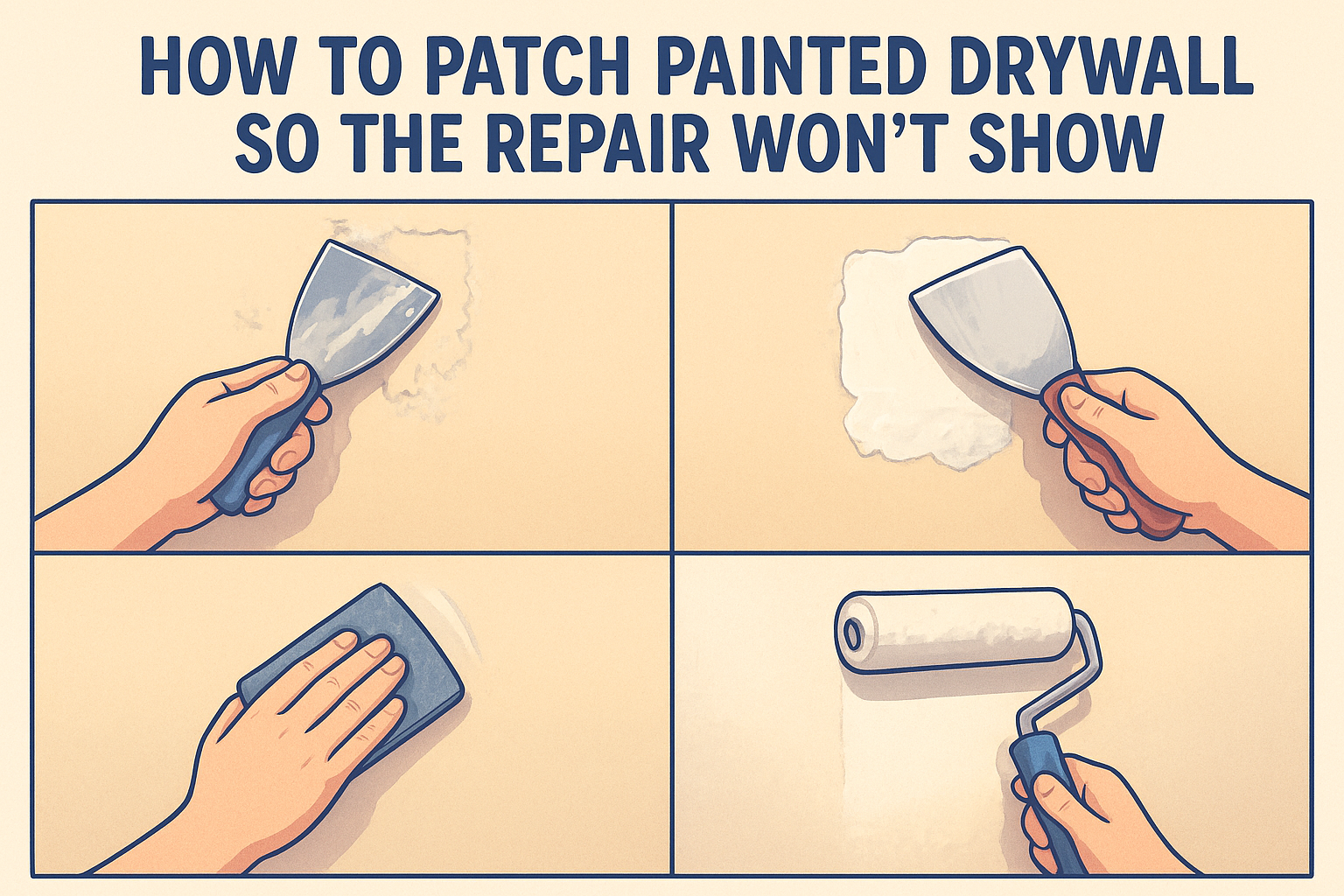
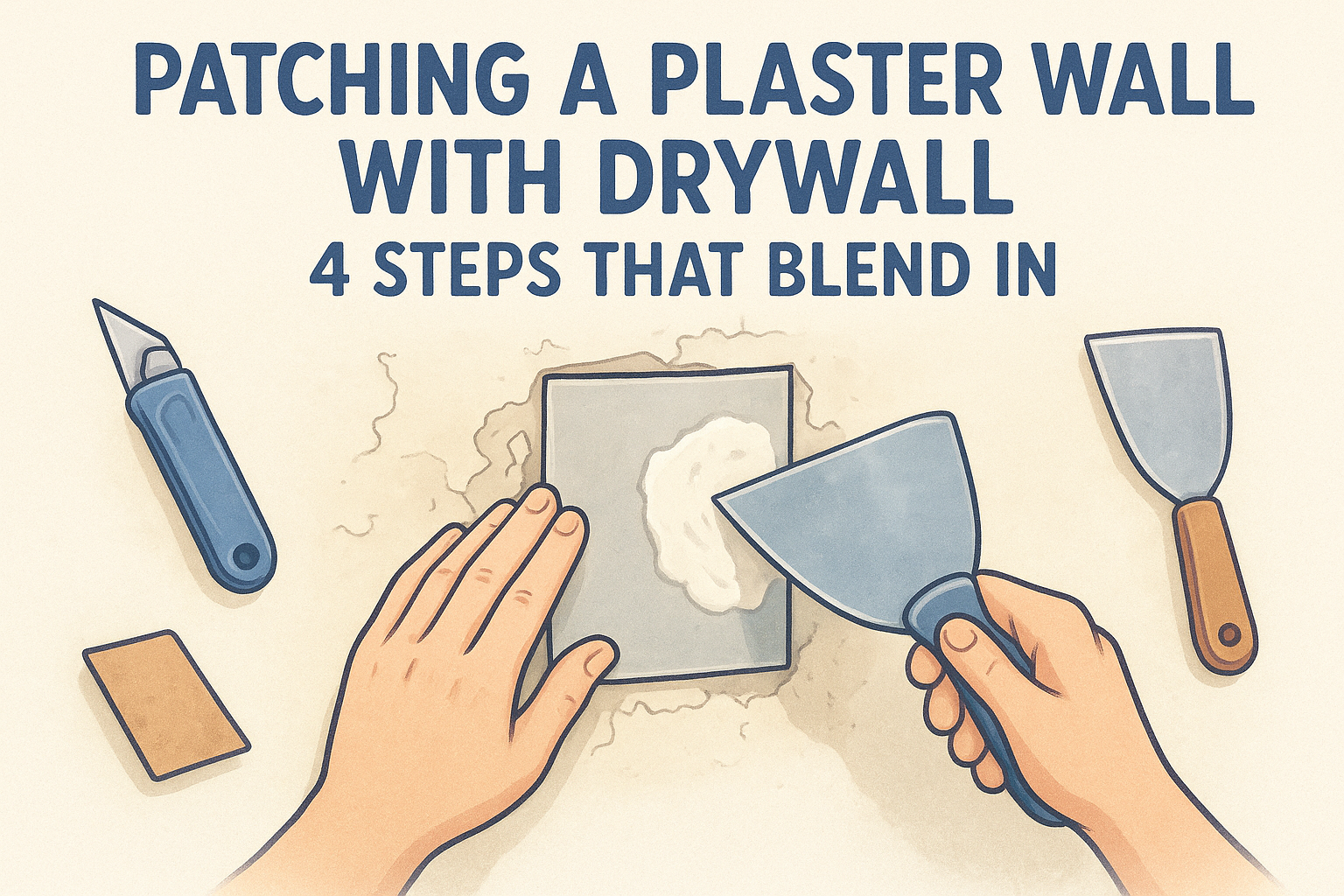
Good texture work starts with a well-prepared surface. If your patch has any high spots or loose edges , sand them down before applying anything new. Wipe away all dust and debris with a damp cloth and let the area dry completely. Applying compound over contaminants creates adhesion problems that will cause the repair to crack or peel later.
How to build up and feather your compound
Mix your joint compound to a smooth, lump-free consistency before loading your knife. For most repairs, a 6-inch knife handles the fill coat, but you'll want a 10- to 12-inch knife to feather the edges outward. Feathering means tapering the compound thin as you move away from the patch center, ideally spreading it 8 to 12 inches beyond the repair edge. This wide, gradual transition is what makes blending possible when you work through how to blend drywall patch texture in the steps that follow.
The wider you feather your compound, the less visible the transition line will be once texture and paint go on.
Let each coat dry completely before adding another. Two to three thin coats beat one thick application every time, reducing shrinkage cracks and keeping edge ridges minimal.
Step 3. Apply texture using hand or spray methods
With your patch prepped and feathered, you're now at the most critical point in how to blend drywall patch texture: actually applying the new texture. Your choice between hand and spray methods depends entirely on what texture type you identified in Step 1 . Using the wrong method produces results that won't match, regardless of how carefully you apply them.
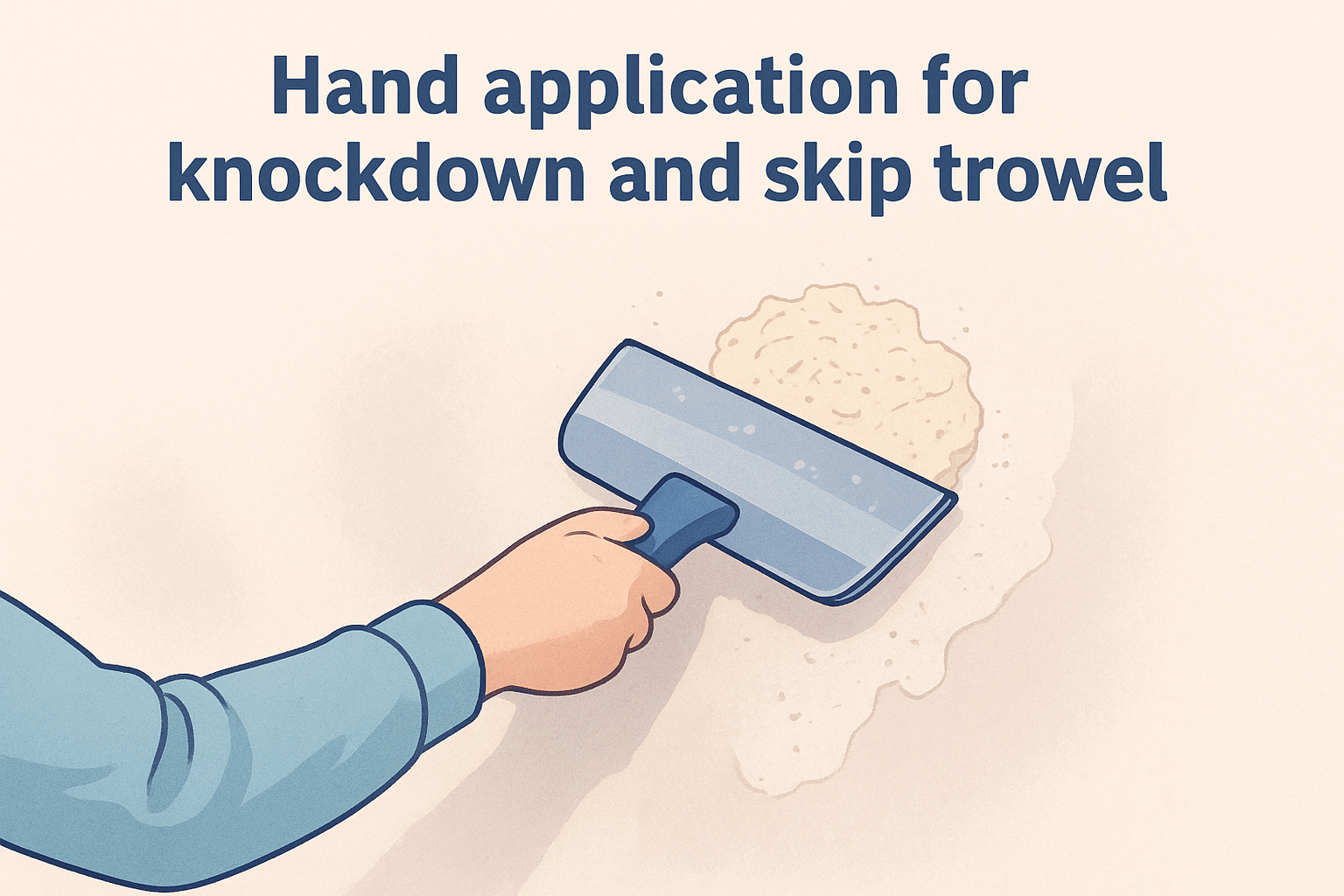
Hand application for knockdown and skip trowel
For knockdown, load a wide drywall knife or trowel with thinned joint compound (roughly a peanut butter consistency) and dab or splatter it onto the patch with an irregular motion. Let it firm up for 10 to 15 minutes, then lightly drag a clean knife across the peaks to flatten them.
Match your knife pressure to the surrounding texture depth; lighter pressure creates subtle knockdown while heavier pressure flattens the peaks more completely.
Spray application for orange peel and splatter
An aerosol texture can or hopper gun works well for orange peel. Test your spray pattern on cardboard before hitting the wall, then hold the nozzle 8 to 12 inches away and apply in short overlapping passes to build coverage gradually.
Splatter textures use the same equipment but with thicker compound and the nozzle adjusted for larger drops. Practice on scrap cardboard until your drop size and spacing match the wall around the patch.
Step 4. Blend the edges, then prime and paint to hide it
Once your texture dries, check the boundary between the new texture and the surrounding wall under raking light. Hard edges need light sanding with a 220-grit sanding sponge to soften them before you prime. You're not trying to remove the texture, just eliminate any ridge that catches light and gives the repair away.
Prime the patch before painting
Skipping primer is the most common reason a patch stays visible after painting. Apply PVA drywall primer over the patched area and let it cure fully before picking up a paint roller. Primer seals the porous compound so paint absorbs evenly instead of pulling in unevenly and dulling out.
Priming the patch is the single step that turns a visible repair into an invisible one.
- Fresh compound patches: use PVA primer
- Water-damaged areas: use shellac-based primer
Paint in multiple coats to complete how to blend drywall patch texture
Apply your first thin coat with a roller nap that matches the surrounding wall's texture . Feather the paint 12 to 18 inches beyond the patch edges and let it dry fully before adding a second coat. That second coat eliminates dull spots and locks in color uniformity.
Use the same paint sheen already on the wall. If you don't have leftover paint, bring a chip sample to a paint store for a color match before you start.
Wrap up and when to call a pro
Learning how to blend drywall patch texture comes down to following the right sequence: identify the texture, prep and feather the compound wide , apply texture with the correct method, then prime and paint in multiple coats. Each step builds directly on the last, and skipping any one of them puts the entire repair at risk of staying visible.
Most small patches are manageable for a motivated homeowner with the right materials and patience. But water-damaged areas, large sections, or ceilings with an unknown texture history can push a DIY repair beyond what's worth attempting without experience. If your patch keeps showing through or covers more than a few square feet, getting a professional assessment saves time and avoids costly redos.
Our team at Super Shooters handles drywall repair and patching across the Sacramento Valley. Contact us for a free in-home estimate and we'll tell you exactly what your repair needs.