June 4, 2026
Drywall Repair For Beginners: Step-by-Step Patch Guide
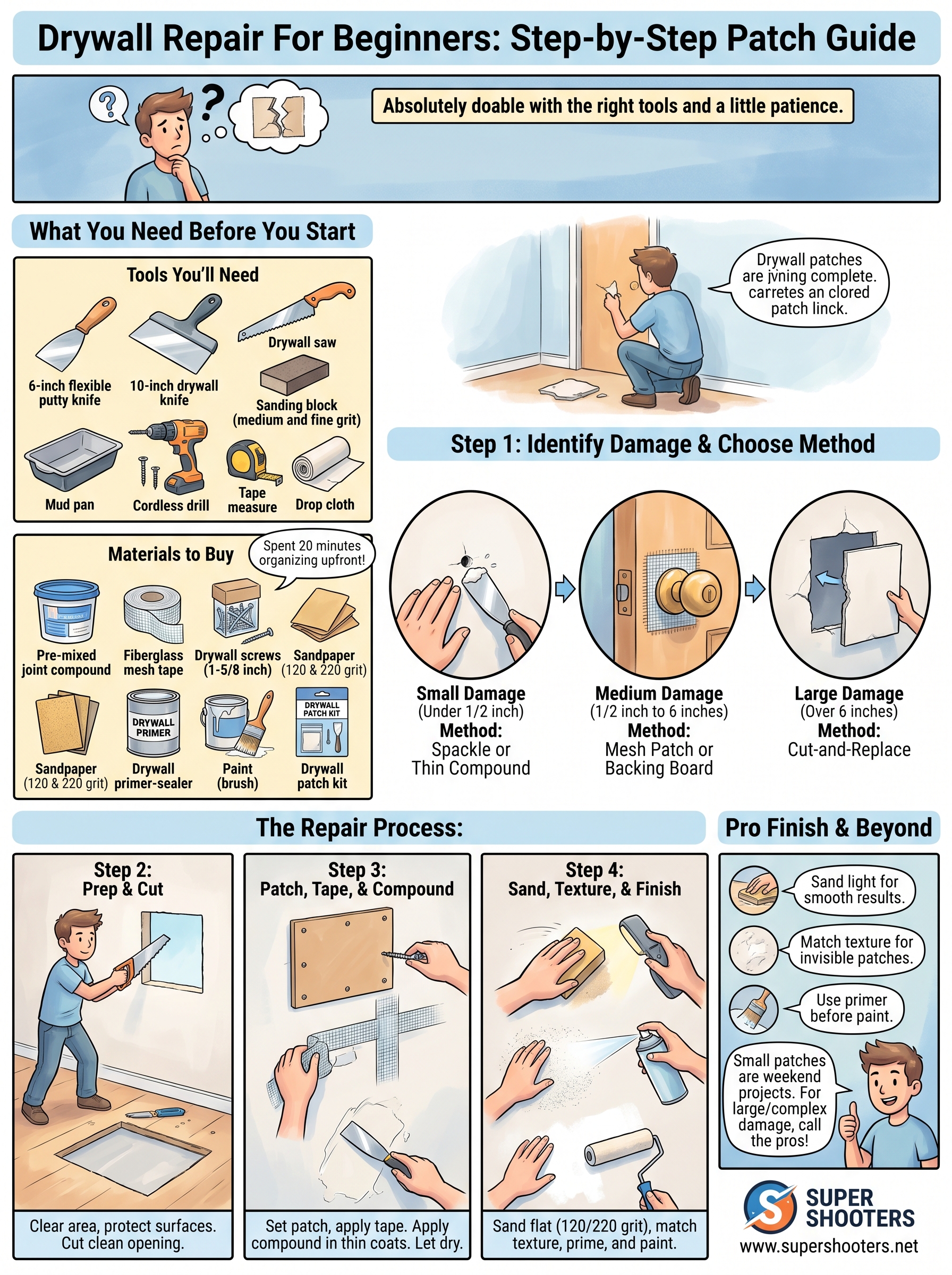
A dinged-up wall doesn't mean you need to call in a crew. Small dents, nail pops, and minor cracks are some of the most common issues homeowners face, and drywall repair for beginners is absolutely doable with the right tools and a little patience. Whether you bumped the corner moving furniture or discovered a hairline crack near a doorframe, most of these fixes take less than a weekend to complete.
That said, knowing the difference between a quick patch job and a problem that runs deeper matters. At Super Shooters, we've completed over 10,000 drywall projects across the Sacramento Valley in our 30-plus years of business, so we've seen every type of wall damage imaginable, from tiny screw holes to full sections that needed replacing. That experience is exactly what shaped this guide. We want to give you honest, practical steps you can follow at home, and help you recognize when a project calls for professional hands.
Below, you'll find a complete walkthrough covering the tools you'll need , the materials worth buying, and clear techniques for patching everything from small nail holes to medium-sized gaps. Each step is written for someone with zero prior drywall experience , so you can work at your own pace and still get a clean, finished result.
What you need before you start
Getting your supplies together before you touch the wall saves you from stopping mid-project to run to the hardware store. For drywall repair for beginners , the good news is that you don't need a truck full of specialized equipment. A focused set of basic tools and a handful of inexpensive materials will handle most repairs you'll encounter, from nail holes up to fist-sized patches. Spending 20 minutes organizing everything upfront means you can move through each step without interruption, which directly affects how clean your final result looks.
Buying slightly more joint compound than you think you need is smart - running out mid-coat forces you to wait, and dried compound edges are much harder to blend into fresh layers.
Tools you'll need
The right tools make every step cleaner and faster. You'll reach for a 6-inch and a 10-inch drywall knife during nearly every repair, so consider those two non-negotiable. A sanding block with interchangeable grits keeps your pressure even across the surface, which matters when you're feathering compound flat across a seam. You don't need to spend much here - budget versions of these tools from any hardware store work fine for residential repairs.
- 6-inch flexible putty knife
- 10-inch drywall knife (also called a taping knife)
- Drywall saw or utility knife
- Sanding block (medium and fine grit)
- Mud pan or mixing tray
- Cordless drill with drywall screws
- Tape measure and pencil
- Drop cloth or plastic sheeting to protect flooring
Materials to buy
Your material list shifts slightly based on the size of the damage, but a few items belong in every repair kit regardless of what you're fixing. Pre-mixed all-purpose joint compound works well for most patches, and fiberglass mesh tape holds joints together without the risk of trapping moisture the way paper tape can when applied by someone still learning the technique.
Here's a quick reference so you can shop in one trip:
| Material | What it's for | Notes |
|---|---|---|
| Pre-mixed joint compound | Filling and coating the patch | Small tub handles most minor repairs |
| Fiberglass mesh tape | Reinforcing seams and patches | Self-adhesive saves time |
| Drywall screws (1-5/8 inch) | Securing backing boards or new drywall | Coarse-thread for wood backing |
| Sandpaper (120 and 220 grit) | Smoothing compound between coats | 120 for rough passes, 220 for finish |
| Drywall primer-sealer | Sealing the patch before paint | Prevents uneven paint absorption |
| Matching paint | Blending the patch to the wall | Bring a chip to the hardware store |
| Drywall patch kit (optional) | Pre-made backer for mid-sized holes | Useful for 4-to-6-inch holes |
Picking up a drywall primer-sealer specifically is worth repeating. Regular wall paint applied directly over fresh compound absorbs unevenly and leaves a dull spot on the wall, even when the patch itself looks perfectly smooth and level.
Step 1. Identify the damage and choose a method
Before you touch a single tool, look closely at what you're actually dealing with . The repair method you use depends entirely on the size and type of damage, and picking the wrong approach adds time and gives you a worse result. For drywall repair for beginners , this is the step most people skip, and it's also where most mistakes originate.
Measuring the hole before you go to the hardware store saves a second trip - a 3-inch gap needs a completely different solution than a 6-inch one.
Three damage types and which method fits each
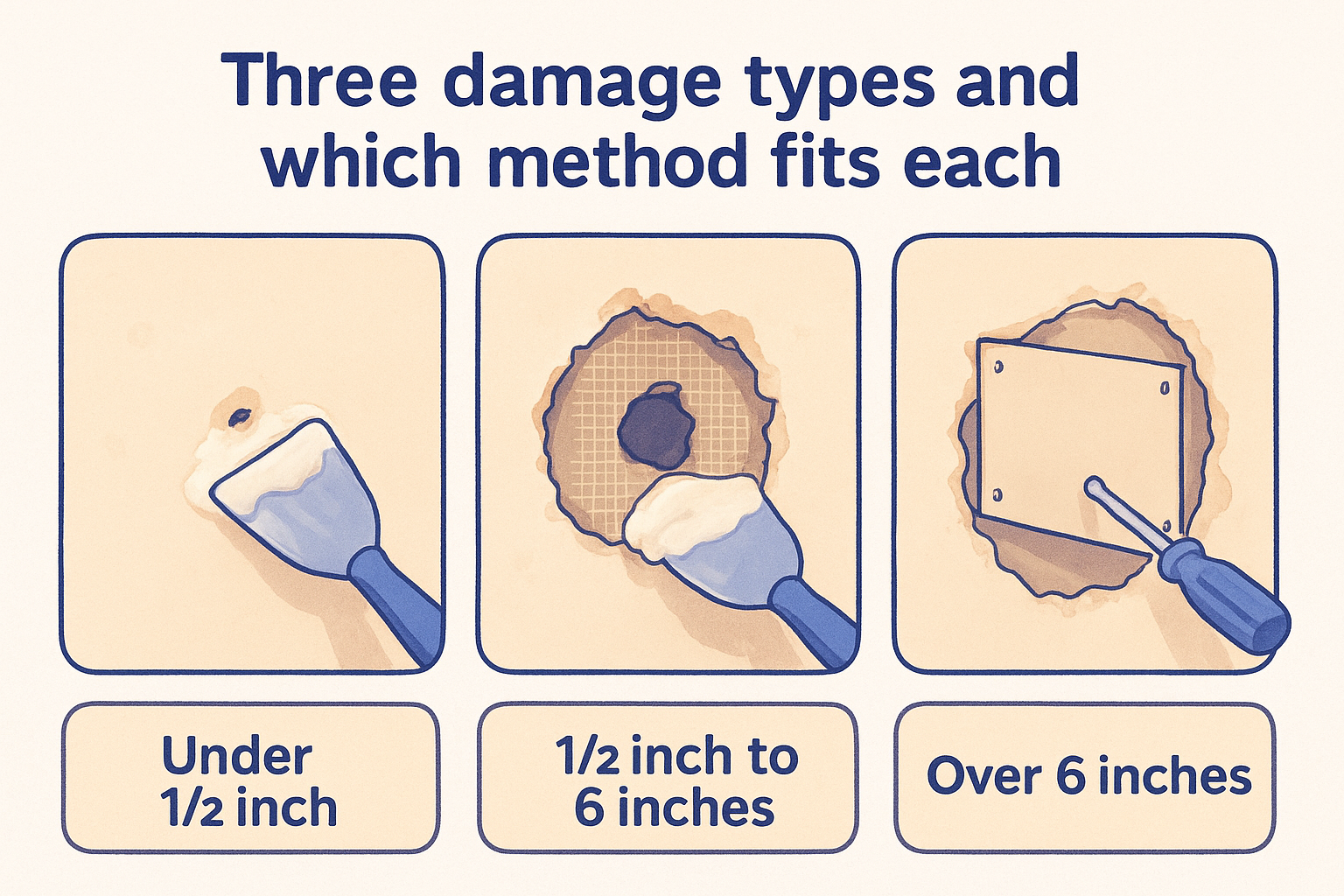
Not all wall damage is the same, and matching your repair method to the damage type is the fastest path to a clean result. Small holes up to about half an inch wide, like nail holes or screw pops, only need spackle or a thin layer of joint compound pressed in with a putty knife. Mid-sized holes between one and six inches need a backing board or a pre-made patch kit to give the compound something solid to grip. Holes larger than six inches require you to cut out the damaged section entirely and screw in a new piece of drywall.
Here's a quick guide to match damage to method:
| Damage size | Common cause | Repair method |
|---|---|---|
| Under 1/2 inch | Nail holes, small dings | Spackle or thin compound layer |
| 1/2 inch to 6 inches | Doorknob impact, minor accidents | Mesh patch or backing board |
| Over 6 inches | Water damage, large impacts | Cut-and-replace with new drywall |
Cracks along seams deserve their own category. A hairline crack at a corner or seam usually means the tape underneath has failed, so your fix involves digging out the loose tape, applying new fiberglass mesh tape, and re-coating with joint compound rather than just filling the surface gap. Skipping this and painting over a failed seam will have the crack reappearing within months.
Step 2. Prep the area and cut a clean opening
Good prep work directly determines how clean your finished patch looks. For drywall repair for beginners , rushing past this step almost always causes problems later, whether that's dust landing on freshly painted trim or a ragged opening that won't hold a patch flat. Taking five to ten minutes to prepare the space properly before you cut or sand anything keeps the rest of the project moving without interruptions.
Clear the work area and protect surfaces
Move furniture and small items at least three feet back from the wall before you start. Drywall dust travels farther than you expect , and it settles onto everything in the room, including floors, furniture, and nearby vents. Lay down a drop cloth or plastic sheeting directly below the repair zone, and tape plastic over any floor vents to keep dust out of your ductwork. If you're working near baseboards or painted trim, run painter's tape along those edges so accidental tool scuffs don't add another repair to your list.
Turning off your HVAC system while you cut and sand keeps drywall dust from spreading through your entire home via the ductwork.
Cut the opening the right way
Once the area is protected, your goal is to create a clean, straight-edged opening that gives your patch something solid to sit against. For mid-sized holes, use a drywall saw or utility knife and a straightedge to cut the damaged section into a square or rectangle. Straight cuts are far easier to patch than irregular shapes, so even if the original damage is oddly shaped, you'll square it off before moving forward.
Score the line with your utility knife first, then follow with the saw using slow, controlled strokes . Keep your cuts parallel to wall studs when possible, since that gives you a structural edge to screw your patch or backing board into without needing to add extra lumber behind the wall.
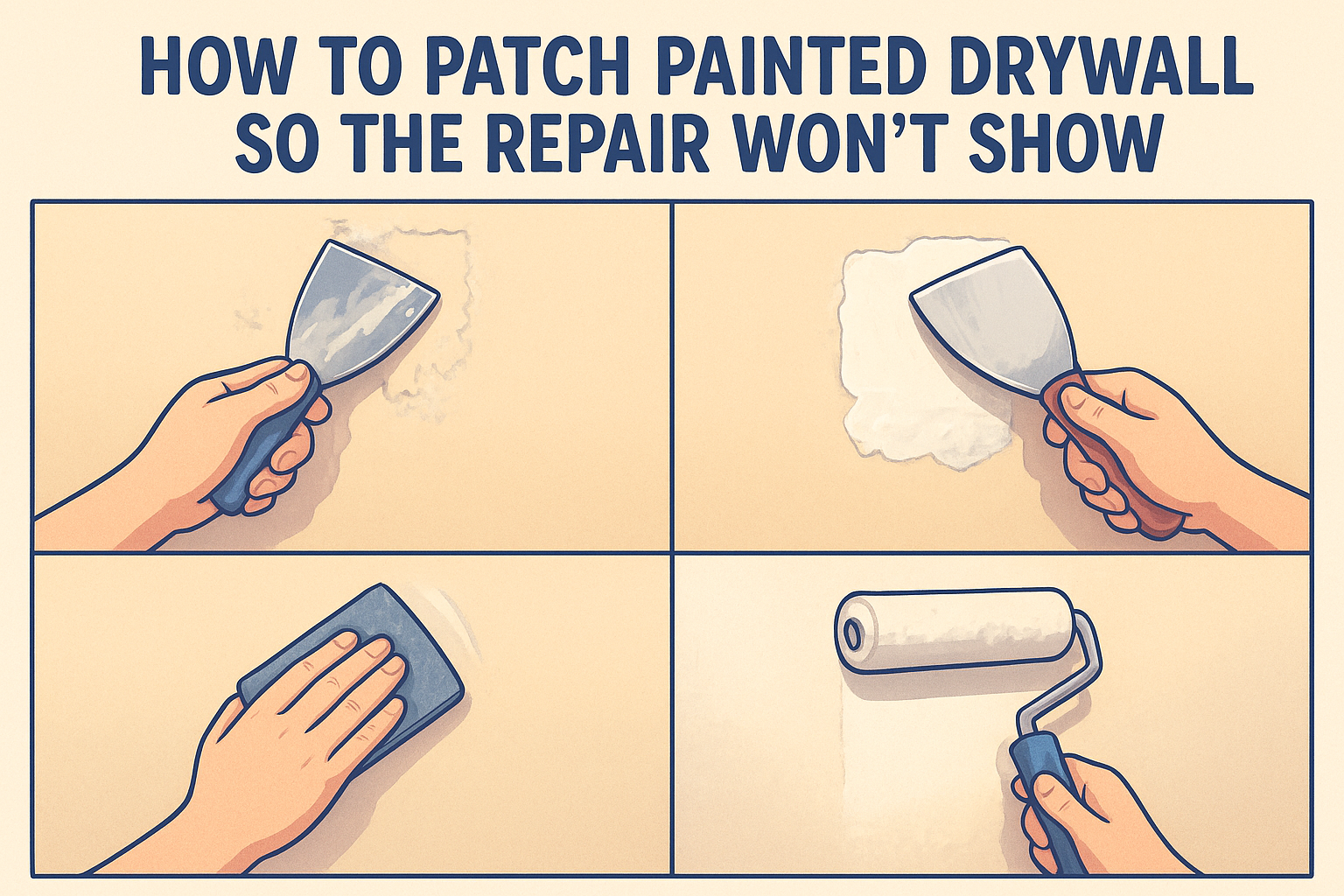
Step 3. Patch, tape, and apply joint compound
With your opening prepped and cut clean, you're ready for the part of drywall repair for beginners that most people either rush or overthink. This step has three distinct phases: setting the patch, applying tape, and building up thin coats of joint compound . Each phase feeds directly into the next, so doing them in order and giving each coat enough time to dry is what separates a flat, smooth result from a lumpy, cracked mess.
Set the patch in place
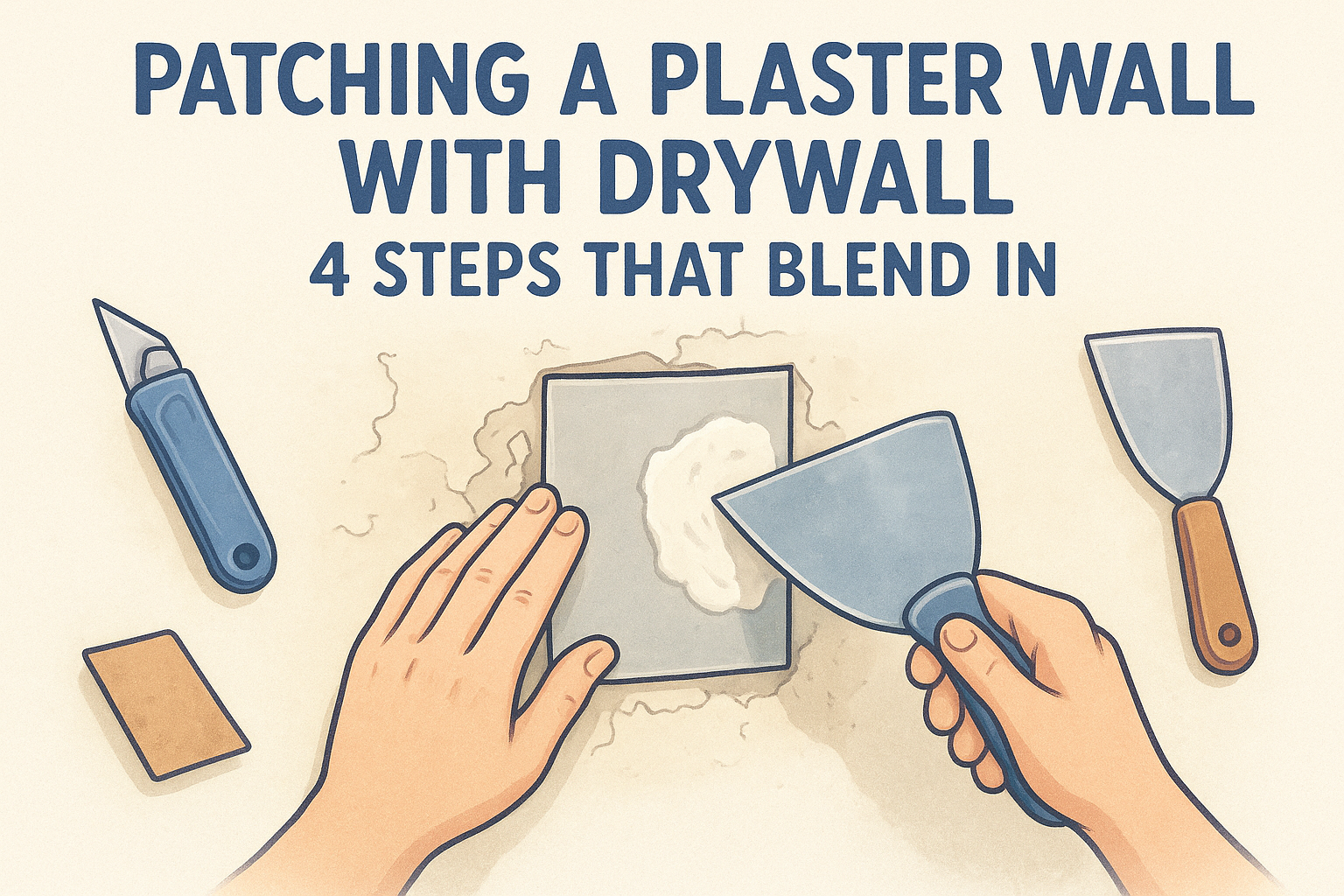
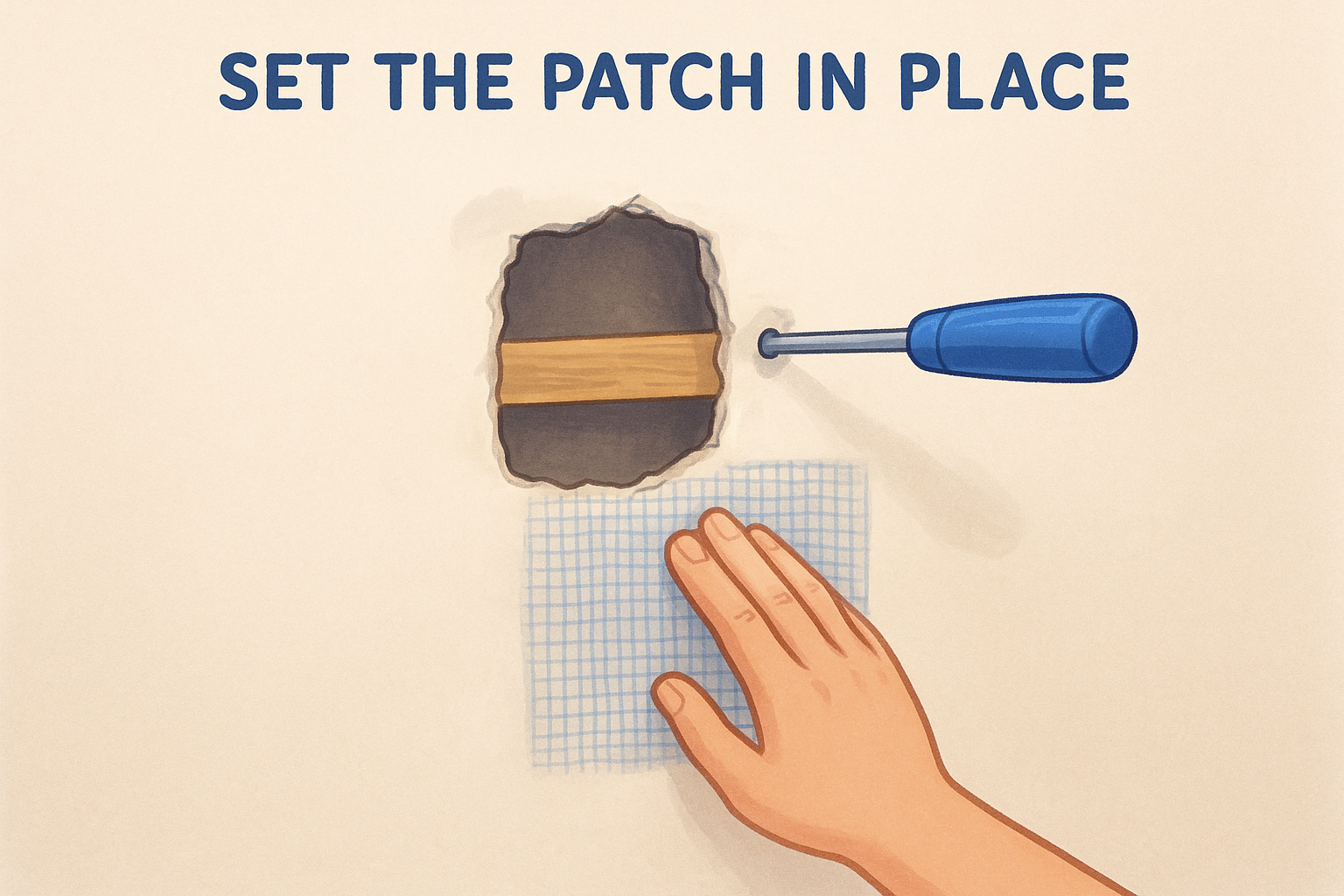
If you're using the backing board method, cut a piece of 1x3 or 1x4 lumber slightly longer than the height of your opening, slide it behind the wall, and drive drywall screws through the existing drywall into the board on both sides of the hole. This gives you a solid mounting surface to screw your new patch piece into without it flexing. For pre-made mesh patch kits, peel and press the self-adhesive backing directly over the hole, pressing firmly on all four edges so no part of the mesh lifts off the wall.
Once your patch sits flat, cut your fiberglass mesh tape to cover every seam around the patch and press it firmly against the wall. Overlap the tape slightly at corners if needed, but avoid bunching it up since thick spots will telegraph through your finished compound coats and remain visible even after painting.
Apply joint compound in thin coats
Load a modest amount of pre-mixed joint compound onto your 6-inch knife and spread it over the tape and patch using smooth, angled strokes. The goal for the first coat is not perfection - it's coverage. Keep each layer no thicker than 1/8 inch , feathering the edges out several inches beyond the patch so the transition blends gradually into the surrounding wall.
Always let each coat dry completely before adding the next - wet compound under a fresh layer traps moisture and causes cracking later.
Sand lightly with 120-grit sandpaper between coats once the compound is fully dry to the touch, wiping away dust before applying the next layer. Switch to your wider 10-inch knife on the second and third coats to extend the feathered edges further and reduce visible ridges at the patch boundary.
Step 4. Sand, match texture, prime, and paint
Your final coat of compound is dry, and this last step of drywall repair for beginners is where the patch either disappears into the wall or stays visible forever. Work through this step in order: sand first, then texture if needed, then prime, then paint. Skipping any of these phases or rushing the drying times between them shows up clearly in the finished wall.
Sand the compound flat
Start with 120-grit sandpaper on your sanding block and work in wide, circular strokes across the entire patch and feathered edges. You're not trying to remove compound aggressively here, just knock down any ridges and tool marks. Switch to 220-grit for a final light pass once the surface feels even, which removes fine scratches that would catch light at an angle after painting.
Hold a work light at a low angle against the wall while sanding to spot any remaining high spots before you move on.
Wipe the entire surface with a dry cloth or tack cloth after sanding to remove all dust. Compound dust left on the wall prevents primer from bonding correctly and causes adhesion problems with your paint coat.
Match the texture
Most walls have some texture , and a smooth patch on a textured wall stands out immediately. Check what texture your wall has before you do anything else, then replicate it using one of these approaches:
| Texture type | Tool to use | Technique |
|---|---|---|
| Orange peel | Spray can texture or hopper gun | Light, even passes from 18 inches away |
| Knockdown | Wide knife and pre-mixed compound | Dab on, let set slightly, flatten lightly |
| Smooth | Fine sanding only | No texture needed |
Prime and paint
Apply one coat of drywall primer-sealer directly over the sanded patch using a roller, and let it dry fully before painting. Without primer, fresh compound soaks up paint unevenly and leaves a dull, flat spot on the wall that stays visible even after multiple paint coats. Once primed, apply your wall paint in two thin coats, feathering slightly beyond the patch boundary to blend the sheen into the surrounding surface.
Next steps if you want a pro finish
Following this guide gets you through most drywall repair for beginners scenarios, but knowing where your limits are saves you time and money. Small nail holes and mid-sized patches are reasonable weekend projects. Larger sections, recurring cracks, or damage connected to water or foundation movement are different situations entirely, and DIY fixes on those problems often mask something that needs proper attention underneath.
If your repair looks uneven after two full coats of compound , stop and assess before adding more layers. Texture matching and paint blending take real practice to master, and a patch that almost matches the surrounding wall can be more noticeable than one you've left clearly unfinished.
When the damage is beyond what you're comfortable tackling, our team is ready to step in. Take a look at our drywall repair and patching services to schedule a free in-home estimate with no upfront payment required.