September 13, 2026
7 Best Popcorn Ceiling Removal Machines to Buy or Rent
Scraping a popcorn ceiling by hand takes a weekend, three trash bags of debris, and a back that hates you afterward. If you're shopping for a popcorin ceiling removal machine , you're probably trying to avoid exactly that mess, or you've already started scraping and realized there has to be a faster way. There is, and it usually involves a vacuum-attached sander instead of a hand scraper.
The right tool depends on your ceiling's size, whether the texture contains asbestos, and how much dust you're willing to deal with, which is why most dust-free DIY popcorn removal tools pair sanding with suction. A drywall sander for popcorn ceiling removal with a built-in dust collection port cuts cleanup time dramatically compared to dry scraping, and the best models can strip a standard bedroom ceiling in under an hour.
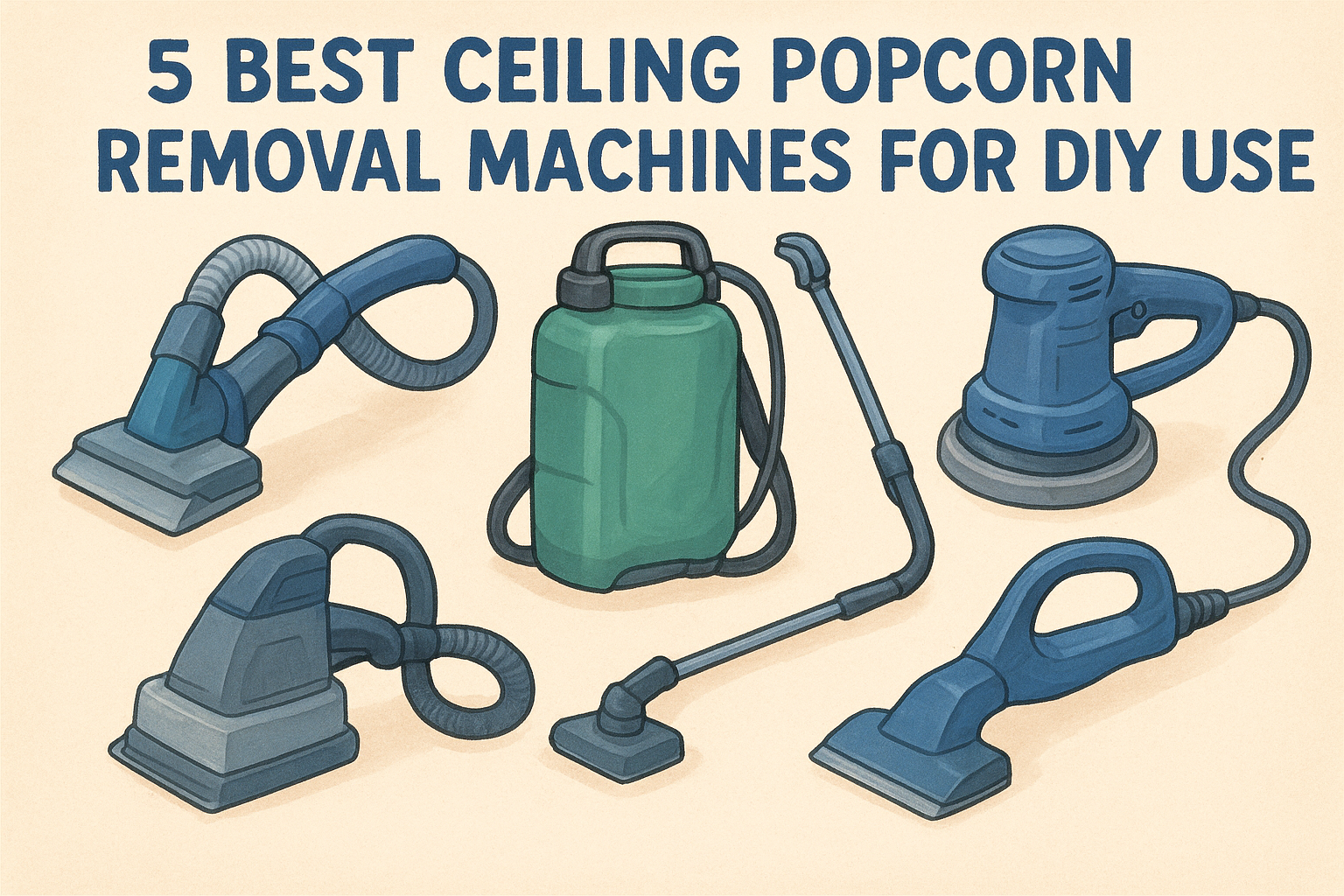
We've put together seven machines worth buying or renting, from budget hand sanders to full vacuum-powered systems contractors use daily, and you can also compare our shorter shortlist of DIY-friendly popcorn removal machines. Each entry covers cost, speed, and how much dust control you actually get, whether you're chasing a popcorn ceiling removal power tool for a one-time project or a rental that gets the whole house done in a weekend. If your ceiling turns out to have asbestos-containing texture, skip the tools altogether and call a licensed abatement crew instead.
1. Super Shooters professional popcorn ceiling removal service
Before you buy or rent anything, consider the option that skips the tool shopping altogether. Super Shooters Acoustic Removal & Drywall has spent over 30 years handling acoustic ceiling removal across the Sacramento Valley, and their crews bring commercial-grade vacuum sanders, containment plastic, and asbestos testing kits to every job. This isn't a machine you can order online, it's a full popcorn ceiling removal service that handles the texture, the dust, and the disposal in one visit.
How it works
A technician starts with a free in-home consultation to inspect the ceiling and pull a texture sample if the home was built before 1990, since whether a popcorn ceiling contains asbestos usually comes down to build date, and no consumer sander should ever touch that material. If the sample comes back clean, the crew seals off the room, runs commercial vacuum-attached sanders and scrapers to strip the texture, and finishes with a fresh skim coat for a flat ceiling after popcorn removal or a texture match. If asbestos turns up, the same company handles licensed asbestos ceiling abatement in Sacramento, so you're not stuck finding a second contractor mid-project.
Skipping the machine and hiring a licensed crew is often the cheapest way to avoid a five-figure asbestos mistake.
Here's a quick rundown of what a typical service visit includes:
- Free on-site inspection and asbestos sample testing
- Room containment with plastic sheeting set up the right way and negative air pressure where needed
- Commercial vacuum sanding or wet scraping, depending on ceiling condition
- Skim coating, texture matching, or smooth-ceiling refinishing
- Full debris haul-away and cleanup
- Super Shield warranty included on the finished work
Who it's best for
This route makes sense for homeowners with older homes where asbestos is a real possibility, for anyone tackling more than one or two rooms, and for people who'd rather not spend a weekend breathing gypsum dust through a respirator. It's also the right call if your ceiling has water stains, cracking, or uneven texture that a rented sander won't fix on its own. Sacramento, Roseville ceiling texture removal customers, Folsom, Elk Grove, and Auburn homeowners make up a big share of the client base, and many jobs come from referrals after a neighbor's ceiling got done first.
Cost to buy or rent
There's no purchase or rental fee here since you're paying for labor and materials, not equipment. Super Shooters takes free estimate requests with no upfront payment required, and you only pay once the work is finished and you're satisfied. Pricing depends on square footage, whether asbestos abatement is involved, and what finish you want afterward, and it helps to see how removal prices break down by the square foot, but a straightforward popcorn removal and re-texture on a standard-size room typically lands well below what a rented commercial sander plus a full weekend of your own labor would cost once you factor in your time. For an exact number, request a quote through the Super Shooters website rather than guessing off a per-square-foot average, since local pricing varies by ceiling condition and access.
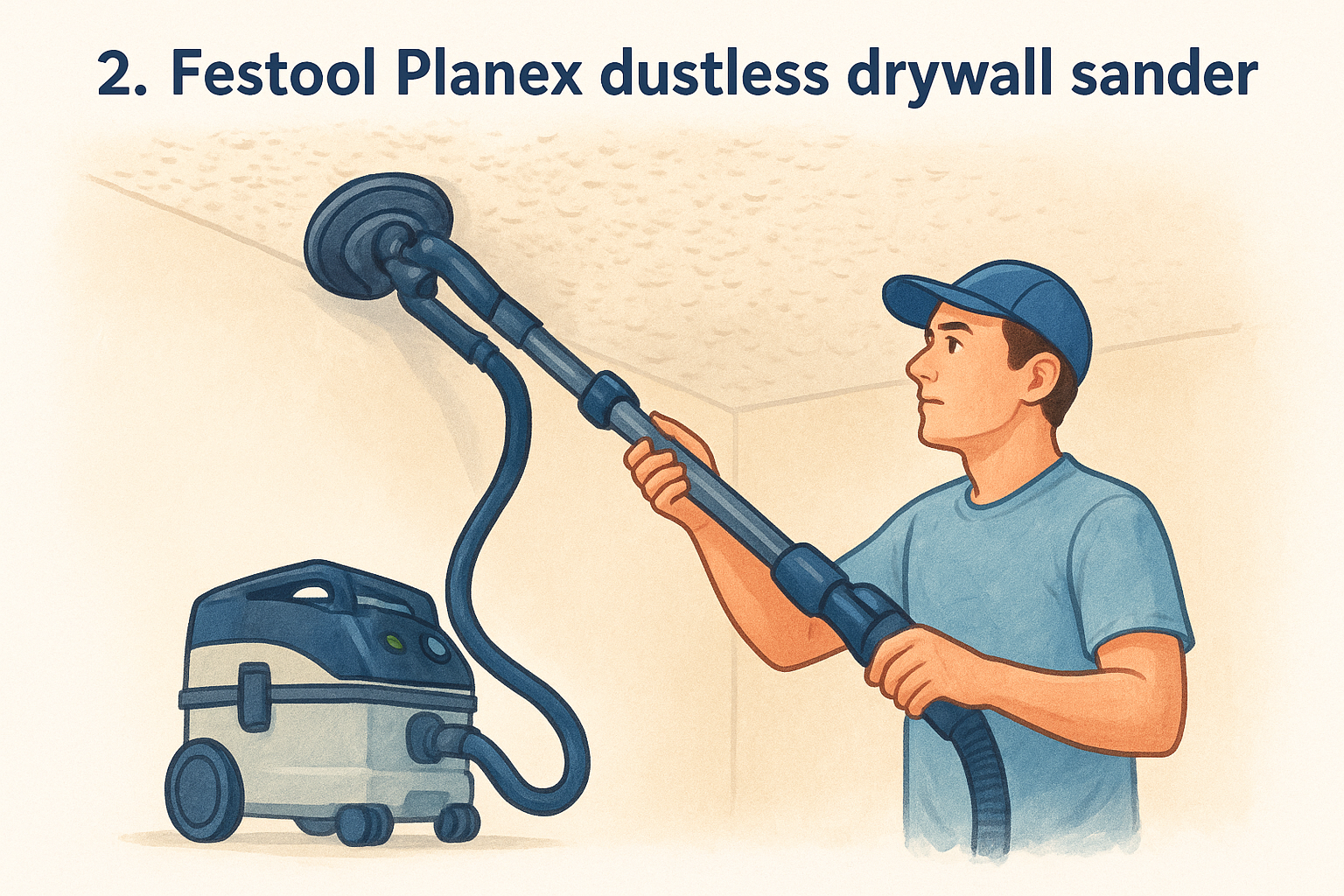
2. Festool Planex dustless drywall sander
Once you move past hiring a crew and start comparing actual equipment, the Festool Planex sits at the top of nearly every contractor's list. This machine pairs a rotating sanding head with a HEPA-rated dust extractor, and it's the closest thing to a professional-grade popcorn ceiling removal power tool you can buy without a contractor's license. Painters and drywall finishers use it because it strips texture and levels drywall mud in the same pass, cutting the two-step process most DIYers stumble through into one.
How it works
Suction pulls debris straight into a dust extractor the moment the abrasive pad touches the ceiling, so almost nothing hits the floor. The head self-adjusts to slight ceiling waves, keeping constant contact without you having to fight the tool. Variable speed settings let you dial back power for delicate texture and crank it up for thicker acoustic coats.
A machine that captures dust at the source beats one you clean up after every single time.
Who it's best for
Experienced DIYers who've already used a random orbital sander and want a step up will get the most out of the Planex. It also suits anyone tackling multiple rooms, since the learning curve pays off fast once you're past the first ceiling. It's overkill for a single small closet ceiling, but for a whole house, the time saved is real.
Cost to buy or rent
Buying a Planex kit with the extractor typically runs $1,300 to $1,600, which only makes sense if you'll reuse it on future projects. Rental yards that carry Festool gear charge roughly $80 to $120 per day, a better fit for a one-time job. Either way, budget for replacement abrasive discs, since a full ceiling chews through several before you're done.
3. VEVOR electric drywall sander with vacuum collection
Drop down a tier in price and you land on VEVOR, a brand that's built a following among weekend renovators who want vacuum sanding without paying professional-tool prices. This electric drywall sander pairs a variable-speed head with a shop-vac hookup, and it's become one of the more common searches for anyone comparing a drywall sander for popcorn ceiling removal on a tight budget. It won't match a Festool for build quality, but for a single ceiling or two, it gets the job done.
How it works
A long aluminum shaft holds a round sanding pad ringed with small vacuum ports that connect to a standard shop vac hose, the same setup behind dust-free vacuum removal of popcorn texture. LED lights around the pad edge help you see texture buildup in real time, which matters more than it sounds like on a ceiling where lighting is always working against you. Speed dials go up to around 1,000-1,500 RPM, and the pad tilts slightly to follow minor ceiling waves.
A budget sander with real vacuum suction still beats any dry-scraping method for keeping dust out of your lungs.
Who it's best for
This machine suits homeowners doing one or two rooms who don't want to spend Festool money on a tool they'll use once. It's a solid match for anyone comfortable troubleshooting equipment quirks, since VEVOR gear sometimes needs a firmer hand to keep the pad flush against the ceiling. Skip it if you're covering more than a few hundred square feet, since the motor and pad wear faster than commercial units under heavy use.
Cost to buy or rent
A VEVOR sander kit typically runs $150 to $250 online, well below any commercial-grade option, though you'll need your own shop vac if you don't already own one. Rental availability is spotty since most rental yards stock name-brand tools instead, so buying outright is usually your only path here. Factor in a shop vac purchase around $80 to $150 if you're starting from zero, plus sanding discs that run a few dollars each.
4. Harbor Freight Bauer vacuum drywall sander
Harbor Freight's Bauer line has become the go-to answer for anyone searching for a popcorn ceiling removal machine without spending contractor money. This corded drywall sander comes bundled with a dedicated dust collection hose designed to run straight into Harbor Freight's own shop vacs, and it's built heavier than most sub-$300 sanders on the market. Contractors on tight budgets and serious DIYers both end up here because the price-to-performance ratio is hard to beat.
How it works
Bauer's sander uses a 6-inch round pad with a built-in dust shroud that seals against the ceiling as you work, pulling debris through a 9-foot hose into a connected vacuum. A variable-speed dial lets you control RPM based on how thick the texture is, and the pad's swivel head follows minor dips in the ceiling without much fighting on your part. Extension length runs about 4 feet, enough for standard 8 or 9-foot ceilings without a ladder for most of the pass.
Matching a mid-range sander to a heavy-duty vacuum gets you 90% of the performance of a premium tool for a fraction of the cost.
Who it's best for
Budget-conscious homeowners tackling a full house of popcorn ceilings, not just one room, get the best return here. It's also a strong pick for anyone who already owns or plans to buy a Harbor Freight shop vac, since the hose fittings match without adapters. Skip it if you need a lightweight tool for tight closets or angled ceilings, since the pad and shroud are bulkier than pole sanders built for tricky spots.
Cost to buy or rent
The Bauer sander itself runs roughly $130 to $170 depending on current sales, and Harbor Freight frequently discounts it with coupon codes. Add a compatible Bauer or Vacmaster shop vac at $100 to $150 if you don't own one. Harbor Freight doesn't rent tools, so buying is your only option, though the price is low enough that resale after the project often recoups a chunk of the cost.
5. Extendable pole sander for high and vaulted ceilings
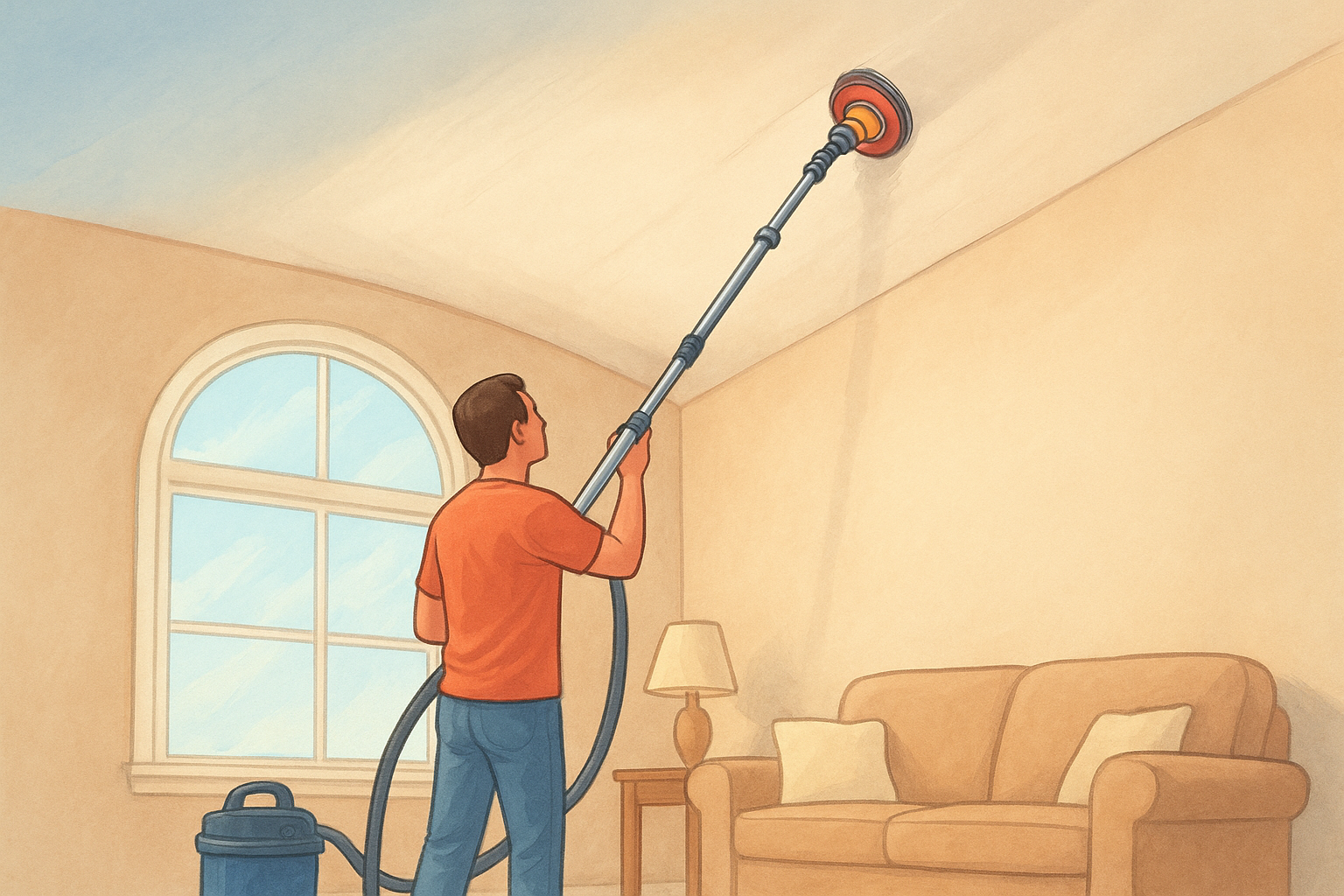
Vaulted living rooms and stairwell ceilings create a problem none of the machines above solve well: reach. A pole sander solves that by putting a sanding head on the end of an adjustable aluminum shaft, so you can strip texture 12 to 20 feet up without setting foot on a ladder. Brands like Full Circle International and Marshalltown dominate this category, and most models attach to a standard vacuum hose the same way a handheld sander does.
How it works
Extension poles telescope from about 4 feet up to 12 or more, with a swivel joint connecting the pad to the shaft so you can angle it flush against sloped or vaulted surfaces. A vacuum attachment port on the pad head pulls debris down through a hose that runs alongside the pole to a shop vac on the floor. You control the sanding motion with your arms instead of your whole body climbing up and down, which changes the physical demand of the job entirely.
Reaching a 20-foot vaulted ceiling from the floor beats climbing scaffolding every single time.
Who it's best for
Homeowners with cathedral ceilings, stairwells, or two-story great rooms need this tool more than they need a bigger sanding pad. It also suits anyone who's uncomfortable on ladders, since the whole point is staying grounded while the pole does the reaching. Skip it for flat, standard-height ceilings, since the extra length just gets in your way there.
Cost to buy or rent
A quality pole sander with a vacuum-ready head runs $60 to $150 depending on extension length and pad size. Rental yards rarely stock these separately, so most people buy one outright, especially since the pole doubles as a paint roller extension later. Add a shop vac if you don't already have one, and expect the pole itself to outlast several sanding pads over a full project.
6. Cordless handheld sander for edges and corners
No pole sander or vacuum rig gets into a corner where two walls meet the ceiling, and that's exactly where a cordless handheld sander earns its spot on this list. These compact tools skip the hose and shroud entirely, trading dust collection for maneuverability in the tight spots every popcorn ceiling job leaves behind. Ryobi, Black+Decker, and DeWalt all make versions built around a small round or triangular pad that fits where a full-size sander can't.
How it works
Battery power means no cord to snag on ladders or drag through wet debris, and most models run 20 to 60 minutes per charge, plenty for edge work on a standard room. A small triangular or detail pad reaches into corners, around light fixtures, and along crown molding where a 6-inch shroud would just gouge the wall. Some versions include a tiny built-in dust bag, but most rely on you working slower and vacuuming as you go instead of true suction collection.
Edge work is where every big sander fails, so a small cordless tool finishes the job the big machine started.
Who it's best for
This tool suits anyone who already rented or bought a larger sander for the open ceiling area and needs a second tool for the last 10 percent. It's also useful for small standalone jobs like a closet ceiling or a single patched section where hauling out a full vacuum rig isn't worth the setup. Skip it as your only tool for a full ceiling, since dust control is weak and the small pad makes flat-area work painfully slow.
Cost to buy or rent
A cordless detail sander typically costs $40 to $90, cheap enough that most people just buy one instead of hunting for a rental. Rental yards rarely stock these separately since they're priced close to a daily rental fee anyway. Budget a few extra sanding pads, since detail work on textured ceilings wears through them faster than flat drywall sanding does.
7. Pump sprayer and scraper kit for wet scraping
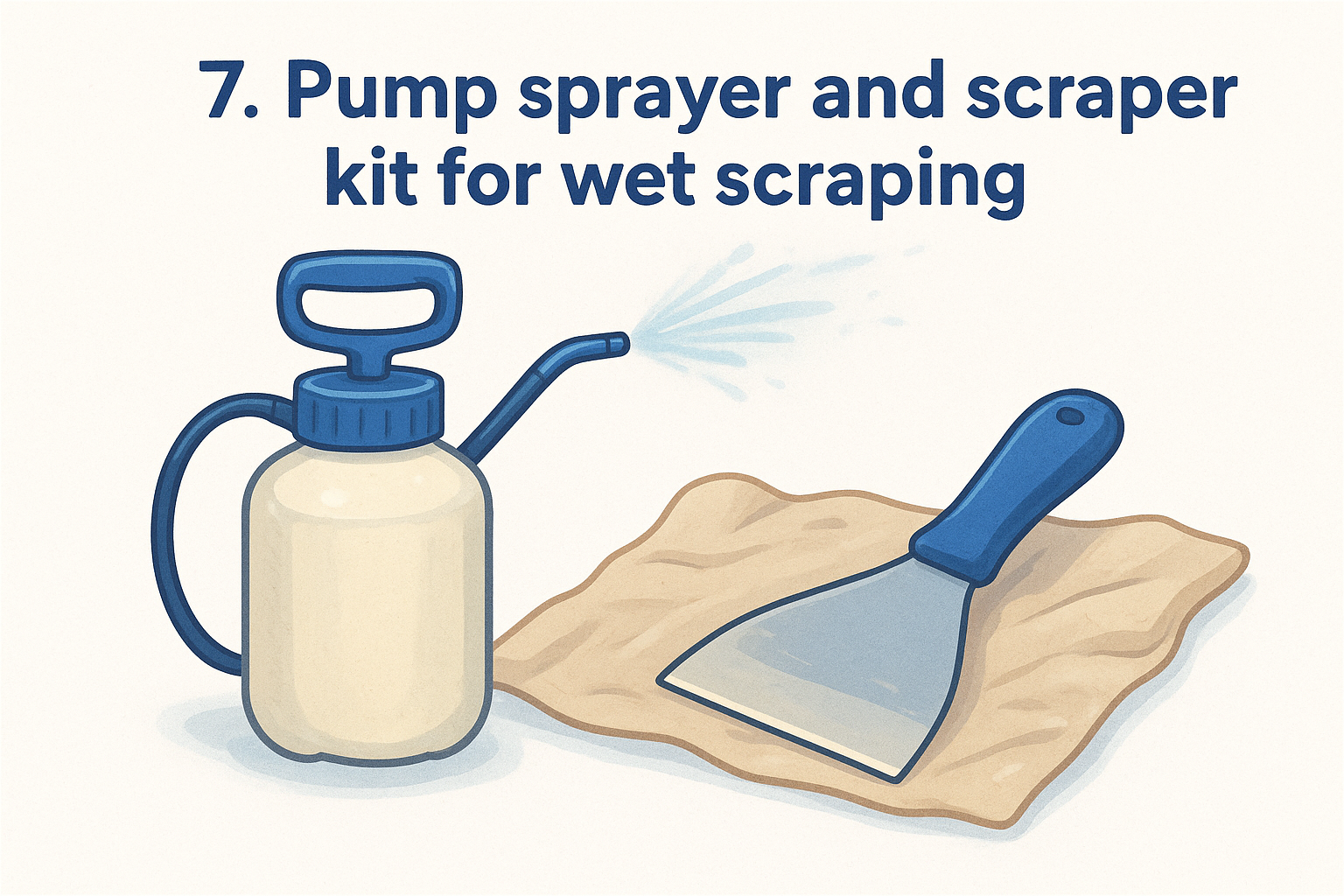
Sometimes the fastest ceiling isn't the one you sand at all. A pump sprayer and scraper kit softens popcorn texture with water instead of grinding it off with abrasive pads, and it's the closest thing to a zero-dust option on this list. This method skips the vacuum hose entirely, trading sanding equipment for a garden sprayer, a wide putty knife, and patience. It's the oldest trick in the popcorn removal playbook, and it still works when the texture isn't painted over.
How it works
You fill a handheld or backyard pump sprayer with warm water, sometimes with a splash of dish soap to help it soak in, and mist small sections of ceiling until the texture darkens and softens. Wait five to ten minutes, then drag a wide flexible scraper across the wet section, and the softened popcorn peels off in sheets instead of clouds of dust. Working in small three-by-three-foot patches keeps the water from drying out before you get to it, and drop cloths below catch the wet debris as it falls.
Wet scraping trades sanding dust for a soggy floor, and for most homeowners that's the better trade.
Who it's best for
Homeowners with unpainted popcorn texture and a tolerance for a slower, messier process get the best results here. It also suits anyone without a shop vac or the budget for a sander, since the whole kit costs less than a single sanding disc set. Skip this method if your ceiling has been painted, since paint seals the texture and blocks water from softening it, leaving you scraping dry material anyway.
Cost to buy or rent
A pump sprayer runs $15 to $30, and a wide drywall scraper adds another $10 to $20, putting the whole kit under $50 in most cases. Nothing here needs renting since the tools are cheap enough to just own, and they're reusable for future patch jobs. Add drop cloths and a few extra scraper blades, and you're covered for a full ceiling.
Which option fits your ceiling project?
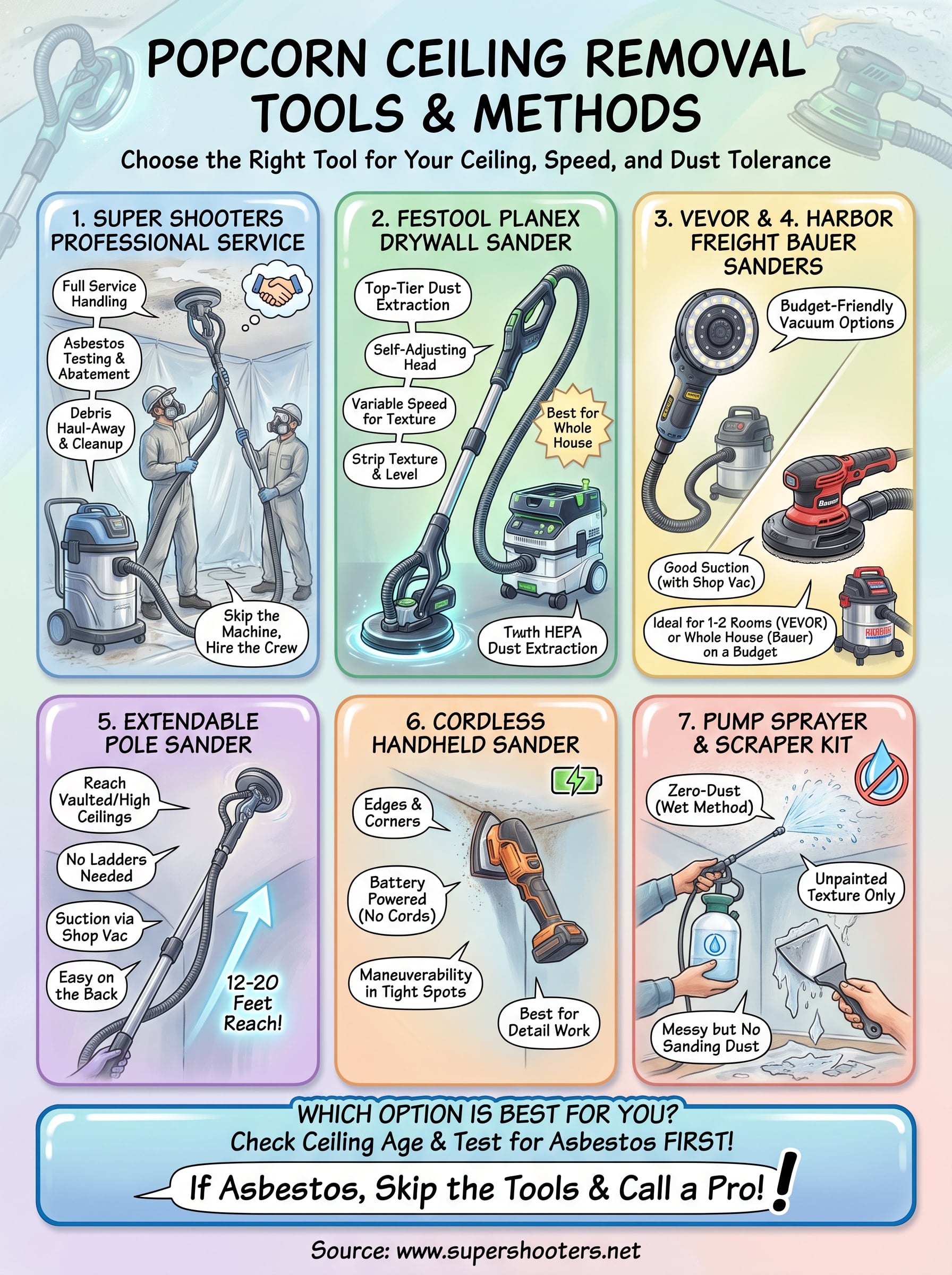
Match the tool to the job, not the other way around. A single small room with unpainted texture favors the wet scraping kit , a whole house with flat ceilings justifies a Bauer or Festool sander, and vaulted rooms need a pole. But before you buy anything, figure out your ceiling's age. Homes built before 1990 carry real asbestos risk, so learn how to pull a texture sample for asbestos testing first, because no amount of vacuum suction makes a sander safe to run through contaminated texture. That single unknown is why so many homeowners who start out comparing a popcorn ceiling removal machine end up calling a licensed crew instead, once they realize testing and abatement aren't optional if the sample comes back positive.
If you'd rather skip the equipment shopping altogether, or you just want a professional to confirm your ceiling is safe to touch, get a free quote on professional popcorn ceiling removal before you spend a dollar on tools.
Recent Posts