Share this article

May 3, 2026

Does Popcorn Ceiling Contain Asbestos? Dates & Testing Guide

If you own a home built before 1990, you've probably asked yourself: does popcorn ceiling contain asbestos ? It's a fair question, and one worth answering before you grab a scraper and start a weekend project. Asbestos was a common ingredient in textured ceiling products for decades, and disturbing it without knowing what you're dealing with can create serious health risks for you and your family.

At Super Shooters, we've removed popcorn ceilings from over 10,000 homes across the Sacramento Valley, including plenty that tested positive for asbestos. With more than 30 years of hands-on experience, we know exactly what homeowners face when they look up at that outdated texture and wonder what's hiding in it. Asbestos-containing ceilings require specific handling , and understanding your situation before taking action is the smartest first step.

This guide breaks down the key dates that determine your risk level, explains how asbestos testing works, and walks you through what to do if your popcorn ceiling tests positive . Whether you're planning a renovation or just want peace of mind, you'll leave with clear, practical answers to make an informed decision about your ceiling.

Why popcorn ceilings may contain asbestos

Popcorn ceilings became a standard interior finish in American homes from the 1950s through the late 1980s. Manufacturers added asbestos to the spray-on texture mix because it was inexpensive, durable, and fire-resistant. The result was a product that covered ceiling imperfections quickly, reduced room noise, and held up well over time, which made it a routine choice for builders working on both new construction and renovations across the country.

The appeal of asbestos in building materials

Asbestos is a naturally occurring mineral that appeared in dozens of building products throughout the mid-20th century. Its heat-resistant and fibrous structure made it ideal for insulation, floor tiles, roofing materials, and ceiling texture. For popcorn ceilings specifically, asbestos helped the spray-on mix bond well to the surface and resist cracking over time. Manufacturers valued these properties enough that asbestos appeared in nearly every major brand of ceiling texture sold before regulation stepped in, making widespread exposure across American homes virtually inevitable.

Asbestos was not added carelessly - it was deliberately chosen for its performance characteristics, which is exactly why it ended up in so many homes built during that era.

When the industry shifted away from asbestos

The EPA began restricting asbestos use in the 1970s after research directly linked airborne asbestos fibers to serious lung diseases, including mesothelioma and asbestosis. Manufacturers phased out asbestos in ceiling texture products by around 1978 , but stockpiled inventory continued to be sold and applied into the mid-1980s.

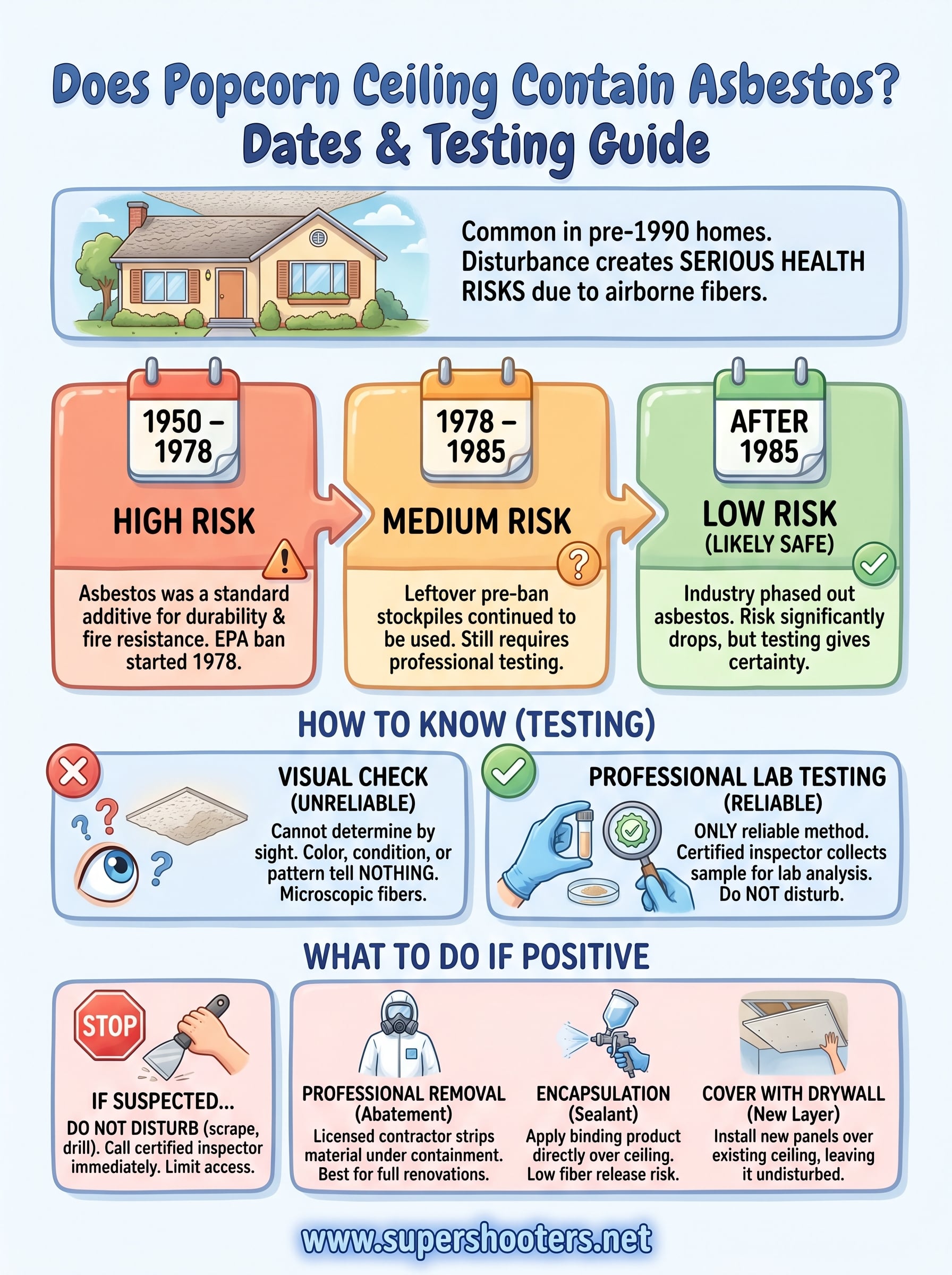
If you are asking whether does popcorn ceiling contain asbestos in your home, the answer depends heavily on when the ceiling was originally installed . Homes built or renovated between 1950 and 1985 carry a significantly elevated risk, and that window covers millions of properties across the Sacramento Valley and beyond.

What years and homes have the highest risk

The single most useful factor in determining whether does popcorn ceiling contain asbestos in your home is the original construction date . Homes built between 1950 and 1985 sit squarely in the danger zone, and the closer your home falls to the middle of that range, the higher your odds of having asbestos-containing texture overhead.

Homes built before 1978

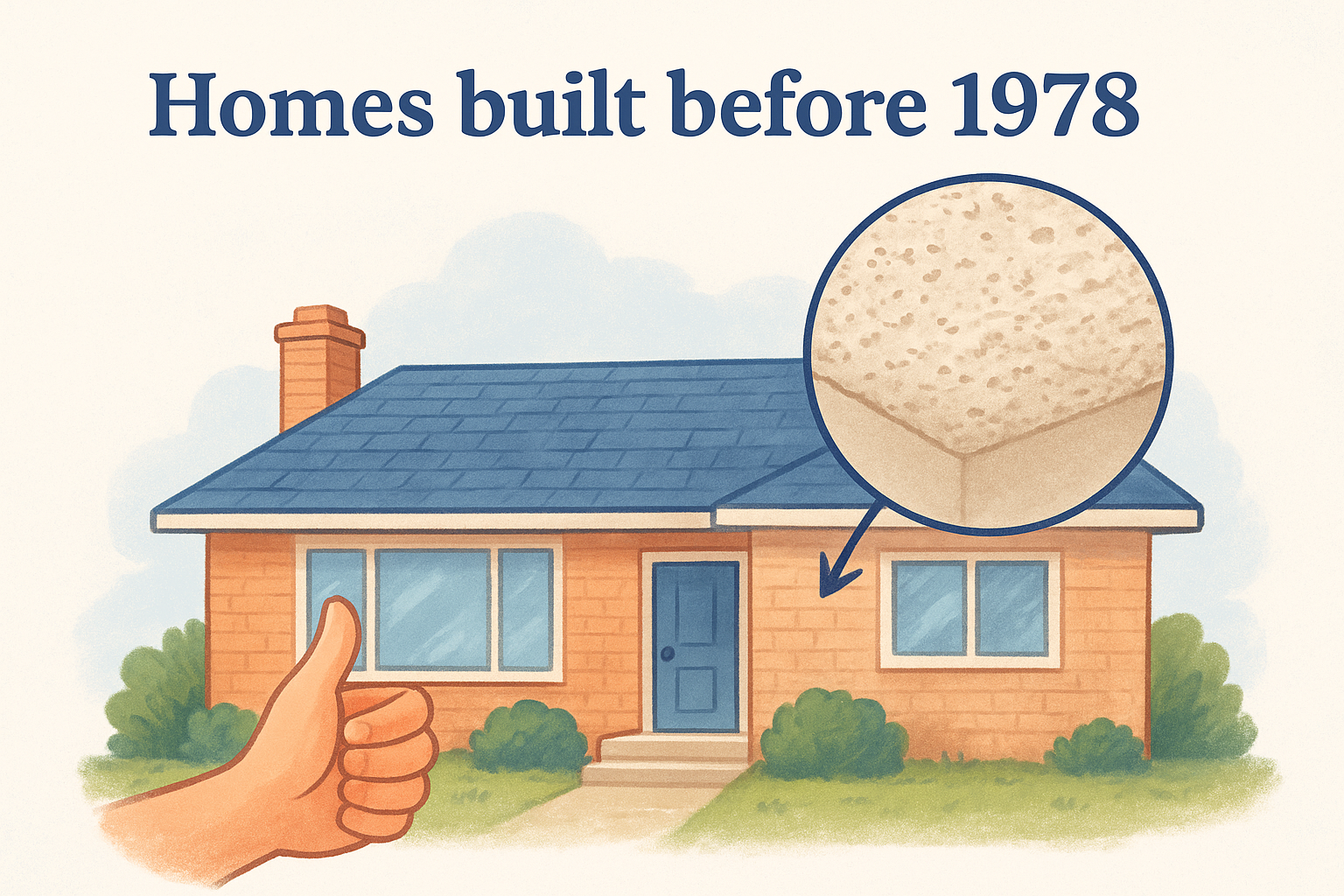
If your home was built or last renovated before 1978 , you face the highest risk. The EPA's restrictions took effect that year, which pushed most manufacturers to reformulate their products. However, existing inventory stayed on store shelves and in contractor warehouses , meaning application continued well after the regulation passed.

Treat any ceiling in a pre-1978 home as asbestos-containing until a certified test proves otherwise.

A few factors push your risk even higher within this window:

  • Ceilings applied in the 1950s through mid-1960s typically carried the highest asbestos concentrations
  • Homes with multiple renovation layers may have asbestos-containing texture buried beneath newer coatings

Homes built between 1978 and 1985

Your risk drops somewhat in this window, but it does not disappear. Contractors frequently used leftover pre-regulation materials purchased before the 1978 cutoff, so homes finished in the early 1980s still produce positive test results. If your home falls in this range, professional testing remains the only reliable way to know what is actually in your ceiling.

How to know if your popcorn ceiling has asbestos

You cannot determine whether does popcorn ceiling contain asbestos just by looking at it. Asbestos fibers are microscopic, and a contaminated ceiling looks completely identical to a clean one. The only reliable method is laboratory testing conducted by a certified professional who knows how to collect samples safely.

Visual inspection has limits

No visual cue confirms or rules out asbestos. Color, texture pattern, and surface condition tell you nothing about what is actually in the material. Some homeowners assume a crumbling or discolored ceiling signals contamination, but condition and composition are entirely separate issues. A fresh-looking ceiling can still test positive , and a badly deteriorated one may come back clean.

Professional asbestos testing

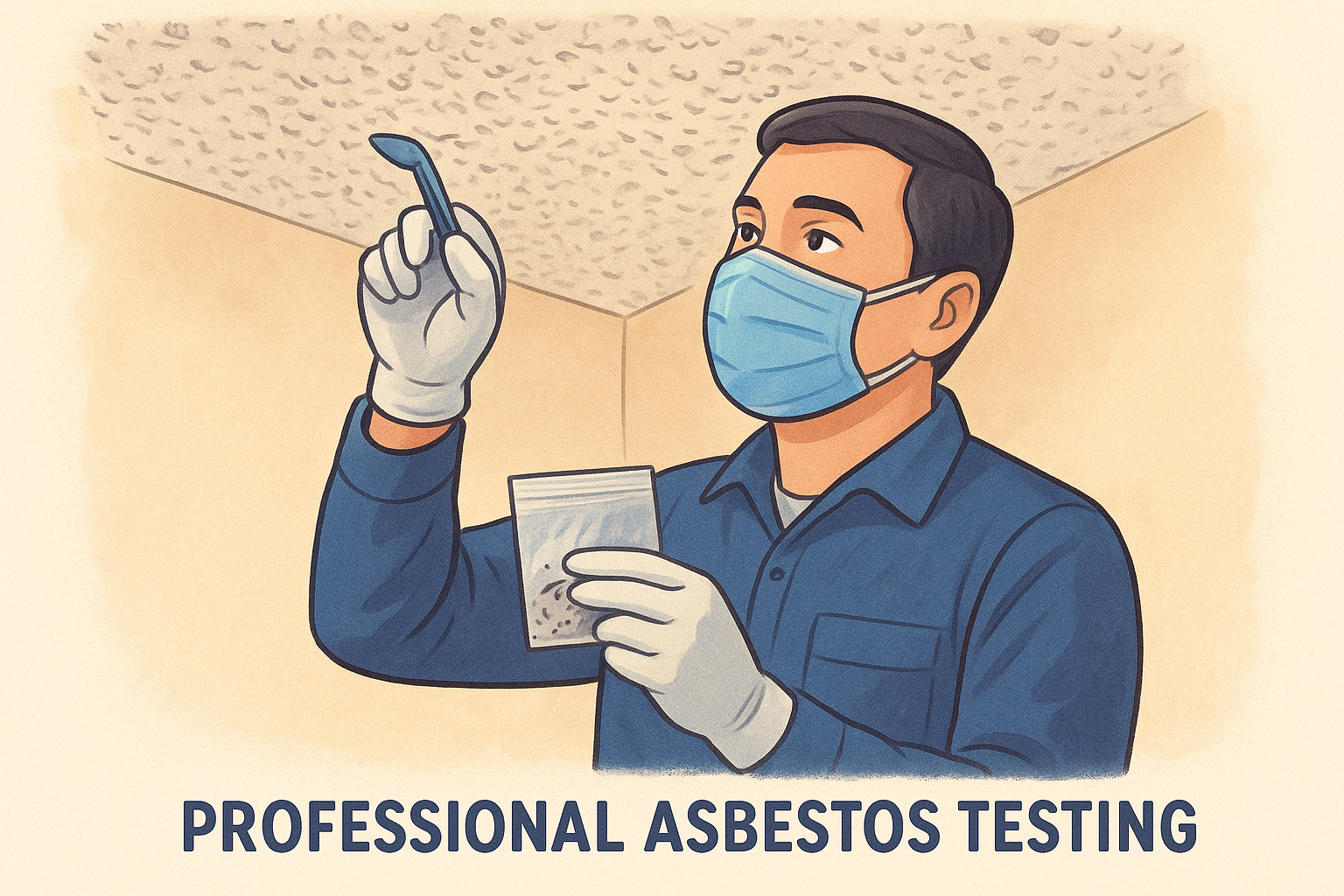
A certified inspector will collect a small physical sample from your ceiling and send it to an accredited laboratory for analysis. Results typically come back within a few business days. Hiring a licensed inspector is important because disturbing ceiling material without proper precautions can release fibers directly into the air you breathe. Most testing services cost between $200 and $500, which is a small price compared to the alternative.

Testing before any ceiling work begins is the one step that protects your family and removes all guesswork from the process.

What to do if you suspect asbestos

If you suspect your ceiling may contain asbestos, the most important rule is: do not disturb the ceiling before you have confirmed test results. Scraping, sanding, or drilling into asbestos-containing material releases microscopic fibers into the air, where they can remain suspended for hours and enter your lungs without any warning.

Stop all ceiling work immediately if your home falls within the at-risk construction date range.

Call a licensed inspector

Your first call should go to a certified asbestos inspector who can collect a sample safely and send it to an accredited laboratory. Most inspectors can schedule an assessment within a few business days, and the cost is minor compared to the health risk of guessing wrong.

When determining whether does popcorn ceiling contain asbestos in your specific home, professional lab analysis is the only answer that actually holds up . Do not attempt to collect a sample yourself, since improper handling can release the exact fibers you are trying to avoid.

Limit access to the affected area

While you wait for results, keep children and pets out of the room as much as possible. If the ceiling already shows visible crumbling or deterioration , close off the space entirely until a licensed professional assesses the situation and gives you a clear path forward.

Removal, encapsulation, or covering options

Once you confirm whether does popcorn ceiling contain asbestos in your home, you have three practical paths forward. Your choice depends on your budget, renovation plans, and the current condition of the ceiling material.

Professional removal

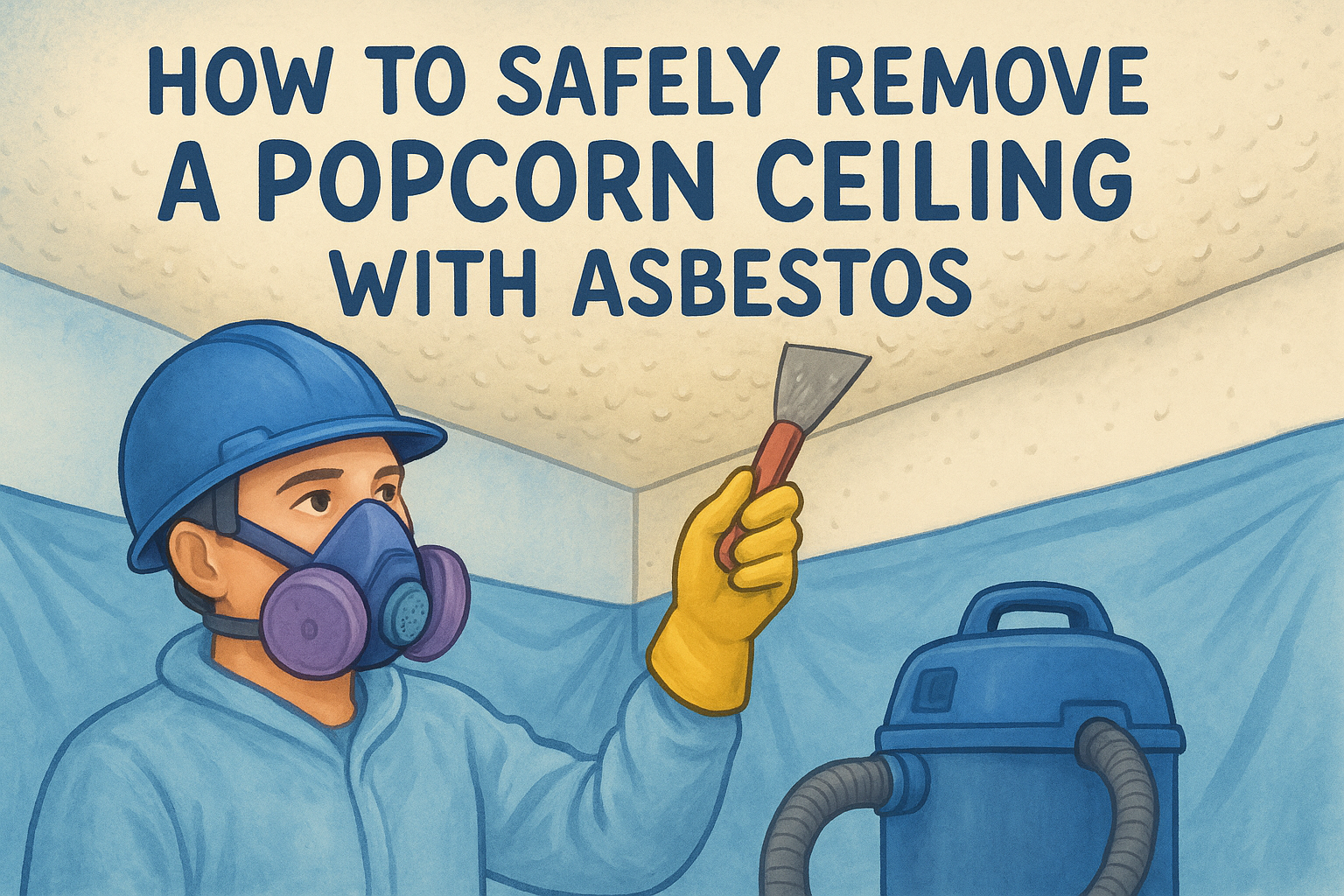
Licensed asbestos abatement contractors use sealed containment areas, negative air pressure equipment, and proper disposal procedures to physically strip the ceiling material. This option gives you a clean slate for new texture or drywall , but it carries the highest upfront cost. Removal makes the most sense if you are planning a full renovation or if the ceiling material is already deteriorating.

Removal by an unlicensed contractor is illegal in most jurisdictions and puts your household at direct risk.

Encapsulation

Encapsulation involves applying a sealant product directly over the existing ceiling to bind any loose fibers in place. It costs less than removal and does not disturb the material, which keeps fiber release risk low during the process. However, encapsulation is not appropriate if the ceiling is already crumbling or if you plan to run new electrical or plumbing through the ceiling space.

Covering with new drywall

Installing a new layer of drywall over the existing ceiling is a third option that seals the material without disturbing it. Your contractor fastens new panels directly to the ceiling joists , leaving the old texture completely undisturbed below.

Next steps for peace of mind

Now you have a clear picture of what determines whether does popcorn ceiling contain asbestos applies to your home. If your house falls within the 1950 to 1985 construction window , schedule a professional inspection before touching the ceiling. Testing costs a fraction of what improper removal can cost you in health risks, fines, and cleanup.

Once you have your test results in hand, your options are straightforward : removal, encapsulation, or covering with new drywall. Each path has a clear use case depending on your ceiling's condition and your renovation goals. The worst move is waiting and hoping the problem resolves itself, especially if the ceiling material already shows signs of wear or damage.

Super Shooters has handled asbestos-containing popcorn ceilings across the Sacramento Valley for over 30 years . If you want a free in-home estimate from a team that knows exactly what to look for, contact Super Shooters today and get the answers you need.

Recent Posts

By cinchweb May 3, 2026
Compare 10 types of interior wall finishes, including drywall, plaster, and wood. Learn the pros, cons, and costs to find the best look for your home.
By cinchweb May 3, 2026
Learn how to hang drywall on ceiling like a pro. Our guide covers joist marking, panel lift techniques, and screw patterns for a smooth, crack-free finish.
May 1, 2026
Master how to patch drywall with our step-by-step guide. Learn to fix small nail holes, medium cracks, and large damage for a seamless, professional finish.
May 1, 2026
Master how to patch drywall with our step-by-step guide. Learn to fix small nail holes, medium cracks, and large damage for a seamless, professional finish.
May 1, 2026
Decide between drywall vs plaster walls. Learn how to tell them apart, compare repair costs, and find the best solution for your home renovation project.
May 1, 2026
Don’t just patch it—fix it for good. Learn how to fix drywall cracks using pro techniques for diagnosing, taping, and texturing for a seamless finish.
April 30, 2026
Learn how to install drywall with this step-by-step guide. We cover measuring, cutting, and hanging panels on walls and ceilings for a flawless finish.
April 30, 2026
Get the 2026 ceiling drywall installation cost per square foot. See room-by-room price breakdowns and labor factors to help you budget for your next project.