May 9, 2026
Plaster Crack Repair: How To Fix Cracks In Plaster Walls
Cracks in plaster walls are one of the most common issues Sacramento Valley homeowners deal with, especially in older homes where settling, moisture, and age take their toll. Knowing how to fix cracks in plaster walls the right way saves you from repeat repairs and keeps your walls looking clean. The good news: most small to moderate cracks are a straightforward DIY fix with the right tools and technique.
That said, not every crack is cosmetic. Some signal deeper structural problems or water damage that require professional attention. At Super Shooters, we've repaired plaster walls across more than 10,000 projects over three decades in the Sacramento Valley, so we know the difference between a quick patch job and a crack that needs expert evaluation and repair .
This guide walks you through everything from identifying crack types to finishing your repair so it blends seamlessly with the surrounding wall. We'll cover the tools and materials you'll need , the step-by-step process, and when it makes sense to call in a professional instead .
Before you start: identify the crack and risks
Before you touch any tools, take a close look at the crack itself . The shape, width, depth, and location of the crack all tell you something important about what caused it and how you should approach the repair. Jumping straight into patching without this step is the fastest way to end up with the same crack reappearing in six months.
Crack types and what they tell you
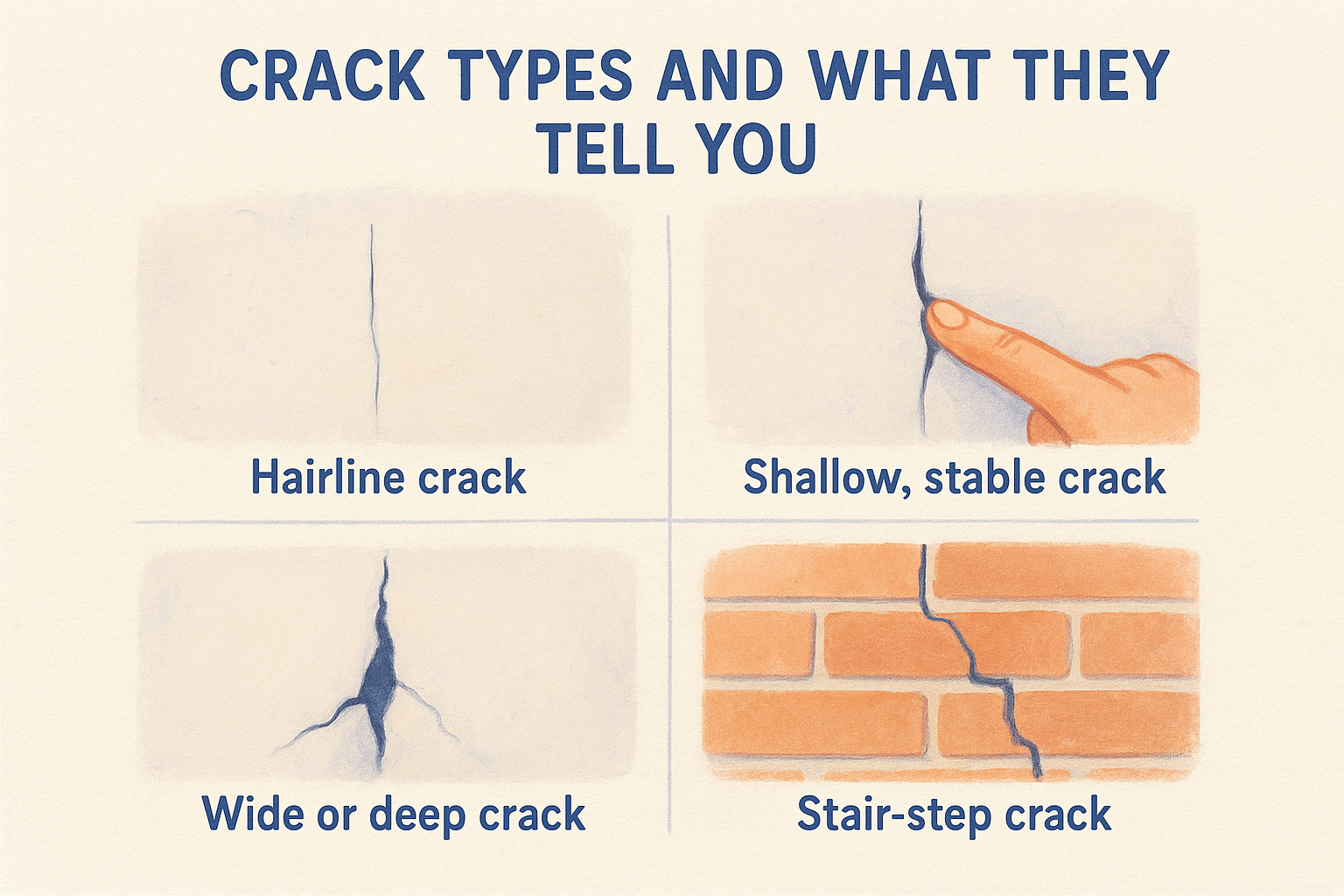
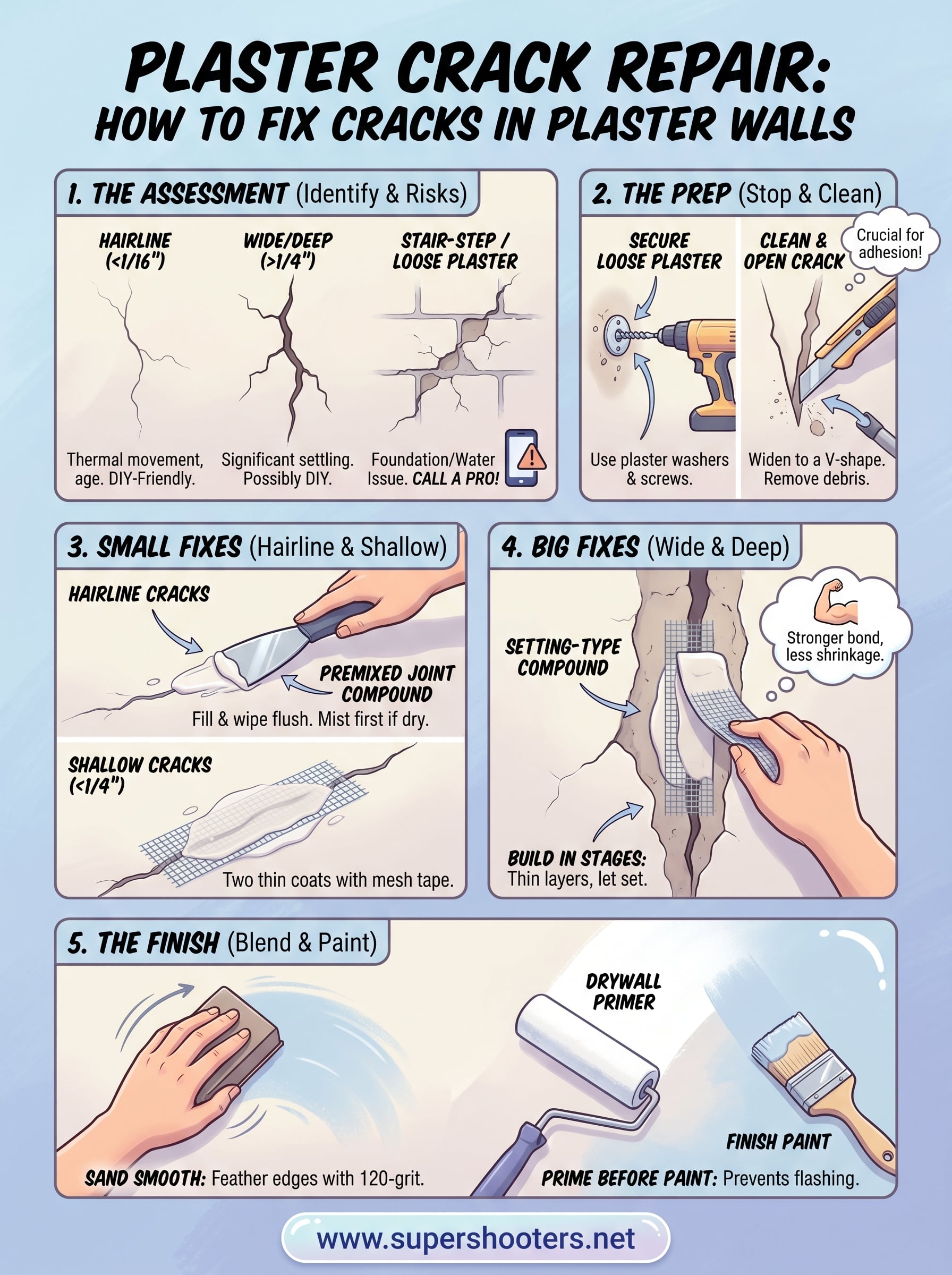
Not all plaster cracks are equal. Hairline cracks are thin surface fractures, usually less than 1/16 inch wide, and often caused by normal expansion and contraction. Wider cracks or stair-step patterns along mortar joints can point to foundation settling or structural movement. Knowing which type you have is the foundation of learning how to fix cracks in plaster walls properly.
| Crack Type | Width | Likely Cause | DIY-Friendly? |
|---|---|---|---|
| Hairline crack | Under 1/16" | Thermal movement, age | Yes |
| Shallow, stable crack | 1/16" to 1/4" | Minor settling | Yes |
| Wide or deep crack | Over 1/4" | Significant settling | Possibly |
| Stair-step crack | Varies | Foundation movement | No, get an inspection |
| Crack with soft or loose plaster | Varies | Water damage, detachment | No, get professional help |
Press gently along the crack with your finger. If the surrounding plaster feels soft, spongy, or hollow , the plaster key behind the wall has likely broken and the section may need full removal rather than a surface patch.
Know when to stop and call a professional
Some cracks fall outside safe DIY territory. If the crack is wider than 1/4 inch, runs diagonally from corners of windows or doors, or keeps coming back after patching , those are signs of active structural movement that a patch will not fix.
If you notice multiple cracks appearing across different walls at the same time, contact a licensed contractor before starting any repairs, as this pattern often signals a foundation or framing issue that needs professional assessment.
Water damage is another stop sign. Staining, bubbling, or soft plaster around a crack means moisture is involved , and the source needs to be fixed before any cosmetic repair will hold.
Step 1. Stop movement and prep the surface
Before you apply any filler, prep work determines whether your repair lasts a month or a decade . Skipping this step is the most common mistake homeowners make when learning how to fix cracks in plaster walls. Your goal here is to stabilize the surrounding plaster and give your patching material a clean, solid surface to bond to.
Secure loose plaster before anything else
If you found any soft or slightly hollow areas around the crack during your inspection, reattach them before patching . Use plaster washers and 1-5/8 inch drywall screws to pull the plaster back tight against the lath. Drive screws every four to six inches on either side of the crack until the surface feels firm. Loose plaster that isn't secured will push the patch off the wall within months, no matter how carefully you apply it.
Plaster washers spread the screw load across a wider area, which prevents the screw from pulling straight through brittle plaster.
Clean and open the crack
Use a utility knife or a can opener to widen the crack slightly into a V-shape . This gives the filler more surface area to grip and reduces the chance of the patch cracking along the same line again. Vacuum or blow out all loose debris from inside the crack. Dust and crumbling plaster left inside the void will prevent proper adhesion , so spend an extra minute cleaning before you move on to filling.
Step 2. Repair hairline and shallow plaster cracks
Hairline and shallow cracks are the most manageable repairs you'll tackle when learning how to fix cracks in plaster walls. Premixed joint compound works well for hairline cracks, while vinyl spackling paste handles slightly wider shallow cracks with enough flexibility to resist future movement.
Apply filler to hairline cracks
Load a small amount of premixed joint compound onto a 4-inch putty knife and press it firmly into the crack at a slight angle. Work the compound in both directions so you push it deep into the crack channel rather than just skimming across the surface. Wipe away excess flush with the wall , then let the compound dry completely, typically 24 hours depending on your room's humidity level.
Lightly mist the crack with a spray bottle before applying compound, since dry plaster pulls moisture out of the filler too fast and causes it to shrink or crack as it cures.
Fill shallow cracks in layers
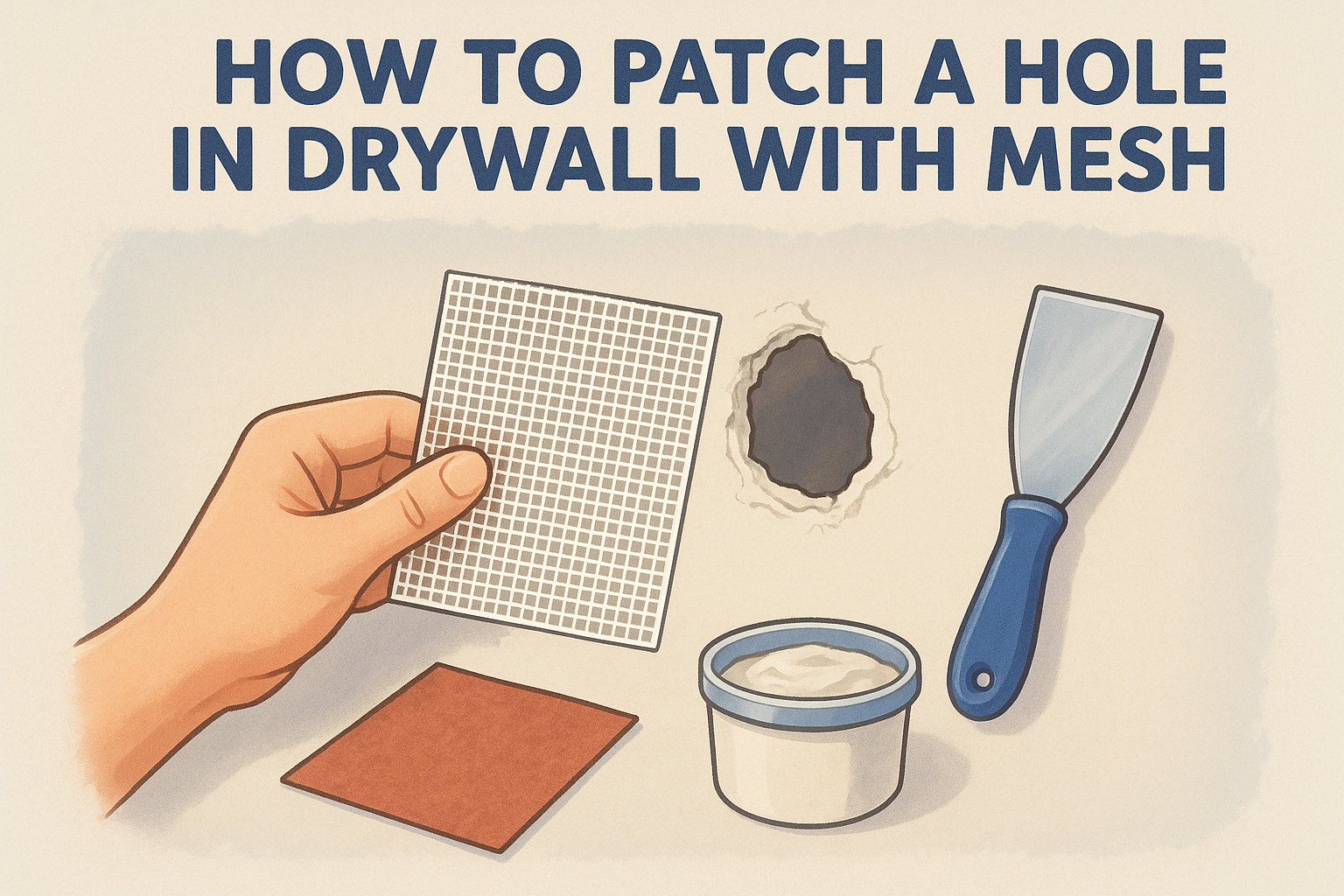
Shallow cracks between 1/16 and 1/4 inch wide need two thin coats rather than one thick application . Apply your first coat, press self-adhesive fiberglass mesh tape over the crack while the compound is still wet, then smooth a second coat over the tape using a 6-inch drywall knife . Let each coat dry fully before adding the next.
Keep each coat thin. Thick layers shrink significantly as they dry , leaving a visible depression that requires additional sanding and another coat to correct.
Step 3. Fix wide, deep, and loose plaster cracks
Wide and deep cracks need a different approach than surface-level hairline repairs . For cracks wider than 1/4 inch or any area where plaster has separated from the lath, premixed joint compound alone won't hold . You need a material with enough body to fill the void and bond to the surrounding plaster properly.
Choose the right patching material
When you're figuring out how to fix cracks in plaster walls at this level, patching plaster or a setting-type joint compound (such as Durabond 90) is the right choice. Unlike premixed compound, setting-type compound hardens through a chemical reaction rather than drying, which gives it stronger adhesion and less shrinkage in deep fills.
Always mix setting-type compound to a peanut butter consistency: thick enough to hold its shape when you press it into the void without sagging.
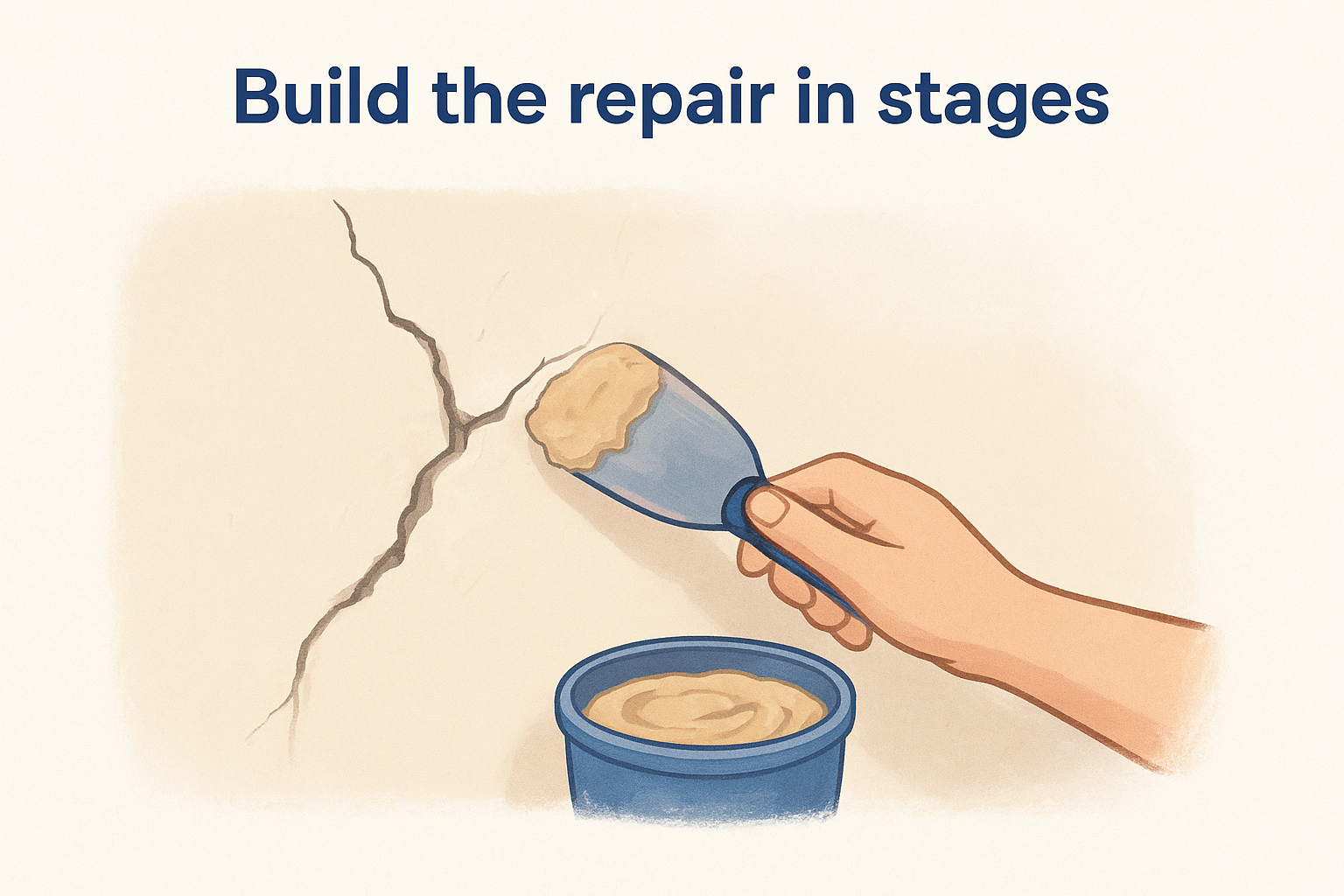
Build the repair in stages
Deep fills require multiple thin layers rather than one thick application . Apply your first coat no deeper than 1/4 inch, press fiberglass mesh tape across the crack, and let the coat set completely before adding the next. For large voids, score or scratch each layer lightly with a nail before it fully hardens to give the next coat a mechanical grip.
Repeat the process until the patch sits flush with the surrounding wall surface . Each layer needs full cure time before you add the next, so plan for the repair to take two to three days from start to finish.
Step 4. Blend the patch and paint for a match
The final step in learning how to fix cracks in plaster walls is the one most people rush, and it shows. A perfectly filled crack that looks slightly different from the surrounding wall tells the whole story of the repair. Sanding, priming, and texturing done in the right order gives you a result that disappears into the wall rather than drawing attention to it.
Sand the patch smooth
Once your final coat of compound is fully cured, use 120-grit sandpaper on a sanding block to level the patch with the surrounding wall. Work in wide, circular strokes that extend several inches beyond the patch edges. Feathering the edges outward rather than sanding only over the patch prevents a visible ridge from forming along the repair border. Wipe away all sanding dust with a damp cloth before moving on.
Do not skip the damp wipe-down after sanding: even fine dust left on the surface creates adhesion problems for the primer coat.
Prime before you paint
Apply a coat of drywall primer directly over the sanded patch before any paint goes on. Bare joint compound is porous and will absorb paint unevenly, leaving a dull spot called flashing even after multiple paint coats. Let the primer dry fully, then apply your finish paint in two thin coats , feathering each coat outward so the sheen matches the surrounding wall. If the original wall has texture, apply a light splatter or skip-trowel texture to the primed patch before painting to get a closer visual match.
You're ready to patch with confidence
You now have everything you need to know about how to fix cracks in plaster walls , from reading the crack before you touch it to matching paint and texture once the repair is done. Work through each step in order , secure loose plaster before filling, build deep repairs in thin layers, and prime before you paint. Rushing any one of those steps is what turns a one-time repair into a recurring problem.
Most cracks in residential plaster are within reach of a careful DIY repair. However, wide cracks, stair-step patterns, or soft plaster around the damaged area are signs that the problem runs deeper than the surface. When that's the case, professional assessment protects your home from further damage. If your plaster walls need more than a simple patch, the team at Super Shooters is ready to help. Get a free in-home estimate from Super Shooters and find out exactly what your walls need.