Share this article

June 25, 2026

How To Tell If Wall Cracks Are Serious: Quick Checklist

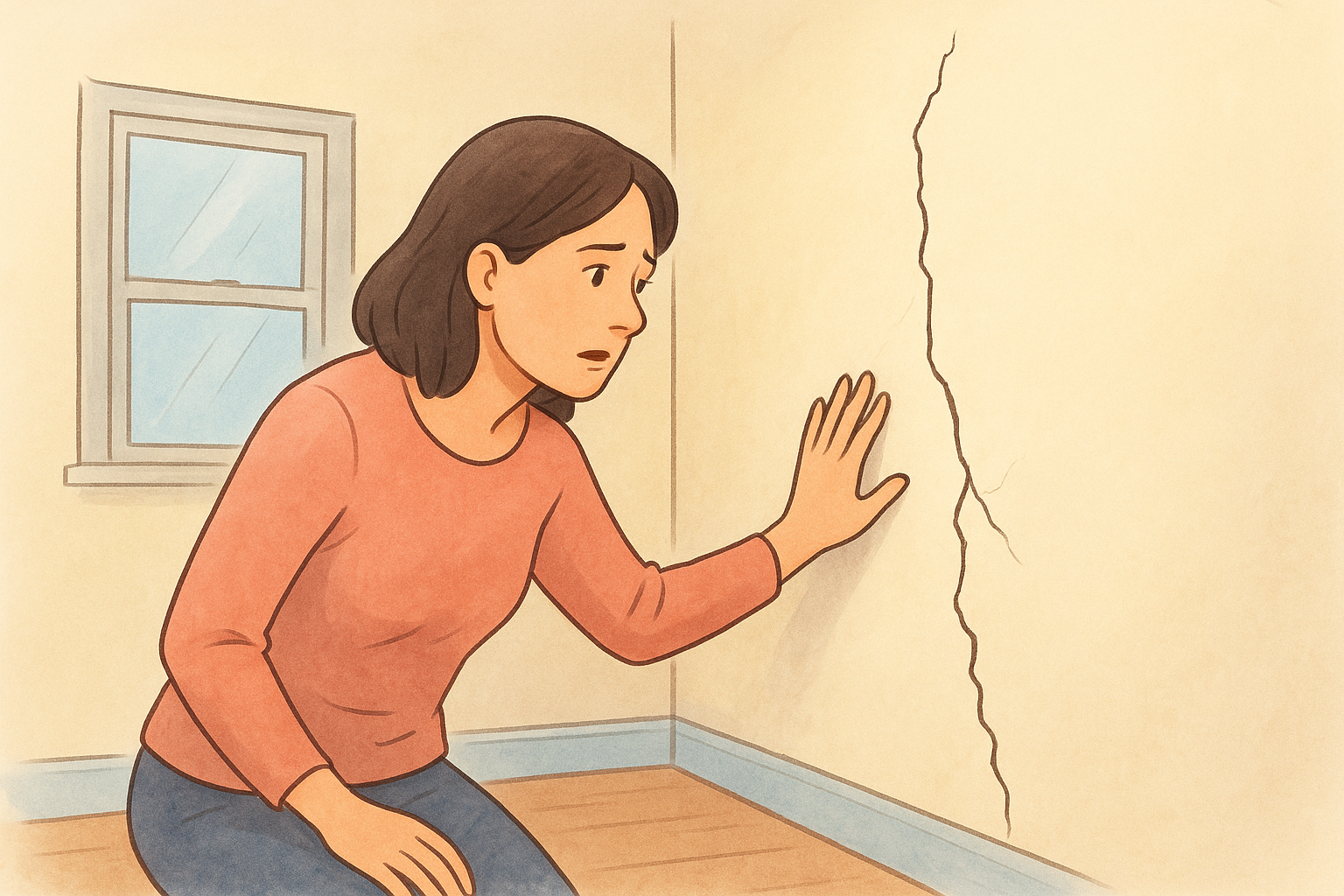
A crack shows up on your wall and your mind jumps straight to the worst case. Is the foundation failing? Is the house shifting? Before you panic, or ignore it entirely, you need to know how to tell if wall cracks are serious versus when they're just normal settling that every home goes through .

Not all cracks mean trouble. Hairline fractures near door frames are common in Sacramento Valley homes, especially older ones with original drywall. But certain patterns, like wide diagonal cracks near corners or gaps that keep growing, can point to real structural problems that need immediate attention.

At Super Shooters, we've repaired wall cracks across more than 10,000 projects over our 30+ years serving the Sacramento Valley. We've seen everything from harmless cosmetic blemishes to cracks that signaled serious foundation movement underneath. This checklist breaks down exactly what to look for , crack width, direction, location, and behavior, so you can assess your walls with confidence and figure out the right next step.

What wall cracks can tell you

Wall cracks give you direct information about what's happening inside your home's structure. Crack type, width, direction, and location all carry different meaning, and reading them together is exactly how to tell if wall cracks are serious versus normal wear. Ignoring the wrong crack or overreacting to a harmless one both cost you time and money.

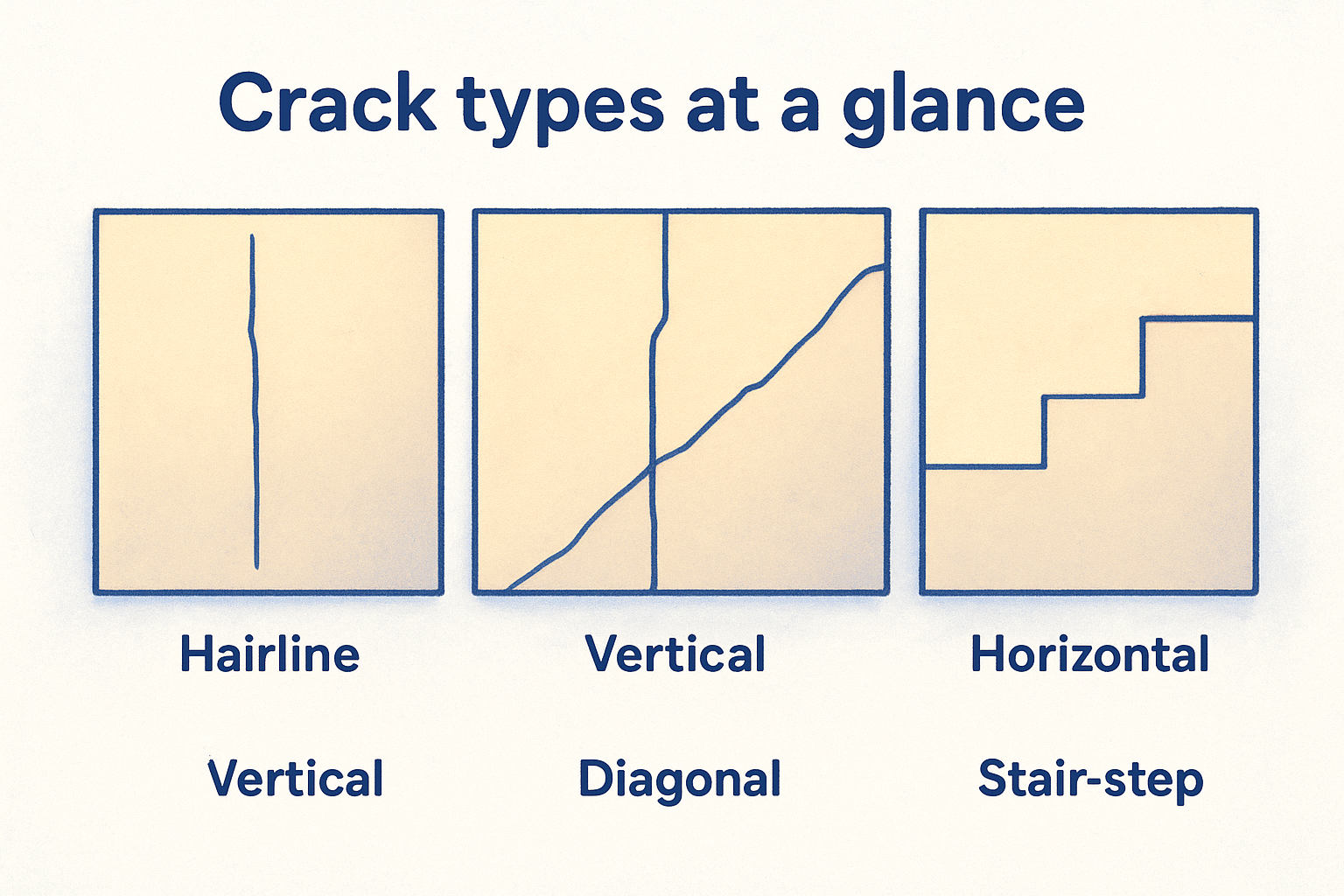
Crack types at a glance

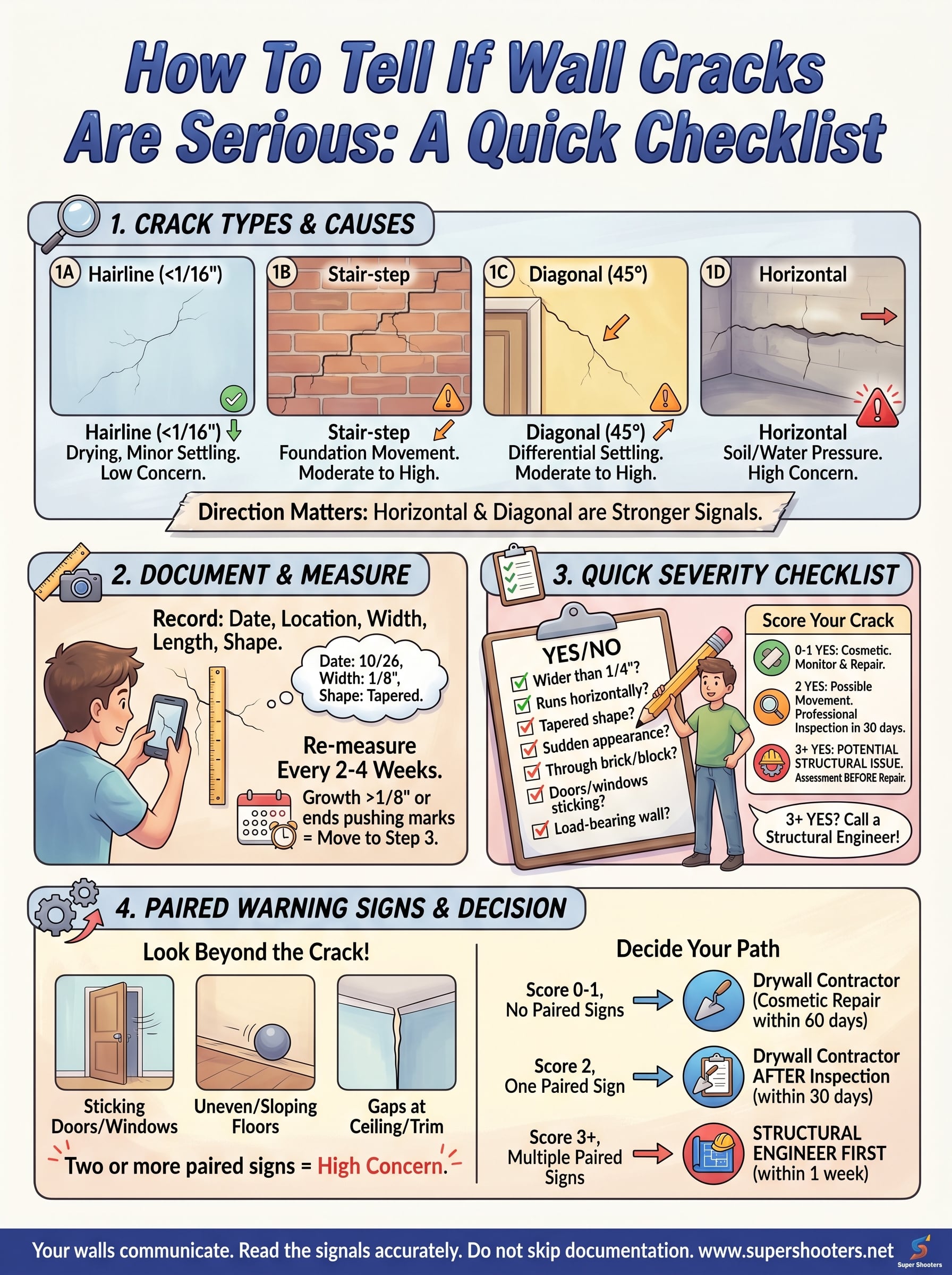
Not all cracks behave the same way. Hairline cracks are thin surface fractures under 1/16 inch wide that typically come from drywall compound or paint shrinking as it dries. They're common in Sacramento Valley homes and rarely signal a structural problem. Stair-step cracks follow mortar joints in brick or block walls and often point to foundation movement. Horizontal cracks run against the natural load path of a wall and are typically more serious than vertical ones.

If a crack is wider at one end than the other, that tapered shape usually means movement is still happening, not that it settled once and stopped.

Crack Type Appearance Common Cause Concern Level
Hairline Under 1/16" wide Drying, minor settling Low
Vertical Straight up and down Normal settlement Low to moderate
Diagonal 45-degree angle Differential settling Moderate to high
Horizontal Runs across the wall Soil or water pressure High
Stair-step Follows mortar joints Foundation movement Moderate to high

Why direction matters more than size

Most homeowners focus on crack width, but direction is actually a stronger diagnostic signal . A vertical crack running down the center of a drywall panel usually means drywall tape has failed , not that your foundation is shifting. A diagonal crack shooting from a door or window corner at roughly 45 degrees points to differential settling , where one section of the foundation has moved more than another.

Horizontal cracks need the fastest response because they often mean lateral pressure is pushing against your wall from outside the structure. Pay close attention to these direction-based warning signs:

  • Diagonal cracks radiating from door or window corners
  • Horizontal cracks in basement or garage walls
  • Multiple cracks spreading outward from a single point

Step 1. Document and measure the crack

Before you call anyone or start worrying, take five minutes to document what you're looking at . A clear record of the crack's current state gives you a baseline so you can track whether it's growing over time, which is one of the most reliable ways to know how to tell if wall cracks are serious versus a crack that settled once and stopped moving.

What to record and how

Pull out your phone and take a close-up photo with something for scale , like a coin or a ruler placed directly next to the crack. Write the date on the photo or in a note. Then measure the widest point using a standard ruler or a tape measure, and note the total length from end to end.

A crack that doubles in width over three to four weeks is actively moving and needs a professional assessment right away.

Use this simple log template each time you check the crack:

Date Location Width (widest point) Length Shape (tapered or uniform) New branching?

When to re-measure

Check the same crack every two to four weeks and update your log. Mark both ends of the crack with a small pencil line so you can see if the length is extending beyond your original marks. If the crack grows more than 1/8 inch in width or the ends push past your marks, move on to the severity checklist immediately.

Step 2. Use the quick severity checklist

Once you've documented the crack, run it through this checklist to get a quick severity score. Each question targets a specific signal that helps you determine how to tell if wall cracks are serious without needing professional training. Answer yes or no to each item, then count your yes answers at the end.

How to score each crack

Go through the checklist below for every crack you've logged. Circle or mark each "yes" answer , then use the scoring guide at the bottom to decide your next move.

  • Is the crack wider than 1/4 inch at any point?
  • Does the crack run horizontally across the wall?
  • Is the crack tapered, meaning wider at one end than the other?
  • Did the crack appear suddenly rather than gradually?
  • Does the crack pass through brick, block, or concrete rather than just drywall?
  • Are doors or windows near the crack suddenly sticking or not closing properly?
  • Is the crack located in a load-bearing wall or near a structural corner?

A score of three or more "yes" answers means you should contact a structural engineer before doing any repair work.

Use this quick reference to act on your score:

Score What It Likely Means Next Step
0-1 yes Cosmetic or minor settling Monitor and repair the surface
2 yes Possible movement worth investigating Schedule a professional inspection within 30 days
3+ yes Potential structural issue Get a structural assessment before any patching

Step 3. Check for paired warning signs

A wall crack rarely tells the full story on its own. Paired warning signs are symptoms that appear alongside cracks and, when taken together, give you a much clearer picture of how to tell if wall cracks are serious before you invest in repairs or call in help.

What to look for beyond the crack itself

Walk through the room where you found the crack and check for these specific conditions. Each one on its own might seem minor, but two or more appearing together raises the concern level significantly.

  • Doors or windows that stick, drag, or no longer latch properly
  • Floors that feel uneven or slope noticeably toward one side of the room
  • Gaps opening up between the wall and the ceiling or baseboard trim
  • Cracks appearing in multiple rooms at the same time
  • Visible bowing or bulging along the wall surface

When a crack appears alongside sticking doors and a gap at the ceiling line, you are likely dealing with active foundation movement rather than simple settling.

Log what you find together

Write down every paired sign you notice on the same date you measure the crack. Use the same log you started in Step 1, and add a column labeled "Other signs." This side-by-side record shows patterns over time and gives any contractor or structural engineer a faster, cleaner starting point for their assessment.

Step 4. Decide what to do next

Your score from the checklist and your paired warning sign log now give you enough information to act. Understanding how to tell if wall cracks are serious means moving from observation into a clear decision, not just waiting to see what happens next.

Three clear paths forward

Your next step depends directly on what you found in Steps 1 through 3. Low-scoring cracks with no paired warning signs are safe to repair at the surface level once you confirm they've stopped moving. Schedule a cosmetic repair with a drywall contractor and monitor the area for another 30 days after the patch.

If your crack scored two or more "yes" answers or came with paired warning signs, contact a structural engineer before any repair work starts.

Higher-scoring cracks need a professional structural assessment first , not just a drywall patch over the top. Patching an active crack without addressing the underlying cause will fail within months and can hide a problem that grows more expensive the longer it sits.

Use this decision table to match your findings to the right action:

Situation Who to Call Timeline
Score 0-1, no paired signs Drywall contractor Within 60 days
Score 2, one paired sign Drywall contractor after inspection Within 30 days
Score 3+, multiple paired signs Structural engineer first Within 1 week

A simple plan for peace of mind

Knowing how to tell if wall cracks are serious comes down to four concrete steps: document and measure, run the checklist, look for paired warning signs, and match your findings to the right action. Most cracks you find will score low , and a straightforward surface repair is all they need. The ones that score higher give you clear direction to bring in a structural engineer before spending money on cosmetic work that won't hold.

Your walls communicate what's happening inside your home, and now you have a system to read those signals accurately. Do not skip the documentation step , because a written record with dates and measurements is the single most useful thing you can hand to any professional you bring in. If your assessment points to drywall repair as the next step, Super Shooters has completed over 10,000 projects across the Sacramento Valley. Schedule your free estimate through our drywall repair and patching service and get the work done right.

Recent Posts

By cinchweb June 23, 2026
Learn how to get a smooth ceiling after popcorn removal. Our step-by-step guide covers skim coating, sanding, and priming for a professional, flat finish.
By cinchweb June 22, 2026
Learn how long does drywall repair take for projects of any size. We break down timelines by patch size, material choice, and drying steps for your home.
By cinchweb June 20, 2026
Learn how long does drywall patch take to dry before you paint. We cover drying times for various compounds and expert tips to finish your repair faster.
By cinchweb June 19, 2026
Spot leaks before they spread. Learn how to tell if drywall has water damage by identifying signs like mold, stains, and sagging to protect your home.
By cinchweb June 18, 2026
Estimate your 2026 project budget. Learn the garage drywall installation cost per square foot for labor, materials, and fire-rated panel options.
By cinchweb June 18, 2026
Find the 2026 popcorn ceiling replacement cost per square foot. See Sacramento labor rates, asbestos abatement fees, and pricing for premium finishes.
By cinchweb June 16, 2026
Compare 9 options for a wall crack repair service near me. Learn to spot structural damage and what questions to ask before you hire a professional.
By cinchweb June 15, 2026
Stop recurring damage. Learn how to prevent ceiling cracks by addressing framing stress, using reinforced patching, and controlling indoor humidity.
By cinchweb June 14, 2026
Learn how to repair walls after wallpaper removal. Follow these steps to clean adhesive, seal torn paper, and skim coat for a professional finish.
Show More