
Share this article

May 12, 2026

What To Do After Popcorn Ceiling Removal: Next Steps

You scraped off the popcorn texture, and now you're staring up at a ceiling that looks worse than before, rough, uneven, maybe gouged in a few spots. If you're wondering what to do after popcorn ceiling removal , you're at the point where the real work starts. The scraping was just step one. What comes next, sanding, skim coating, priming, painting, is what actually determines whether your ceiling ends up looking smooth and professional or patchy and amateur .

At Super Shooters, we've removed popcorn ceilings on over 10,000 homes across the Sacramento Valley in our 30+ years of business. We've seen every scenario: ceilings with multiple layers of paint underneath, surfaces riddled with nail pops, and drywall so scarred from scraping it needs serious repair before anything else can happen. That hands-on experience is exactly why we put this guide together, so you know what each step involves and can decide whether to tackle it yourself or bring in a pro.

This guide walks you through the full process from raw, scraped ceiling to finished surface. We'll cover how to assess the condition of your ceiling, how to skim coat properly, which primer to use, and how to avoid the most common mistakes that leave homeowners with a ceiling that looks obviously DIY. Whether you're planning to do the work yourself or just want to understand what a contractor should be doing , you'll have a clear picture by the end.

Before you start: safety, tools, and what to expect

Knowing what to expect going in will save you a lot of frustration. After popcorn ceiling removal, most ceilings need far more work than homeowners anticipate. The scraping process almost always damages the paper face of the drywall , tears the surface, or leaves gouges in the gypsum underneath. Even a careful scraper ends up with a ceiling that's rough, uneven, and scuffed in multiple spots. The steps you take before applying any product matter just as much as the finishing steps themselves.

Safety considerations

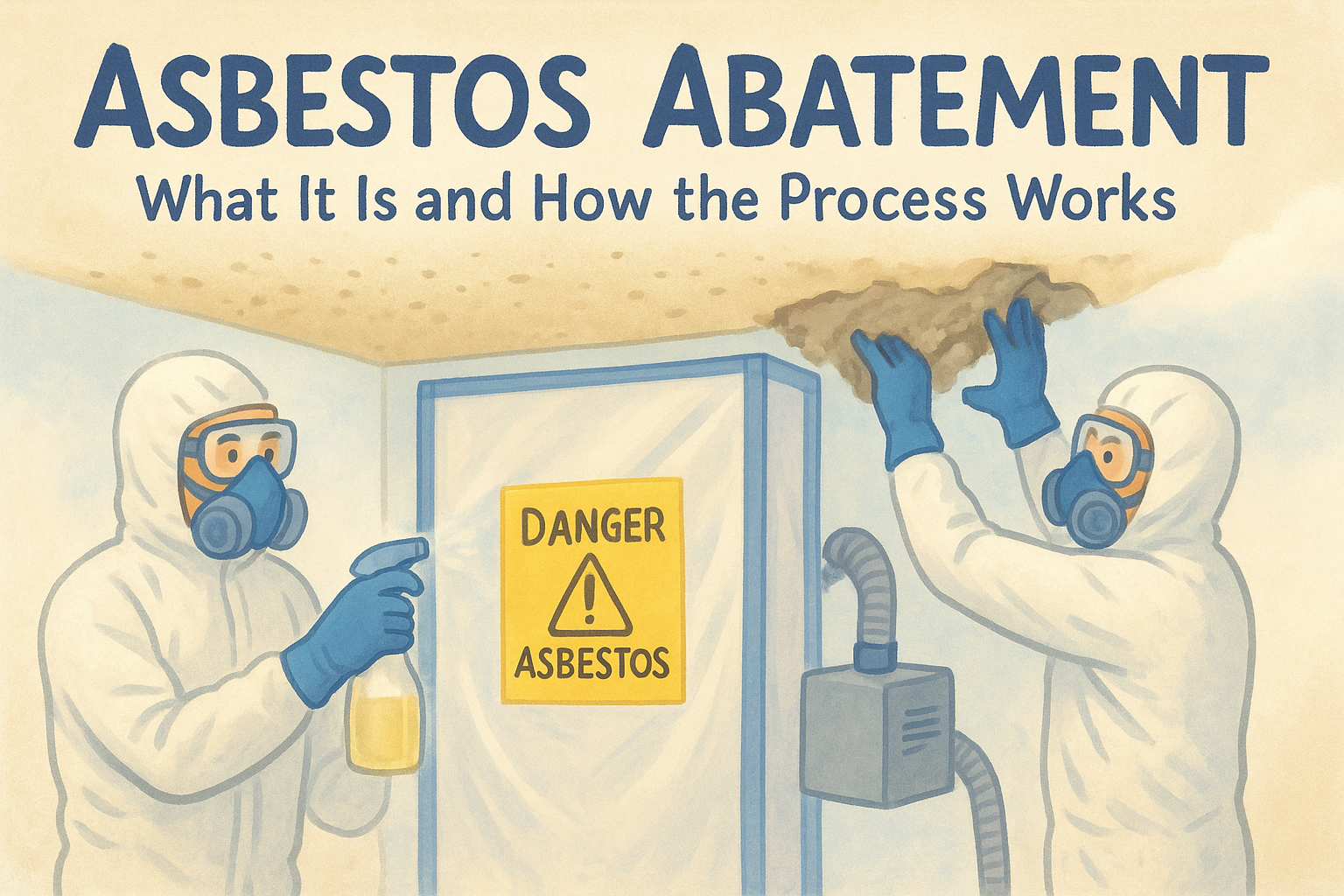
If your home was built before 1979 , you should test for asbestos before scraping, or hire a licensed contractor to handle it. If the ceiling is already scraped, you still need to protect yourself during sanding. Drywall dust is a real respiratory hazard , so wear an N95 or P100 respirator for any sanding work. Keep windows open for ventilation, and tape plastic sheeting over doorways to stop dust from spreading through your home.

If you have any doubt about whether your ceiling contained asbestos, stop work and contact a licensed abatement professional before continuing.

At minimum, have this protective gear ready before you do anything:

  • N95 or P100 respirator
  • Safety goggles
  • Work gloves

Tools you'll need

Getting your materials together before you start prevents the job from stopping halfway through while you make hardware store runs. You'll need tools for multiple stages : repair, skim coating, priming, and painting. Here's what to have on hand:

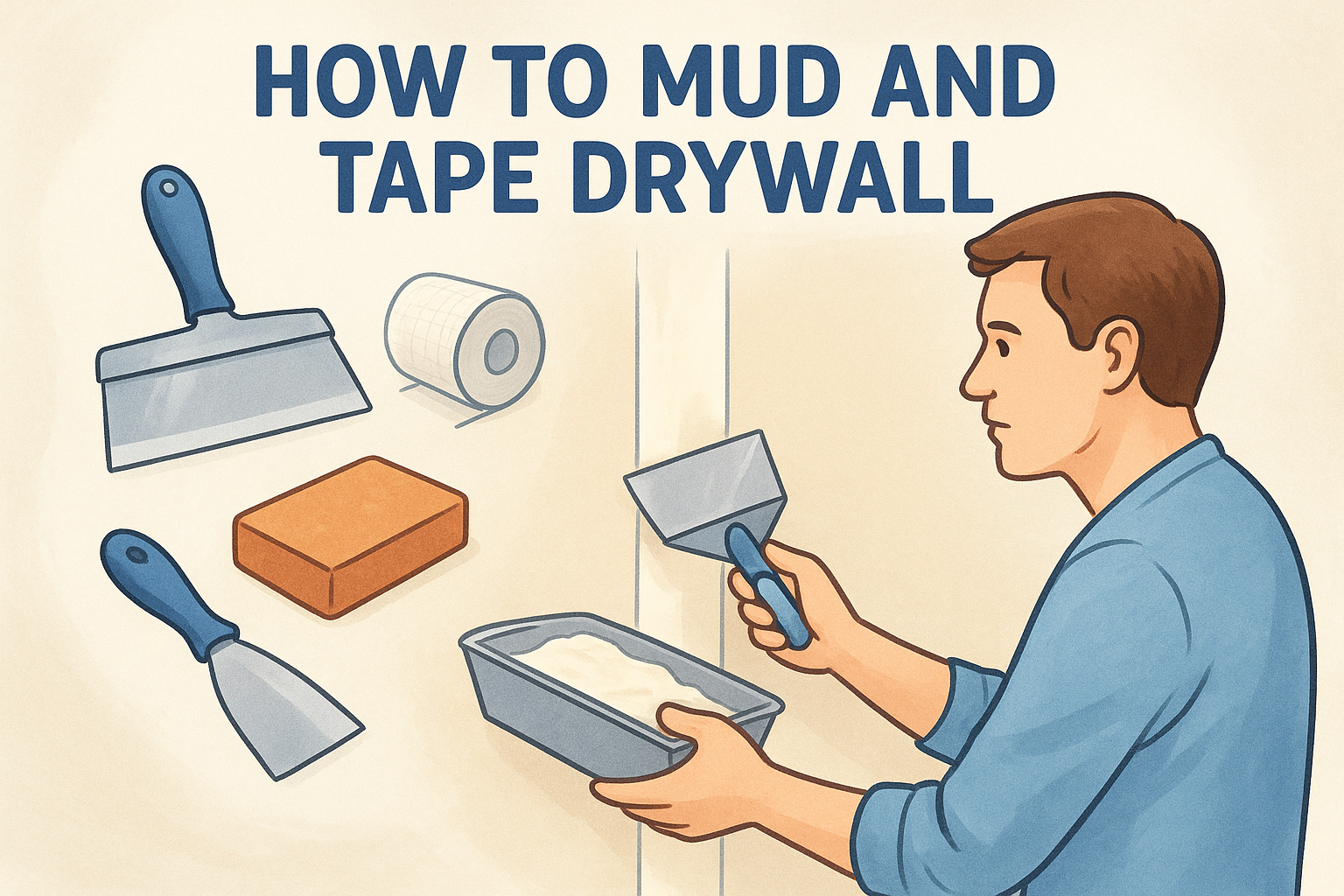
  • 6-inch and 10-inch drywall knives for applying joint compound
  • All-purpose joint compound or topping compound
  • PVA drywall primer (standard primer won't properly seal bare drywall)
  • 120-grit sandpaper or a fine-grit sanding sponge
  • Mesh tape or paper tape for damaged seams
  • Paint roller with a 3/8-inch nap and an extension pole
  • Drop cloths and painter's tape

Step 1. Inspect the ceiling and clean it

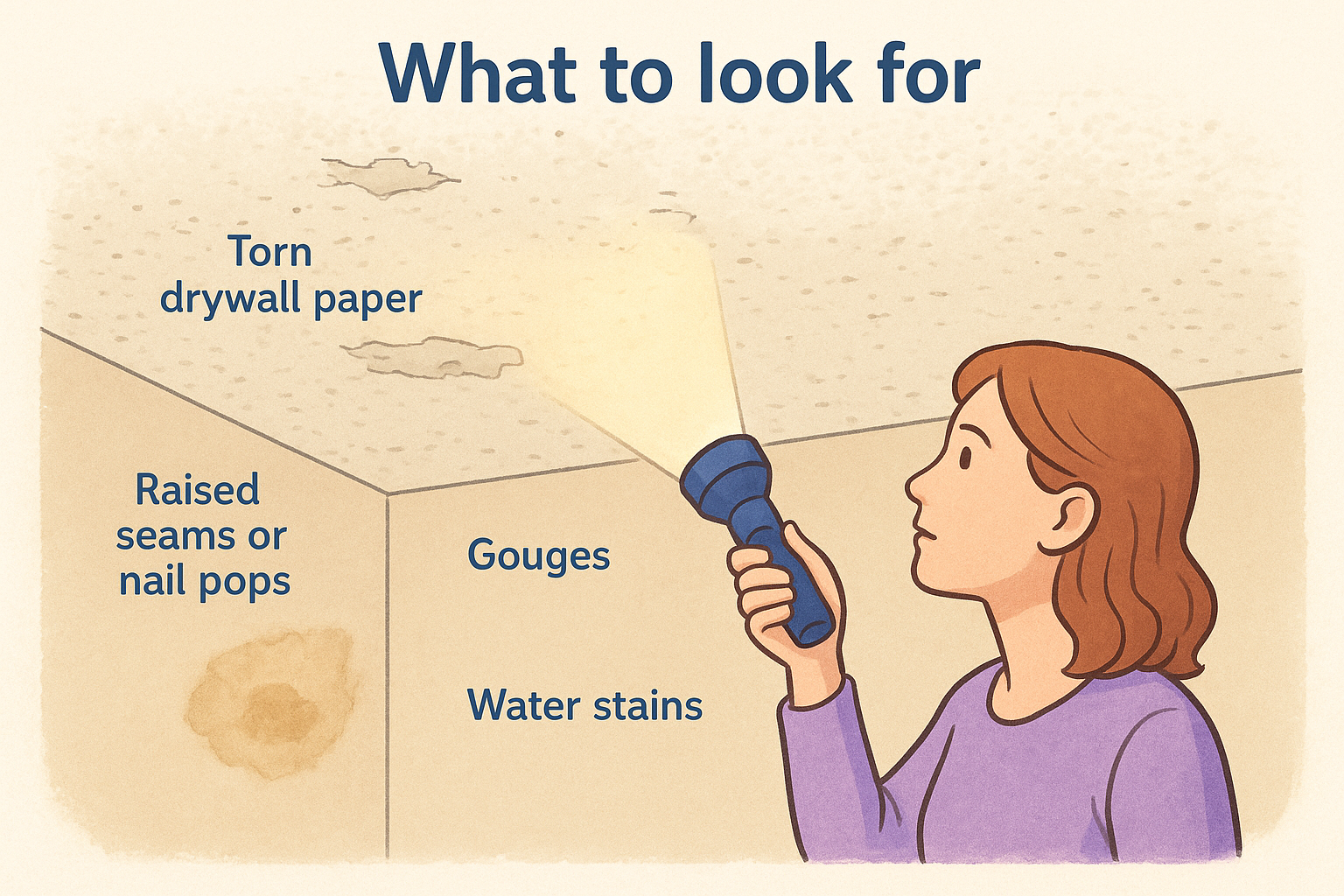
Before you do anything else, take 10 to 15 minutes to look at the entire ceiling under good lighting. Hold a work light or bright flashlight at a low angle to the surface, which makes damage far easier to spot than standard overhead lighting. This step tells you exactly how much repair work you're facing before you open a single bucket of compound.

What to look for

Scan the ceiling systematically from one corner to the other . You're looking for specific types of damage that each need a different fix:

  • Torn drywall paper : fuzzy or peeling surface caused by scraping
  • Gouges : depressions cut into the gypsum itself
  • Raised seams or nail pops : spots where fasteners or tape are pushing through the surface
  • Water stains : brownish rings that indicate past moisture damage

If you find water stains, locate and fix the source of the leak before doing any ceiling repair, or the problem will come back.

Cleaning the surface

Understanding what to do after popcorn ceiling removal means recognizing that surface prep determines how well your compound bonds. Wipe the ceiling with a dry microfiber cloth or a lightly damp sponge to clear away all dust and debris left from scraping. Any loose material on the surface will keep joint compound from sticking properly and cause it to crack or peel later.

Step 2. Fix torn paper, gouges, and bad seams

This is the most labor-intensive part of knowing what to do after popcorn ceiling removal. Skipping repairs here will show through primer and paint, no matter how carefully you apply them. Work through the ceiling one problem type at a time rather than jumping around.

Torn drywall paper and gouges

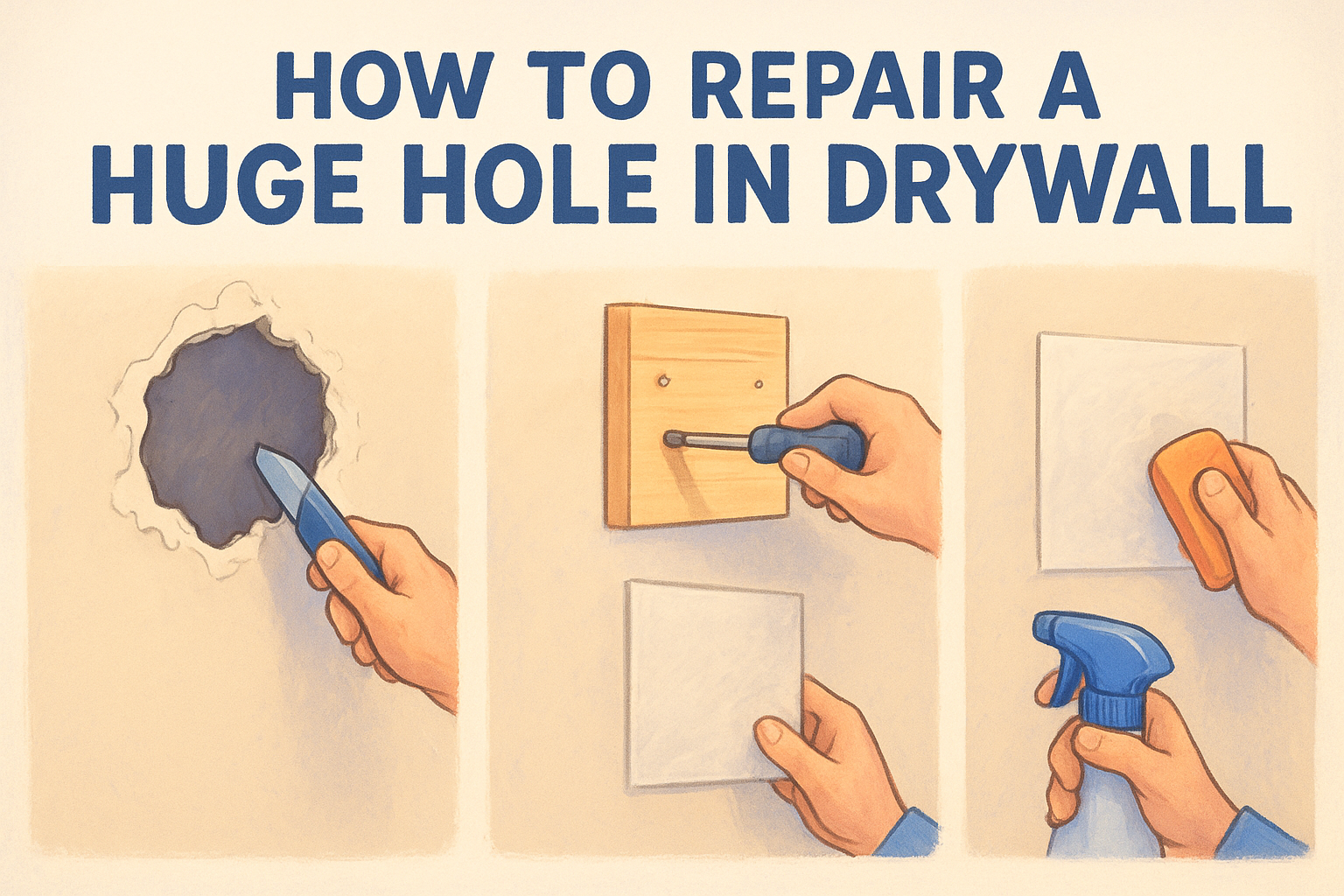
Torn paper needs to be sealed before you apply any compound. Brush a thin coat of PVA primer or drywall bonding adhesive over every torn area and let it dry fully. Once dry, apply all-purpose joint compound with a 6-inch knife in a thin, even layer. Feather the edges outward and let each coat dry completely before adding another. Two coats are usually enough for shallow damage.

Never apply compound directly over raw, fuzzy drywall paper. It will bubble and peel once it dries, and you'll have to redo the repair from scratch.

Bad seams and nail pops

Nail pops need to be driven back in or secured with a drywall screw placed just above or below the pop before you cover them. For bad seams , apply mesh tape over the joint, then bed it in with joint compound using a 10-inch knife. Keep the compound thin and sand lightly between coats once each layer is fully dry.

Step 3. Skim coat for a smooth, paint-ready finish

Once your repairs are dry and sanded flat, skim coating is the step that transforms a patchy, damaged ceiling into a surface ready for paint. This is the part of knowing what to do after popcorn ceiling removal that most DIYers underestimate. A skim coat is a thin layer of topping compound spread across the entire ceiling to create one uniform surface, hiding all the repair work underneath.

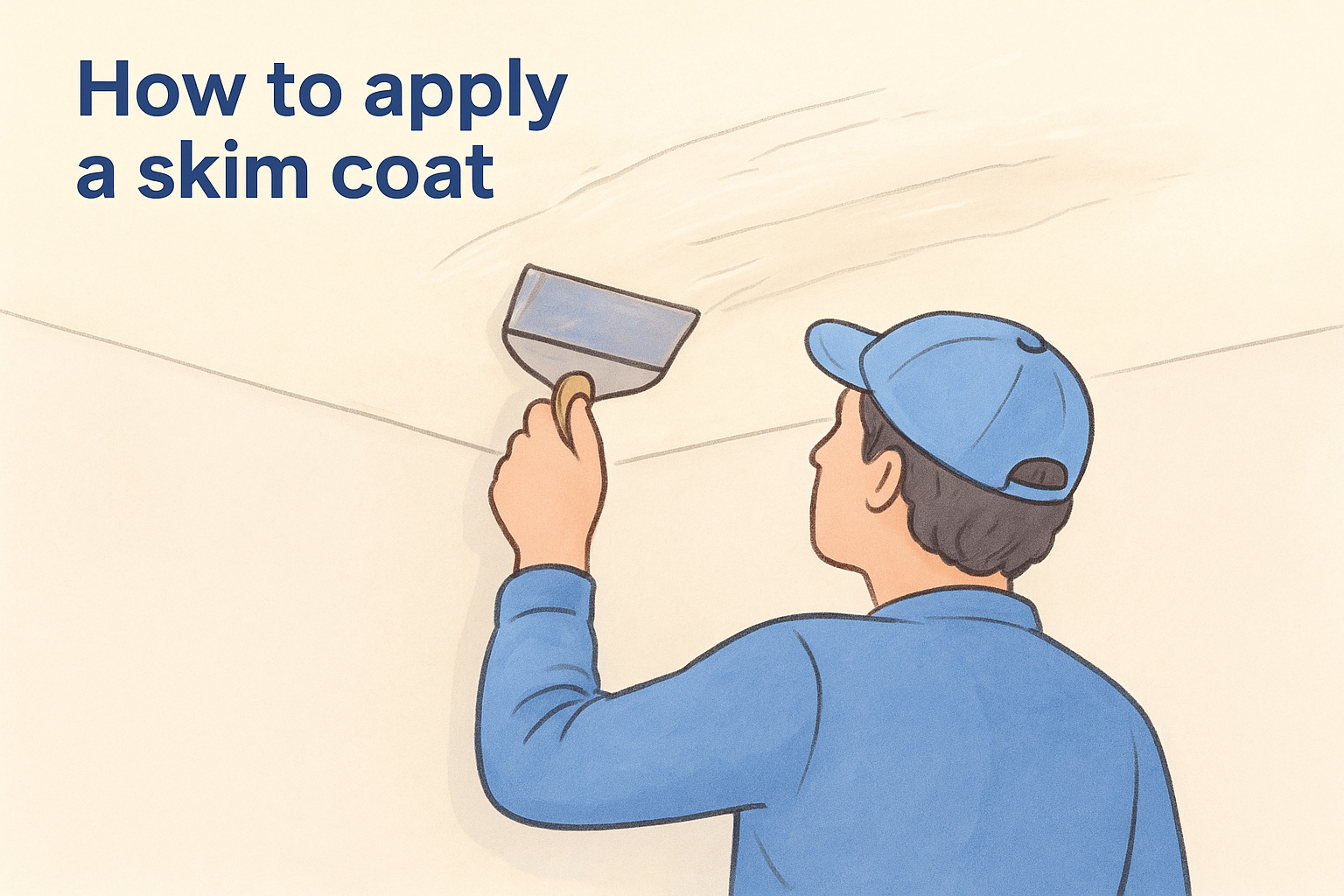
How to apply a skim coat

Mix your topping compound to a smooth, peanut-butter-like consistency before you start. Working in sections of about 4 to 6 square feet , apply a thin coat with a 10-inch knife, holding the blade at a low angle. Pull the compound across the surface in long, overlapping strokes. Let the first coat dry fully, then sand lightly with 120-grit paper before applying a second coat.

Two thin coats always produce a better result than one thick coat, which is more likely to crack as it dries.

Apply the second coat perpendicular to the first to fill any missed low spots . Sand the finished surface smooth before moving on to priming.

Step 4. Prime and paint the ceiling the right way

The final step in knowing what to do after popcorn ceiling removal is applying primer and paint in the right order. Your ceiling now has raw joint compound and exposed drywall paper across much of the surface, and both materials absorb paint at different rates. Skip primer here, and your finished coat will come out blotchy and uneven , with dull spots where the compound soaked the paint in faster.

Prime before you paint

PVA drywall primer is the right product for this job, not standard wall primer. Roll it across the ceiling with a 3/8-inch nap roller and let it dry for the time shown on the label, typically one to two hours. PVA seals compound and raw drywall paper together so they absorb the topcoat evenly across the entire surface.

Do not substitute flat ceiling paint for primer. It won't seal the surface properly, and you'll see uneven sheen once the paint dries.

Apply the paint

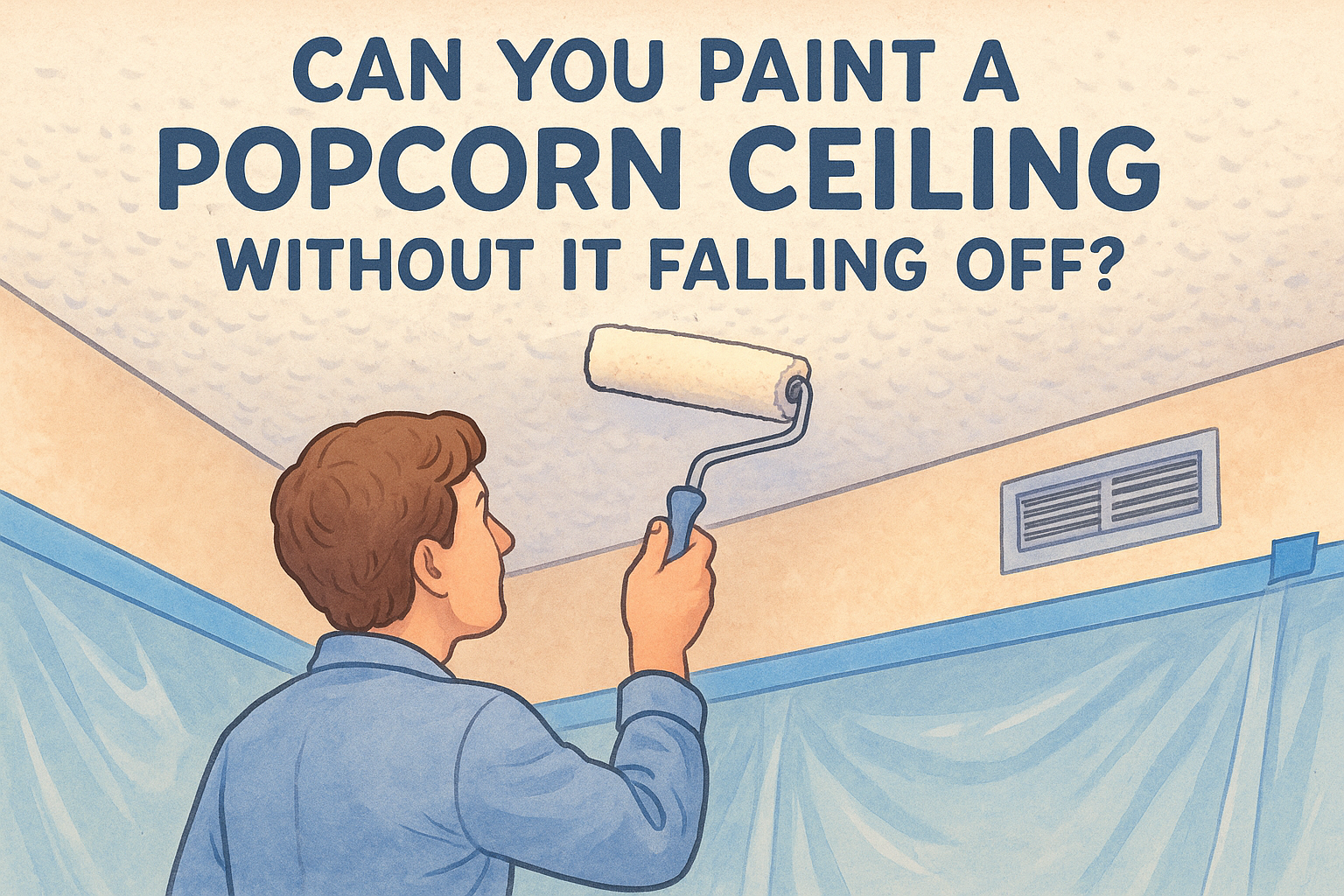
Flat ceiling paint is the right finish for nearly every residential ceiling because it minimizes visible surface imperfections better than any sheen level. Apply two coats with a roller, letting the first dry completely before starting the second. Roll in consistent overlapping passes and maintain a wet edge to avoid lap marks showing through the finish.

Final thoughts

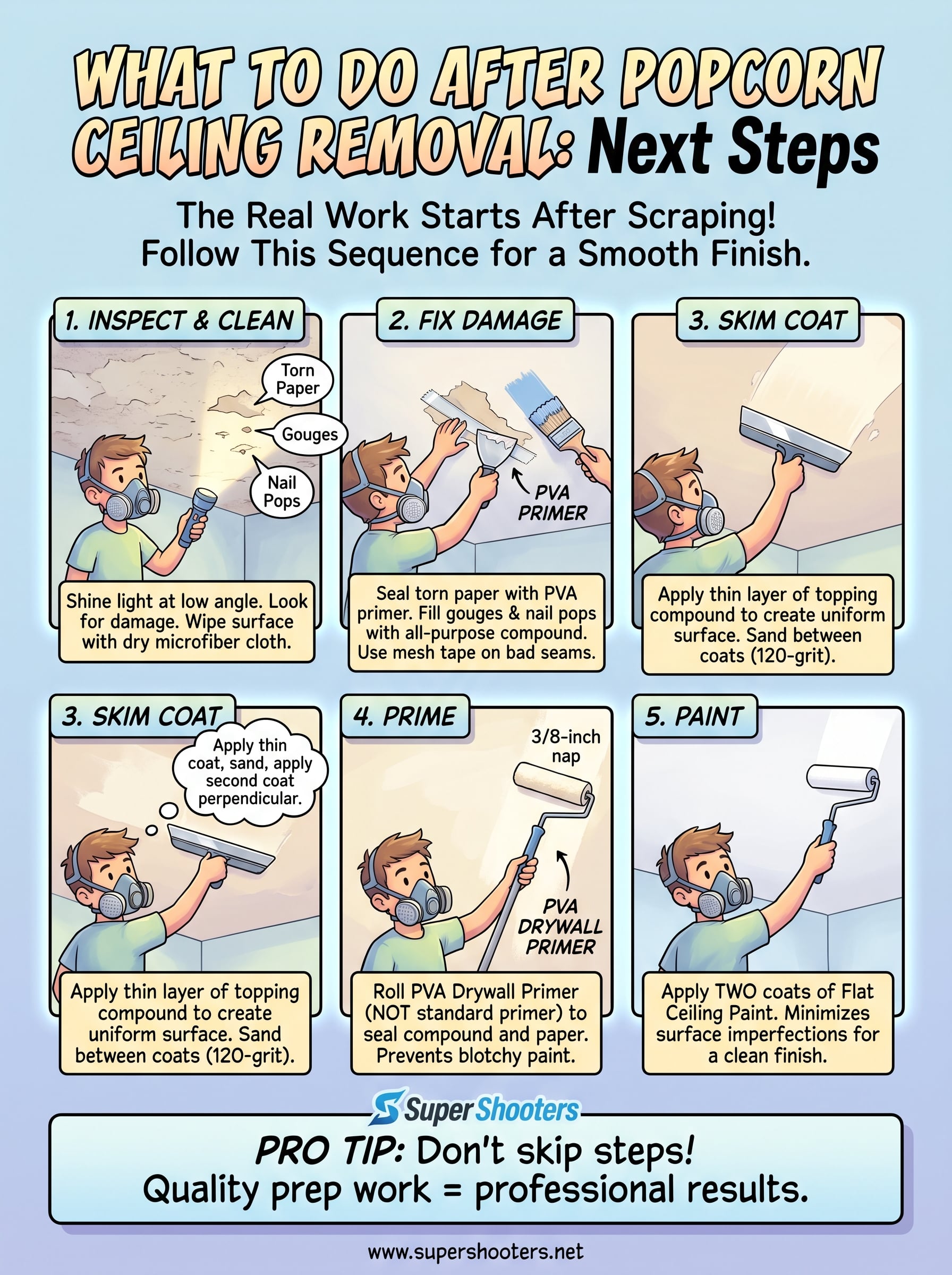
Knowing what to do after popcorn ceiling removal comes down to following the right sequence: inspect and clean first, repair all damaged paper and gouges, skim coat the entire surface, prime with PVA drywall primer , then paint with two coats of flat ceiling paint. Skip any step or rush the drying times between coats, and the problems will show through your finished ceiling.

Every ceiling is different. Some scrape clean with minimal damage, while others need significant repair work before they're ready for compound. If your ceiling has deep gouges, large torn sections, or water damage, bringing in a professional will save you time and get you a better result than patching it yourself. Super Shooters has completed over 10,000 ceiling projects across the Sacramento Valley, and we're happy to take a look at yours. Get a free estimate for your ceiling project and find out exactly what it will take to get your ceiling looking right.

Recent Posts

By cinchweb May 12, 2026
Learn how to drywall a garage with our complete guide. Discover essential tools, fire-rated panels, insulation, and costs for a professional, durable result.
By cinchweb May 10, 2026
Identify and repair 6 common types of drywall damage. From water stains to cracks, learn how to fix your walls fast and get professional, lasting results.
By cinchweb May 9, 2026
Learn how to fix cracks in plaster walls. Assess the damage, secure loose areas with plaster washers, and apply compound for a seamless, lasting repair.
By cinchweb May 9, 2026
Learn how to texture drywall walls with our guide to orange peel and knockdown finishes. Master mud consistency, tool selection, and expert techniques.
By cinchweb May 7, 2026
Learn how to repair water damaged drywall with our guide. Fix leaks, dry framing, and follow steps to patch and finish walls or ceilings for a seamless look.
By cinchweb May 7, 2026
Learn how to finish drywall with this step-by-step guide. Master professional techniques for taping, mudding, and sanding to get smooth, paint-ready walls.
By cinchweb May 5, 2026
Compare orange peel vs knockdown texture to find the best finish for your home. We break down the costs, cleaning ease, and repair tips for each style.
By cinchweb May 4, 2026
Learn how to patch a hole in the ceiling with our guide for every size. Fix dings, use mesh patches, or replace drywall for a seamless, professional finish.
By cinchweb May 4, 2026
Learn how to smooth textured walls to get a flat, modern finish. Our guide covers asbestos safety, skim coating, and tools for professional results.
Show More