October 13, 2026
Drywall Repair Contractors Near Me: 5 Types to Compare
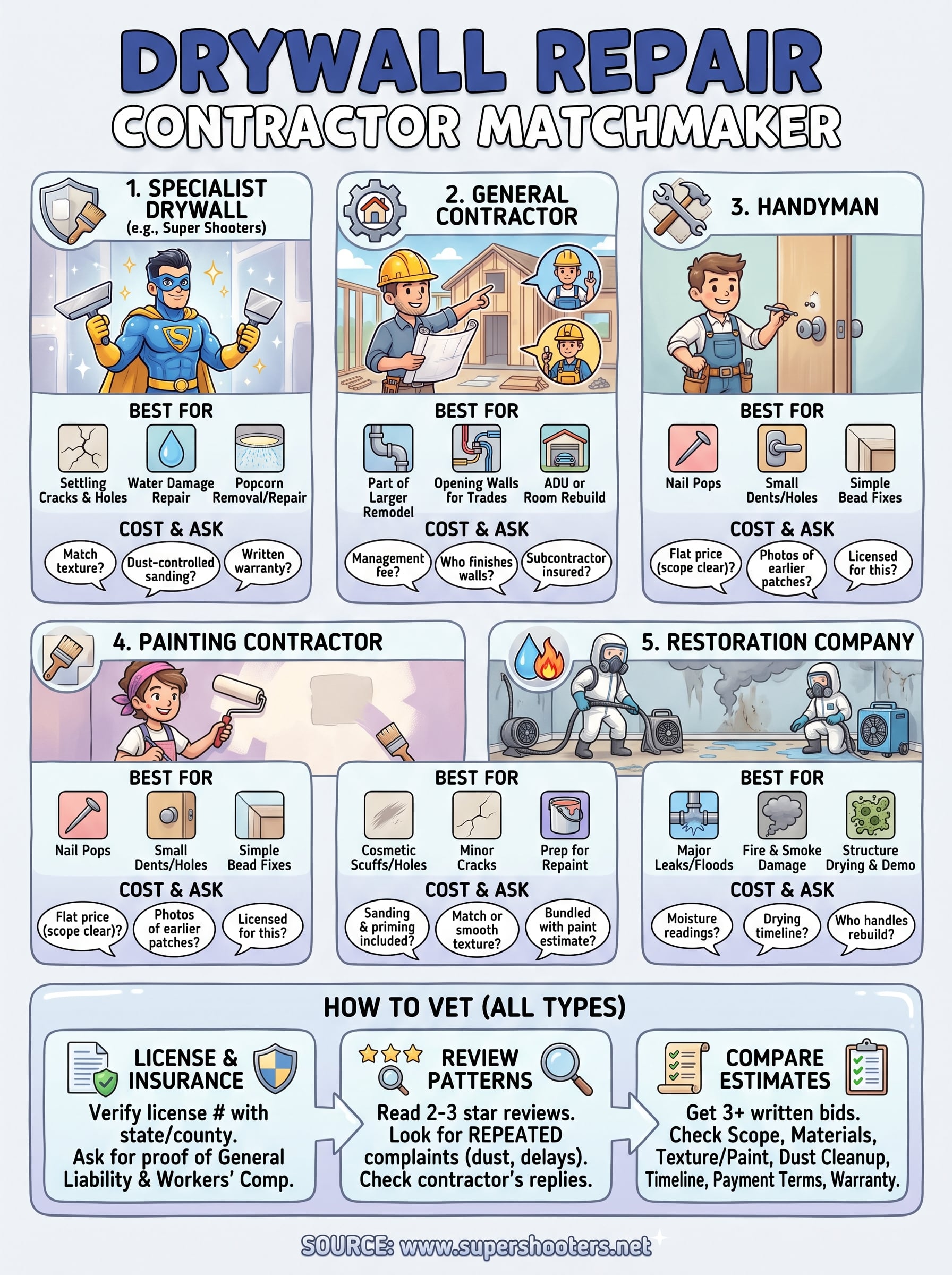
The best drywall repair contractors near me are licensed, insured specialists who finish walls and ceilings every day and give you a written estimate for free. Match the type of contractor to the job. A drywall or spackling specialist suits most patches, cracks, and texture matching. A general contractor suits repairs inside a bigger remodel. A handyman suits a nail pop or a doorknob hole. A restoration company suits leaks and fire damage.
A local search usually returns a wall of directories, ads, and star ratings that all look alike. Many of those listings are fine, but a rating alone does not tell you whether a crew can match your wall texture or leave your house free of dust. This guide sorts the five kinds of contractors you will find, explains who each one suits, and shows how to check licenses, reviews, and estimates before you sign.
Super Shooters is a licensed California contractor (License No. 1077675) with more than 30 years and over 10,000 projects in ceilings and walls. We work in the Sacramento Valley, not on Long Island. If you live in Nassau County, use the profiles and checks below to judge local companies. If you live near Sacramento, we are item one.
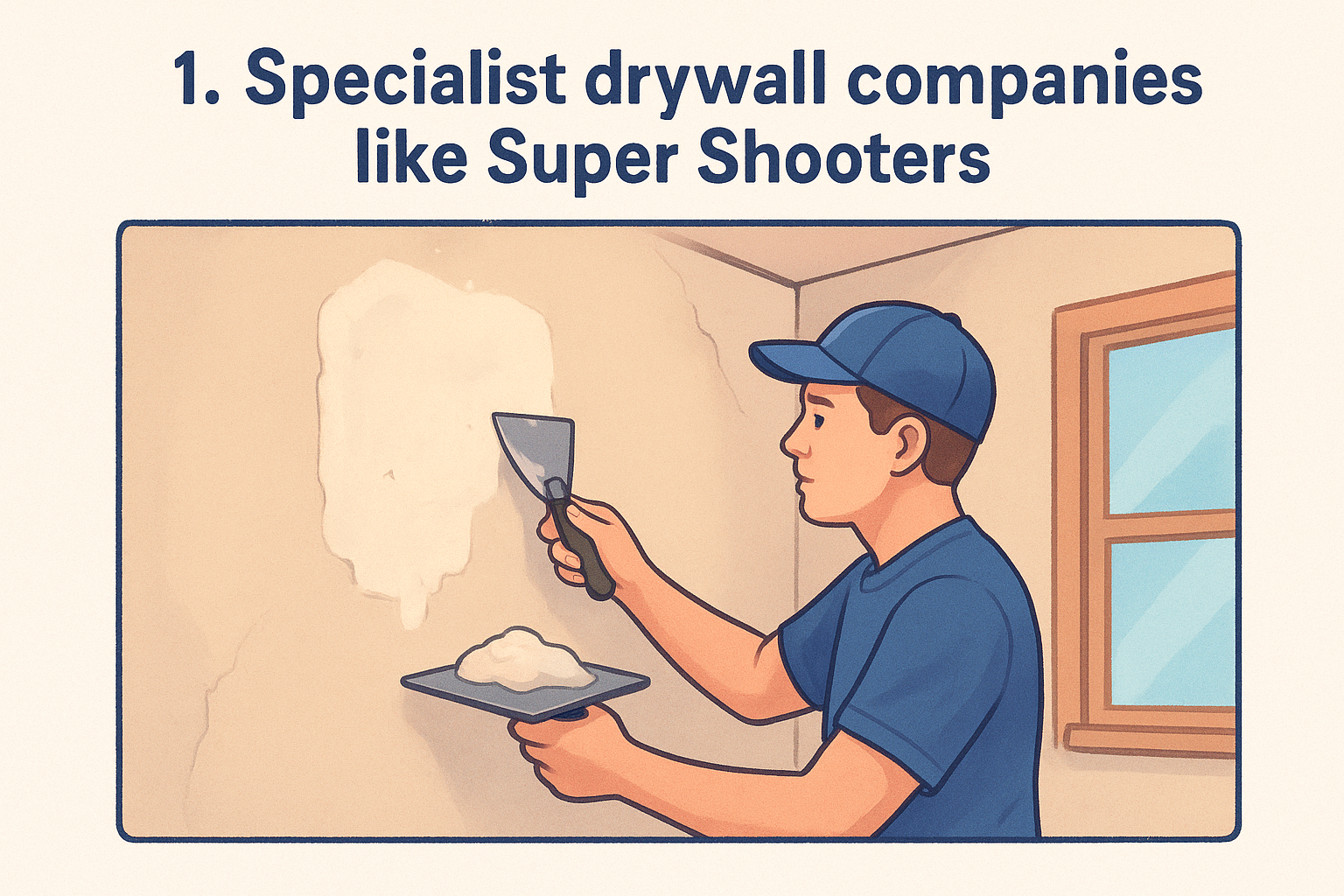
1. Specialist drywall companies like Super Shooters
A specialist drywall company is the right first call for most repairs, because patching, taping, and texturing are its whole business. Super Shooters fills this role for Sacramento Valley homeowners. On Long Island, the same type of company often calls itself a spackling and taping contractor .
Best for
Specialists handle the jobs that need a smooth finish and a matched texture. Typical work includes:
- Cracks from settling and holes from doors or plumbing access
- Water-damaged wall and ceiling sections, once the leak is fixed
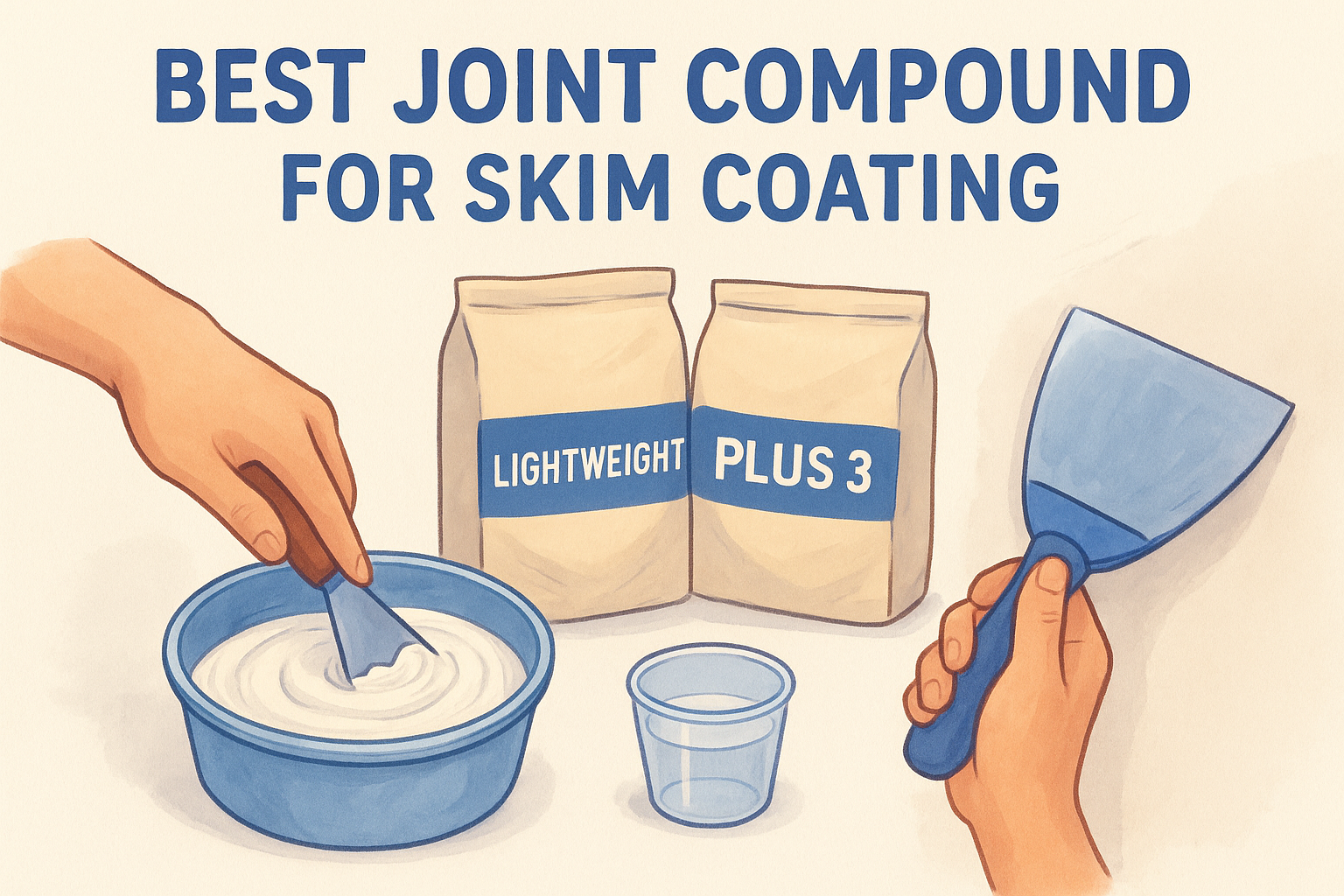
- Plaster wall repair and skim coating
- Popcorn ceiling repair or full popcorn ceiling removal
At Super Shooters this work covers drywall repair and patching, popcorn ceiling removal, and drywall installation for remodels and ADUs. Textured ceilings applied before the 1980s can contain asbestos, so a responsible specialist tests before scraping or sanding . We handle asbestos acoustic ceiling removal for those cases.
Cost and what to ask
Specialists usually price per job after they see the damage, not by the hour. Super Shooters offers free in-home estimates , asks for no payment until the project is complete, and includes the Super Shield warranty. Ask any specialist whether they match your existing texture, use dust-controlled sanding, put the warranty in writing, and send the same crew that quoted the job.
Hire the contractor whose daily work is the exact repair you need.
2. General contractors and remodelers
A general contractor is the best of the drywall repair contractors near me when the repair is one piece of a larger project. You hire one company to coordinate everything. The drywall itself is often done by a subcontractor.
Best for
Choose a general contractor when drywall is tied to other trades. Examples include opening a wall for plumbing or wiring, finishing a garage or ADU, or rebuilding a room after a structural fix. The contractor sequences the trades, so the patch happens after the pipes and before the paint. One contract and one point of contact keep a multi-step job from stalling.
Cost and what to ask
Expect the price to include a management margin on top of the drywall subcontractor's work. Many general contractors also set a minimum job size, so a single ceiling patch may not interest them. Ask who actually finishes the walls, their own crew or a subcontractor. Ask whether the subcontractor carries insurance. A general contractor is a poor value for a standalone repair, and a good fit when drywall is one line in a longer scope.
Pay a general contractor to coordinate trades, not to patch one hole.
3. Handymen
A handyman is a sensible choice for small, simple repairs . Can a handyman handle drywall repairs? Yes, within limits. Skill varies far more here than with specialists, so judge the work, not the title.
Best for
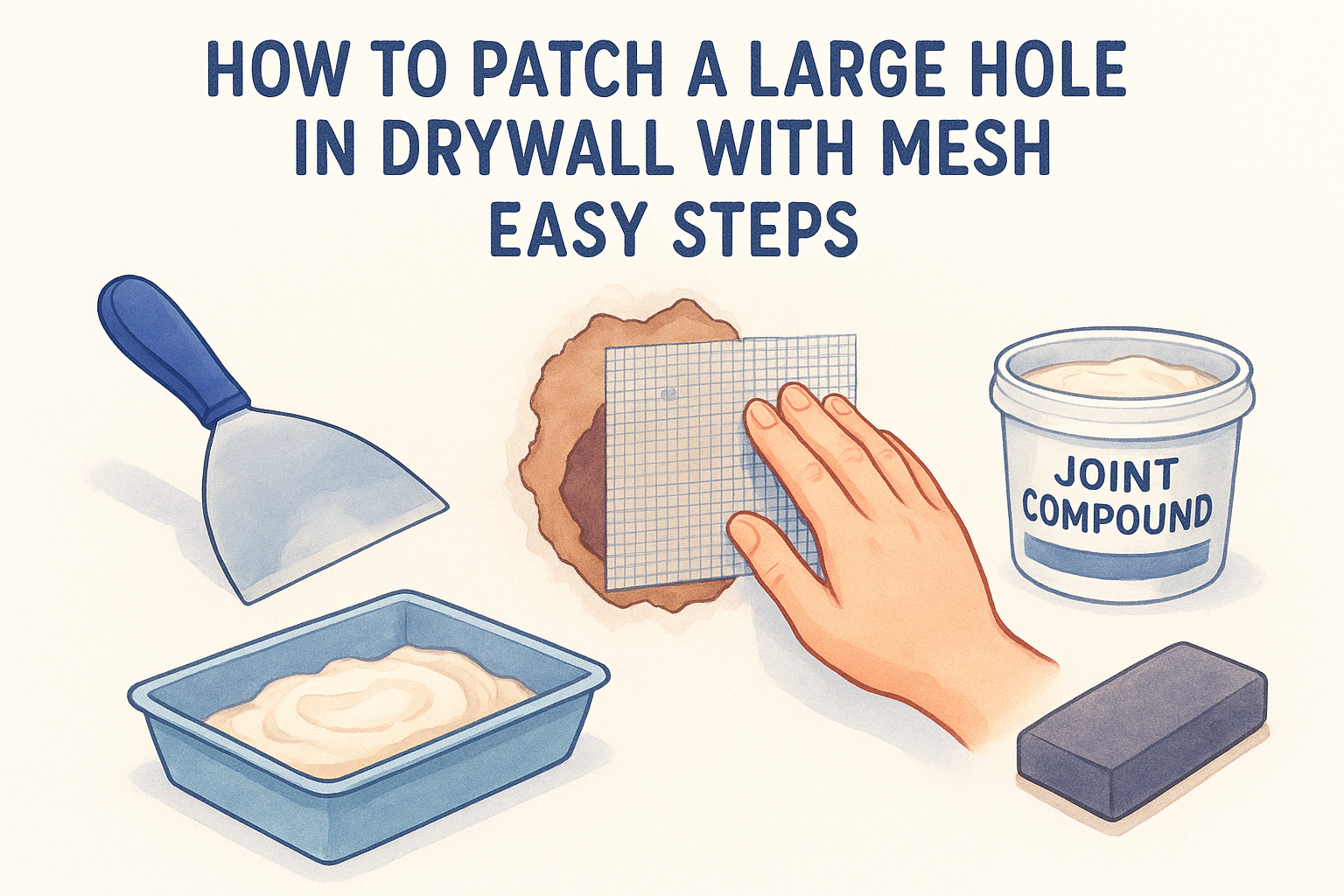
Handymen suit jobs such as nail pops, dents, small holes from doorknobs or hooks, and a loose corner bead. These repairs take one visit and a little compound. A larger hole, a long crack, or a textured ceiling is where handyman work tends to show ridges, flashing, or a visible patch once the paint dries.
Cost and what to ask
Handymen often bill hourly with a minimum service charge , which makes small jobs cheap and large ones unpredictable. Ask for a flat price when the scope is clear. Request photos of earlier patches on textured or painted walls, because that is where quality shows. Licensing rules for handymen differ by state and county, so check with your county's consumer affairs office before you hire.
A handyman is a good fit for a patch you can cover with your hand.
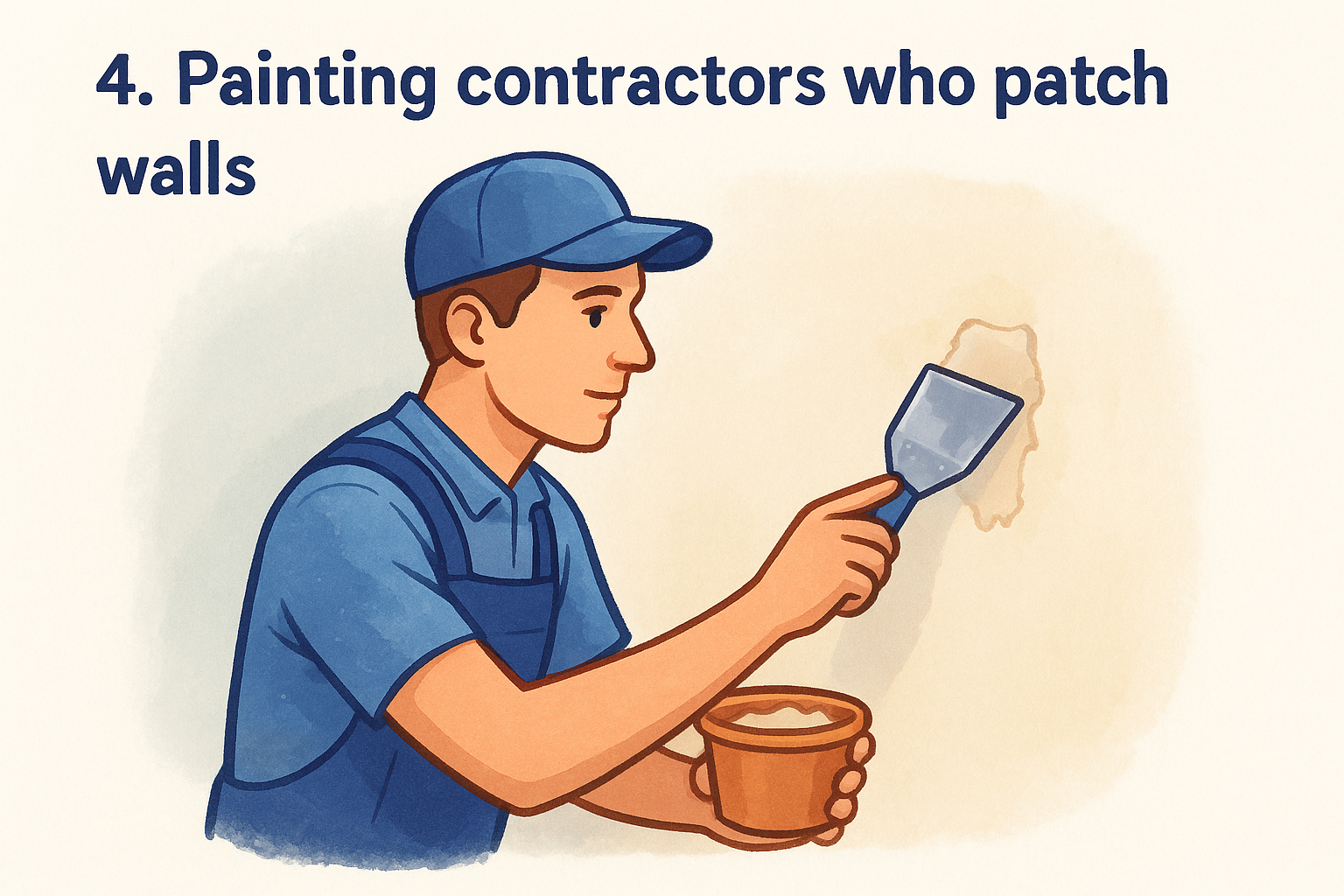
4. Painting contractors who patch walls
A painter who patches walls works best when you are already repainting and the damage is cosmetic. Many painters repair dents and hairline cracks as part of prep, so this is the least disruptive way to handle a small list of blemishes.
Best for
Use a painter for scuffs, nail holes, minor cracks, and repairs that sit under a full repaint. The same crew that patches also primes and paints, which means no color mismatch between repaired and untouched areas. Skip this option for water damage, crumbling drywall, or ceilings with heavy texture. Those need a drywall finisher first.
Cost and what to ask
Patching is usually bundled into the paint estimate , and the cost depends on the number of repairs. Ask whether the quote includes sanding and priming every patch, since unprimed compound shows through as dull spots under paint. Also ask whether they match texture or only smooth over it. A painter who is vague about either answer is likely to leave visible repairs.
If the wall needs more than a patch, hire the finisher before the painter.
5. Water and fire damage restoration companies
A restoration company is the right call when the damage came from a leak, a flood, or a fire . These firms dry out the structure, remove ruined drywall, and often rebuild. Their drywall repair is part of a larger recovery process.
Best for
Call a restoration company for burst pipes, appliance leaks, storm intrusion, or smoke damage. If a ceiling stain traces back to the roof, the roofer must fix the source first . Patching before that only repeats the damage. Soft, crumbling drywall, visible water stains, and mold all point toward replacement instead of patching, and a restoration firm can document it all.
Cost and what to ask
Water damage drywall repair costs are higher than a simple patch because of drying equipment, moisture testing, and demolition. A sudden event such as a burst pipe may be covered by homeowners insurance, so photograph everything and call your insurer early. Ask for moisture readings, a drying timeline, and who handles the rebuild. If the company only demolishes and dries, you will still need a drywall specialist from item one to close the wall.
Stop the water, dry the wall, then repair the drywall, in that order.
How to vet and compare drywall contractors
Whichever type you pick, the same three checks separate reliable contractors from risky ones: license and insurance, review patterns, and line-by-line estimates . Do them for every contractor you consider, including the ones with five stars.
Verify the license and insurance
Ask for the license number and look it up with the issuing agency. In California, that is the Contractors State License Board. On Long Island, home improvement contractors generally need a license from the county, through the Nassau or Suffolk consumer affairs office, so confirm the rules with the county. Then ask for proof of:
- General liability insurance, to cover damage to your home
- Workers' compensation coverage for the crew
- A written warranty on the repair
Read reviews for patterns
Look past the average rating. Read the three-star and two-star reviews, and note repeated complaints such as dust, missed appointments, or surprise charges. Praise for clean work and lasting repairs across many months is a better signal than a perfect score from five reviews. Check more than one source, such as Google, Yelp, and the Better Business Bureau.
Also look at the contractor's replies to complaints. A calm, specific response tells you how they act when something goes wrong. Look for photos of repairs on walls like yours, with the same texture and similar damage.
Compare estimates side by side
Get at least three written estimates , and judge them on scope, not just the total. Published national averages for a drywall repair job run from roughly $400 to just over $1,000, but local labor rates and damage size move that range. The cheapest bid often leaves out texture, paint, or cleanup. Use this table to compare:
| Estimate line | What to look for |
|---|---|
| Scope | Every area, hole size, wall or ceiling |
| Materials | Backing, tape, compound, primer |
| Texture and paint | Matching included, or sold separately |
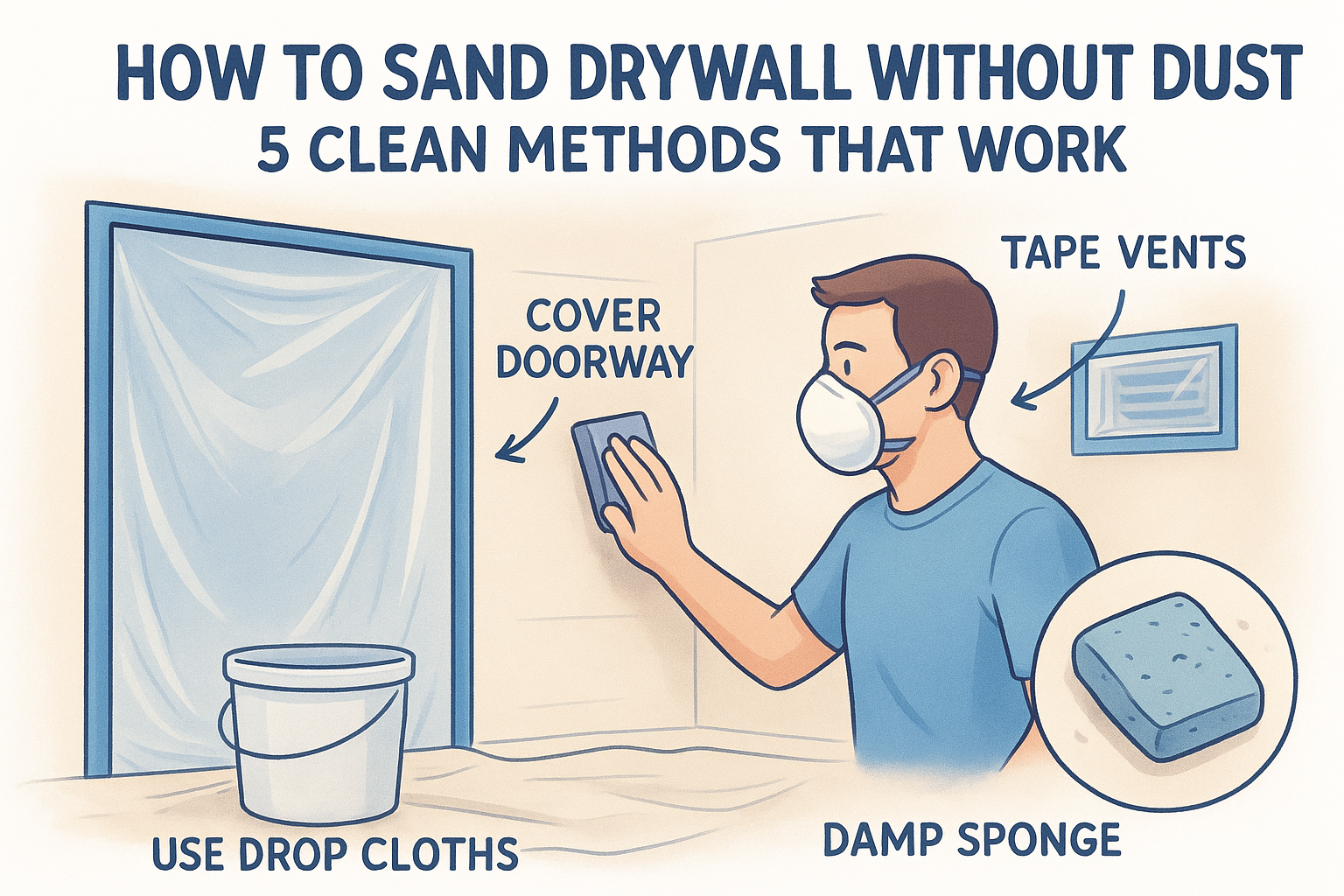
| Dust and cleanup | Drop cloths, vacuum sanding, debris removal |
| Timeline | Days allowed for coats to dry |
| Payment terms | Small deposit at most, balance on completion |
| Warranty | Workmanship coverage in writing |
Be careful what you say, too. Do not announce a fixed budget before you see the estimate, do not ask for "whatever is cheapest," and do not agree to pay in full up front. Prefer a flat price for a defined repair over an hourly rate.
The best estimate is the one that spells out everything the cheapest bid leaves out.
Choose the contractor who answers every question
Pick the type of contractor that fits the damage, then verify the license, read the reviews for patterns, and compare written estimates line by line. A specialist is the safest default, and the other four types earn their place only in the situations described above.
If you live in the Sacramento Valley, Super Shooters can look at your walls or ceilings and give you a clear price. Request a free drywall repair estimate and we will walk through the options with you. If you live on Long Island, hold local contractors to the same standard.