May 22, 2026
How Long Does Drywall Take To Dry? Mud Vs Water Damage Times
Whether you're staring at freshly mudded seams or dealing with a ceiling leak, the question is the same: how long does drywall take to dry ? The answer matters more than you might think. Move too fast after mudding and you'll end up with cracking, bubbling, or a paint job that fails within months. Wait too long after water damage and mold can take hold in as little as 24 to 48 hours .
The tricky part is that drying times vary depending on the situation. Joint compound on a repair job and a water-soaked ceiling after a pipe burst are two completely different problems with very different timelines . Humidity, airflow, temperature, and the extent of saturation all play a role. Sacramento Valley homeowners know this well, our dry summers help, but our rainy winters can slow things down significantly .
At Super Shooters, we've handled over 10,000 drywall and ceiling projects across the Sacramento Valley in our 30+ years of business. That includes everything from fresh drywall installs to full water damage restoration. Below, we break down the realistic drying times for both joint compound and water-damaged drywall, what affects those timelines, and when it's safe to move on to the next step.
Why drywall drying time matters
Drying time isn't just a scheduling detail. Rushing past it causes real, costly damage that often means redoing work you already paid for. Whether you're finishing a remodel or drying out after a leak, understanding when your drywall is actually ready saves you from bigger problems down the line.
Moving too fast on mudded drywall
Joint compound looks deceptively dry on the surface long before it's ready. Painting over wet mud traps moisture inside , which causes the paint to bubble, crack, or peel within weeks. Sanding too early is equally problematic: damp compound tears instead of smoothing , leaving a rough, uneven surface that's hard to fix without adding more coats and starting the wait all over again. Each coat of mud needs to be fully dry before you apply the next one or pick up a sanding block.
Applying paint over joint compound that hasn't fully cured is one of the most common reasons a drywall project has to be redone from scratch.
Wet drywall after a leak is a different kind of urgency
Water-damaged drywall carries serious health and structural risks if you don't dry it out completely and quickly. Mold begins forming in as little as 24 to 48 hours in damp conditions, and once it spreads into the wall cavity or paper facing, a simple dry-out turns into a full remediation job. Beyond mold, saturated drywall loses its structural integrity: the gypsum core softens and crumbles, and the paper facing delaminates. At that point, drying alone won't save it and you'll need full replacement.
Knowing how long does drywall take to dry in each scenario gives you a realistic plan. Act too late on water damage and the repair cost climbs fast , rush a mudding job and you're painting over a problem that will show up again within months.
Drywall mud drying times you can plan around
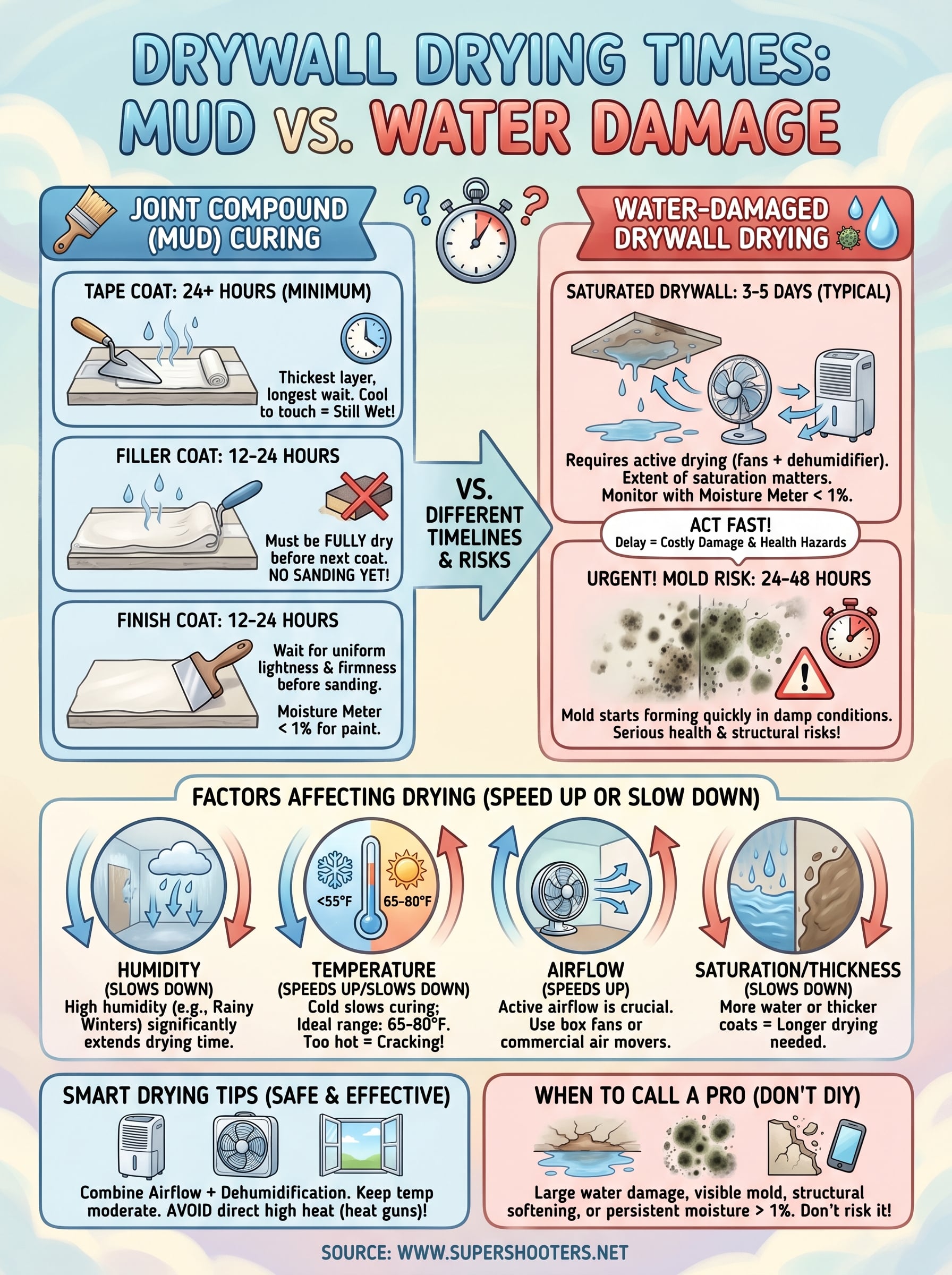
Joint compound dries in stages, and each coat has its own timeline you can schedule around. Most repairs and new installs require three coats : a tape coat, a filler coat, and a finish coat. Under standard conditions, count on a minimum of three full days before you're ready to sand.
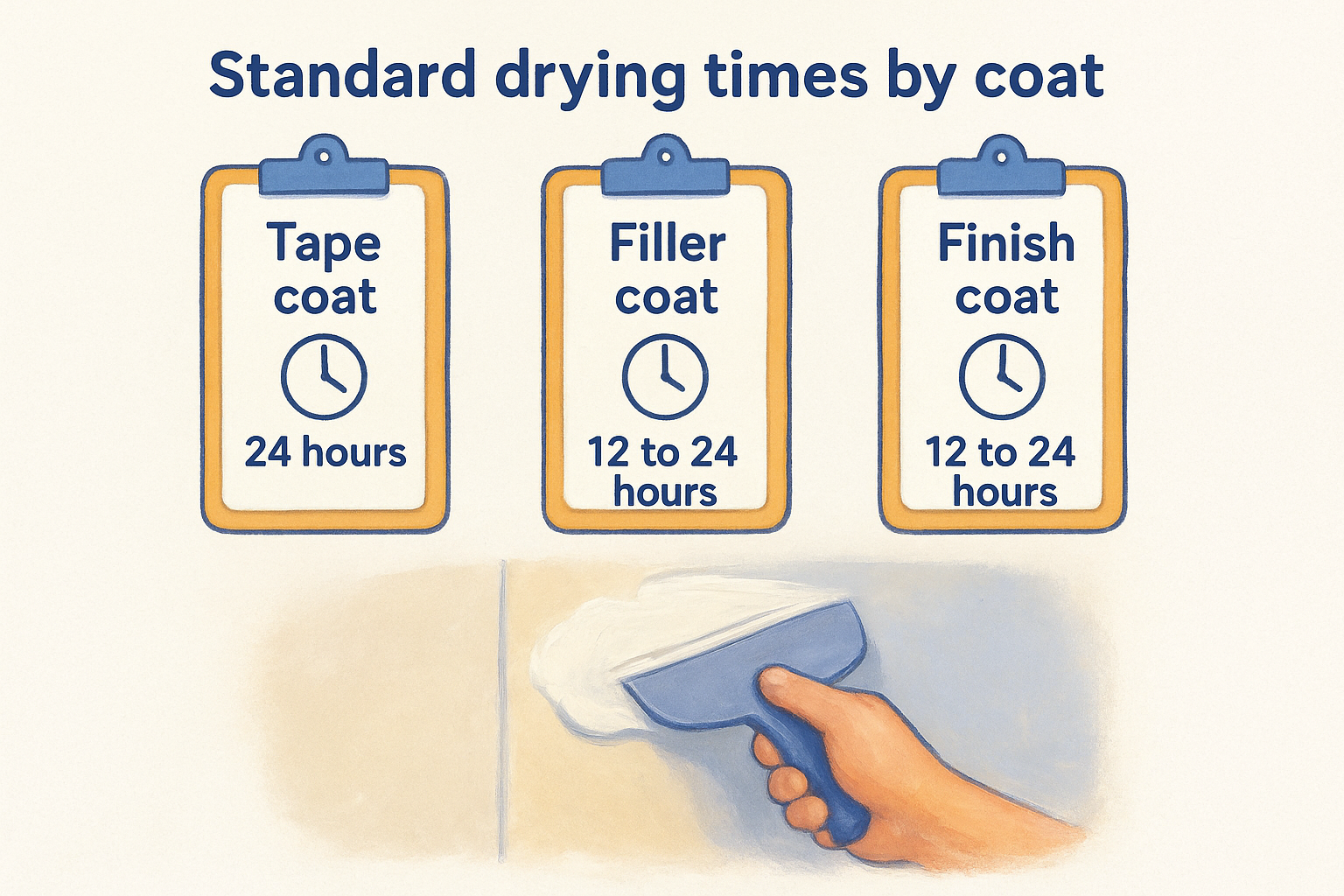
Standard drying times by coat
Under typical conditions (65-75°F, 40-50% relative humidity), here's what to expect for each mud layer before applying the next:
- Tape coat : 24 hours minimum (thickest application, longest dry time)
- Filler coat : 12 to 24 hours
- Finish coat : 12 to 24 hours
Never sand a coat that still looks or feels cool to the touch. That coolness means moisture is still trapped inside the compound.
What slows drying down
High humidity is the single biggest factor that extends how long does drywall take to dry beyond the standard timelines above. Sacramento Valley winters push single-coat drying times past 48 hours thanks to cool, damp air moving through the region. Temperatures below 55°F also slow the curing process considerably, so if you're working in a cold garage or an unheated room, build extra time into your schedule at every stage.
Drying wet drywall after a leak or flood
Water-damaged drywall follows a completely different timeline than joint compound. Understanding how long does drywall take to dry after a leak helps you act before mold sets in. Fully saturated drywall typically takes 3 to 5 days to dry under good conditions, but that window depends on how much water soaked in and how quickly you started the drying process.
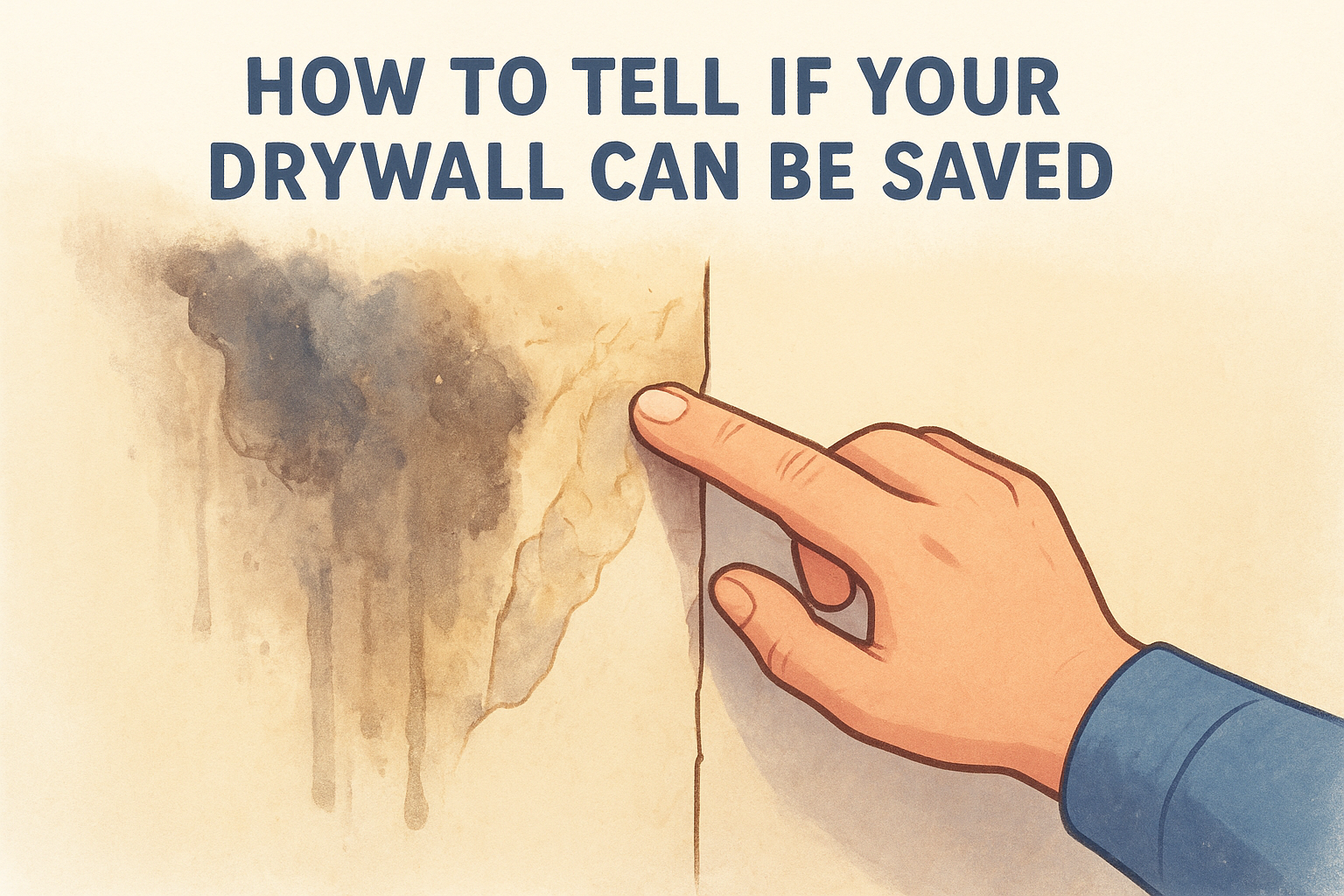
How to tell if your drywall can be saved
Not every wet wall is worth attempting to dry out. If the drywall has been wet for more than 48 hours , mold has likely started forming inside the wall cavity or along the paper facing. Press on the surface: if it feels soft, spongy, or crumbles, the gypsum core has already broken down and replacement is the right call.
Look for these warning signs before you try to dry:
- Visible mold or dark discoloration
- Musty smell coming from the wall
- Paper facing peeling or bubbling
- Soft, spongy surface under pressure
If any of these signs are present, call a professional before you do anything else.
Signs the drying process is complete
Your drywall is ready once it feels firm and dry to the touch , shows no soft spots, and a moisture meter reads below 1% moisture content . Skipping this check is what leads to mold growing behind a freshly painted wall.
Renting a moisture meter from a local hardware store costs very little and gives you a concrete number instead of guessing. Any reading above 1% means the wall needs more drying time before you prime, paint, or close it up.
How to speed drying up safely
You can cut how long does drywall take to dry without cutting corners, but only if you use the right approach. Skipping steps or applying too much heat in one spot creates uneven drying , which leads to cracks in joint compound or hidden moisture pockets behind water-damaged walls.
Use airflow and heat together
The most effective combination is box fans pushing air across the wall surface paired with a dehumidifier pulling moisture out of the room. Keep room temperature between 65 and 80°F and relative humidity below 50%. For water damage, renting a commercial-grade air mover from a local equipment rental shop moves the process along faster than a standard household fan.
Running a dehumidifier without active airflow directly across the wall is one of the most common mistakes homeowners make during a dry-out.
What not to do
Directing high heat at one spot creates a surface that feels dry while the core stays wet underneath. Avoid using heat guns or hair dryers on joint compound for the same reason: the surface hardens before moisture fully escapes, and the next coat or a layer of paint traps it inside. Keep heat and airflow consistent across the entire wall rather than focused on any single area.
When to DIY and when to call a pro
Knowing how long does drywall take to dry is useful, but knowing when to handle the work yourself versus calling a contractor saves you from expensive mistakes. The right call depends on the scope of the damage or repair , not just your comfort level with tools.
Situations where DIY works
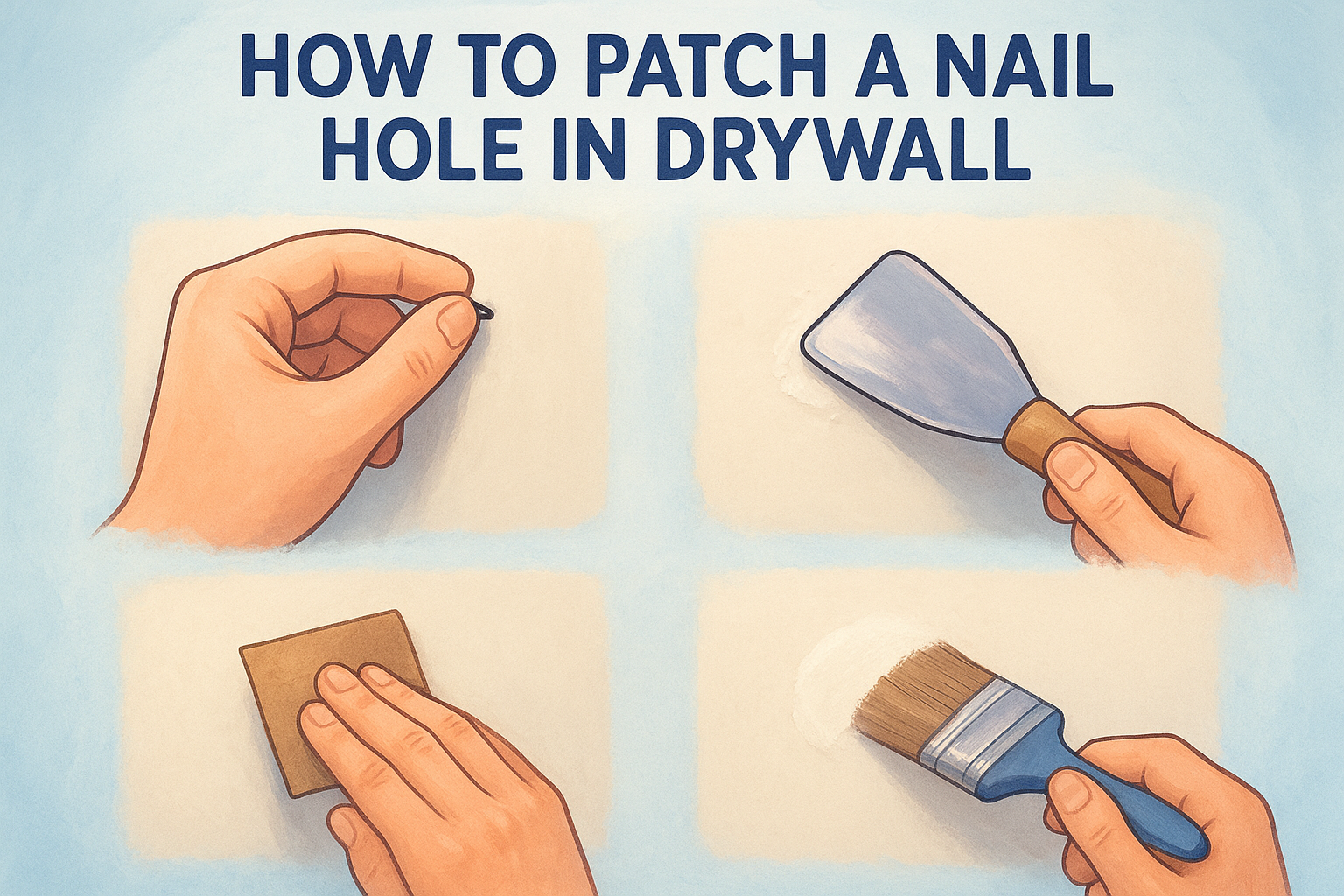
Small repairs, like patching a nail hole or fixing a minor surface crack, are well within reach for most homeowners. Single-coat touch-ups in well-ventilated rooms with stable humidity are straightforward jobs where controlling drying time is manageable on your own.
If your repair involves more than one coat of mud or covers an area larger than a dinner plate, the risk of an uneven finish grows quickly.
Situations that need a professional
Water damage, mold presence, and large sections of saturated drywall are jobs that require professional equipment and assessment. A moisture meter reading above 1% that won't drop after three to five days of active drying means the problem goes deeper than the surface. Structural softening, visible mold, or damage that covers more than a small section of wall all signal that you need someone with the right tools and experience to step in before the repair becomes a full replacement.
Next steps for a clean, paint-ready wall
Once you understand how long does drywall take to dry in your specific situation, the path forward becomes clear. For mudded repairs, confirm every coat is fully dry and firm before sanding, then prime before painting. For water damage, verify your moisture meter reads below 1% and check the entire affected area, not just the surface you can see. Skipping either check leads to problems that show up weeks after the job looks done.
Your walls are ready for primer and paint only when the drywall passes both a touch test and a moisture reading below 1% . A clean, professional finish depends on that patience more than any other single step in the process.
If your project involves more than a basic patch, or if water damage has affected a large section of wall, contact the drywall and ceiling professionals at Super Shooters for a free in-home estimate across the Sacramento Valley .