July 4, 2026
Ceiling Asbestos Testing: How To Test Ceiling For Asbestos
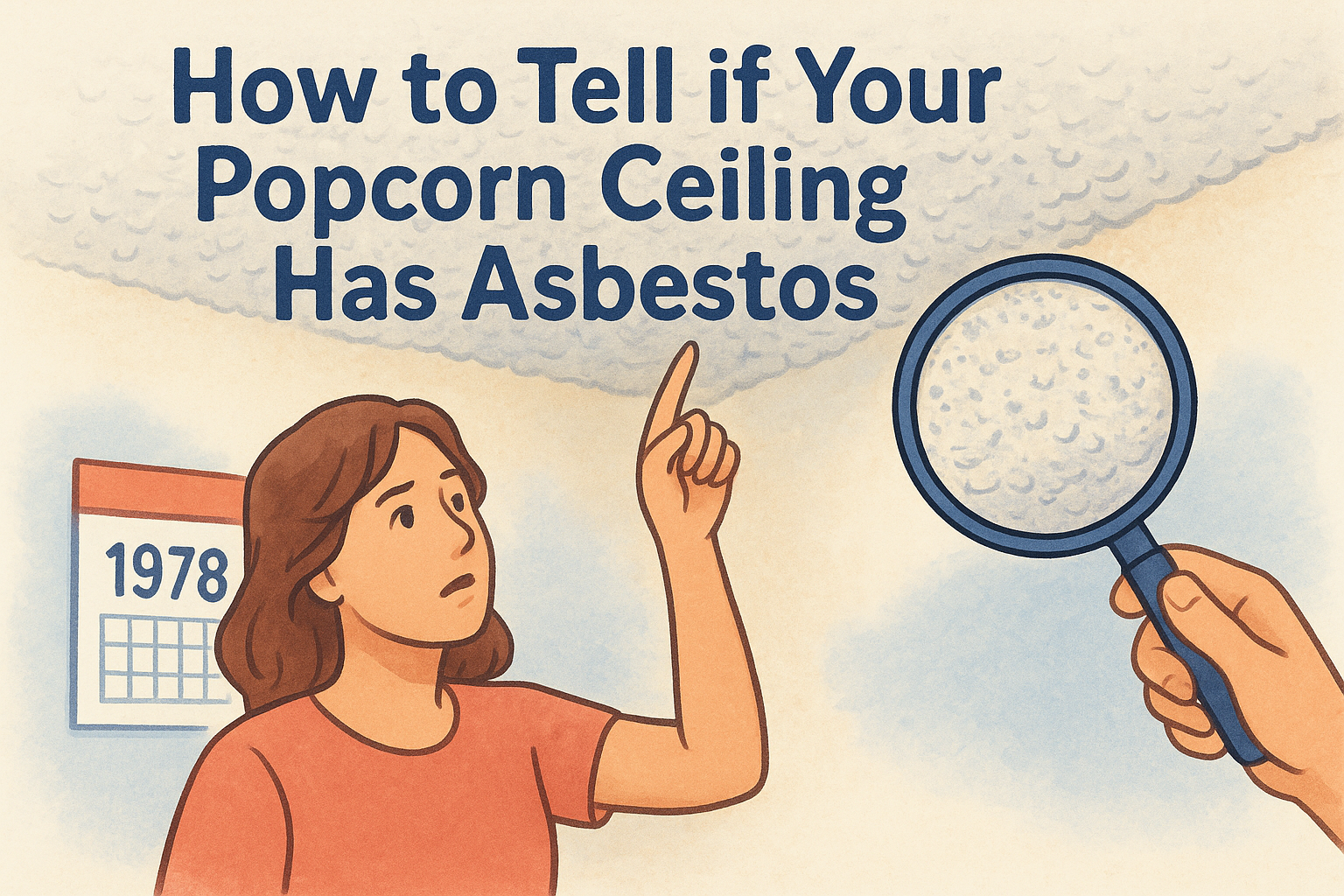
If your home was built before the mid-1980s and still has its original popcorn ceiling, there's a real chance it contains asbestos. Knowing how to test ceiling for asbestos is the first step toward protecting your family's health, because disturbing asbestos fibers without proper precautions can lead to serious respiratory issues , including mesothelioma and lung disease.
The good news? Testing doesn't have to be complicated. You can collect a sample yourself and send it to a certified lab, or you can hire a professional to handle the entire process. Either way, getting a clear answer before scraping, sanding, or renovating is non-negotiable. At Super Shooters, we've removed over 10,000 ceilings across the Sacramento Valley in our 30+ years of business, many of which tested positive for asbestos, so we've seen firsthand what happens when homeowners skip this step.
This guide walks you through the full testing process: how to safely collect a sample , where to send it, what results mean, and what to do next based on what you find.
When you should test and what you can't see
The most important rule with asbestos is simple: never assume based on how a ceiling looks. Asbestos fibers are microscopic , which means visual inspection tells you nothing about whether a ceiling is safe to work on. A ceiling can look perfectly intact and still release dangerous fibers the moment you scrape it, sand it, or drill into it. Skipping the test and finding out afterward is not a risk worth taking.
Situations that require a test before you touch anything
You need to know how to test ceiling for asbestos before starting any common renovation project that disturbs the ceiling surface. Testing is not optional if your home was built before 1986 and still has its original textured or acoustic ceilings. Here are the specific situations that require testing before any work begins:
- You're removing or scraping a popcorn or acoustic ceiling
- You're renovating a room and need to cut, drill, or sand the ceiling
- You're selling your home and buyers or their inspector request documentation
- You notice crumbling, flaking, or water-damaged ceiling texture
- A contractor is about to start any work that touches the ceiling surface
If your ceiling is in good condition and you are not disturbing it, the risk of fiber release is low. The real danger starts the moment you break the surface.
Why visual inspection fails every time
Many homeowners assume they can spot an asbestos ceiling by its texture, color, or apparent age. That assumption is consistently wrong . Asbestos was routinely mixed into ceiling texture compounds alongside sand, paint binders, and other materials during the 1950s through early 1980s. The resulting product looks identical to non-asbestos alternatives made during the same era. There is simply no reliable visual difference between an asbestos-containing popcorn ceiling and one that is completely asbestos-free.
Beyond the surface appearance, asbestos fibers measure just 0.1 to 10 micrometers in diameter , far too small to detect with the naked eye. Even a licensed inspector cannot confirm or rule out asbestos through sight alone. The EPA states that the only way to confirm asbestos is through laboratory analysis of a collected material sample. Everything else is a guess, and in this case, guessing carries real health consequences.
Step 1. Choose DIY sampling or hire a pro
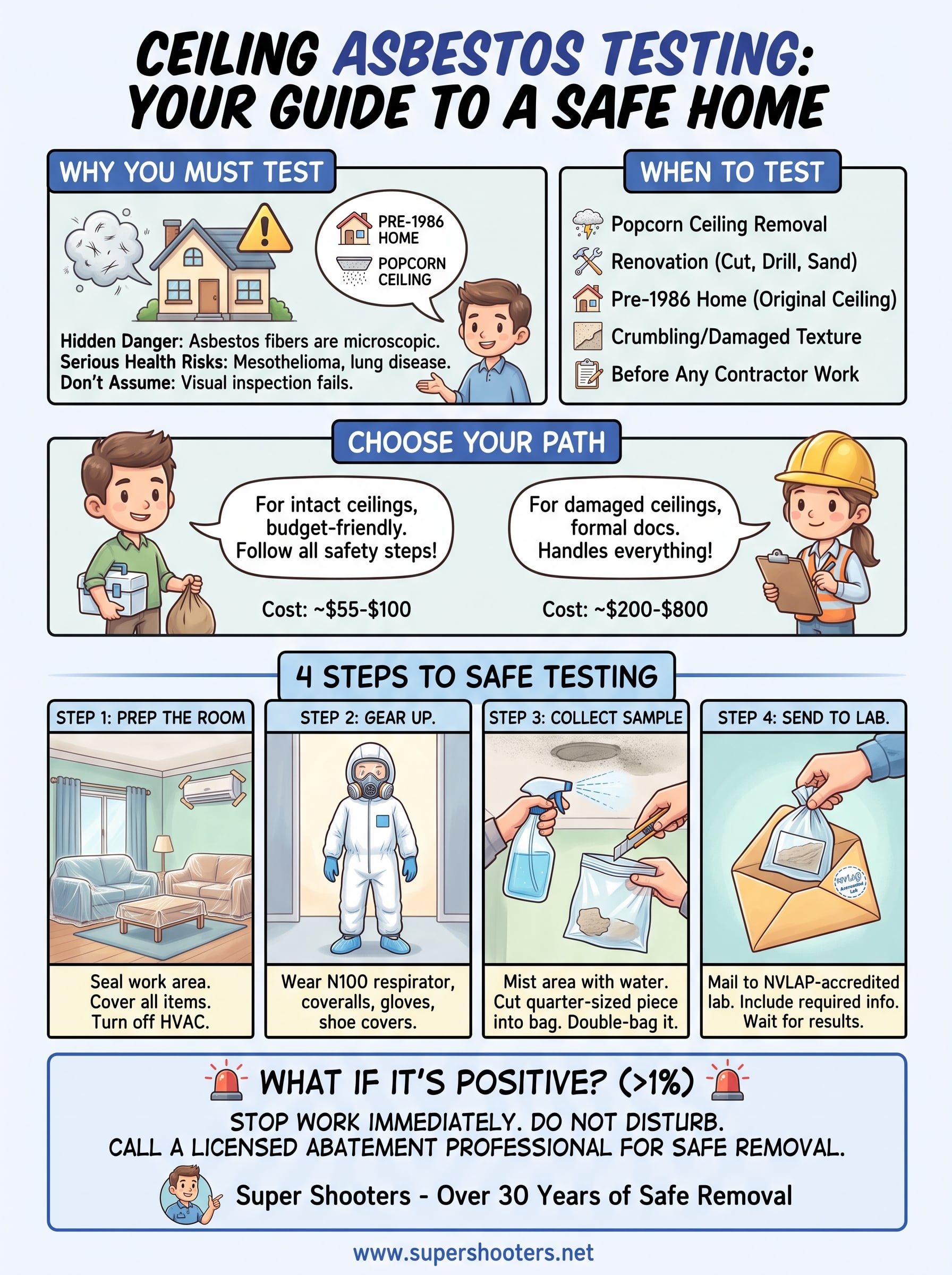
Your first decision when learning how to test ceiling for asbestos is whether to collect the sample yourself or call in a certified professional. Both options get you to the same result: a lab-confirmed answer . The right choice depends on your budget, the condition of the ceiling, and how comfortable you are working near a potentially hazardous material.
| Option | Typical Cost | Best For |
|---|---|---|
| DIY sampling kit | $55 to $100 total | Intact ceilings, budget-conscious homeowners |
| Certified inspector | $200 to $800 | Damaged ceilings, multiple suspect materials, documentation needs |
DIY sampling kits
DIY asbestos test kits are available at most home improvement retailers and cost $30 to $50 , with certified lab analysis adding another $25 to $50 per sample. After you collect the sample using the steps below, you mail it to a lab accredited by the National Voluntary Laboratory Accreditation Program (NVLAP) , which the National Institute of Standards and Technology lists in a public directory. Results typically return within 3 to 7 business days.
DIY sampling is a legitimate and cost-effective option, but only if you follow every safety step precisely. Cutting corners during collection creates unnecessary exposure risk for everyone in the home.
Hiring a certified inspector
A certified asbestos inspector manages the entire process, from sampling and chain-of-custody paperwork to result interpretation. This option is worth the higher cost if your ceiling shows visible crumbling or water damage , or if a buyer, lender, or contractor is requesting formal documentation before work begins.
Inspectors also provide a written report with supporting lab results, which carries more legal weight than a self-collected sample in real estate transactions or permit applications.
Step 2. Set up the room and protect yourself
Before you collect a sample, you need to seal off the work area and put on the right protective gear. Skipping preparation is the most common mistake homeowners make when learning how to test ceiling for asbestos. Even a small, controlled sample collection can release fibers if the space is not properly contained first.
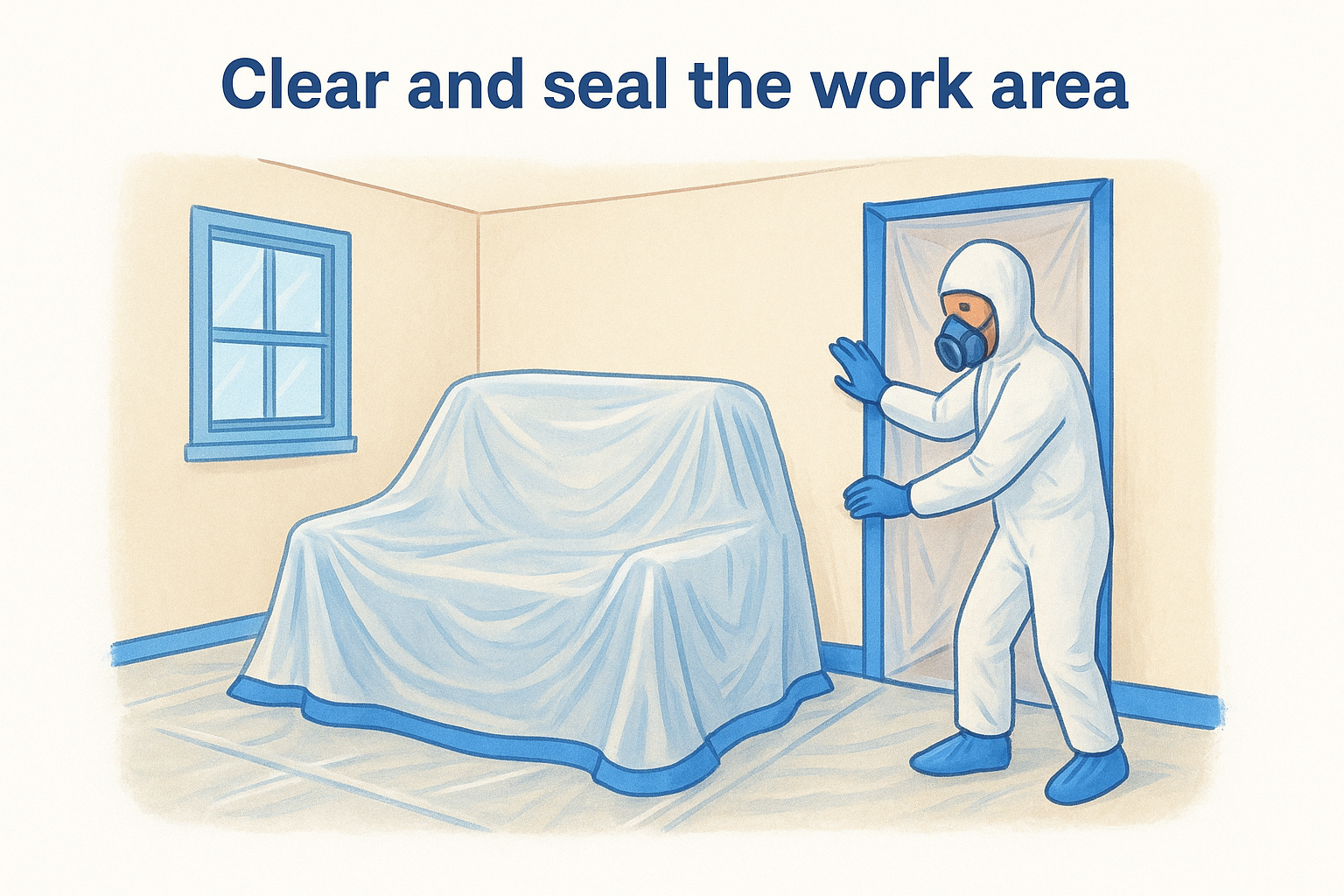
Clear and seal the work area
Remove or cover everything in the room before you start. Furniture, rugs, and any exposed belongings should be moved out entirely or covered tightly with plastic sheeting, since asbestos fibers settle onto surfaces and are nearly impossible to clean without professional equipment.
Use painter's tape and 6-mil plastic sheeting to cover floor vents, doorways, and any openings that connect to other parts of the house. Turn off your HVAC system completely so the air handler does not pull fibers through your ductwork and distribute them to every other room.
Seal the HVAC return and supply vents in the room completely before you begin. Even a brief run cycle can carry fibers throughout your entire home.
Gear up before you enter
Put on your personal protective equipment before stepping into the sealed area. You need a minimum N100 respirator rather than a standard dust mask, because asbestos fibers are small enough to pass straight through basic filtration without stopping.
Wear disposable coveralls, nitrile gloves, and shoe covers to prevent fibers from transferring to your skin or clothing. Seal the gloves to the coveralls at your wrists with tape before entering the room. After you finish, bag all disposable gear immediately and treat it as contaminated waste before disposal.
Step 3. Collect a safe ceiling sample
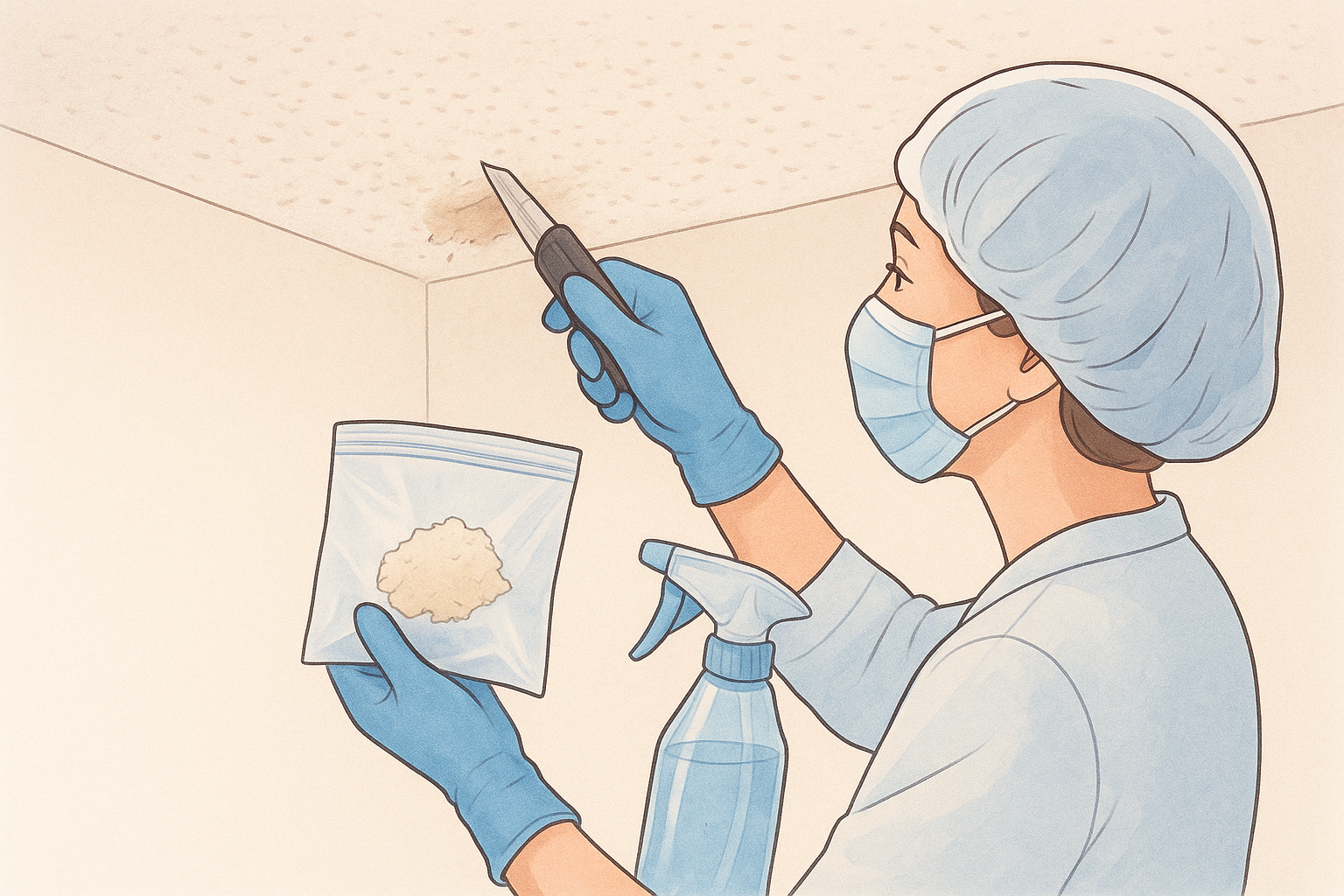
Now that the room is sealed and you're geared up, the actual sample collection is the most critical part of learning how to test ceiling for asbestos safely. The goal is to remove a small piece of ceiling material as quickly and cleanly as possible, and lightly misting the target area with water from a spray bottle before you touch it suppresses fiber release during collection.
What to collect and how much
You need a sample that weighs at least 1 gram , which translates to roughly a quarter-sized piece of ceiling texture. Use an open plastic bag positioned directly below the cut area so the material falls straight in rather than floating into the air. Follow these steps in exact order:
- Hold an open zip-lock sample bag directly beneath the collection area before cutting
- Use a sharp utility knife to cut and loosen a quarter-sized section of ceiling texture
- Let the material drop into the bag without touching it with bare hands
- Seal the bag immediately, then wipe the cut area with a damp paper towel
- Place the sealed bag inside a second clean bag and seal that one too
Double-bagging prevents cross-contamination and is required by most NVLAP-accredited labs before they accept a sample submission.
After sealing both bags, clean the exposed cut area once more with a fresh damp paper towel, then seal the small patch with a thin coat of paint or joint compound. This locks off any loose fibers at the collection site while you wait for your lab results to come back.
Step 4. Send the sample to a lab and read results
With your double-bagged sample ready, the next part of learning how to test ceiling for asbestos is getting it to an NVLAP-accredited laboratory quickly and correctly. Most DIY test kits include a pre-addressed shipping envelope and a chain-of-custody form that you fill out before dropping the package at the post office.
Finding an accredited lab
Your test kit will typically name a specific lab, but if you collected your sample independently, the NVLAP directory on the National Institute of Standards and Technology website lists every certified asbestos testing facility in the United States. Search by state to find a lab near you. Most accredited labs charge $25 to $50 per sample for standard turnaround, with rush results available in 24 to 48 hours for an added fee.
When you submit your sample, include:
- Your full name, address, and phone number
- A description of the material tested (for example: "popcorn ceiling texture, collected from master bedroom")
- Date of collection
- Requested turnaround time
How to read your results
Labs report asbestos content as a percentage by weight of the total sample. Any result at or above 1% asbestos means the material is legally classified as asbestos-containing under EPA standards, and you must treat it accordingly before any renovation work begins.
A result below 1% does not automatically mean the material is risk-free. Some labs note trace detections, and if you have any doubt, get a second sample tested before proceeding.
Results below 1% are reported as non-detect or trace , meaning the ceiling can generally be handled under standard renovation conditions without mandatory abatement.
What to do next if the ceiling tests positive
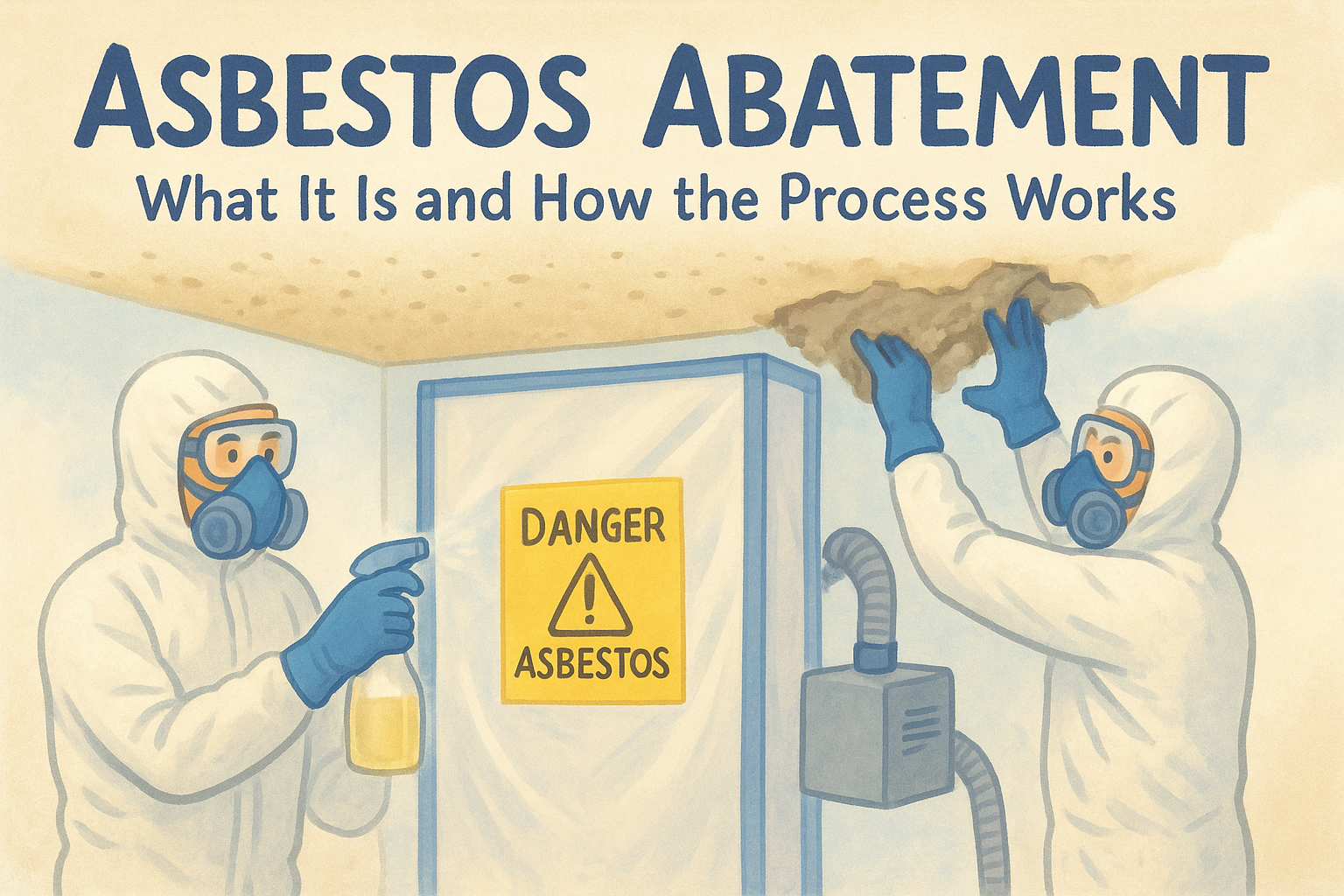
A positive result changes your renovation plan immediately. Under EPA regulations, any ceiling material testing at 1% asbestos or higher must be handled by a licensed abatement contractor before removal or disturbance. Attempting to scrape or remove the ceiling yourself at this point creates serious legal and health risks for everyone in the home.
Now that you know how to test ceiling for asbestos and have your lab results in hand, the next step is clear: call a licensed professional to handle removal safely. Super Shooters has completed over 10,000 ceiling projects across the Sacramento Valley, including hundreds of asbestos-containing ceilings removed in full compliance with state regulations. Your project comes with no upfront payment required and a free in-home estimate so you know exactly what to expect before work begins.
Schedule your free asbestos ceiling removal estimate today and get a clear plan from a contractor with over 30 years of experience.