November 5, 2026
How to Remove Stubborn Wallpaper Without Damaging Walls
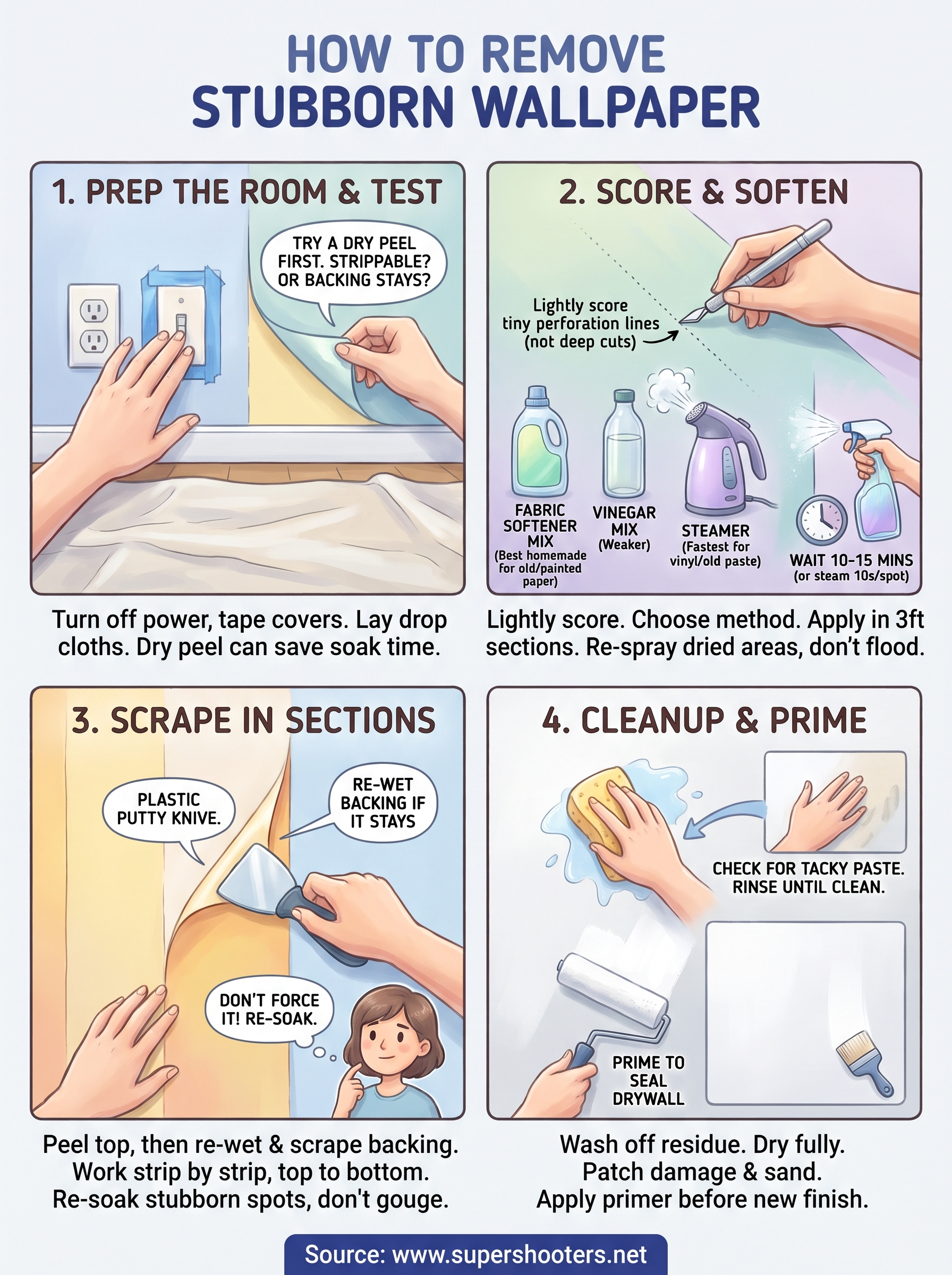
The fastest way to learn how to remove stubborn wallpaper is to treat it as two jobs: soften the glue, then scrape. Score the paper, soak it with steam or a warm mix of water and fabric softener, and wait for the adhesive to let go. Then peel and scrape in small sections, wash off the leftover paste, and prime the wall before you decorate.
Stubborn paper fights back for good reasons. Vinyl coverings repel water, and old paste hardens over the decades. Paper hung on bare drywall can bond so well that it takes the wall's paper face with it. Rush the job and gouge the wall, and you end up with a repair bigger than the wallpaper problem.
Super Shooters has handled wallpaper removal and drywall repair for homeowners across the Sacramento Valley for over 30 years, so this guide draws on what we see once the paper comes off. Below you will find the prep, a comparison of softening methods, the scraping technique, and the cleanup that leaves your walls ready for paint.
Why wallpaper gets stubborn and what you need first
Wallpaper turns stubborn because of its type, the age of its adhesive, and the surface under it. Knowing which of the three you face tells you how much soaking and patience the job needs.
What makes some wallpaper so hard to remove
Vinyl and foil papers block water, so the glue underneath stays dry unless you break the surface. Old paste cures hard over time, which is why a 40-year-old covering needs far more soak time than one hung ten years ago.
The wall matters most. Paper hung on primed or painted drywall usually lets go in large sheets. Paper hung straight on bare drywall bonds to the board's paper face, and wet scraping can tear it. If you want to keep the paint or finish underneath intact, test a small hidden patch first and see how the surface reacts.
The surface under the paper decides how hard you can scrub, so find out what you are working with before you wet anything.
Tools and supplies
You do not need much, and most of it costs little. A steamer is the one optional item you can rent or skip. Gather these before you start:
- A scoring tool, or a utility knife you will use very lightly
- A spray bottle or garden sprayer
- A wallpaper steamer, if you want the fastest method
- A plastic scraper or a putty knife with rounded corners
- Liquid fabric softener, white vinegar, or dish soap
- Drop cloths, painter's tape, a bucket, and sponges
- Gloves and eye protection
Check for hazards in older homes
If your home is older, think about what sits under the paper. Paint applied before 1978 can contain lead. Some textures and joint compounds in homes from earlier decades can contain asbestos.
Keep surfaces wet while you work and do not dry-sand or dry-scrape anything you suspect. If you are unsure, have the material tested or call a licensed professional before you disturb it.
Step 1. Prep the room and test the paper
Prep takes about half an hour, and it prevents the two big mistakes: water near live electricity and a ruined floor. Do it before you open a single bottle.
Protect the room and the power
Turn off power to the room at the breaker. Remove outlet and switch covers and tape over the openings. Lay drop cloths along the baseboards and run the edge up the wall a few inches to catch drips. Move furniture out, or to the center and cover it.
Try a dry peel first
Lift a corner at a seam with your scraper and pull slowly at a low angle. Strippable paper often comes off whole with no liquid at all. Many papers peel off the top layer and leave a thin paper backing on the wall. That backing is the part you soak and scrape in the next steps.
If the paper tears into small bits instead, skip ahead to scoring and softening.
A dry peel costs you two minutes and can save you an hour of soaking, so always try it before you wet the wall.
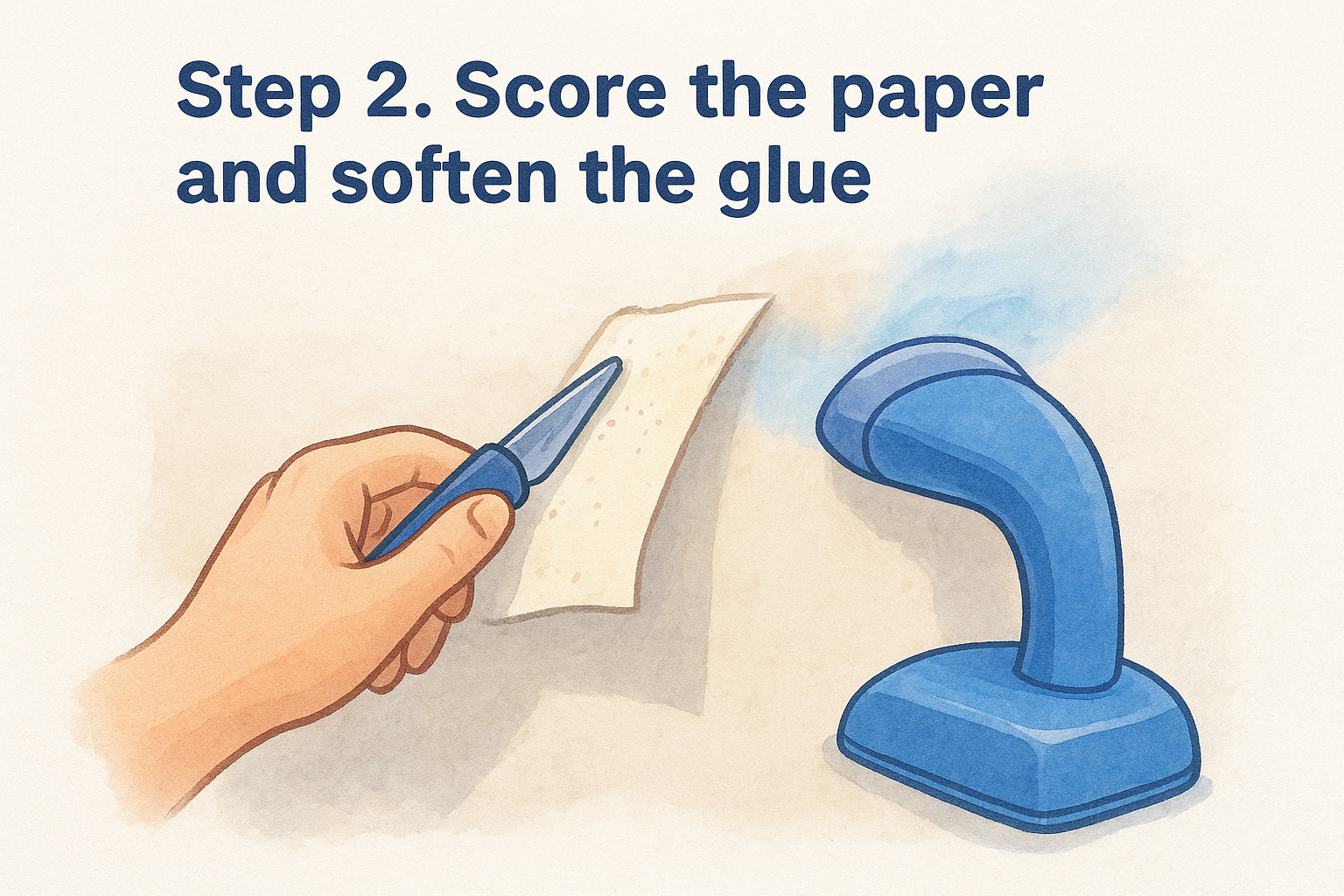
Step 2. Score the paper and soften the glue
Softening the adhesive is the step that decides whether the job feels easy or miserable. Score first so the liquid can reach the glue, then pick a method that matches your paper.
Score without cutting the wall
Run the scoring tool over the paper in small circles with light pressure. You want tiny perforations in the paper, not grooves in the drywall. Skip scoring on any paper that peeled off cleanly in the dry test, but score the backing and any vinyl.
Pick a softening method
A steamer is the fastest option, and fabric softener is the best homemade option when you have no steamer. This table sets the common methods side by side:
| Method | Mix | Best for | Watch out for |
|---|---|---|---|
| Steamer | Plain water in the steamer | Vinyl, multiple layers, old paste | Hold the plate on the wall at least 10 seconds per spot, and avoid soaking drywall |
| Fabric softener | Equal parts liquid softener and warm water | Painted-over, textured, or old paper | Slippery floors, so rinse the wall afterward |
| White vinegar | Equal parts hot water and white vinegar | Thin, lightly bonded paper | Strong smell, and it is weaker on vinyl |
| Dish soap | A few squirts in a bottle of hot water | A first pass, or a light job | Needs repeat coats |
| Commercial remover | Mixed as the label says | Very old, heavy paste | Ventilate the room |
On the vinegar versus fabric softener question, fabric softener wins on stubborn paper. Vinegar is fine for light jobs. Dish soap, Dawn included, does help water soak in, but it is a mild helper and not a fix for stubborn glue.
Apply it so it soaks in
Work in sections about 3 feet wide so nothing dries before you reach it.
- Spray the scored section until it glistens but does not run.
- Wait 10 to 15 minutes, or hold the steamer plate in place for at least 10 seconds.
- Re-spray any area that dries out before you scrape it.
Do not flood the wall. Drywall paper softens when it stays wet for too long, so repeat light coats instead of one heavy one.
Several light, repeated soakings release old glue better than one drenching, and they protect the drywall.
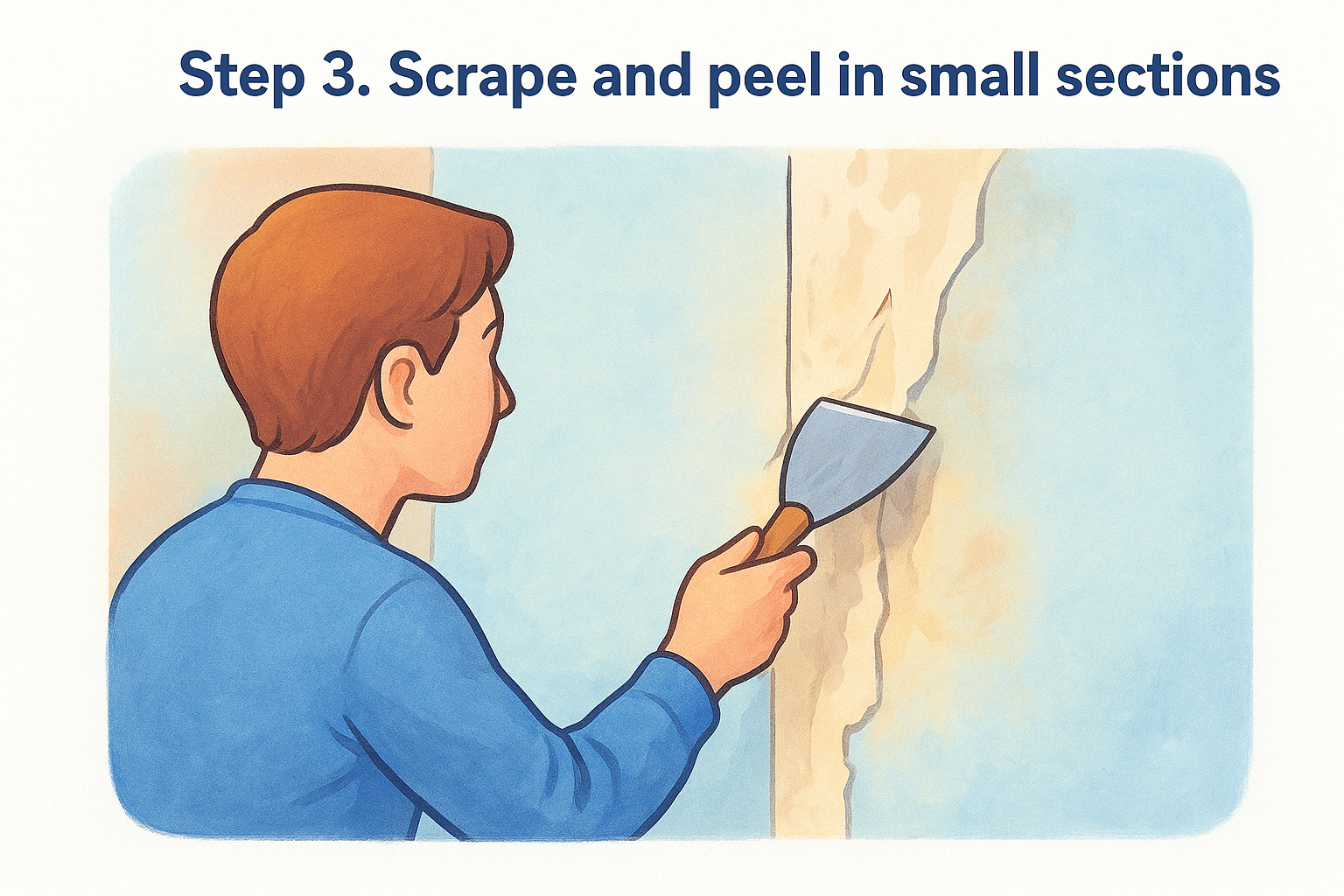
Step 3. Scrape and peel in small sections
Once the glue is soft, the paper should move under a gentle push. If you have to muscle it, the glue is not ready, so soak it again.
Peel the top layer, then the backing
Start at a seam and peel the top layer slowly, keeping your pull close to the wall. If a paper backing stays behind, re-wet the backing and scrape it with the scraper at a shallow angle, around 30 degrees. Push with the flat of the blade and keep the corners rounded or tilted up so they do not dig in.
Work strip by strip
Plan the job by the number of strips. A 12 by 12 foot room with 8 foot walls has 48 feet of wall, which is 16 strips at 3 feet wide. Soften one or two strips ahead of where you scrape, and work from top to bottom so runoff does not soak finished sections. This rhythm prevents the main problem, glue that dries again before you reach it.
When it still will not come off
For 40-year-old paper or paper painted over, repeat the cycle. Re-score, re-soak with steam or fabric softener mix, and scrape again, two or three rounds if needed. If the scraper starts lifting the drywall's paper face, stop and let the wall dry before you continue. Patching a torn wall is far easier than fixing one you kept gouging.
A stubborn spot calls for another soak, not more force.
Step 4. Wash off the glue and prep the wall
Bare walls are not ready for paint until the paste is gone. Leftover adhesive bubbles under new paint and shows through new paper.
Wash off the residue
Wipe the wall with a sponge and warm water with a little dish soap, then rinse with clean water. Run your hand over it. Any tacky or slick spot is leftover paste , so wash it again. Let the wall dry fully, usually overnight with a fan running.
Repair and prime
Check for gouges, torn paper face, and seam ridges. Fill small damage with joint compound and sand it smooth once dry, keeping the earlier hazard check in mind for older homes. Then prime the wall with a primer made to seal drywall before you paint or hang anything new. For deeper gouges, torn board, or plaster damage, a drywall repair is the better route than layers of filler.
A clean, sealed wall is what makes the next finish last, so do not skip the rinse and the primer.
When the paper still wins
Stubborn wallpaper comes off with the right order of work: dry test, score, soften with steam or a fabric softener mix, scrape in small sections, wash the glue, and prime. Patience beats pressure at every stage.
If the paper is old, layered, or sitting on damaged drywall, you do not have to fight it alone. Super Shooters offers wallpaper removal with free quotes in Sacramento and surrounding areas, and we require no payment until the job is complete. If the scraping has already left torn or gouged walls, our drywall repair and patching service brings them back to a smooth finish.