November 27, 2026
What Is Asbestos Abatement? Process, Rules, and Your Options
So, what is asbestos abatement ? It is the set of controlled procedures that remove, seal off, or enclose asbestos-containing materials so their fibers cannot reach the air people breathe. In a home you plan to renovate, removal is the usual choice. Enclosing or coating the material is the alternative when it is intact and can stay where it is.
Asbestos is a naturally occurring mineral fiber that builders used for decades in ceilings, floor tiles, pipe insulation, and plaster because it resists heat and fire. Left alone, those materials are generally not a hazard. Sanding, scraping, drilling, or water damage can turn them into airborne dust, and abatement exists to prevent that moment.
This article explains why abatement matters, how each method works, what the rules require in California, and how to move forward with your own house. Super Shooters has removed acoustic and popcorn ceilings across the Sacramento Valley for over 30 years, so the examples lean toward ceilings.
Why asbestos abatement matters
Abatement matters because disturbed asbestos releases microscopic fibers that you can inhale, and the diseases they cause take decades to appear. You cannot see, smell, or feel the exposure when it happens, so the controls have to be in place before the work starts.
The health risk comes from disturbed material
Long-term exposure to airborne asbestos can lead to asbestosis, lung cancer, and mesothelioma. The danger depends on the material's condition, not just its presence. Intact material that nobody touches is generally not hazardous. It becomes a problem when it is friable , meaning it crumbles into dust or is damaged enough to shed fibers.
Spray-on acoustic ceilings sit in an awkward middle. They are soft and textured, so a water stain, a scraper, or a remodel can disturb them easily. That is why any ceiling work on an older house should start with a question about asbestos.
Asbestos is harmless while it stays intact and untouched, and abatement exists for the moment that stops being true.
When abatement is needed and when it is not
Abatement is needed when asbestos-containing material is damaged, or when planned work will disturb it. Otherwise, leaving it in place and checking on it is a legitimate choice. Homes built before the 1980s are the most likely to contain asbestos, but only a lab test confirms it.
- Needed: you plan to remove a ceiling, open a wall, or replace flooring that tests positive.
- Needed: the material is crumbling, water-stained, or already damaged.
- Not needed yet: the material is intact, in good condition, and no project will touch it.
How asbestos abatement works
Abatement uses one of three methods, then follows a fixed sequence of containment, work, cleaning, and clearance testing. Removal is generally the preferred response, though conditions sometimes call for enclosing or coating the material instead.
Removal, enclosure, and encapsulation compared
| Method | What happens | Best when | Trade-off |
|---|---|---|---|
| Removal | Material is wetted, taken out, bagged, and sent to an approved disposal site | You are renovating or the material is damaged | Most disruptive, but nothing is left behind |
| Enclosure | A permanent barrier is built over or around the material | The material is intact and rarely touched | Asbestos stays in the building |
| Encapsulation | A sealant coating binds the fibers in place | The surface is stable and in good shape | Needs periodic inspection, and the coating can fail |
For a ceiling you intend to change, removal is the practical answer . Enclosure and encapsulation leave asbestos in your home, so someone has to track and inspect it over time .
The sequence on a removal job
Every reputable abatement follows the same logic: contain the area, remove the material wet, clean thoroughly, and prove the air is clean.
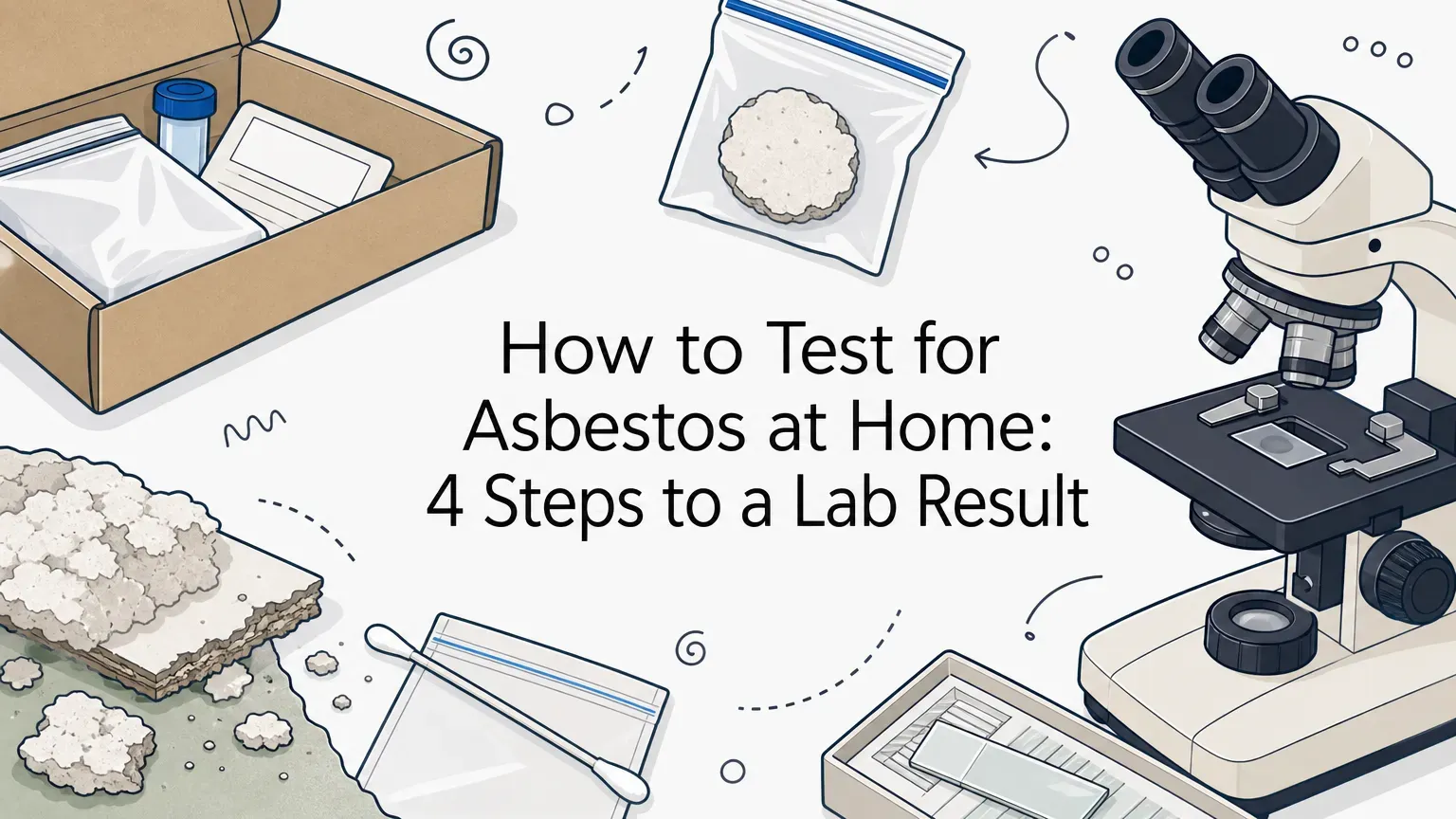
- Survey and lab test. A sample confirms whether the material contains asbestos.
- Containment. Doors, windows, and vents are sealed with plastic sheeting, and the HVAC system is shut off. Larger jobs use negative pressure with HEPA-filtered air machines.
- Wet removal. Workers dampen the material to hold dust down, remove it mostly by hand, and double-bag the waste. Decontamination areas control who and what leaves the work zone.
- Cleaning. Surfaces inside the enclosure are cleaned with HEPA vacuums and wet wiping.
- Clearance. A qualified party separate from the removal crew inspects the area and may take air samples. A common benchmark is 0.01 fibers per cubic centimeter of air. Barriers come down only after the area passes.
The step that separates safe abatement from a messy demolition is independent clearance testing before the barriers come down.
How asbestos abatement is regulated
Asbestos abatement is regulated at the federal, state, and local levels, covering notification, worker protection, contractor licensing, and waste disposal. The details depend on the amount of material and the type of building, so have your licensed contractor confirm what applies to your job.
Federal rules
The U.S. Environmental Protection Agency regulates how asbestos is handled during renovation and demolition. Its rules require notification for work above certain amounts, wet work practices, and disposal at approved sites. You can read the overview on the EPA asbestos page. OSHA sets limits on worker exposure, along with requirements for protective equipment and training.
California and local requirements
California adds its own layer. Cal/OSHA requires contractors doing asbestos-related work of roughly 100 square feet or more to be registered, and the Contractors State License Board governs licensing. A 12 by 15 foot living room ceiling is 180 square feet, already above that mark, and a whole-house popcorn ceiling is many times larger.
| Body | What it covers |
|---|---|
| U.S. EPA | Notification, wet work practices, approved disposal |
| OSHA and Cal/OSHA | Worker exposure limits, protection, training, contractor registration |
| CSLB | Contractor licensing |
| Local air district | Notification for renovation and demolition, such as the Sacramento Metropolitan Air Quality Management District in Sacramento County |
If a contractor cannot show you a license number and an asbestos registration number, do not let them near your ceiling.
How to handle abatement in your home
Start with a lab test, hire a licensed and registered contractor, and prepare the house before the crew arrives. Do not scrape, sand, or cut into a suspect surface to see what is inside.
Test first, then plan
Take or order a sample through a professional and send it to a lab. For asbestos ceiling work, Super Shooters gets test results back within a day. A negative result means a standard ceiling removal. A positive result means the job follows asbestos procedures, and Super Shooters partners with Redline Environmental (CSLB 809926, DOSH 825) for that work.
Questions to ask and how to prepare
Before you sign, ask for these in writing:
- The contractor's license and Cal/OSHA registration numbers
- The containment plan and how the rest of your home will be protected
- Who performs the clearance inspection, and whether it is independent
- How waste is handled and where it goes
- What happens after removal: repairs, texture, and paint
A typical asbestos ceiling job at Super Shooters uses double layers of plastic, removes ceiling fixtures, dampens and extracts the ceiling, replaces any compromised sheetrock and joint tape, and smooths joints and nails with joint compound. The crew then applies new texture, with two coats of paint if you want them. Clear out breakables and glass-top furniture beforehand, and the crew moves the rest.
A good abatement plan tells you what happens after the asbestos is gone, not just how it leaves.
Safety, timing, cost, and terminology questions
Most homeowners want the same quick answers: whether it is safe to stay, how long it takes, what it costs, and what the terms mean. The short version is below.
Is it safe to stay home during abatement?
Containment and air monitoring protect the areas next to the work zone, but the safest choice is to stay out of the house during active removal, especially for whole-house ceiling work. Asbestos dust also does not go away on its own. The fibers do not dissolve or decay, so settled dust stays until someone removes it with HEPA vacuuming and wet cleaning.
How long it takes, what it costs, and abatement versus remediation
Standard acoustic ceiling removal at Super Shooters takes one to two days, up to three for a large house. Asbestos jobs add testing, containment, and clearance, so ask for a written schedule. Cost depends on square footage, the material, access, the number of rooms, disposal, and the retexturing you choose. Free estimates make it easy to compare. Be wary of any price quoted without seeing the ceiling.
"Abatement" and "remediation" are often used interchangeably. Ask each contractor exactly what is included, such as removal, cleaning, repairs, and clearance testing, and compare the scopes rather than the labels.
Compare written scopes of work, not the words "abatement" or "remediation" on the proposal.
What to do next
Asbestos abatement is the controlled removal, enclosure, or sealing of asbestos-containing material, done under licensed supervision, with the area contained and tested before anyone moves back in. It matters most when material is damaged or a project will disturb it. For an older ceiling you want gone, removal is almost always the cleanest long-term answer.
Test before you touch anything, confirm your contractor's license and registration, and ask who will perform the clearance inspection. If you live in the Sacramento Valley and suspect your acoustic ceiling contains asbestos, you can request a free estimate through Super Shooters' asbestos acoustic ceiling removal service. You pay nothing upfront, and payment is due only after the job is complete.